

Best Probiotic for Gut Lining Support: What Actually Works for Barrier and Intestinal Health
Probiotics for Stomach Lining & Intestinal Health: What Science Shows
Digestive discomfort is often blamed on “bad digestion” or food intolerance.
For many people, digestion doesn’t feel broken — it feels fragile.
In many cases, the deeper issue is gut barrier weakness, not digestion itself.
The stomach lining and intestinal lining form a dynamic protective interface between microbes, food particles, and the immune system. When this barrier is compromised, symptoms such as bloating, sensitivity, inflammation, and irregular digestion become far more likely — a pattern long emphasized in barrier biology research (Nature Reviews Immunology, Turner, 2009).
This article explains how probiotics influence stomach lining and intestinal health, which microbial pathways matter most, and how to choose probiotic strategies that support long-term gut barrier resilience.
Anyone comparing the best Akkermansia probiotic should first look at whether the approach supports mucus-associated microbes, epithelial resilience, immune signaling, and long-term gut barrier health. Akkermansia is best understood as part of a barrier-support strategy, not simply as another general digestive probiotic.
1. The Gut Lining: Your First Line of Defense
The gastrointestinal lining performs several essential roles:
-
acts as a selective barrier
-
supports immune tolerance
-
houses mucus-associated microbes
-
regulates inflammatory signaling
-
facilitates nutrient absorption
When the gut lining is intact, microbes and immune cells communicate in a controlled, beneficial way. When compromised, immune activation increases and digestive sensitivity follows — a foundational concept of intestinal barrier research (Nature Reviews Immunology, Turner, 2009).
This explains why gut lining health is central to digestive wellness, not just digestion speed or enzyme production.

2. What Weakens the Stomach and Intestinal Lining
Several common factors reduce gut barrier resilience:
-
chronic stress and cortisol elevation
-
low-fiber diets
-
microbiome depletion
-
antibiotic exposure
-
hormonal shifts (including menopause)
-
circadian rhythm disruption
-
oral–gut microbial imbalance
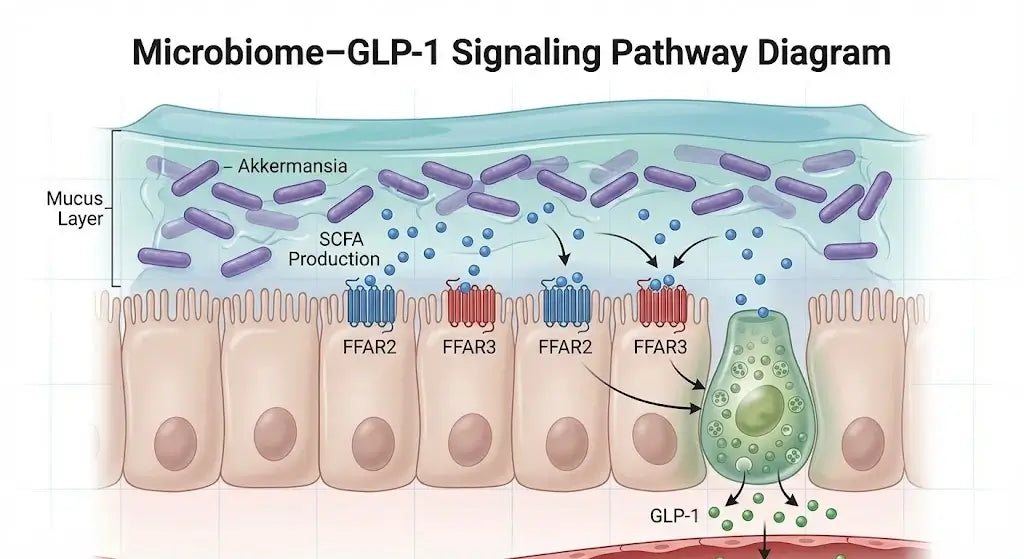
Barrier-support science emphasizes that microbial metabolites (including SCFAs) and immune signaling are critical to tight junction maintenance and epithelial repair (Experimental & Molecular Medicine, Chelakkot et al., 2018). When these inputs are disrupted, the gut lining becomes thinner, more permeable, and more reactive.
The connection between upstream oral microbial imbalance and downstream gut barrier damage is explored in Oral Dysbiosis: Hidden Driver of Gut Barrier Health.
When these stressors accumulate, the gut lining becomes thinner, more permeable, and more reactive.
3. How Probiotics Support Gut Barrier Function
Probiotics influence gut barrier and intestinal lining health through indirect but powerful mechanisms, including:
-
reducing inflammatory signaling
-
modulating immune tolerance
-
supporting mucus-producing cells
-
shaping microbial communities that protect the epithelium
Notably, probiotics do not “patch” the gut lining like a bandage. They help restore the biological conditions under which the lining can repair itself — often via microbial signaling and metabolite-driven barrier support (Experimental & Molecular Medicine, Chelakkot et al., 2018).
For readers comparing options, the best probiotic for gut lining is usually one that supports microbial balance, mucus-layer integrity, and long-term barrier resilience rather than promising to patch the gut lining quickly.
This is why daily probiotic strategies are most effective when aligned with gut barrier biology, as explained in Daily Probiotic Supplement: Do You Really Need One?
For a deeper understanding of what makes a probiotic mechanistically effective — beyond immune modulation or barrier support — see What Makes a High-Quality Probiotic: Science Explained.

4. The Role of Mucus-Associated Bacteria
Research on Akkermansia muciniphila highlights its role in mucus turnover, immune signaling, and epithelial health, which is why it is often discussed in next-generation beneficial microbe research (Frontiers in Microbiology, Cani & de Vos, 2017).
One of the most studied mucus-associated species is Akkermansia muciniphila, which helps regulate mucus turnover, immune signaling, and epithelial health.
Because of this role, Akkermansia is often discussed in the context of gut lining protection rather than traditional digestion. A more detailed explanation is available on our Akkermansia Microbiome Guide.
For readers researching an Akkermansia supplement, the key question is whether the approach supports mucus-associated microbes, immune signaling, and epithelial health rather than relying on the strain name alone.
Understanding probiotic strain specificity, survival, and host signaling — covered in What Makes a High-Quality Probiotic: Science Explained — reinforces why delivery format and microbial function matter for gut barrier health.

5. Why Delivery Format Matters for Gut Lining Support
The way probiotics are delivered affects how they interact with the gut lining.
Chewable probiotics:
-
engage oral–gut signaling pathways
-
interact with salivary enzymes
-
influence upper-GI immune cues
-
support early microbial communication
This upstream interaction can shape downstream mucosal responses, which is why chewable formats are increasingly discussed in gut-barrier–focused strategies.
For readers comparing pasteurized vs lyophilized probiotic formats, the key is to evaluate the specific strain, intended mechanism, stability, delivery method, and evidence behind the preparation rather than assuming one format is always superior.
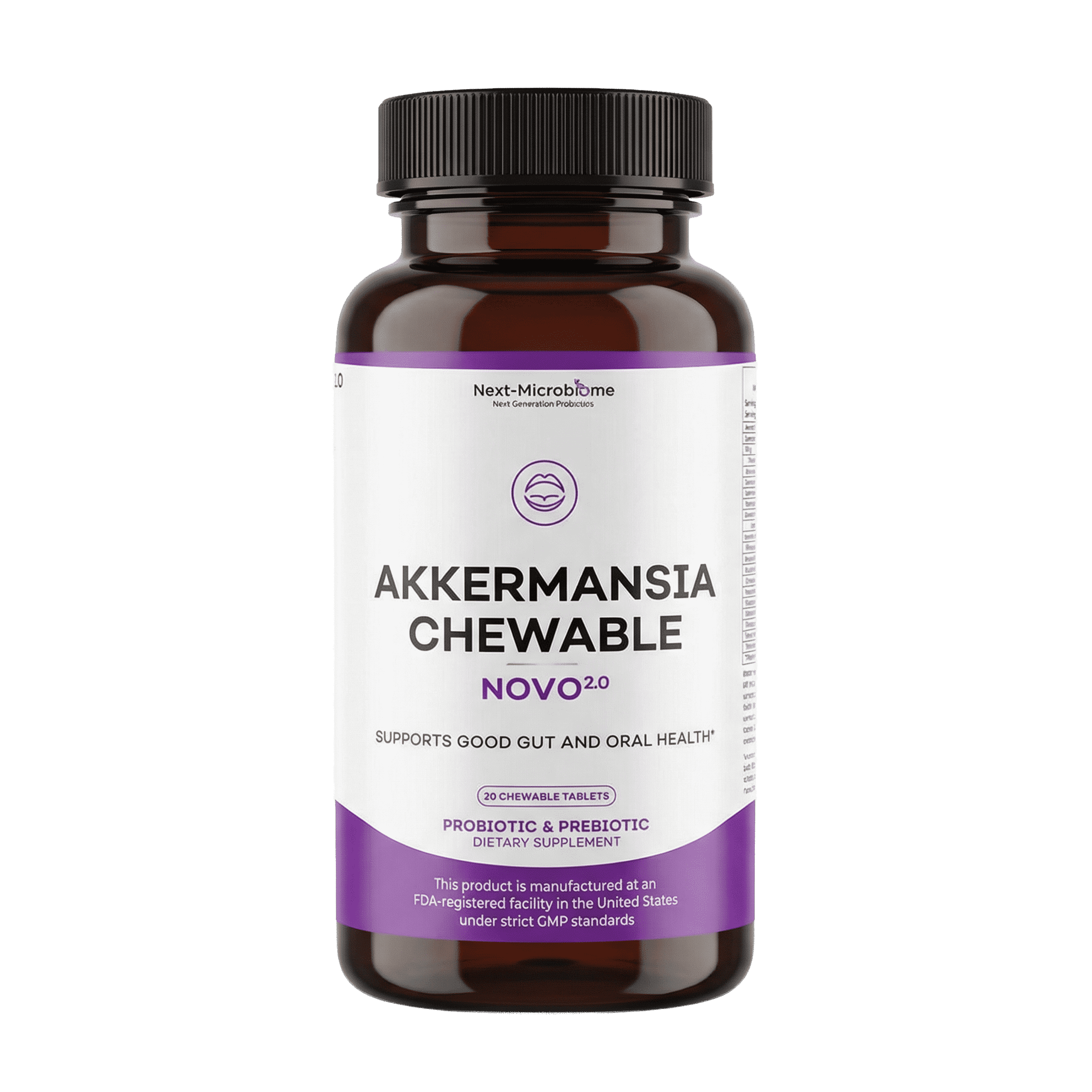
A practical example is Akkermansia Chewable, formulated to support oral–gut signaling and mucosal integrity as part of a daily digestive routine.

6. Gut Lining Health and Digestive Wellness
Digestive wellness depends on more than enzyme activity or stool frequency. It includes:
-
barrier integrity
-
immune tolerance
-
microbial balance
-
inflammation regulation
-
gut–brain communication
This is where gut-brain health becomes relevant, because barrier integrity, inflammation regulation, microbial balance, and nervous system signaling all influence digestive comfort over time.
Probiotics that support gut lining resilience contribute to overall digestive wellness, not just symptom relief.
This broader framework is outlined in the Gut Health & Microbiome Knowledge Hub, which connects probiotics, prebiotics, microbiome science, and digestive comfort into a unified model.
7. Supporting Gut Lining Health Beyond Probiotics
Understanding the difference between prebiotics and probiotics can help readers see why beneficial microbes and the fibers that feed them often work best together for long-term gut lining support.
Probiotics work best when combined with:
-
diverse dietary fibers
-
adequate sleep and circadian alignment
-
stress reduction
-
micronutrient sufficiency
-
avoidance of unnecessary antibiotics
This integrated approach allows the gut lining to repair and stabilize over time.
Frequently Asked Questions About Gut Lining Health
1. What is the gut lining?
The gut lining consists of mucus layers, epithelial cells, and tight junctions that regulate what passes from the gut into the bloodstream (Nature Reviews Immunology, Turner, 2009).
2. Can probiotics repair the gut lining?
Certain probiotics support gut lining function indirectly by modulating inflammation, immune signaling, and microbial balance rather than “patching” tissue directly (Experimental & Molecular Medicine, Chelakkot et al., 2018).
3. Why is intestinal barrier health important?
A healthy barrier prevents excessive immune activation and supports digestive comfort, nutrient absorption, and metabolic balance (Nature Reviews Immunology, Turner, 2009).
4. Are the stomach lining and the intestinal lining the same?
They are related but distinct. Both rely on mucus integrity and immune regulation, but the intestinal lining plays a larger role in systemic immune exposure and inflammation (Nature Reviews Immunology, Turner, 2009).
5. How long does it take to improve gut lining health?
Gut lining repair is gradual. Meaningful improvements typically occur over weeks to months, depending on inflammation, diet, sleep, and microbiome support.
6. Can stress damage the intestinal barrier?
Yes. Chronic stress and elevated cortisol are associated with barrier disruption and increased permeability, especially when paired with low fiber intake and circadian disruption (Experimental & Molecular Medicine, Chelakkot et al., 2018).
This is one reason broader discussions around leaky gut and microbiome support often focus on stress control, fiber intake, and microbiome repair.
7. Are probiotics alone enough to heal the gut lining?
No. Probiotics work best when combined with fiber intake, sleep regulation, stress reduction, and circadian alignment — the conditions that support barrier repair biology (Experimental & Molecular Medicine, Chelakkot et al., 2018).
8. What protects the stomach lining?
The mucosal barrier protects stomach tissues from digestive acids.
9. Can probiotics support intestinal health?
Certain probiotics are studied for their potential role in gut barrier support.
10. Why is the gut barrier important?
It helps regulate nutrient absorption and immune responses.
Scientific References
-
Turner J.R. (2009). Intestinal mucosal barrier function in health and disease.
Nature Reviews Immunology. -
Chelakkot C. et al. (2018). Gut microbiota–derived metabolites and intestinal barrier function.
Experimental & Molecular Medicine. -
Cani P.D., de Vos W.M. (2017). Next-generation beneficial microbes: The case of Akkermansia muciniphila.
Frontiers in Microbiology, 8:1765.
-
Thaiss C.A. et al. (2014). Transkingdom control of microbiota diurnal oscillations promotes metabolic homeostasis.
Cell, 159(3), 514–529.
- Hamer HM et al., Gut, 2008
Written by Ali Rıza Akın
Microbiome Scientist, Author & Founder of Next-Microbiome
Ali Rıza Akın is a microbiome scientist with nearly 30 years of experience in translational biotechnology, systems biology, and applied microbiome research, spanning discovery, preclinical development, and clinical-stage translation.
His work focuses on how microbial ecosystems interact with human physiology, including:
-
Gut barrier function and intestinal permeability
-
Mucus-associated microbiota (Akkermansia-related systems)
-
Oral–gut microbiome axis
-
Short-chain fatty acids (SCFAs) and metabolic signaling
-
Circadian rhythm–microbiome interactions
-
Clinical Research Contributions
He has contributed to multiple clinical-stage microbiome programs, supporting bacterial strain discovery, optimization, and formulation design across different therapeutic areas, including:
Active Ulcerative Colitis (Inflammatory Bowel Disease)
Hyperoxaluria (Oxalate Metabolism Disorder)
Microbiome-driven gut health and inflammatory conditions
These studies were part of broader clinical development programs evaluating microbiome-based approaches. His contributions focused on the early-stage scientific and translational pipeline, including strain discovery, functional optimization, and multi-strain formulation design.
Scientific Contributions:
Ali Rıza Akın is the discoverer of Christensenella californii, a bacterial species associated with microbiome diversity and metabolic health.
He is a contributing author to scientific publications and Bacterial Therapy of Cancer (Springer), and the author of Bakterin Kadar Yaşa: İçimizdeki Evren: Mikrobiyotamız.
Approach:
His work emphasizes evidence-based microbiome science, long-term safety, and a systems-based understanding of how microbes influence human health.
The content provided is for educational and informational purposes only and does not replace professional medical advice, diagnosis, or treatment.
Human Microbiome Guide: How Microbes Shape Gut, Immune, and Whole-Body Health
Gut Microbiome Development: What Shapes It Across Life and How to Support It
Related Posts

Why Do You Wake Up at 3 A.M.? Gut, Cortisol and Blood Sugar

Can Gut Health Affect Sleep? How the Microbiome May Shape Rest and Recovery

Ozempic Plateau? What Your Gut Microbiome May Be Telling You About Slower Weight Loss

Akkermansia vs Ozempic: Why Gut Balance May Shape GLP-1, Digestion, and Results

GLP-1 Gut Side Effects: Why Bloating and Constipation Happen and What May Help

Best Probiotic for Leaky Gut? Why Gut Barrier Support Differs From Digestive Probiotics

Can You Support Akkermansia Naturally, or Are Supplements Needed?