

Why Does Oral Dysbiosis Matter for Gut and Metabolic Health?
Oral Dysbiosis: Hidden Driver of Gut Barrier Damage & Metabolic Slowdown
Oral dysbiosis is often dismissed as a dental issue — bad breath, gum irritation, or plaque buildup.
But modern microbiome science tells a very different story.
Oral dysbiosis is an upstream biological trigger that can weaken the gut barrier, amplify systemic inflammation, disrupt microbial balance, and slow metabolic function.
For readers researching Akkermansia probiotics for metabolic wellness, this article explains why oral-gut balance matters first: inflammation, mucosal barrier health, and microbial signaling all shape the metabolic environment that Akkermansia and other beneficial microbes depend on.
When the oral microbiome becomes imbalanced, inflammatory signals and pathogenic microbial products travel downstream through the digestive tract. This alters gut immunity, damages mucosal defenses, and interferes with metabolic signaling.
Oral dysbiosis sits at the intersection of:
-
immune activation
-
mucosal barrier damage
-
microbial translocation
-
chronic low-grade inflammation
-
metabolic slowdown
This explains why many gut-focused approaches fail:
They ignore the mouth, where immune and microbial signaling begins.
If you haven’t read the previous article, start here:
"Chewable Probiotics vs Capsules: Why Delivery Format Matters"
The oral microbiome is the upstream regulator of digestion, mucosal immunity, and metabolic signaling. For the full science behind the oral–gut axis, explore the Oral–Gut Microbiome Hub.
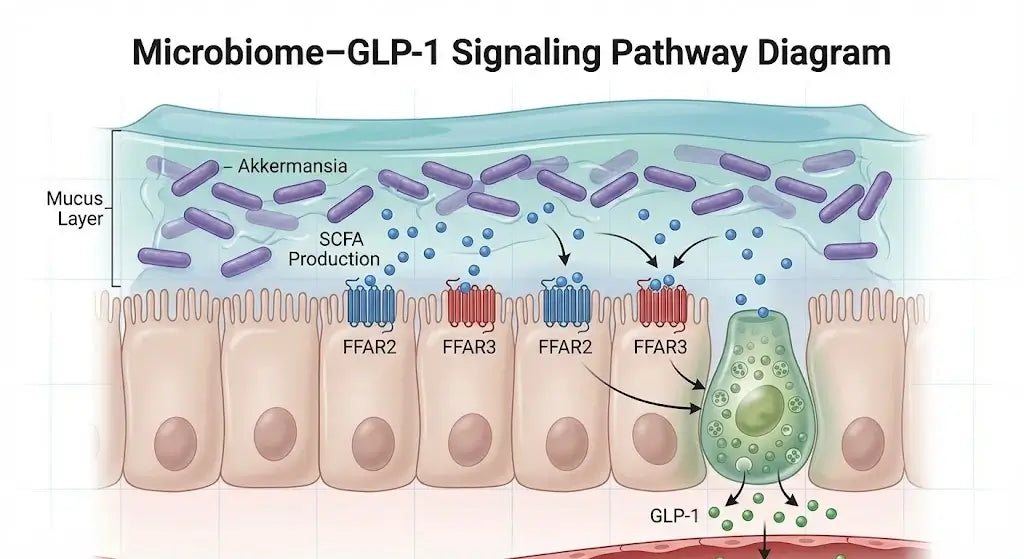
Also, the stability of the gut barrier is not maintained by structure alone but by specific microbial interactions within the mucus layer. Among these, Akkermansia muciniphila plays a critical role by interacting directly with mucin and supporting the renewal of the gut lining. This unique function has positioned it as a key organism in maintaining barrier integrity and metabolic balance. To explore this in more depth, see our detailed overview of Akkermansia muciniphila benefits.
Key Takeaways
-
Oral dysbiosis drives inflammation beyond the mouth
-
Pathogenic oral microbes weaken gut barrier integrity
-
Chronic immune activation disrupts metabolic signaling
-
Repairing oral–gut balance is essential for long-term health
Frequently Asked Questions About Oral Dysbiosis & Systemic Health:
A. Core Concepts
1. What is oral dysbiosis?
Oral dysbiosis is an imbalance in the oral microbiome where pathogenic bacteria outnumber beneficial species, increasing inflammation and impairing mucosal health.
2. Is oral dysbiosis only a dental problem?
No. Oral dysbiosis influences immune signaling, gut barrier integrity, and systemic inflammation through the oral–gut axis.
3. Can oral dysbiosis affect gut health?
Yes. Oral bacteria and inflammatory molecules travel downstream, altering gut microbial balance and immune tone.
B. Mechanisms & Biology
4. How does oral dysbiosis damage the gut barrier?
It increases inflammatory cytokines and microbial toxins that weaken tight junctions and thin the protective mucus layer of the gut lining.
5. Can oral bacteria translocate to the gut?
Yes. Under inflammatory conditions, oral microbes can colonize the esophagus, stomach, and intestines.
6. Is oral dysbiosis linked to systemic inflammation?
Yes. Dysbiotic oral bacteria release lipopolysaccharides (LPS) and inflammatory metabolites that drive chronic low-grade inflammation.
7. How does oral dysbiosis affect SCFA production?
It disrupts downstream microbial balance, reducing short-chain fatty acid–producing bacteria.
C. Symptoms & Metabolic Effects
8. What symptoms suggest oral dysbiosis?
Bad breath, gum inflammation, bloating, food sensitivities, fatigue, cravings, and digestive discomfort.
9. Can oral dysbiosis cause bloating?
Yes. Disrupted oral–gut signaling alters digestion and microbial fermentation.
10. Does oral dysbiosis affect metabolism?
Yes. Chronic inflammation interferes with insulin sensitivity and energy regulation.
11. Is oral dysbiosis linked to appetite changes?
Yes. The idea that the microbiome controls appetite is best understood as microbiome-influenced appetite signaling, where inflammatory signaling may blunt GLP-1 and vagal satiety cues.
D. Intervention & Recovery
12. Can improving oral health improve gut health?
Yes. Restoring oral microbial balance reduces inflammatory load upstream.
13. Are chewable probiotics better than capsules for oral dysbiosis?
Chewables interact directly with oral mucosa, while capsules bypass the mouth.
14. Can stress worsen oral dysbiosis?
Yes. The cortisol gut microbiome connection matters because stress can alter saliva flow, immune tone, microbial balance, and downstream oral-gut signaling.
15. Does sleep disruption affect oral microbes?
Yes. Poor sleep disrupts circadian immune regulation and oral microbial balance.
For readers exploring probiotics for mental wellness, this topic is best understood through the broader relationship between sleep quality, inflammation, microbial balance, and gut-brain signaling rather than as a stand-alone mental wellness solution.
16. Can mouth breathing contribute to oral dysbiosis?
Yes. Mouth breathing dries the oral cavity and promotes pathogenic bacteria.
17. Do polyphenols support oral microbial balance?
Yes. Polyphenols from berries, green tea, cacao, and pomegranate support beneficial microbes.
18. Can oral dysbiosis reduce Akkermansia levels?
Yes. Inflammation and mucosal damage reduce conditions favorable for Akkermansia muciniphila.
19. How long does recovery from oral dysbiosis take?
Improvement may begin within weeks, but sustained recovery requires consistent oral, dietary, and lifestyle support.
20. What supports both oral and gut microbiome health?
Hydration, nasal breathing, polyphenol-rich foods, sleep regulation, stress management, and oral-gut-targeted synbiotic support can all help. Understanding the difference between prebiotics and probiotics can also clarify why synbiotics combine beneficial microbes with the nutrients those microbes need to function.

1. Oral Dysbiosis — Definition and Drivers
Oral dysbiosis develops when microbial balance in the mouth is disrupted by:
-
chronic stress
-
high-sugar, low-fiber diets
-
antibiotics
-
mouth breathing
-
poor oral hygiene
-
disrupted sleep
These factors increase inflammatory signaling and impair nitric-oxide pathways.
As described in Microorganisms (Willis & Gabaldón, 2020), oral dysbiosis is not confined to the mouth — its immune effects extend to distant mucosal surfaces.

2. Oral Dysbiosis and Gut Barrier Integrity
The gut barrier is a multilayered defense system central to gut barrier and intestinal lining health.
When oral dysbiosis is present, downstream effects include:
-
immune cell activation
-
cytokine release
-
tight-junction disruption
-
mucus thinning
A landmark eLife study (Schmidt T.S.B., 2019) demonstrated how upstream microbial shifts reshape downstream mucosal immunity and epithelial integrity.
Barrier breakdown allows microbial products (such as LPS) to enter the circulation, promoting systemic inflammation and metabolic dysregulation.
This is one reason broader conversations around leaky gut and microbiome support often overlap with oral dysbiosis, barrier damage, and immune activation.
For upstream signaling context, see:
The Oral–Gut Axis: How the Mouth Shapes Digestion, Immunity & Inflammation
3. Oral Dysbiosis, Immune Activation & Metabolic Signals
Dysbiotic oral microbes produce LPS, hydrogen sulfide, proteolytic enzymes, and inflammatory cytokines.
As detailed in Microorganisms (Willis & Gabaldón, 2020), this immune activation interferes with metabolic hormone signaling, including GLP-1, which is why GLP-1 microbiome science increasingly examines oral inflammation, microbial imbalance, and downstream metabolic disruption.
For readers exploring natural GLP-1 support, this topic is best understood through oral-gut microbial balance, inflammation control, gut barrier resilience, and microbiome-linked metabolic signaling.
In this context, gut-based GLP-1 support means supporting the oral-gut system through microbial balance, inflammation control, gut barrier resilience, SCFA production, and metabolic signaling.
For metabolic context, see:
GLP-1 & Microbiome: Complete Guide to Metabolic Health
4. Oral Microbial Translocation & Feedback Loops
Pathogenic oral bacteria can translocate into the esophagus, stomach, small intestine, and colon.
Once established, they disrupt resident gut communities, leading to reduced SCFA production, lower Akkermansia muciniphila abundance, weakened mucosal integrity, and impaired digestion — creating a self-reinforcing loop of inflammation and metabolic slowdown.
5. Supporting Oral–Gut Recovery
A. Improve Salivary Flow
Hydration and nasal breathing support mucosal immunity.
B. Increase Polyphenol Intake
Green tea, berries, cacao, and pomegranate support beneficial microbes.
For readers exploring food-based GLP-1 strategies, polyphenol-rich foods may help support beneficial microbes, oral-gut signaling, inflammatory balance, and metabolism-linked appetite pathways.
C. Restore Sleep & Circadian Rhythm
Sleep supports mucosal repair and immune balance.
D. Oral–Gut Synbiotic Support
Chewable probiotics engage the oral mucosa before reaching the gut.

REFERENCES
-
Willis J.R., Gabaldón T. (2020).
The human oral microbiome in health and disease. Microorganisms.
-
Schmidt T.S.B. et al. (2019).
Drivers and determinants of the human gut microbiome. eLife.
-
Wade W.G. (2013).
The oral microbiome in health and disease. Journal of Oral Biosciences. -
Liddle R.A. (2019).
Enteroendocrine cells and gut hormones in metabolic regulation. Gastroenterology.
Written by Ali Rıza Akın
Microbiome Scientist, Author & Founder of Next-Microbiome
Ali Rıza Akın is a microbiome scientist with nearly 30 years of experience in translational biotechnology, systems biology, and applied microbiome research, spanning discovery, preclinical development, and clinical-stage translation.
His work focuses on how microbial ecosystems interact with human physiology, including:
-
Gut barrier function and intestinal permeability
-
Mucus-associated microbiota (Akkermansia-related systems)
-
Oral–gut microbiome axis
-
Short-chain fatty acids (SCFAs) and metabolic signaling
-
Circadian rhythm–microbiome interactions
-
Clinical Research Contributions
He has contributed to multiple clinical-stage microbiome programs, supporting bacterial strain discovery, optimization, and formulation design across different therapeutic areas, including:
Active Ulcerative Colitis (Inflammatory Bowel Disease)
Hyperoxaluria (Oxalate Metabolism Disorder)
Microbiome-driven gut health and inflammatory conditions
These studies were part of broader clinical development programs evaluating microbiome-based approaches. His contributions focused on the early-stage scientific and translational pipeline, including strain discovery, functional optimization, and multi-strain formulation design.
Scientific Contributions:
Ali Rıza Akın is the discoverer of Christensenella californii, a bacterial species associated with microbiome diversity and metabolic health.
He is a contributing author to scientific publications and Bacterial Therapy of Cancer (Springer), and the author of Bakterin Kadar Yaşa: İçimizdeki Evren: Mikrobiyotamız.
Approach:
His work emphasizes evidence-based microbiome science, long-term safety, and a systems-based understanding of how microbes influence human health.

What Are the Benefits of Probiotics for Digestive Health?
How Stress and Cortisol Affect Gut Health and GLP-1 Signaling
Related Posts

Why Do You Wake Up at 3 A.M.? Gut, Cortisol and Blood Sugar

Can Gut Health Affect Sleep? How the Microbiome May Shape Rest and Recovery

Ozempic Plateau? What Your Gut Microbiome May Be Telling You About Slower Weight Loss

Akkermansia vs Ozempic: Why Gut Balance May Shape GLP-1, Digestion, and Results

GLP-1 Gut Side Effects: Why Bloating and Constipation Happen and What May Help

Best Probiotic for Leaky Gut? Why Gut Barrier Support Differs From Digestive Probiotics

Can You Support Akkermansia Naturally, or Are Supplements Needed?