

Gut Microbiome Development: What Shapes It Across Life and How to Support It

How the Gut Microbiome Develops & Changes Across Life
The gut microbiome is not static.
It is a living, adaptive ecosystem that begins forming at birth and continues to evolve across childhood, adulthood, and later life.
Understanding gut microbiome development explains why digestion, immunity, metabolism, and even stress tolerance change over time — and why microbiome support must be contextual, not generic.
Anyone researching where to buy Akkermansia muciniphila should first understand how this microbe fits into the broader gut ecosystem across different life stages. Akkermansia is closely linked to mucus-layer integrity, gut barrier resilience, microbial balance, and metabolic signaling, so choosing a supplement should begin with education rather than availability alone.
This article explores how the gut microbiome forms, what shapes it at each life stage, and how disruptions occur — building on the foundational concepts introduced in "What Is the Human Microbiome? A Science Guide", the pillar article of this cluster.
While the pillar article explains what the human microbiome is, this article focuses specifically on how the gut microbiome develops, adapts, and changes across life stages.
For a systems-level overview connecting oral–gut signaling, gut–brain communication, and microbiome development, see the Human Microbiome Hub.
1. Early-Life Microbiome Development
Gut microbiome development begins during birth and early infancy.
Key influences include:
-
delivery mode (vaginal vs. cesarean)
-
early feeding (breast milk vs. formula)
-
maternal microbiome
-
antibiotic exposure
-
environmental microbial contact
Research published in Gut (BMJ) shows that early microbial colonization shapes immune tolerance and metabolic programming later in life (Valdes et al., 2018).
During this period, the microbiome is highly plastic and sensitive — which explains why early-life disruptions can have long-term physiological consequences.
2. Childhood: Expansion & Immune Training
During childhood, microbial diversity expands rapidly.
The microbiome:
-
diversifies with dietary exposure
-
trains immune recognition
-
strengthens the gut barrier
-
establishes metabolic signaling pathways
As shown in Nature Reviews Immunology, microbial exposure during childhood is essential for the development of immune tolerance and for preventing inappropriate inflammatory responses later in life (Turner, 2009).
This stage lays the groundwork for long-term digestive resilience and immune balance.
For readers comparing options, the best probiotic for gut lining is usually one that supports gut barrier development, microbial diversity, and long-term digestive resilience rather than promising permanent microbiome change on its own.

3. Adulthood: Relative Stability, Ongoing Adaptation
In adulthood, the gut microbiome reaches relative stability — but it remains adaptable.
Key factors that continue to reshape it include:
-
dietary patterns and fiber diversity
-
the cortisol gut microbiome relationship, including how stress signaling may influence microbial balance, inflammation, and gut barrier resilience
-
oral–gut microbial balance
-
medication use
For readers exploring how stress affects eating behavior, stress hijacks appetite can be understood as a related gut-brain and metabolic signaling topic, especially when cortisol patterns, sleep disruption, and microbiome changes overlap.
Human intervention studies published in Cell demonstrate that adult microbiomes can shift significantly within weeks in response to dietary and lifestyle changes (Zmora et al., 2018).

4. The Oral–Gut Axis as an Upstream Influence
Microbiome development is often discussed as a gut-only process, but this view is incomplete.
The oral microbiome acts as an upstream regulator of gut microbial composition. Oral bacteria that are swallowed interact with the gastric and intestinal environments, influencing immune tone downstream.
Research in Cell Host & Microbe shows that oral bacteria can translocate to the gut and contribute to dysbiosis under certain conditions (Willis & Gabaldón, 2020).
5. Hormones, Stress & Life-Stage Transitions
Major life transitions alter microbiome composition, including:
-
pregnancy
-
chronic stress
-
metabolic disease
-
menopause
Hormonal shifts influence gut barrier integrity, mucus layer production, microbial diversity, and inflammatory signaling.
6. Aging and Microbiome Resilience
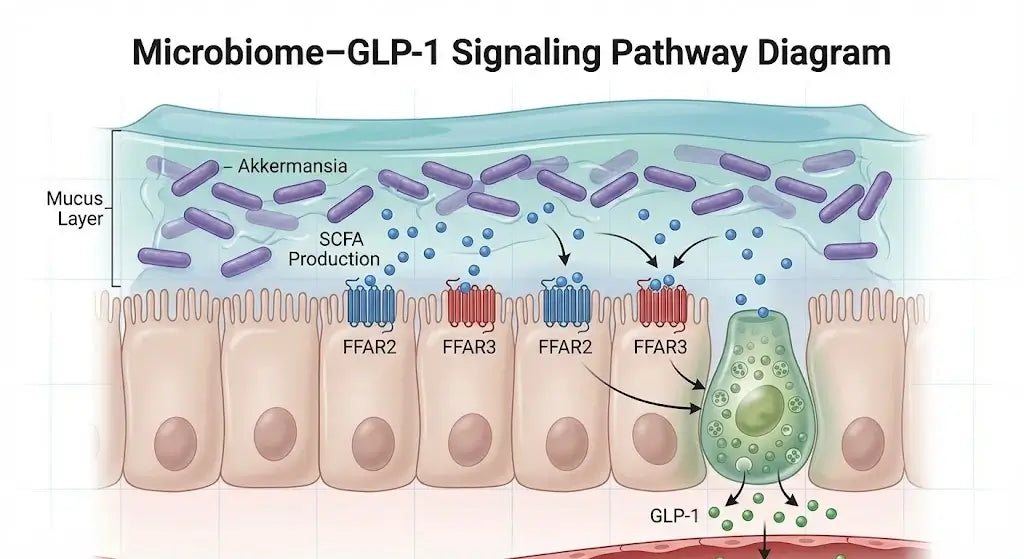
With aging, microbial diversity often declines, accompanied by reduced short-chain fatty acid (SCFA) production and increased inflammation.
The relationship between microbiome and lifespan is increasingly discussed through microbial diversity, SCFA production, inflammatory balance, diet quality, and long-term environmental exposure.
However, research in Cell shows microbiome composition is shaped more by diet and environment than age alone (Koh et al., 2016).
In that context, a metabolic support probiotic is best understood as a microbiome-supportive option that may complement SCFA production, microbial resilience, and inflammatory balance rather than act as a stand-alone healthy aging solution.
7. Supporting Healthy Microbiome Development Across Life
Key ecosystem supports include:
-
diverse dietary fibers
-
circadian rhythm alignment
-
stress regulation
-
oral–gut balance
-
gut barrier support
Certain microbes play a disproportionate role in maintaining gut barrier integrity across life stages.
Strategies targeting mucus-associated microbes such as Akkermansia muciniphila are explored in our Akkermansia Microbiome Guide.
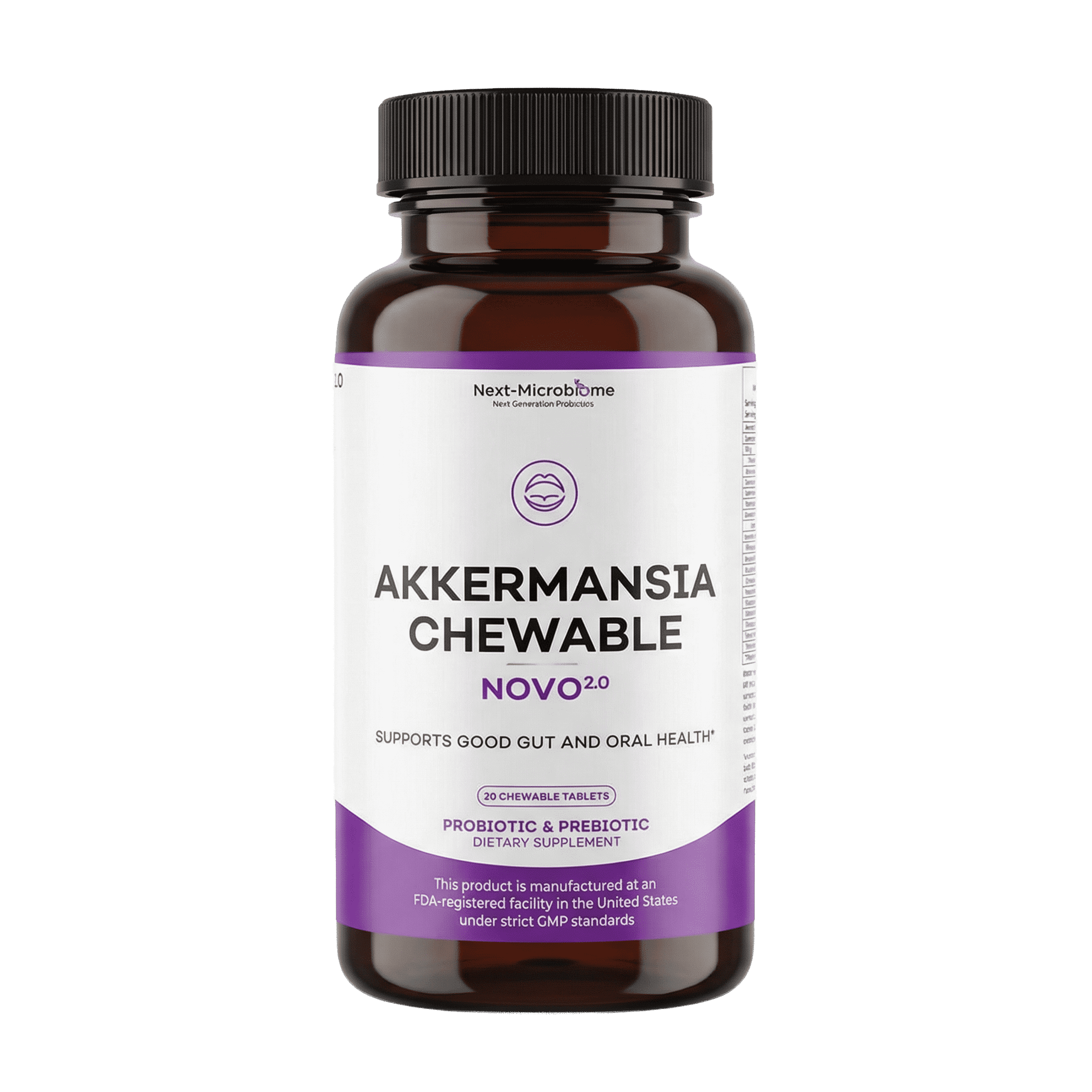
A practical example of this approach is Akkermansia Chewable, designed to support oral–gut signaling and mucosal integrity as part of a long-term microbiome routine.
8. Why Microbiome Development Matters for Long-Term Health
Microbiome development influences digestion, immunity, metabolism, stress resilience, and inflammatory balance.
Disruptions at any life stage can cascade into long-term effects — but the microbiome remains modifiable with the right support.
Frequently Asked Questions About Gut Microbiome Development:
1. When does the gut microbiome begin forming?
Microbiome development begins at birth and accelerates rapidly in early life.
2. Does the microbiome stabilize in adulthood?
Yes — but it remains responsive to diet, stress, sleep, hormones, and medication.
3. Can the microbiome recover after disruption?
Yes. The microbiome is resilient, but recovery depends on environmental support and gut barrier health.
4. Do life stages like menopause affect the microbiome?
Yes. Hormonal shifts significantly alter microbial composition and function.
5. How does the gut microbiome develop?
The microbiome begins forming at birth and evolves through diet, environment, and microbial exposure.
6. Why is early microbiome development important?
Early microbial colonization influences immune development and metabolism.
7. What factors influence microbiome development?
Birth method, breastfeeding, antibiotics, and diet all play roles.
8. Can the gut microbiome change later in life?
Yes. Diet, stress, microbiome and sleep patterns, medication, and hormonal changes can reshape the gut microbiome at any age.
9. What disrupts gut microbiome development the most?
Antibiotics, chronic stress, low fiber intake, circadian disruption, and gut barrier damage are major disruptors.
10. Is the gut microbiome different in children and adults?
Yes. Children have higher microbiome plasticity, while adult microbiomes are more stable but still adaptable.
11. Does menopause affect the gut microbiome?
Yes. Hormonal shifts during menopause alter microbial composition, gut permeability, and inflammatory signaling.
12. Can probiotics permanently change the microbiome?
Most probiotics act transiently; durable microbiome change depends on supporting the gut environment, mucus layer, and microbial metabolism rather than introducing bacteria alone.
13. How is the oral microbiome related to gut microbiome development?
Oral bacteria are swallowed daily and can influence gut microbial composition and immune signaling.
14. Can aging-related microbiome decline be reversed?
While aging affects diversity, diet, and lifestyle can support microbial resilience even later in life.
Scientific References
-
Valdes, A. M., et al. (2018). Role of the gut microbiota in nutrition and health.
Gut (BMJ).
- Turner, J. R. (2009). Intestinal mucosal barrier function in health and disease.
Nature Reviews Immunology.
-
Zmora, N., et al. (2018). Personalized gut mucosal colonization resistance to probiotics.
Cell. -
Willis, J. R., & Gabaldón, T. (2020). The human oral microbiome in health and disease.
Cell Host & Microbe.
-
Koh, A., De Vadder, F., Kovatcheva-Datchary, P., & Bäckhed, F. (2016). From dietary fiber to host physiology: short-chain fatty acids as key bacterial metabolites. Cell.
- Tamburini S et al., Nature Medicine, 2016
Written by Ali Rıza Akın
Microbiome Scientist, Author & Founder of Next-Microbiome
Ali Rıza Akın is a microbiome scientist with nearly 30 years of experience in translational biotechnology, systems biology, and applied microbiome research, spanning discovery, preclinical development, and clinical-stage translation.
His work focuses on how microbial ecosystems interact with human physiology, including:
-
Gut barrier function and intestinal permeability
-
Mucus-associated microbiota (Akkermansia-related systems)
-
Oral–gut microbiome axis
-
Short-chain fatty acids (SCFAs) and metabolic signaling
-
Circadian rhythm–microbiome interactions
-
Clinical Research Contributions
He has contributed to multiple clinical-stage microbiome programs, supporting bacterial strain discovery, optimization, and formulation design across different therapeutic areas, including:
Active Ulcerative Colitis (Inflammatory Bowel Disease)
Hyperoxaluria (Oxalate Metabolism Disorder)
Microbiome-driven gut health and inflammatory conditions
These studies were part of broader clinical development programs evaluating microbiome-based approaches. His contributions focused on the early-stage scientific and translational pipeline, including strain discovery, functional optimization, and multi-strain formulation design.
Scientific Contributions:
Ali Rıza Akın is the discoverer of Christensenella californii, a bacterial species associated with microbiome diversity and metabolic health.
He is a contributing author to scientific publications and Bacterial Therapy of Cancer (Springer), and the author of Bakterin Kadar Yaşa: İçimizdeki Evren: Mikrobiyotamız.
Approach:
His work emphasizes evidence-based microbiome science, long-term safety, and a systems-based understanding of how microbes influence human health.
The content provided is for educational and informational purposes only and does not replace professional medical advice, diagnosis, or treatment.
Best Probiotic for Gut Lining Support: What Actually Works for Barrier and Intestinal Health
How the Gut-Brain Axis Works and How the Microbiome Communicates
Related Posts

Why Do You Wake Up at 3 A.M.? Gut, Cortisol and Blood Sugar

Can Gut Health Affect Sleep? How the Microbiome May Shape Rest and Recovery

Ozempic Plateau? What Your Gut Microbiome May Be Telling You About Slower Weight Loss

Akkermansia vs Ozempic: Why Gut Balance May Shape GLP-1, Digestion, and Results

GLP-1 Gut Side Effects: Why Bloating and Constipation Happen and What May Help

Best Probiotic for Leaky Gut? Why Gut Barrier Support Differs From Digestive Probiotics

Can You Support Akkermansia Naturally, or Are Supplements Needed?