

How to Naturally Support GLP-1 with Fiber, SCFAs, Prebiotics, and Akkermansia
Natural Ways to Support GLP-1: Fiber, SCFAs, Akkermansia & Prebiotics
GLP-1 is one of the most important hormones for metabolic health. It reduces hunger, stabilizes blood sugar, decreases cravings, and supports healthy body-weight regulation.
While GLP-1 medications (Ozempic®, Wegovy®, Mounjaro®) imitate this hormone, your own gut microbiome is capable of stimulating powerful natural GLP-1 release — if you give it the right inputs.
This blog explains the science-backed, microbiome-supported ways to naturally enhance GLP-1.
If you missed the first article in this series, start here:
GLP-1 & The Gut: How the Microbiome Controls Appetite & Metabolism
Frequently Asked Questions — Natural GLP-1 Support, SCFAs, Fiber, Akkermansia & Prebiotics:
1. Which nutrients support GLP-1 release?
Fiber, resistant starch, and prebiotics increase SCFA production, which directly activates GLP-1–producing L-cells.
2. Which microbes influence GLP-1?
Akkermansia muciniphila, Clostridium butyricum, Faecalibacterium, and Roseburia — all key SCFA producers.
3. Do prebiotics improve appetite control?
Yes — prebiotics feed beneficial bacteria, increasing SCFAs that strengthen GLP-1 and satiety signaling.
4. Does meal timing affect GLP-1?
Yes — circadian-aligned eating improves microbial oscillation and strengthens the daily GLP-1 rhythm.
5. Can GLP-1 be boosted without drugs?
Yes — microbiome repair, fiber intake, mucosal support, feeding windows, and stress regulation all enhance GLP-1 naturally.
6. How do SCFAs stimulate GLP-1 production?
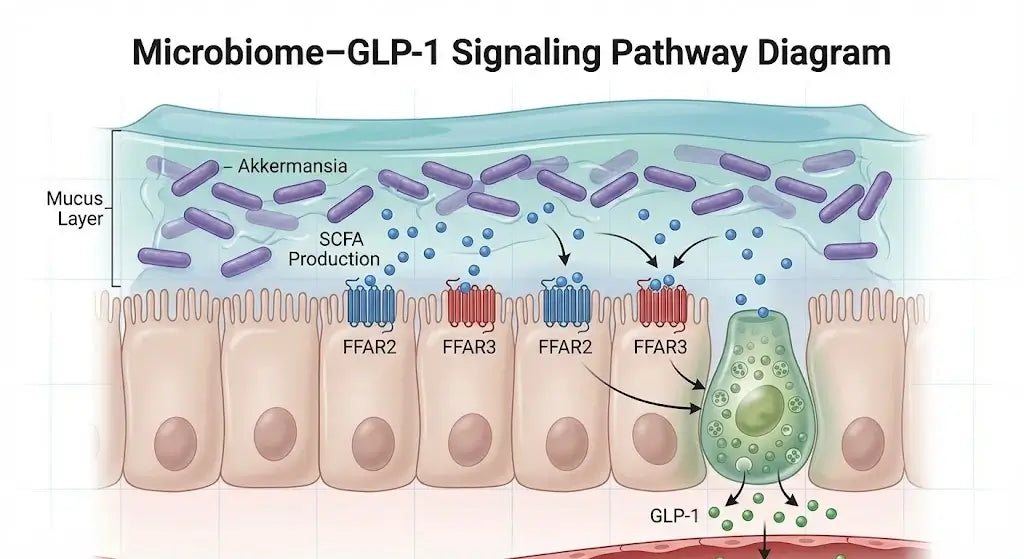
SCFAs bind to FFAR2/FFAR3 receptors on L-cells, triggering GLP-1 release and improving appetite, cravings, and glucose control.
7. Why do fiber and resistant starch improve GLP-1 so effectively?
They feed SCFA-producing bacteria, increase butyrate and propionate, and improve L-cell responsiveness.
8. Can Akkermansia increase natural GLP-1 sensitivity?
Yes — Akkermansia strengthens the mucin layer, reduces inflammation, and enhances epithelial hormone signaling.
9. Does stress lower GLP-1 levels?
Yes — cortisol disrupts microbiome rhythms, reduces SCFAs, and weakens L-cell hormone release.
10. How does circadian rhythm influence GLP-1?
GLP-1 has a 24-hour cycle; sleep disruption, late meals, or irregular eating weaken natural GLP-1 peaks.
11. Can prebiotics reduce cravings by supporting GLP-1?
Yes — stronger GLP-1 signaling improves satiety, stabilizes blood sugar, and reduces reward-driven eating.
12. Which foods increase SCFA production for GLP-1 support?
Beans, lentils, oats, bananas, sweet potatoes, resistant starch foods, berries, and cocoa.
13. Does improving gut barrier function support GLP-1?
Yes — reduced inflammation and stronger mucosal structure improve hormone sensitivity and metabolic regulation.
14. Can probiotics enhance GLP-1 without drugs?
Yes — SCFA-supporting strains like C. butyricum and synbiotics help elevate natural GLP-1 levels.
15. How quickly can natural GLP-1 activation improve appetite?
Changes may begin in 1–3 weeks, with stronger metabolic balance in 4–8 weeks.
16. Do polyphenols support natural GLP-1 release?
Yes — polyphenols nourish SCFA producers, support Akkermansia, and improve metabolic hormone response.
17. How does hydration impact GLP-1 signaling?
Hydration improves digestion, SCFA distribution, blood glucose regulation, and the timing of metabolic hormones.
18. Can GLP-1 support help stabilize emotional eating?
Yes — better GLP-1 signaling reduces blood sugar crashes and dopamine-driven cravings.
19. Does oral microbiome health affect GLP-1 pathways?
Yes — oral bacteria influence inflammation and vagus signaling, indirectly affecting GLP-1 sensitivity.
20. What habits best support natural GLP-1 production?
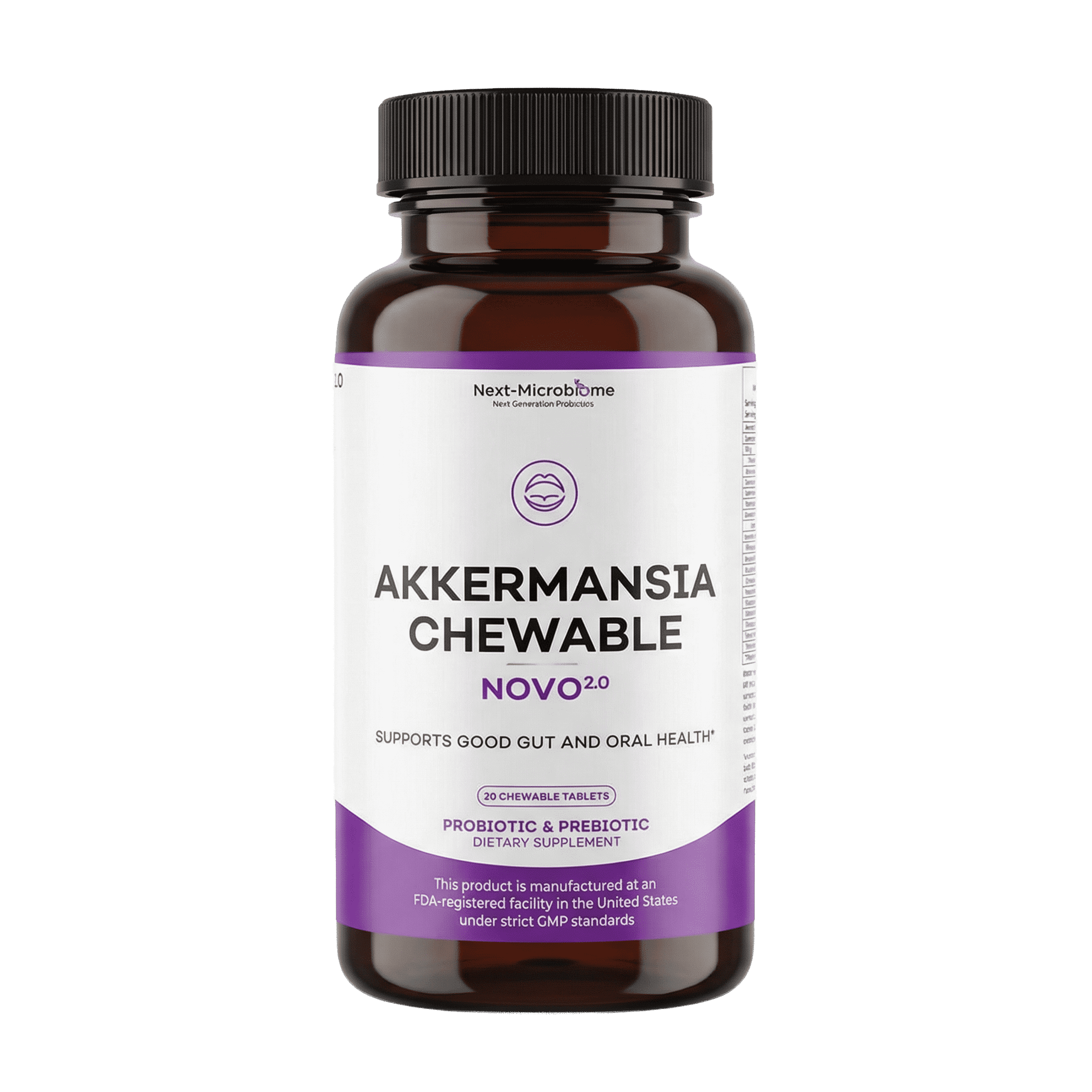
Fiber diversity, resistant starch, polyphenols, stress reduction, circadian feeding windows, hydration, exercise, and oral–gut synbiotics like Next-Microbiome Akkermansia Chewable.
Reduced Akkermansia is among the most consistent microbial patterns associated with inflammation, metabolic dysfunction, and gut-barrier weakness. For a complete, science-based guide to restoring this keystone microbe, explore the Akkermansia Microbiome Guide.
1. SCFAs: The Most Powerful Natural Stimulators of GLP-1
Short-chain fatty acids — butyrate, propionate, and acetate — are the primary natural activators of GLP-1 receptors (FFAR2, FFAR3) on intestinal L-cells.
How SCFAs increase GLP-1:
-
Activate G-protein–coupled receptors → GLP-1 secretion
-
Reduce inflammation that hinders metabolic hormone signaling
-
Regulate appetite and cravings via vagus-nerve pathways
Reference — SCFAs regulate GLP-1 secretion (Gut Microbes, 2021)

2. Fiber & Resistant Starch: The Fuel for GLP-1
Fiber and resistant starch feed the microbes that produce SCFAs.
Foods that strongly increase SCFAs:
✔ Resistant starch
• Cooked & cooled potatoes
• Green banana flour
• Plantains
• Oats
✔ Soluble fiber
• Legumes
• Oats
• Chia
• Flaxseed
• Carrots
✔ Polyphenol-rich foods
• Blueberries
• Pomegranate
• Cocoa
• Green tea
✔ Prebiotic fibers
• Inulin
• GOS
Reference — Prebiotic fiber increases SCFAs & regulates gut hormones (Gut Microbes, 2012)

3. Akkermansia: The Mucosal Engineer Behind GLP-1 Sensitivity
Discussion around Akkermansia muciniphila benefits often focuses on its relationship with mucosal integrity, metabolic signaling, and GLP-1 responsiveness, although outcomes depend on broader diet, lifestyle, and microbiome context.
For readers exploring Akkermansia weight management, this topic should be understood through gut barrier resilience, SCFA production, GLP-1 sensitivity, appetite regulation, inflammatory balance, and broader metabolic health rather than as a stand-alone weight-loss claim.
Emerging research exploring foods that increase Akkermansia suggests that dietary patterns rich in fermentable fibers, resistant starches, and polyphenol-dense plant compounds may support its abundance as part of strengthening mucosal integrity and downstream metabolic hormone signaling.
Akkermansia strengthens GLP-1 function by:
-
Reinforcing the mucin (gut lining) layer
-
Reducing inflammation
-
Improving SCFA-producing microbial networks
-
Enhancing L-cell sensitivity
-
Supporting gut–metabolic signaling efficiency
Reference — Akkermansia improves metabolic regulation (PNAS, 2013)

4. Hydrolyzed HMOs: Feeding the Right Microbes for GLP-1
Human Milk Oligosaccharides (HMOs), especially 2’-FL, selectively fuel:
-
Bifidobacterium
-
Akkermansia
-
Butyrate-producing microbes
These microbial shifts strengthen mucosal integrity, increase SCFAs, and improve metabolic hormone signaling.
Reference — HMO-driven microbial modulation & gut barrier health (Nutrients, 2020)

5. Circadian Rhythm: GLP-1 Follows a Daily Clock
GLP-1 follows a circadian rhythm:
-
High in the morning
-
Lower at night
When circadian timing becomes misaligned, GLP-1 signaling weakens:
-
Morning hunger instability
-
Evening cravings
-
Flattened GLP-1 curve
-
Impaired glucose control
Reference — Gut microbial oscillation affects GLP-1 timing

6. Stress Reduces GLP-1 (Cortisol → Cravings Loop)
Chronic stress biologically suppresses GLP-1:
-
Reduces SCFA-producing microbes
-
Weakens mucosal integrity
-
Disrupts circadian timing
-
Lowers L-cell sensitivity
-
Increases cravings and emotional eating
Reference — Stress eating & hormonal dysregulation
 7. How to Support GLP-1 Naturally (Evidence-Based Strategy)
✔ Increase fiber (25–40 g/day)
✔ Add resistant starch
✔ Eat polyphenol-rich foods
✔ Support Akkermansia
✔ Add HMOs (2’-FL)
✔ Improve circadian rhythm
✔ Reduce stress
✔ Strengthen mucosal integrity
✔ Support SCFA-producing microbes
Microbiome-Based Support
Boost Synergy GLP-1
Supports SCFA pathways, GLP-1 physiology, appetite regulation, and metabolic resilience.
Akkermansia Chewable
Supports mucosal health, microbial diversity, and metabolic signaling.
Sleepy-Biome™
Enhances circadian rhythm and SCFA cycles that influence GLP-1.
GLP-1 only works when the metabolic system beneath it is healthy. If your microbiome is unstable, SCFAs are low, or inflammation is high, GLP-1 signaling weakens. For a complete scientific roadmap to restoring natural GLP-1 biology, visit the GLP-1 & Microbiome Knowledge Hub.
INTERNAL LINKS
GLP-1 Blog 1 — Microbiome Controls Appetite & Metabolism
About the Author — Ali Rıza Akın
Microbiome Scientist • Published Author • Inventor • Founder of Next-Microbiome California Inc.
Ali Rıza Akın is a microbiome scientist and biotechnology researcher with nearly 30 years of translational R&D experience in Silicon Valley. His work focuses on gut barrier biology, GLP-1 and metabolic signaling, SCFA pathways, mucosal immunology, circadian–microbiome interactions, and next-generation probiotics.
He is the discoverer of Christensenella californii — a novel human commensal species associated with metabolic resilience, mucosal health, and healthy aging.
Books & Scientific Contributions
-
Bakterin Kadar Yaşa: İçimizdeki Evren – Mikrobiyotamız
-
Contributing author to Bacterial Therapy of Cancer (Springer)
He publishes extensively on:
-
GLP-1 physiology
-
Akkermansia biology
-
SCFA–gut hormone mechanisms
-
Mucosal barrier science
-
Oral–gut microbial communication
-
Autism–microbiota interactions
-
Stress, HPA-axis, and metabolic resilience
Patents & Scientific Innovations
Ali is the inventor or co-inventor on patents covering:
-
Next-gen probiotic compositions
-
Akkermansia-enhancing mucosal support systems
-
Oral–gut axis modulation
-
SCFA-enhancing microbial ecosystems
-
Dual-action probiotic delivery technologies
-
Synbiotic HMO–polyphenol–microbial formulations
-
Discovery and characterization of Christensenella californii
These patents form the scientific foundation of:
-
Akkermansia Chewable (Novo 2.0)
-
Boost Synergy GLP-1
-
Sleepy-Biome™
-
FiberBiome-Berry
-
Multi-Biome™
-
Vellura™
- Probiome Novo
Founder of Next-Microbiome California Inc.
As Founder and Chief Scientist, Ali leads the development of microbiome-centered formulations that support:
-
metabolic resilience
-
GLP-1 pathway physiology
-
mucosal integrity
-
microbial diversity
-
SCFA production
-
circadian metabolic alignment
-
oral–gut axis communication
Areas of Expertise
-
GLP-1 biology & metabolic signaling
-
Akkermansia muciniphila physiology
-
SCFA pathways & appetite regulation
-
Mucosal immunity & barrier science
-
Circadian rhythm–microbiome interactions
-
HPA-axis & stress biology
-
Next-generation probiotics
-
Microbiome ecology & taxonomy
-
Host–microbe communication networks
GLP-1 and the Gut: How the Microbiome Supports Appetite, Cravings, and Metabolism
GLP-1 and Microbiome Repair for Appetite Control and Long-Term Metabolism
Related Posts

Why Do You Wake Up at 3 A.M.? Gut, Cortisol and Blood Sugar

Can Gut Health Affect Sleep? How the Microbiome May Shape Rest and Recovery

Ozempic Plateau? What Your Gut Microbiome May Be Telling You About Slower Weight Loss

Akkermansia vs Ozempic: Why Gut Balance May Shape GLP-1, Digestion, and Results

GLP-1 Gut Side Effects: Why Bloating and Constipation Happen and What May Help

Best Probiotic for Leaky Gut? Why Gut Barrier Support Differs From Digestive Probiotics

Can You Support Akkermansia Naturally, or Are Supplements Needed?