


Ali Rıza Akın
A leading researcher in the field of the Microbiome, with over 25 years of experience developing next-generation probiotic technologies. His work translates microbiome science into real-world therapeutic and functional health solutions.
0 +
Years of Experience
Pioneering research in human microbiota and next-generation probiotics since Silicon Valley.
0 +
Patents Worldwide
Registered in Europe, Japan, and the United States for groundbreaking innovations.
0 +
Publications
Peer-reviewed research papers and a co-authored book on bacterial therapy.
0
Countries
Global presence across Malta, Türkiye, USA, and Italy.
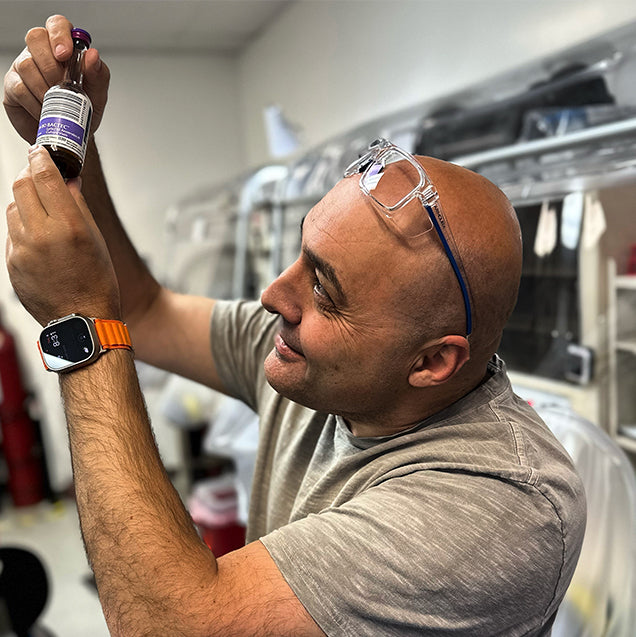
From Silicon Valley to Global Impact
Ali Rıza Akın is the inventor and co-inventor of multiple internationally registered patents, the author of peer-reviewed scientific publications, and a contributor to clinical-stage microbiome programs. His work centers on keystone bacterial species such as Akkermansia muciniphila and next-generation microbial consortia designed to regulate inflammation, metabolism, and host–microbe interactions.
He began his scientific career in Northern California’s Silicon Valley, where he developed a deep specialization in microbiota research and microbial engineering. Over the past decade, he has led teams involved in the discovery and development of dozens of next-generation bacterial systems.
He is a contributing author to the landmark scientific work ‘Bacterial Therapy of Cancer’, and his research has been conducted in collaboration with globally recognized institutions, including UCLA, Imperial College London, the Bill & Melinda Gates Foundation, and the Novartis Biomedical Research Institute.
scientific innovations
His innovations span therapeutic microbiology, metabolic health, and industrial-scale biomanufacturing — contributing to the development of precision live biotherapeutics and advanced microbial therapies.
US 11,969,446 B2
Targets precise microbiome compositions to regulate metabolic and immune pathways.
- Enables systemic modulation of host–microbe interactions
- Supports advanced therapies, including cancer immunotherapy (anti-PD-1)
- Focuses on keystone bacteria such as Akkermansia muciniphila
- Designed to correct dysbiosis and restore gut barrier integrity
- Positions microbiome as a direct therapeutic target
US 2022/0339212 A1
Introduces targeted bacterial compositions centered on Christensenella strains.
- Drives production of short-chain fatty acids (SCFAs)
- Modulates immune and metabolic signaling
- Targets root causes of inflammatory and metabolic disorders
- Leverages highly heritable keystone bacteria
- Functions as a platform-level live biotherapeutic system
US 2021/0060090 A1
Defines foundational methods for using microbiota as precision therapeutics.
- Enables targeted treatment of metabolic, GI, and immune disorders
- Unlocks host–microbe interaction engineering
- Uses keystone strains (e.g., Akkermansia muciniphila) for disease modulation
- Establishes microbiome as a modifiable clinical intervention layer
- Forms a cornerstone of translational microbiology
US 7,745,189 B2
Optimizes large-scale production through regulated growth of filamentous fungi.
- Reduces fermentation viscosity → improves oxygen transfer
- Enhances the yield of proteins and biotherapeutics
- Enables scalable production of microbiome-based products
- Supports industrial cultivation of sensitive strains like Akkermansia muciniphila
- Bridges R&D and commercial biomanufacturing
US 2009/0093039 A1
Introduces genetic control (cotA pathway) for precision fermentation systems.
- Prevents over-viscosity in culture environments
- Extends production cycles of bioactive compounds
- Improves efficiency in enzyme and therapeutic production
- Provides infrastructure for next-gen probiotic manufacturing
- Enables scalable microbiome innovation
US 7,425,450 B2
Establishes core methods for high-efficiency microbial production.
- Engineers fungal morphology for optimized fermentation
- Increases output of proteins, enzymes, and therapeutics
- Forms the backbone for mass-scale probiotic production
- Supports complex ecosystems required by keystone strains
- Critical infrastructure for commercial microbiome therapeutics
Next-Generation Probiotic Systems
Ali Rıza Akın’s work focuses on advancing next-generation probiotic systems centered on keystone microbial species. His research emphasizes:
- Regulation of the gut barrier
- Immune system modulation
- Metabolic health optimization
- Precision microbiome engineering
Particular focus is given to Akkermansia muciniphila, a bacterium widely studied for its role in gut lining integrity, insulin sensitivity, weight regulation, and inflammation control.
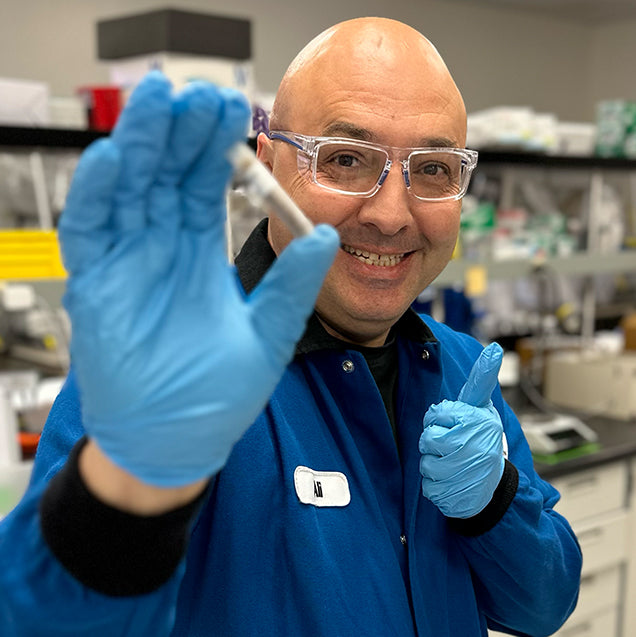

An Active, Programmable Layer of Human Biology
Ali Rıza Akın’s work is based on a core principle:
The microbiome is not just a passive ecosystem — it is an active, programmable layer of human biology.
By integrating microbiology, systems biology, and translational medicine, his approach bridges the gap between scientific discovery and real-world health applications.
publications
Ali Rıza Akın's work explores how targeted microbial interventions can regulate inflammation, modulate immune responses, and enable precision therapeutic applications.
Bifidobacterium breve UCC2003 & Colonic Inflammation Modulation
Demonstrates how targeted probiotics actively modulate gut inflammation and infection dynamics.
- Reduces Citrobacter rodentium–induced colonic inflammation
- Alters organ-specific pathogen behavior in vivo
- Uses advanced 3D bioluminescent + micro-CT imaging
- Shows probiotics can intercept disease progression
- Validates gut barrier + immune regulation mechanisms
High-Resolution In Vivo Imaging for Bacterial Tumor Targeting
Establishes bacteria as precision targeting systems for cancer and systemic disease.
- Tracks engineered microbes (e.g., Bifidobacterium breve) in real time
- Demonstrates tumor-specific colonization
- Positions bacteria as therapeutic delivery vehicles
- Visualizes host–microbe interactions in vivo
- Foundation for microbiome-driven oncology
Longitudinal Imaging of Infection, Inflammation & Bone Damage
Introduces continuous tracking of infection and immune response inside living systems.
- Monitors bacterial burden, inflammation, and tissue damage
- Combines optical imaging + μCT
- Tracks immune cell activity (neutrophils)
- Enables dynamic modeling of host–pathogen interactions
- Provides a framework for longitudinal microbiome research
Fluorescent Protein-Based Tracking of Bacteria
Revolutionizes how researchers track live bacteria in real time.
- Uses fluorescent proteins (e.g., tdTomato)
- Eliminates slow culture-based measurement
- Enables rapid therapeutic response tracking
- Maps bacterial localization in vivo
- Critical for studying complex microbiome ecosystems
In Vivo Bioluminescence Imaging of Intratumoral Bacteria
Defines bacteria as programmable, trackable therapeutic agents.
- Tracks lux-tagged bacteria (e.g., E. coli, Bifidobacterium breve) in vivo
- Visualizes tumor targeting and colonization in real time
- Establishes bacteria as precision oncology tools
- Enables simultaneous tracking of tumor + microbial activity
- Forms a foundation for live biotherapeutic platforms
scientific contributions
From bacterial strain discovery to functional optimization and multi-strain formulation design, these programs reflect a full pipeline approach — strain discovery → functional optimization → clinical application.
Microbiome Therapeutics — Active Ulcerative Colitis
Role & Contributions
- Discovery and isolation of novel bacterial strains
- Functional and metabolic characterization of candidate strains
- Contribution to clinical strain selection and optimization
- Development of targeted microbial consortia
Engineered Microbiome — Hyperoxaluria
Role & Contributions
- Optimization of engineered bacterial strains
- Participation in metabolic pathway tuning
- Design of next-generation microbial combinations
- Support for clinical translation and readiness
Multi-Strain Microbiome Intervention — Gut Health & Inflammation
Role & Contributions
- Creation of synergistic multi-strain formulations
- Optimization of strain compatibility and stability
- Alignment with clinical endpoints and biomarkers
- Contribution to clinical-stage formulation strategies
Why this matters
From laboratory discovery to human clinical validation
Microbial therapeutics designed to act on specific disease mechanisms rather than broad-spectrum effects.
Direct translation into inflammatory and metabolic conditions affecting millions worldwide.
Multi-strain formulations engineered for stability, manufacturability, and clinical readiness.
& collaborators

Through decades of groundbreaking research and unwavering dedication, Ali Rıza Akın continues to revolutionize the field of microbiome science. His pioneering work bridges scientific discovery and real-world health applications, advancing next-generation probiotic systems and precision microbiome engineering to empower ‘Wellness from Within.’
The information presented reflects scientific research, innovation, and product development in microbiome science. It is not intended as medical advice or as a substitute for professional healthcare guidance.