


Gut Health Hub: How Your Microbiome Supports Digestion, Balance, and Wellness
Gut Health & Microbiome Knowledge Hub
Your Complete Guide to Akkermansia, Probiotics, Prebiotics & Digestive Wellness
Welcome to the Next-Microbiome Gut Health Knowledge Hub — a science-driven resource created to help you understand how the gut microbiome influences digestion, metabolism, immunity, and overall health.
These articles are written by microbiome scientist Ali Rıza Akın, combining nearly 30 years of Silicon Valley microbiome research with the latest scientific studies on Akkermansia, probiotics, prebiotics, and gut-brain communication.
Whether you're new to gut health or looking to deepen your scientific understanding, this hub is designed to help you navigate the microbiome with clarity and confidence.
Anyone researching where to buy Akkermansia muciniphila should first understand the science behind this next-generation microbe, including its relationship with gut lining integrity, microbiome balance, digestive resilience, and metabolic signaling. This hub can help readers compare educational resources before evaluating any Akkermansia-related support option.
1. Akkermansia — The Foundation of a Strong Gut Microbiome
Akkermansia: The Key to Gut Health, Microbiome Balance & Digestive Wellness
Akkermansia muciniphila is one of the most important microbes in the human gut.
This blog explains:
-
why Akkermansia is crucial for gut lining health
-
how low Akkermansia affects digestion & metabolism
-
how to naturally increase Akkermansia
-
prebiotics and polyphenols that support microbiota stability
Read the full article:
"Why Akkermansia Matters for Gut and Microbiome Health"

2. Probiotics for Gut Health — Improve Digestion & Microbiome Balance
Gut Health Probiotics: Improve Digestion, Microbiome Balance & Wellness
This blog covers:
-
the best probiotics for gut health
-
how probiotics support digestion & inflammation balance
-
strains like Bifidobacterium & Lactobacillus
-
how probiotics interact with the gut lining
For readers comparing options, the best probiotic for gut lining is usually one that supports barrier integrity, microbial balance, and long-term digestive resilience rather than relying on strain hype alone.
Read the full article:
"How Akkermansia Probiotics Support Digestion and Gut Health"
3. Probiotics for Digestive Health — Bloating, Gas & Gut Lining Support
Probiotics for Digestive Health: Reduce Bloating, Strengthen Gut Lining & Improve Digestion
Learn about:
-
which probiotic strains support digestive comfort
-
bloating and gas reduction
-
intestinal lining protection
-
synergy between probiotics & Akkermansia
Read the full article:
"How Akkermansia Probiotics Support Digestive Health and Gut Comfort"
4. Prebiotics for Gut Health — Feed Good Bacteria & Strengthen Microbiota
Prebiotics for Gut Health: Feed Good Bacteria, Improve Digestion & Strengthen Microbiota
This blog explains:
-
what prebiotics are and how they work
-
how prebiotics support good bacteria
-
best sources of natural prebiotics
-
how prebiotics support gut lining health
Read the full article:
"How Do Prebiotics Improve Digestion and Support the Gut Microbiota?"
5. Gut Microbiome Science — Brain-Gut Axis, Immunity & Future Research
Gut Microbiome Science: How Your Microbiota Shapes Digestion, Immunity & the Brain–Gut Axis
Explore:
-
the gut microbiome and gut biome
-
how the brain–gut microbiome axis affects mood & stress
-
microbiota roles in immunity & metabolism
-
the future of microbiome research
Read the full article:
"How the Gut Microbiome Influences Digestion, Immunity, and the Brain–Gut Axis"
Why This Cluster Matters
These five interconnected blogs form a complete educational journey through:
-
gut microbiome science
-
Akkermansia
-
probiotics
-
prebiotics
-
digestive health
-
gut-brain axis
-
microbiota development
-
microbiome optimization
When it comes to digestive wellness, understanding the role of the gut microbiome is crucial. Let's delve into the world of Akkermansia, probiotics, prebiotics, and how they contribute to overall gut health.
What is Akkermansia?
Akkermansia muciniphila science continues to explore how this beneficial gut bacterium relates to gut barrier integrity, inflammatory balance, and metabolic regulation. Current research has made it an important area of interest in broader microbiome discussions.
Maintaining a balanced population of this microbe supports overall digestive resilience. Emerging evidence also suggests that specific dietary patterns and lifestyle factors may help increase Akkermansia naturally, reinforcing its role in long-term gut health.
While there is no formal medical diagnosis labeled as symptoms of low Akkermansia, research has observed reduced abundance in individuals with metabolic imbalance, impaired gut barrier function, and elevated inflammatory markers. Rather than indicating a single condition, lower Akkermansia levels typically reflect broader microbiome disruption that may influence digestive stability and metabolic signaling.
The Power of Probiotics
Probiotics are live bacteria and yeasts that are good for your digestive system. These beneficial microorganisms can help restore the natural balance of gut bacteria, support immune function, and improve digestion. Emerging research evaluating the effectiveness of chewable probiotics suggests that delivery format may influence microbial interaction within the oral-gut axis, although outcomes depend on strain selection, dosage, and overall microbiome context.
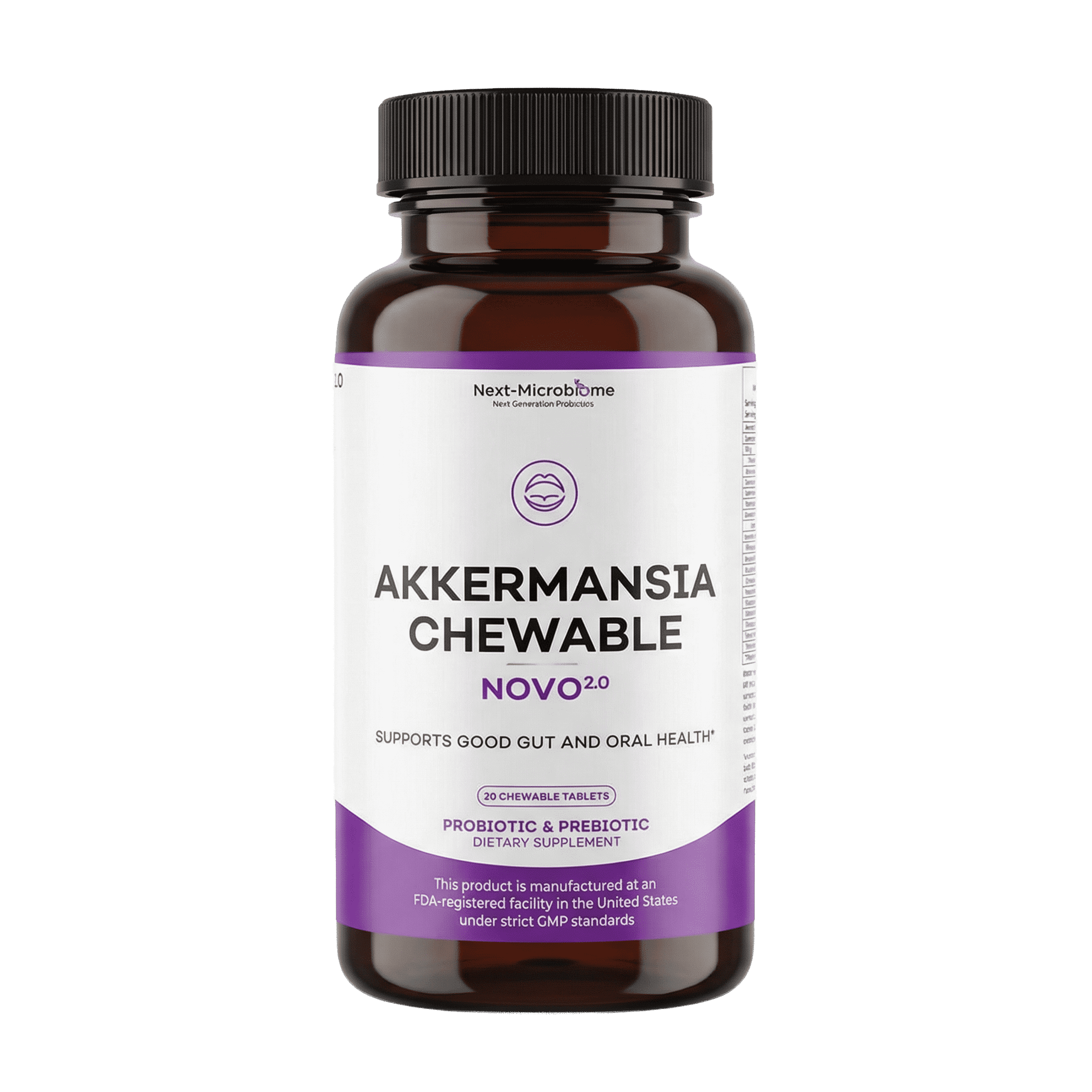
An Akkermansia chewable probiotic formula may be evaluated through this same oral-gut lens, especially when the goal is to support mucosal interaction, daily consistency, gut barrier resilience, and broader microbiome balance. The most responsible approach is to compare formulation quality, delivery format, and intended microbiome-support mechanisms rather than relying on chewable format alone.
For readers comparing pasteurized vs lyophilized probiotic formats, the key consideration is how each formulation relates to microbial viability, stability, delivery quality, safety, and the intended microbiome-support mechanism rather than assuming one format is universally better.
Incorporating probiotic-rich foods like yogurt, kefir, and sauerkraut into your diet can promote a healthy gut microbiome.
The Role of Prebiotics
Prebiotics are a type of fiber that serves as food for probiotics, helping them thrive and multiply in the gut. By consuming prebiotic-rich foods such as bananas, onions, garlic, and asparagus, you can support the growth of beneficial bacteria in your digestive system. This, in turn, can enhance gut health and overall well-being.
Optimizing Digestive Wellness
By incorporating Akkermansia, probiotics, and prebiotics into your diet, you can create an optimal environment for a diverse, healthy gut microbiome. This balance of beneficial bacteria can help improve digestion, boost immune function, and even impact mental health. Research exploring clostridium butyricum benefits highlights its role as a butyrate-producing probiotic strain studied for supporting gut barrier integrity, microbial balance, and immune regulation. Prioritizing gut health is key to overall wellness.
In that context, a metabolic support probiotic is best understood as one that complements gut barrier health, microbial balance, and butyrate-related signaling rather than acting as a stand-alone shortcut.

FAQ:
1. Can antibiotics disrupt good gut bacteria, and what helps afterward?
Yes. Antibiotics can reduce beneficial microbes along with harmful ones, which is one reason digestion may feel different during or after treatment. Cleveland Clinic notes that some people recover naturally, while others may benefit from extra support such as prebiotics or probiotics. NCCIH also reports that using probiotics with antibiotics appears safe for most people, except those who are very weak or have poorly functioning immune systems, and some evidence suggests probiotics may help reduce the risk of certain antibiotic-associated diarrheas.
Scientific Reference:
https://my.clevelandclinic.org/health/body/25201-gut-microbiome
https://www.nccih.nih.gov/health/probiotics-usefulness-and-safety
https://ods.od.nih.gov/factsheets/Probiotics-HealthProfessional/
2. What foods are best for increasing good gut bacteria and microbiome diversity?
A strong foundation usually starts with a varied, plant-rich diet. Cleveland Clinic recommends a variety of whole foods such as whole grains, vegetables, and fruits because they provide fiber for gut microbes, while Harvard and Johns Hopkins note that fermented foods like yogurt, kefir, kimchi, and sauerkraut may also support a healthier microbiome. In practice, food variety matters because it helps create a better environment for beneficial bacteria, and targeted probiotics or prebiotics can complement that foundation rather than replace it.
Scientific Reference:
https://my.clevelandclinic.org/health/body/25201-gut-microbiome
https://www.health.harvard.edu/blog/how-and-why-to-fit-more-fiber-and-fermented-food-into-your-meals-202404263036
https://podcasts.hopkinsmedicine.org/can-a-plant-based-diet-improve-your-gut-microbiome-elizabeth-tracey-reports/
Written by Ali Rıza Akın
Microbiome Scientist, Author & Founder of Next-Microbiome
Ali Rıza Akın is a microbiome scientist with nearly 30 years of experience in translational biotechnology, systems biology, and applied microbiome research, spanning discovery, preclinical development, and clinical-stage translation.
His work focuses on how microbial ecosystems interact with human physiology, including:
-
Gut barrier function and intestinal permeability
-
Mucus-associated microbiota (Akkermansia-related systems)
-
Oral–gut microbiome axis
-
Short-chain fatty acids (SCFAs) and metabolic signaling
-
Circadian rhythm–microbiome interactions
-
Clinical Research Contributions
He has contributed to multiple clinical-stage microbiome programs, supporting bacterial strain discovery, optimization, and formulation design across different therapeutic areas, including:
Active Ulcerative Colitis (Inflammatory Bowel Disease)
Hyperoxaluria (Oxalate Metabolism Disorder)
Microbiome-driven gut health and inflammatory conditions
These studies were part of broader clinical development programs evaluating microbiome-based approaches. His contributions focused on the early-stage scientific and translational pipeline, including strain discovery, functional optimization, and multi-strain formulation design.
Scientific Contributions:
Ali Rıza Akın is the discoverer of Christensenella californii, a bacterial species associated with microbiome diversity and metabolic health.
He is a contributing author to scientific publications and Bacterial Therapy of Cancer (Springer), and the author of Bakterin Kadar Yaşa: İçimizdeki Evren: Mikrobiyotamız.
Approach:
His work emphasizes evidence-based microbiome science, long-term safety, and a systems-based understanding of how microbes influence human health.
Why Gut Microbiome Health Matters for Digestion, Immunity, and Brain-Gut Balance
How Digestive Probiotics May Help Reduce Bloating and Support Gut Lining Health
Related Posts

Why Do You Wake Up at 3 A.M.? Gut, Cortisol, Blood Sugar, and Sleep Recovery

Can Gut Health Affect Sleep? How the Microbiome May Shape Rest and Recovery

Ozempic Plateau? What Your Gut Microbiome May Be Telling You About Slower Weight Loss

Akkermansia vs Ozempic: How Gut Microbiome Support May Influence GLP-1 and Digestion

GLP-1 Side Effects: How to Ease Bloating, Constipation, and Gut Issues Naturally

Best Probiotic for Leaky Gut? Why Gut Barrier Support Differs From Digestive Probiotics

Can You Support Akkermansia Naturally, or Are Supplements Needed?
