

Cortisol and the Gut Microbiome: Why Stress Becomes a Destructive Loop
Quick Answer
Research suggests the gut microbiome and your main stress system, the HPA axis, influence each other, so gut health may play a role in how your body produces and clears cortisol. Most of the direct cause-and-effect evidence so far comes from animal studies, with a smaller but growing set of human trials, so the microbiome is best understood as one contributor to stress and sleep rather than the master switch. In practice, the habits that build a resilient microbiome, such as fiber, regular sleep and meal timing, morning light, and stress management, are the same ones linked to steadier cortisol. A supplement like Akkermansia Chewable may support the gut barrier as part of that broader routine, not as a standalone fix for stress.
What the research points to:
-
Gut bacteria help regulate the HPA axis, the loop that controls cortisol. Animal evidence is strong here; human evidence is still emerging.
-
Chronic stress can raise gut permeability and shift bacterial balance, which may feed back into inflammation.
-
Short-chain fatty acids from fiber-fermenting bacteria are a plausible calming signal, studied mostly in animals so far.
-
Circadian rhythm ties it together, since cortisol, sleep, and gut microbes all follow a daily clock.
The HPA Axis: Where Cortisol Actually Comes From
Cortisol is produced by your stress-response system, known as the HPA axis. The signal starts in the brain, not the gut. The hypothalamus releases CRH, the pituitary responds by releasing ACTH, and the adrenal glands then release cortisol. This system evolved to handle short bursts of stress, not the steady, low-grade pressure of modern life.
So where does the gut come in? The microbiome does not create cortisol, but research suggests it helps set how reactive this system is. The clearest evidence comes from animal work. Mice raised germ-free, with no gut bacteria, show exaggerated HPA responses to stress, and this can be partly normalized by introducing specific bacteria such as Bifidobacterium (Dinan and Cryan, 2012). Human data are still emerging, so a fair summary is that gut health appears to influence stress sensitivity rather than controlling cortisol outright.

How Stress Affects the Gut
Stress does not act on the gut through cortisol alone. The stress response is a package: cortisol from the HPA axis, plus faster-acting signals from the autonomic nervous system and the immune system. Together, and over time, these can affect the gut lining and its bacterial balance. Cortisol is part of the story, not the whole mechanism, so it is more accurate to talk about stress here than to pin every effect on one hormone.
What research associates with ongoing stress includes shifts in bacterial balance, including lower levels of some beneficial groups, and greater intestinal permeability, sometimes called leaky gut, which may let bacterial fragments reach the bloodstream and trigger low-grade immune activation. In healthy people this permeability link is real but modest, and the human evidence is still being mapped out (La Torre et al., 2023).
This is also where a popular claim needs correcting. It is true that most of the body's serotonin is made in the gut, but that gut serotonin does not cross into the brain, and it is not the source of the melatonin that helps you sleep. Instead, the microbiome appears to influence mood and sleep indirectly, mainly by shaping the supply of tryptophan, the raw material the brain uses to make its own serotonin and, later, melatonin, and by producing signaling molecules such as short-chain fatty acids (Agus et al., 2018). The takeaway is that the gut and stress talk to each other in both directions, but the pathway is more layered than "cortisol lowers serotonin, so you cannot sleep."
SCFAs: The Bacterial Molecules Behind the Gut-Stress Link
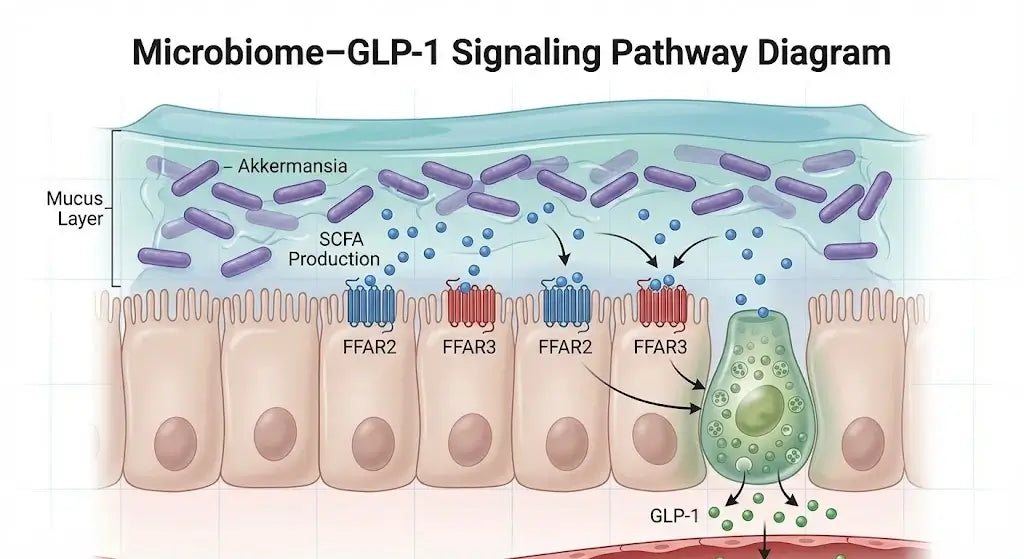
When gut bacteria ferment fiber, they produce short-chain fatty acids, or SCFAs, mainly butyrate, propionate, and acetate. These are among the most studied ways gut bacteria may influence the rest of the body, including the stress and sleep systems. SCFAs serve as the main fuel for the cells lining the colon, which supports the gut barrier. They help regulate inflammation, and they act as signals to the brain and nervous system, including through the vagus nerve.
The direct link to sleep and cortisol is promising but still early. In rodents, butyrate given before the rest period increased non-REM, or deep, sleep in the hours afterward, which suggests SCFAs are one of the bacterial signals that can promote sleep (Szentirmai et al., 2019). That is animal evidence, so it points to a mechanism rather than a guaranteed effect in people. The practical point holds either way. When fiber intake is low, SCFA production drops, and diets that feed SCFA-producing bacteria are consistently associated with better gut and metabolic health.

Cortisol, Circadian Rhythm, and Timing
Two separate clocks matter here, and it helps to keep them apart. First, your own circadian physiology. In humans, cortisol follows a daily rhythm. It rises to a peak shortly after waking, the cortisol awakening response, falls through the day, and reaches its low point at night. This pattern is driven by your central body clock, which is set mainly by light. Morning light exposure and consistent sleep and wake times are the best-established ways to keep this rhythm on track.
Second, the gut microbiome. Gut bacteria also shift in a roughly 24-hour pattern, rising and falling in step with when you eat and sleep. Most of the detailed cause-and-effect work here is in animals. In mice, the composition and output of the microbiome oscillate across the day and interact with the host's clock genes (Leone et al., 2015), and human reviews describe a similar two-way relationship between sleep, circadian timing, and gut bacteria (Matenchuk et al., 2020).
When these rhythms fall out of sync, through late eating, night shifts, or screen light at night, the result can be poorly timed cortisol, lower melatonin at night, and shallower sleep. So circadian habits are a lever that works on both clocks at once.
A Note on the Oral-Gut Connection
The mouth is the entry point to the gut, and the health of the oral microbiome is linked to inflammation elsewhere in the body. Ongoing gum inflammation, for example, is associated with higher systemic inflammatory markers, which is one reason oral health is worth taking seriously as part of a whole-body picture.
It is fair to say a chewable engages the mouth and upper digestive tract, and some people simply prefer chewing to swallowing a capsule. What the current evidence does not support is the stronger claim that a chewable works faster than a capsule for mood or sleep, or that it delivers melatonin-free sleep. Those go beyond what has been shown, so we have left them out.
The Stress and Gut Loop, in Plain Terms
Put simply, stress and gut health can feed into each other. Ongoing stress activates the HPA axis and raises cortisol. Over time, the broader stress response can shift bacterial balance and affect the gut barrier. A less diverse, more inflamed gut tends to produce fewer SCFAs, which are some of the calming, barrier-supporting signals your body relies on. Weaker gut signaling and higher inflammation can then make the stress system more reactive, and disrupted sleep feeds back into the next day's cortisol.
The useful part of this picture is that it is a loop, not a one-way street. That means there are several places to step in, and you do not have to fix everything at once to start shifting the pattern.
Practical Ways to Support the Stress-Gut Balance
None of these are quick fixes, and none replace medical care if stress or sleep problems are serious. But each is low-risk and supported by the broader research on circadian health, the gut microbiome, or both.
-
Get morning light. Natural light within an hour or so of waking helps anchor your cortisol rhythm and central clock (Duffy and Wright, 2005).
-
Keep a consistent eating window. Eating within a roughly 10 to 12 hour daytime window, rather than grazing late into the night, helps align both your metabolic rhythm and the daily pattern of your gut bacteria. Much of the mechanistic work here is in animals, but the habit is sensible and low-risk (Zarrinpar et al., 2014).
-
Feed your SCFA-producing bacteria. Fiber, resistant starch, and a wide range of plants give gut bacteria the raw material to make short-chain fatty acids.
-
Protect your sleep. Even short-term sleep loss has been shown to reduce gut bacterial diversity in healthy people, so regular sleep is part of gut care, not separate from it (Karl et al., 2023).
-
Reduce bright and blue light at night, which helps melatonin rise on schedule and supports the natural drop in cortisol before bed.
-
Manage stress directly. Slow breathing, movement, and time outdoors all help regulate the nervous system that sits upstream of both cortisol and the gut.
Together these support your stress and gut systems through everyday biology. They work gradually, and consistency matters more than intensity.
Microbiome Tools That May Support Stress and Sleep
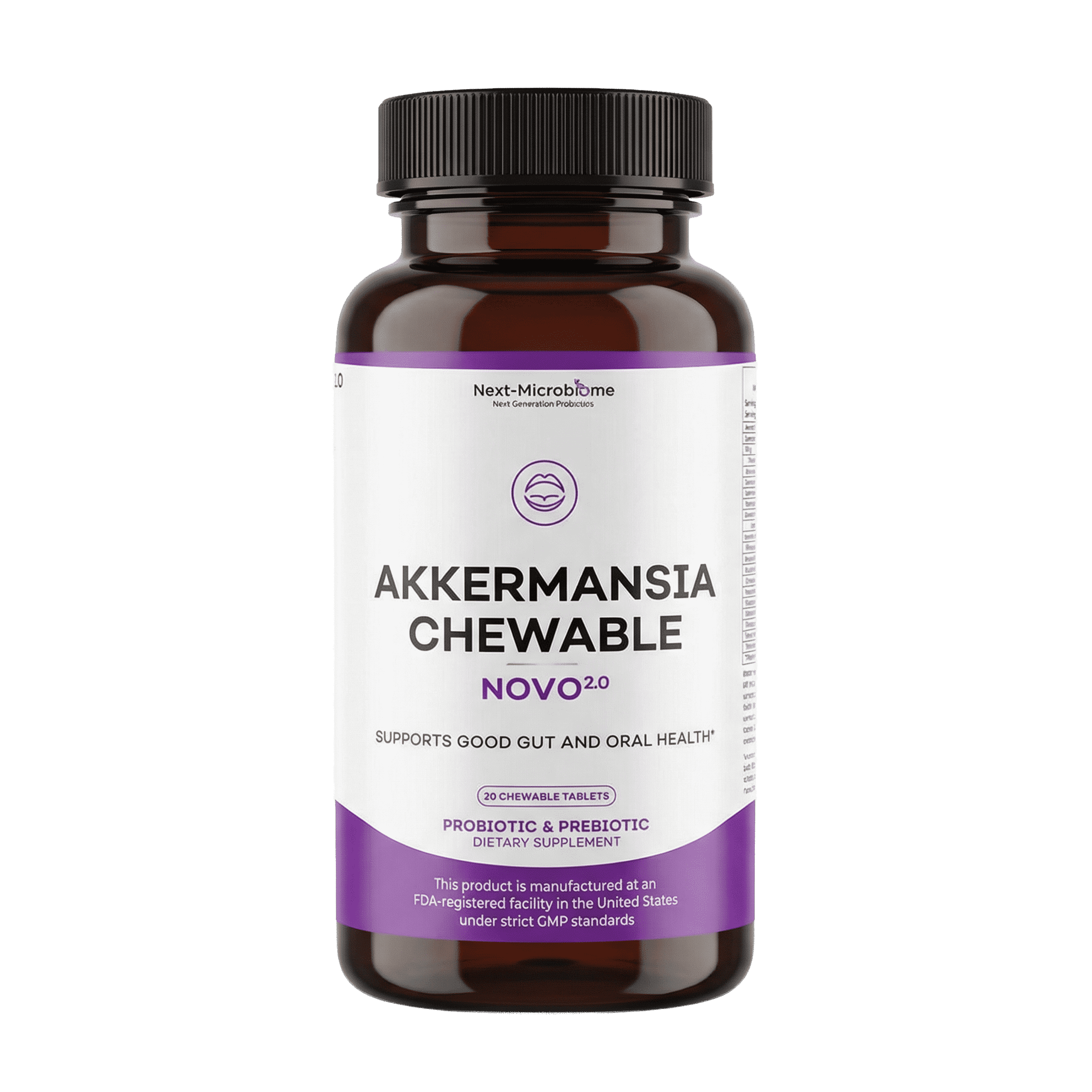
Akkermansia Chewable, oral and gut microbiome support. Formulated with Akkermansia muciniphila, this chewable is designed to support the gut barrier and microbial diversity as part of a broader routine. In animal studies, Akkermansia muciniphila supports the mucus layer and gut barrier (Everard et al., 2013), and a small early human study found it was well tolerated with favorable metabolic signals (Depommier et al., 2019). Think of it as gut-barrier support, not a stress or sleep treatment.
Sleepy-Biome, circadian and sleep support. Formulated to support natural cortisol timing and the body's own sleep rhythm without added melatonin.
Availability can change, so please confirm current stock on the product page before ordering.
INTERNAL LINKS
Cortisol & Gut Microbiome: The Hidden Stress Loop Explained
Stress, Gut–Brain Axis & Sleep: Microbiome Disruption
Cortisol, Circadian Rhythm & Microbial Timing Explained
SCFAs & Stress Recovery: Restore Gut, Calm HPA Axis
Cortisol, Cravings & GLP-1: How Stress Hijacks Appetite
Cortisol, Stress, and the Gut Microbiome: Common Questions Answered
1. Can gut bacteria really affect cortisol levels?
Research suggests they can influence it. The microbiome helps set how reactive the HPA axis is, the system that produces cortisol. Much of the clearest evidence is from animal studies, with human research still developing, so the effect is best seen as one factor among several.
2. Why does stress affect my digestion so quickly?
The gut and brain are directly connected through the nervous system, including the vagus nerve, so stress signals reach the gut fast. The stress response as a whole, not cortisol alone, can affect motility, comfort, and appetite.
3. Does stress affect my sleep even when I feel exhausted?
It can. A stress response that stays switched on into the evening can leave you feeling tired but wired, making it harder to fall or stay asleep despite being worn out.
4. Why do I crave more when I am stressed?
Stress shifts appetite and reward signaling, which can push cravings toward quick energy and comfort foods. Gut bacteria and their metabolites are part of appetite signaling, though the exact links in humans are still being studied.
5. How long before I notice a difference?
This varies from person to person and depends on the whole routine, not one supplement. Circadian and sleep habits can shift how you feel within a couple of weeks, while microbiome changes tend to build more gradually. There is no fixed timeline that applies to everyone.
6. Can improving my circadian rhythm lower cortisol naturally?
This is one of the better-supported levers. Morning light, consistent sleep and wake times, and reducing bright light at night all help keep cortisol on its natural daily curve.
7. Do SCFA-producing bacteria help with stress?
Possibly. Short-chain fatty acids like butyrate are among the signals gut bacteria use to communicate with the brain, and in animal studies butyrate promoted deep sleep. That points to a mechanism rather than a guaranteed effect in people, so the practical move is to feed those bacteria with fiber.
Scientific References:
-
Dinan TG, Cryan JF.
Regulation of the stress response by the gut microbiota: implications for psychoneuroendocrinology
Psychoneuroendocrinology 2012;37(9):1369-1378
DOI (Review; evidence largely germ-free animal models)
-
La Torre D, Van Oudenhove L, Vanuytsel T, Verbeke K.
Psychosocial stress-induced intestinal permeability in healthy humans: what is the evidence?
Neurobiology of Stress 2023;27:100579
DOI (Human review)
-
Agus A, Planchais J, Sokol H.
Gut microbiota regulation of tryptophan metabolism in health and disease.
Cell Host & Microbe 2018;23(6):716-724
DOI (Review; basis for the serotonin and blood-brain-barrier correction)
-
Szentirmai E, Millican NS, Massie AR, Kapas L.
Butyrate, a metabolite of intestinal bacteria, enhances sleep
Scientific Reports 2019;9:7035
DOI (Animal study; non-REM sleep in rodents)
-
Leone V, Gibbons SM, Martinez K, et al.
Effects of diurnal variation of gut microbes and high-fat feeding on host circadian clock function and metabolism
Cell Host & Microbe 2015;17(5):681-689
DOI (Animal study)
-
Matenchuk BA, Mandhane PJ, Kozyrskyj AL.
Sleep, circadian rhythm, and gut microbiota
Sleep Medicine Reviews. 2020;53:101340
DOI (Human review)
-
Duffy JF, Wright KP Jr.
Entrainment of the human circadian system by light
Journal of Biological Rhythms. 2005;20(4):326-338
DOI (Human physiology)
-
Zarrinpar A, Chaix A, Yooseph S, Panda S.
Diet and feeding pattern affect the diurnal dynamics of the gut microbiome
Cell Metabolism 2014;20(6):1006-1017
DOI (Animal study)
-
Karl JP, Whitney CC, Wilson MA, et al.
Severe, short-term sleep restriction reduces gut microbiota community richness but does not alter intestinal permeability in healthy young men
Scientific Reports. 2023;13:213
DOI (Human study)
-
Everard A, Belzer C, Geurts L, et al.
Cross-talk between Akkermansia muciniphila and intestinal epithelium controls diet-induced obesity
Proc Natl Acad Sci USA 2013;110(22):9066-9071
DOI (Animal study)
-
Depommier C, Everard A, Druart C, et al.
Supplementation with Akkermansia muciniphila in overweight and obese human volunteers: a proof-of-concept exploratory study
Nature Medicine. 2019;25:1096-1103
DOI (Small human study)
-
Psychological Stress, Intestinal Barrier Dysfunctions, and Autoimmune Disorders: An Overview
Frontiers in Immunology 2020;11:1823
DOI (Review)

Written by Ali Rıza Akın
Microbiome Scientist, Author & Founder of Next-Microbiome
Ali Rıza Akın is a microbiome scientist with nearly 30 years of experience in translational biotechnology, systems biology, and applied microbiome research, spanning discovery, preclinical development, and clinical-stage translation.
His work focuses on how microbial ecosystems interact with human physiology, including:
-
Gut barrier function and intestinal permeability
-
Mucus-associated microbiota (Akkermansia-related systems)
-
Oral–gut microbiome axis
-
Short-chain fatty acids (SCFAs) and metabolic signaling
-
Circadian rhythm–microbiome interactions
-
Clinical Research Contributions
He has contributed to multiple clinical-stage microbiome programs, supporting bacterial strain discovery, optimization, and formulation design across different therapeutic areas, including:
Active Ulcerative Colitis (Inflammatory Bowel Disease)
Hyperoxaluria (Oxalate Metabolism Disorder)
Microbiome-driven gut health and inflammatory conditions
These studies were part of broader clinical development programs evaluating microbiome-based approaches. His contributions focused on the early-stage scientific and translational pipeline, including strain discovery, functional optimization, and multi-strain formulation design.
Scientific Contributions:
Ali Rıza Akın is the discoverer of Christensenella californii, a bacterial species associated with microbiome diversity and metabolic health.
He is a contributing author to scientific publications and Bacterial Therapy of Cancer (Springer), and the author of Bakterin Kadar Yaşa: İçimizdeki Evren: Mikrobiyotamız.
Approach:
His work emphasizes evidence-based microbiome science, long-term safety, and a systems-based understanding of how microbes influence human health.
Medical Disclaimer
This content is for educational and informational purposes only and is not medical advice. It is not intended to diagnose, treat, cure, or prevent any disease. Dietary supplements are not a substitute for prescription medication or professional care. Consult a qualified healthcare professional before making changes to your diet, supplement routine, or treatment, especially if you are pregnant, nursing, managing a health condition, or taking medication.
Last reviewed: July 2026
How Microbiome-Based Support Helps Restore Sleep Naturally Without Melatonin
How Stress Disrupts the Gut-Brain Axis and Affects Sleep
Related Posts

Why Do You Wake Up at 3 A.M.? Gut, Cortisol and Blood Sugar

Can Gut Health Affect Sleep? How the Microbiome May Shape Rest and Recovery

Ozempic Plateau? What Your Gut Microbiome May Be Telling You About Slower Weight Loss

Akkermansia vs Ozempic: Why Gut Balance May Shape GLP-1, Digestion, and Results

GLP-1 Gut Side Effects: Why Bloating and Constipation Happen and What May Help

Best Probiotic for Leaky Gut? Why Gut Barrier Support Differs From Digestive Probiotics

Can You Support Akkermansia Naturally, or Are Supplements Needed?