

How SCFAs Support Stress Recovery, Gut Integrity, and HPA Axis Balance
SCFAs & Stress Recovery: How Gut Molecules Help Heal Stress Damage
Stress doesn’t just rattle your mind — it shakes your biology.
Chronic stress often leads to gut barrier damage, microbial imbalance, inflammation, and disruption of the brain–gut axis.
But there’s a hidden remedy: short-chain fatty acids (SCFAs) — oils created by good gut bacteria when you eat fiber.
SCFAs don’t just feed the gut lining — they play central roles in calming the stress response, restoring gut integrity, and helping you return to deep sleep, balanced mood, and stable energy.
If you missed earlier posts, catch up here:
-
Cortisol & Gut Microbiome: The Hidden Stress Loop Explained
-
Stress, Gut–Brain Axis & Sleep: Microbiome Disruption
-
Cortisol, Circadian Rhythm & Microbial Timing Explained
-
Cortisol, Cravings & GLP-1: How Stress Hijacks Appetite
This fourth article examines how short-chain fatty acids such as butyrate, acetate, and propionate contribute to recovery, tissue repair, and metabolic regulation following stress, forming the biological foundation of microbiome-based sleep support strategies.
Anyone researching an Akkermansia muciniphila supplement should first understand how Akkermansia fits into the broader SCFA and stress-recovery pathway. Akkermansia is most relevant to mucus-layer integrity, gut barrier resilience, inflammatory balance, and the microbial environment that helps SCFA-producing bacteria support gut-brain recovery.
Frequently Asked Questions — SCFAs, Stress Biology & Gut Repair:
1. What exactly are SCFAs, and why are they essential for stress recovery?
SCFAs — acetate, propionate, and butyrate — are healing molecules produced when beneficial gut bacteria ferment fiber. They repair the gut barrier, regulate inflammation, support neurotransmitter production, and stabilize the HPA axis. When SCFA levels drop, stress becomes much harder to recover from.
2. How does chronic stress reduce SCFA production?
Stress weakens the gut lining, reduces SCFA-producing microbes, increases inflammation, and disrupts brain–gut signaling. This lowers butyrate, acetate, and propionate levels — worsening sleep, digestion, mood, and cortisol control.
3. Can SCFAs actually lower cortisol or calm the HPA axis?
Yes — clinical evidence shows SCFAs reduce the cortisol response to stress. They act as biological stabilizers, supporting HPA axis recovery and improving resilience.
4. Do SCFAs improve sleep quality?
Adequate SCFA production supports serotonin metabolism, endogenous melatonin regulation, vagal signaling, and inflammatory control — all of which are linked to improved sleep architecture and reduced nocturnal awakenings. For this reason, melatonin-free sleep support approaches prioritize reinforcing these biological pathways instead of externally overriding them.
5. Why do SCFAs help repair gut barrier damage after stress?
Butyrate is the primary fuel for colonocytes. It helps restore tight junctions, reduces immune activation, and supports gut barrier and intestinal lining health, helping interrupt the stress → inflammation → stress loop.
6. How long does it take to rebuild SCFA production?
With consistent fiber intake, circadian-aligned eating, and microbial diversity, SCFA levels typically begin improving in 2–4 weeks, with deeper recovery in 6–8 weeks.
7. Can supporting the oral–gut axis improve SCFA levels?
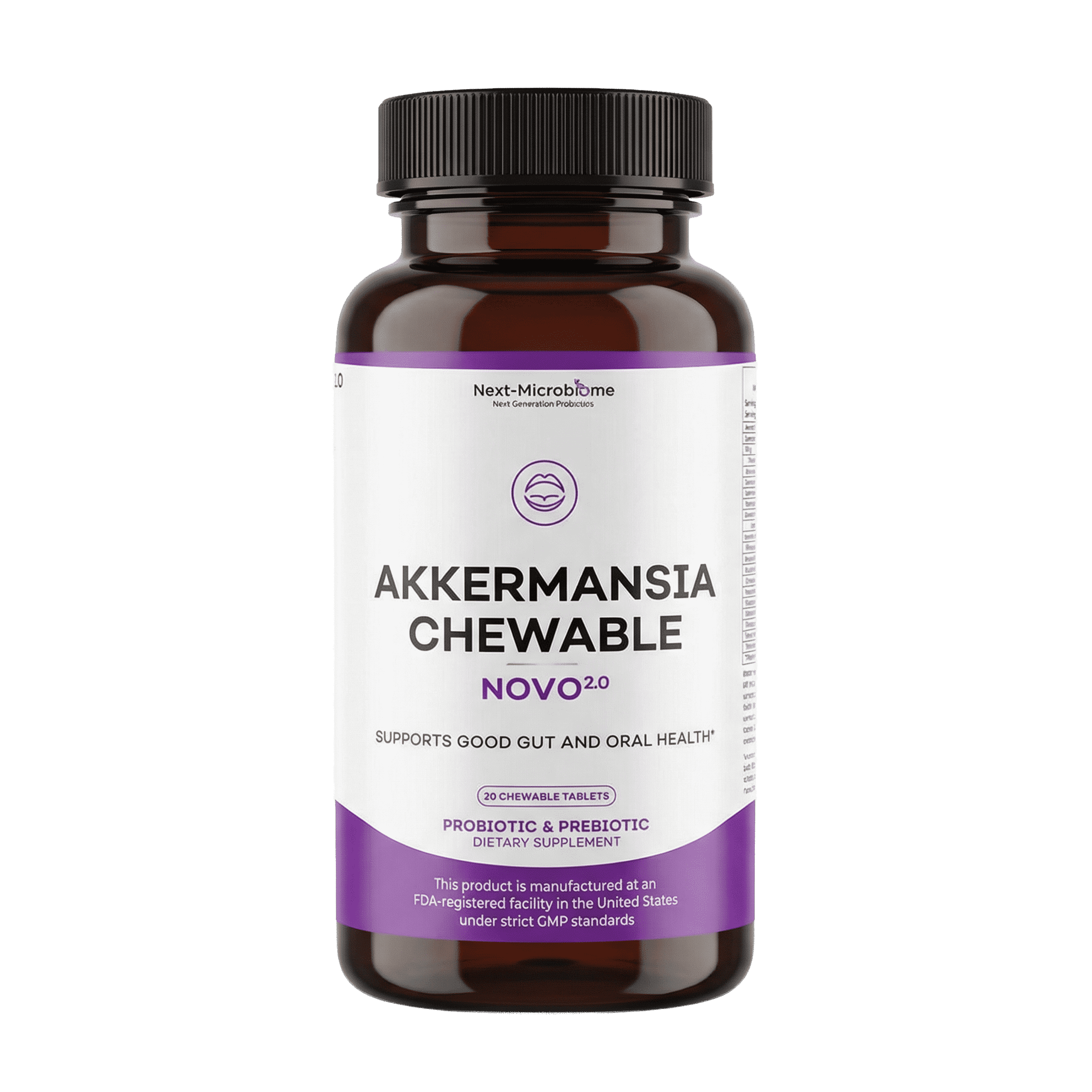
Yes — oral–gut synbiotics activate early immune and vagal pathways, allowing better microbial implantation and increased support for SCFA-producing bacteria. Akkermansia Chewable may enhance mucosal integrity and downstream SCFA ecology.
8. What are the first signs SCFA levels are improving?
Steadier energy, smoother digestion, calmer mood, deeper sleep, fewer early awakenings, and reduced inflammation — all signs of improved gut barrier function and SCFA rhythm.
9. How do SCFAs regulate inflammation during stress recovery?
SCFAs reduce pro-inflammatory cytokine production, strengthen gut barrier integrity, and modulate immune pathways, thereby stabilizing the inflammatory response triggered by chronic stress.
10. Can low SCFA levels cause cravings or emotional eating?
Yes — low butyrate disrupts dopamine regulation, increases cortisol reactivity, and destabilizes appetite hormones, leading to stress-driven cravings and emotional eating.
11. How do SCFAs influence the vagus nerve?
SCFAs activate vagal pathways that calm the nervous system, improve digestion, regulate heart-rate variability, and help restore parasympathetic balance after stress.
12. Are certain fibers better for rebuilding SCFA levels?
Yes — resistant starch, inulin, FOS, GOS, and polyphenol-rich fibers strongly increase butyrate production and support beneficial bacteria such as Faecalibacterium, Roseburia, and Eubacterium.
13. Can SCFAs help fix stress-induced gut motility issues?
Yes — SCFAs regulate intestinal movement, reduce spasms, improve motility balance, and restore the gut–brain rhythm disrupted by stress.
14. How do SCFAs support mood and emotional stability?
Butyrate influences the GABA system, serotonin pathways, and anti-inflammatory pathways that stabilize mood, reduce anxiety, and support emotional resilience.
15. Can SCFA support improve metabolic health during stress?
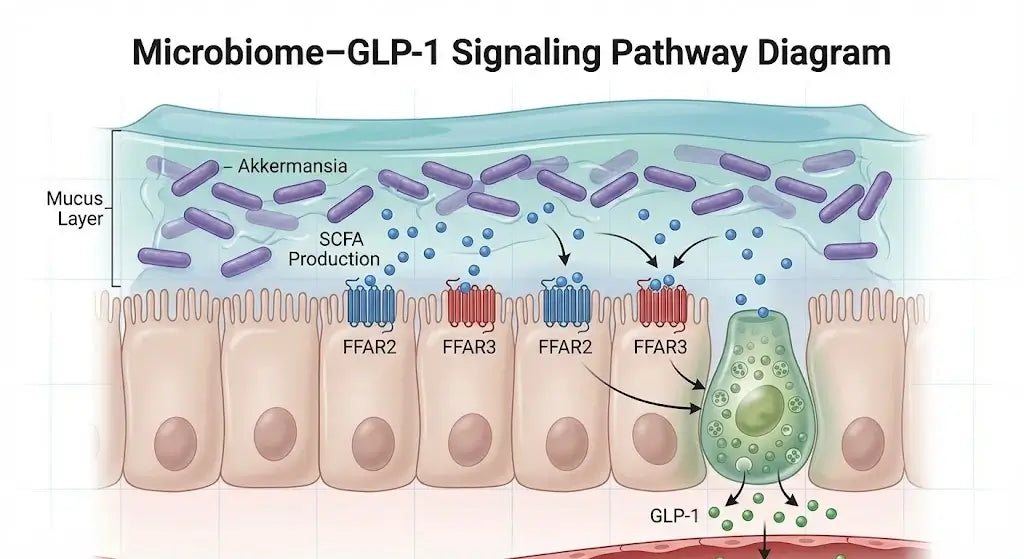
Yes — SCFAs enhance insulin sensitivity, reduce inflammation, and support GLP-1 and microbiome signaling, helping stabilize appetite and counteract stress-induced metabolic slowdown.
16. Do probiotics increase SCFA production?
Yes — especially strains that support butyrate-producing ecosystems. Oral–gut synbiotics paired with Akkermansia create a mucosal environment where SCFA producers thrive.
17. How long does it take to fully restore the SCFA–gut–brain axis?
Most people see early improvements within 2–4 weeks, but full restoration of gut barrier architecture, SCFA rhythm, and HPA axis stability takes 6–12 weeks depending on stress load and diet quality.
18. Can low SCFAs worsen nighttime anxiety or 2–3 AM awakenings?
Yes — insufficient SCFAs impair melatonin signaling, increase inflammation, elevate nighttime cortisol, and weaken vagal tone — all drivers of 2–3 AM wake-ups.
19. Are SCFAs involved in repairing stress-induced immune imbalance?
Absolutely — SCFAs reduce immune hyperactivation, support regulatory T-cell function, and restore immune tolerance disrupted by chronic stress.
20. What daily habits most effectively rebuild SCFAs after stress?
High-fiber meals, polyphenols, early eating windows, circadian rhythm alignment, stress reduction, and synbiotics containing Akkermansia + butyrate-supportive strains.

Reduced Akkermansia is among the most consistent microbial patterns associated with inflammation, metabolic dysfunction, and gut-barrier weakness. For a complete, science-based guide to restoring this keystone microbe, explore our Akkermansia Microbiome Guide.
1. What Are SCFAs and Why Do They Matter
SCFAs are small fatty-acid molecules (acetate, propionate, butyrate) produced by beneficial gut microbes when they ferment dietary fiber, resistant starch, and prebiotics. Frontiers+2ScienceDirect+2
These simple compounds are more than gut fuel: they act as signaling molecules throughout the body. SCFA receptors (FFAR2/FFAR3/GPR109a) are found in gut, immune, and nervous-system cells — so SCFAs influence immune response, metabolism, nerve signaling, and even brain function. Frontiers+1
SCFAs support:
-
Gut barrier integrity & tight-junction health Frontiers+1
-
Reduced inflammation & immune regulation PMC+1
-
Neuro-immune signaling via the gut–brain axis (vagus nerve, neurotransmitter synthesis) Frontiers+1
-
Stress resilience & normalized HPA axis response (cortisol, autonomic tone) PMC+1
Bottom line: SCFAs are molecular healers — they reverse many of the biological damages stress inflicts.
2. Stress, Gut Barrier Damage & the Role of SCFAs
When you’re under chronic stress:
-
Gut tight junctions become “leaky” — allowing endotoxins & immune triggers into circulation PMC+1
-
Microbial balance shifts: beneficial SCFA-producing bacteria decline, inflammation rises PMC+1
-
Immune activation increases — driving cortisol dysregulation, poor sleep, anxiety, fatigue PMC+1
That’s the biological loop: stress → gut leak → inflammation → more stress.
This is one reason readers exploring broader topics such as leaky gut and microbiome support often become interested in SCFA restoration, mucosal repair, and stress-related microbiome recovery.
SCFAs act as repair agents: they feed colonocytes (gut-lining cells), reinforce tight junctions, and prevent leakage. Frontiers+1
They also reduce inflammatory signals, restoring immune balance — which calms the HPA axis and prepares the body for recovery. PMC+1

3. SCFAs & HPA Axis Reset: Reducing Cortisol Overdrive
A key 2020 human trial showed that direct SCFA delivery to the colon significantly lowered cortisol response to acute stress (psychosocial stress) compared to placebo. PMC
This suggests SCFAs act as a natural buffer — calming the HPA axis, reducing overactive stress reactions, and making your stress response more stable and proportional.
In animals, SCFA supplementation restored stress-induced gut barrier damage, reduced neuroinflammation, and normalized behavior. PMC+1
In short: SCFAs help reset your biological stress thermostat.
4. Sleep, Microbiome & SCFAs: The Healing Triangle
Healthy SCFA levels support:
-
Balanced serotonin and GABA production (via microbial metabolism + immune-neural signaling) MDPI+1
-
Restored gut–brain axis, calming sympathetic overdrive, supporting vagus tone Frontiers+1
-
Reduced inflammation → fewer night awakenings, better deep-sleep cycles PLOS+1
Clinical and preclinical evidence links better sleep quality with higher microbial diversity and SCFA production. PLOS+2ScienceDirect+2
When SCFA production declines, gut–brain coordination may weaken, increasing vulnerability to sleep fragmentation and reduced deep-sleep quality. In this context, a gut-brain sleep formula is designed to support microbial signaling and restore circadian stability.
5. How to Rebuild SCFA Production & Restore Gut-Brain Health
Here’s a scientific, gut-first recovery plan:
-
Eat fiber-rich, SCFA-supportive foods: legumes, whole grains, vegetables, resistant starches, polyphenol-rich fruits. These feed SCFA-producing microbes.
PMC+2ScienceDirect+2. -
Maintain a consistent feeding window: align meals with circadian rhythm, avoid late-night eating (supports microbial timing)
-
Support oral–gut axis & microbial diversity: avoid antibiotics unless necessary, consider chewable synbiotics to reintroduce key microbes gently
-
Reduce stress load: chronic stress depletes SCFAs — stress management improves recovery
-
Prioritize sleep + circadian hygiene: good sleep supports microbial cycles — and vice versa
Repeat this consistently: over 4–8 weeks, you should notice:
-
calmer stress response
-
smoother digestion
-
better sleep onset & depth
-
more stable energy / better mood
Gentle Microbiome Supports
-
Akkermansia Chewable — supports mucosal integrity, microbial balance, may enhance SCFA ecology in gut.
-
Sleepy-Biome™ — designed to support microbial metabolism, SCFA pathways, and gut–brain axis recovery — without using melatonin.
These should be viewed as supportive tools, not quick fixes — best used alongside fiber-rich nutrition, gut-friendly habits, and circadian alignment.
For readers comparing pasteurized vs lyophilized probiotic formats, the key consideration is how each formulation relates to microbial stability, viability, delivery quality, safety, and its intended role in supporting mucosal integrity, SCFA ecology, and gut-brain recovery.
Why SCFA Science Matters — Not Just Wellness Hype
The role of SCFAs in gut health, metabolism, immune regulation, brain-gut signaling and circadian biology is one of the most robust findings in microbiome science. Frontiers+2Frontiers+2
Emerging 2024-2025 studies continue to confirm:
-
SCFAs support gut barrier integrity and reduce systemic inflammation ScienceDirect+1
-
Microbial metabolites modulate microglia and brain immune cells, influencing mood, stress resilience, and neuro-health SpringerLink+1
-
Dietary fiber and feeding timing directly affect SCFA production, circadian alignment, metabolic health, and sleep quality PMC+2MDPI+2.
This is not lifestyle fluff — it’s biology.
Written by Ali Rıza Akın
Microbiome Scientist, Author & Founder of Next-Microbiome
Ali Rıza Akın is a microbiome scientist with nearly 30 years of experience in translational biotechnology, systems biology, and applied microbiome research, spanning discovery, preclinical development, and clinical-stage translation.
His work focuses on how microbial ecosystems interact with human physiology, including:
-
Gut barrier function and intestinal permeability
-
Mucus-associated microbiota (Akkermansia-related systems)
-
Oral–gut microbiome axis
-
Short-chain fatty acids (SCFAs) and metabolic signaling
-
Circadian rhythm–microbiome interactions
-
Clinical Research Contributions
He has contributed to multiple clinical-stage microbiome programs, supporting bacterial strain discovery, optimization, and formulation design across different therapeutic areas, including:
Active Ulcerative Colitis (Inflammatory Bowel Disease)
Hyperoxaluria (Oxalate Metabolism Disorder)
Microbiome-driven gut health and inflammatory conditions
These studies were part of broader clinical development programs evaluating microbiome-based approaches. His contributions focused on the early-stage scientific and translational pipeline, including strain discovery, functional optimization, and multi-strain formulation design.
Scientific Contributions:
Ali Rıza Akın is the discoverer of Christensenella californii, a bacterial species associated with microbiome diversity and metabolic health.
He is a contributing author to scientific publications and Bacterial Therapy of Cancer (Springer), and the author of Bakterin Kadar Yaşa: İçimizdeki Evren: Mikrobiyotamız.
Approach:
His work emphasizes evidence-based microbiome science, long-term safety, and a systems-based understanding of how microbes influence human health.
All content is provided for educational purposes only and does not replace personalized medical advice. Readers should consult qualified healthcare professionals for individual health decisions.
Cortisol, Circadian Rhythm and the Microbiome Stress Loop Explained
Cortisol, Cravings, and GLP-1: How Stress Affects Appetite Signaling
Related Posts

Why Do You Wake Up at 3 A.M.? Gut, Cortisol and Blood Sugar

Can Gut Health Affect Sleep? How the Microbiome May Shape Rest and Recovery

Ozempic Plateau? What Your Gut Microbiome May Be Telling You About Slower Weight Loss

Akkermansia vs Ozempic: Why Gut Balance May Shape GLP-1, Digestion, and Results

GLP-1 Gut Side Effects: Why Bloating and Constipation Happen and What May Help

Best Probiotic for Leaky Gut? Why Gut Barrier Support Differs From Digestive Probiotics

Can You Support Akkermansia Naturally, or Are Supplements Needed?