

How to Increase Akkermansia Naturally With Foods, Fiber, and Daily Habits
Quick Answer:
How do you increase Akkermansia naturally? The most consistent way to support Akkermansia through diet is to eat more polyphenol-rich plants (especially grapes, cranberries, berries, cocoa, and green tea), feed short-chain fatty acid producers with a wide range of fibers and resistant starch, and cut back on added sugar, alcohol, and ultra-processed food. Most of the direct evidence linking these foods to higher Akkermansia comes from laboratory and animal studies, with human data still emerging, so treat them as sensible, low-risk habits rather than guaranteed fixes. Consistency over several weeks matters more than any single food.
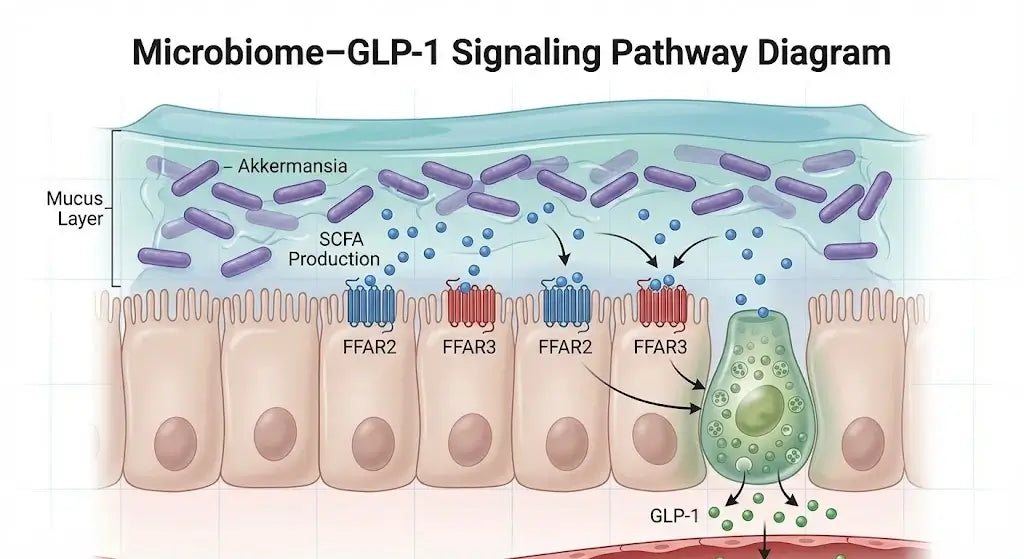
Akkermansia muciniphila lives in the mucus layer of the gut, where it helps maintain the intestinal barrier and supports a stable microbial environment. Its levels tend to fall with low-fiber diets, high sugar intake, certain medications, and ongoing stress, and lower levels have been associated with weaker barrier function and metabolic changes in several studies.
The encouraging part is that everyday diet and lifestyle choices appear to influence Akkermansia. Below is what the research currently supports, what is still preliminary, and how to put it into practice.
If you haven’t read the foundational overview yet, start with Blog 1:
How Akkermansia Supports Gut Health, Oral-Gut Balance, and Digestive Strength
For readers who want a broader foundation before focusing on Akkermansia-specific strategies, our gut health microbiome guide explains how microbial balance, diet, gut lining support, and daily habits work together.
And for symptoms and causes of low Akkermansia, see Blog 2:
What Causes Low Akkermansia and How Can It Be Restored Naturally?
1. Polyphenol-Rich Foods Studied in Akkermansia Research
Polyphenols are plant compounds found in colorful fruits, vegetables, cocoa, and tea. In a 2024 study published in the journal Antioxidants, grape polyphenols supported the growth of Akkermansia muciniphila in mice, apparently by lowering oxidative stress in the gut. Earlier animal studies using grape and cranberry polyphenols found similar increases. When researchers have looked at human data, the effect has been less consistent, so polyphenol-rich foods are best seen as a supportive daily habit rather than a proven way to raise Akkermansia on their own.
Polyphenol sources worth including regularly:
-
red and purple grapes
-
cranberries
-
blueberries and blackberries
-
pomegranate
-
cocoa
-
green tea

2. Human Milk Oligosaccharides (HMOs), Including 2'-FL
Human milk oligosaccharides are complex carbohydrates first identified in breast milk, where they help shape the infant gut microbiome. The most studied is 2'-fucosyllactose, or 2'-FL.
There is a mechanistic reason HMOs come up in Akkermansia discussions. In laboratory (in vitro) work modeling early-life conditions, Akkermansia muciniphila was able to grow on human milk and break down HMOs such as 2'-FL, because these sugars resemble the mucin glycans it normally feeds on (Kostopoulos et al., 2020). In plain terms, HMOs can act as a food source for Akkermansia.
It is worth being precise about what this does and does not show. This evidence comes from cell and culture studies, not from trials of 2'-FL supplements in adults, so HMOs are an interesting area to watch rather than an established way to raise Akkermansia. If you are considering an HMO supplement, treat it as experimental and speak with a clinician first.
3. Prebiotic Fibers: Inulin, FOS, and Resistant Starch
Prebiotic fibers are the parts of plant foods your own body cannot digest but your gut microbes can. Fermenting them produces short-chain fatty acids, including butyrate, which is an important fuel for the cells lining the colon and helps support the gut barrier.
The link to Akkermansia is mostly indirect. Feeding short-chain fatty acid producers helps maintain a healthy mucus layer, and a well-nourished, diverse microbial community, supported by cross-feeding between species, tends to create conditions where mucus-associated bacteria can do better. Resistant starch and inulin are reasonable additions on that basis, though the direct evidence tying any single fiber to higher Akkermansia in people is still limited.
Useful prebiotic sources:
-
inulin (chicory root, Jerusalem artichoke, onions, garlic)
-
FOS
-
resistant starch (cooked and cooled potatoes or rice, slightly green bananas, cooked and cooled legumes)
-
beta-glucans (oats, barley)
Add these gradually. A sudden jump in fermentable fiber can cause gas and bloating.
Foods and Habits That May Support Akkermansia
|
Category |
Examples |
Why it may help |
Evidence so far |
|---|---|---|---|
|
Polyphenol-rich foods |
Grapes, cranberries, berries, pomegranate, cocoa, green tea |
Plant compounds appear to shift the gut environment toward Akkermansia |
Mainly animal and lab studies; human results mixed |
|
Fiber-rich foods |
Legumes, oats, vegetables, whole grains |
Feed SCFA-producing microbes that support the mucus layer |
Consistent for SCFA and barrier support; indirect for Akkermansia |
|
Prebiotics |
Inulin, FOS, GOS, resistant starch |
Fuel beneficial fiber-fermenting bacteria |
Strong for microbiome support; specific Akkermansia data limited |
|
HMOs (2'-FL) |
Supplemental 2'-FL |
Can serve as a food source Akkermansia uses |
In vitro and early-life models only; not established in adults |
|
Lifestyle habits |
Regular meals, sleep, movement, stress management, lower sugar |
Support the overall gut environment and mucus integrity |
Associative; general health benefit, modest direct effect |
4. SCFA-Producing Probiotics (Clostridium butyricum)
Clostridium butyricum is a butyrate-producing bacterium. Butyrate is a short-chain fatty acid that fuels colon cells, supports the gut barrier, and helps regulate inflammation, which is why C. butyricum is often discussed alongside Akkermansia. Much of the direct evidence that C. butyricum strengthens the gut lining comes from animal models, so it is fair to describe it as promising rather than settled in humans.
The reasoning is straightforward: when short-chain fatty acid production rises, the mucosal environment tends to become more favorable for mucus-associated bacteria like Akkermansia. Short-chain fatty acids are also part of why the gut microbiome comes up in conversations about metabolic and appetite signaling more broadly.
5. Reduce What Harms Akkermansia
To increase Akkermansia, you must also remove what destroys it:
Avoid or minimize:
-
high-sugar diets
-
ultra-processed foods
-
low-fiber diets
-
chronic stress
-
alcohol overuse
-
repeated antibiotic courses
These factors weaken mucin integrity and can leave Akkermansia with less to feed on. Over time, a thinner mucus layer may also affect gut barrier permeability, which is one reason diet quality, fiber intake, and inflammation control matter when you are trying to rebuild an Akkermansia-supportive environment. If you are already noticing signs of low Akkermansia, these habits are the ones worth addressing first.
6. The Oral-Gut Connection
The gut microbiome does not begin in the gut. The mouth is the entry point to the digestive tract, and the oral microbiome can influence conditions further downstream, including inflammation in the upper digestive tract. This is one reason oral and gut health are increasingly discussed together.
The practical takeaways are low-risk: look after your oral health, since chronic oral inflammation is associated with a wider inflammatory burden. How much any particular product or delivery format changes Akkermansia specifically is not established, so it is fair to treat the oral-gut link as a promising area of research rather than a proven route to higher Akkermansia.
7. Where a Supplement Fits
Food and lifestyle come first. If you want to add a supplement on top of those habits, the most sensible options are formulated to support the same pathways discussed above: polyphenols, prebiotic fibers such as inulin or FOS, short-chain fatty acid producers, and formats designed for the oral-gut route.
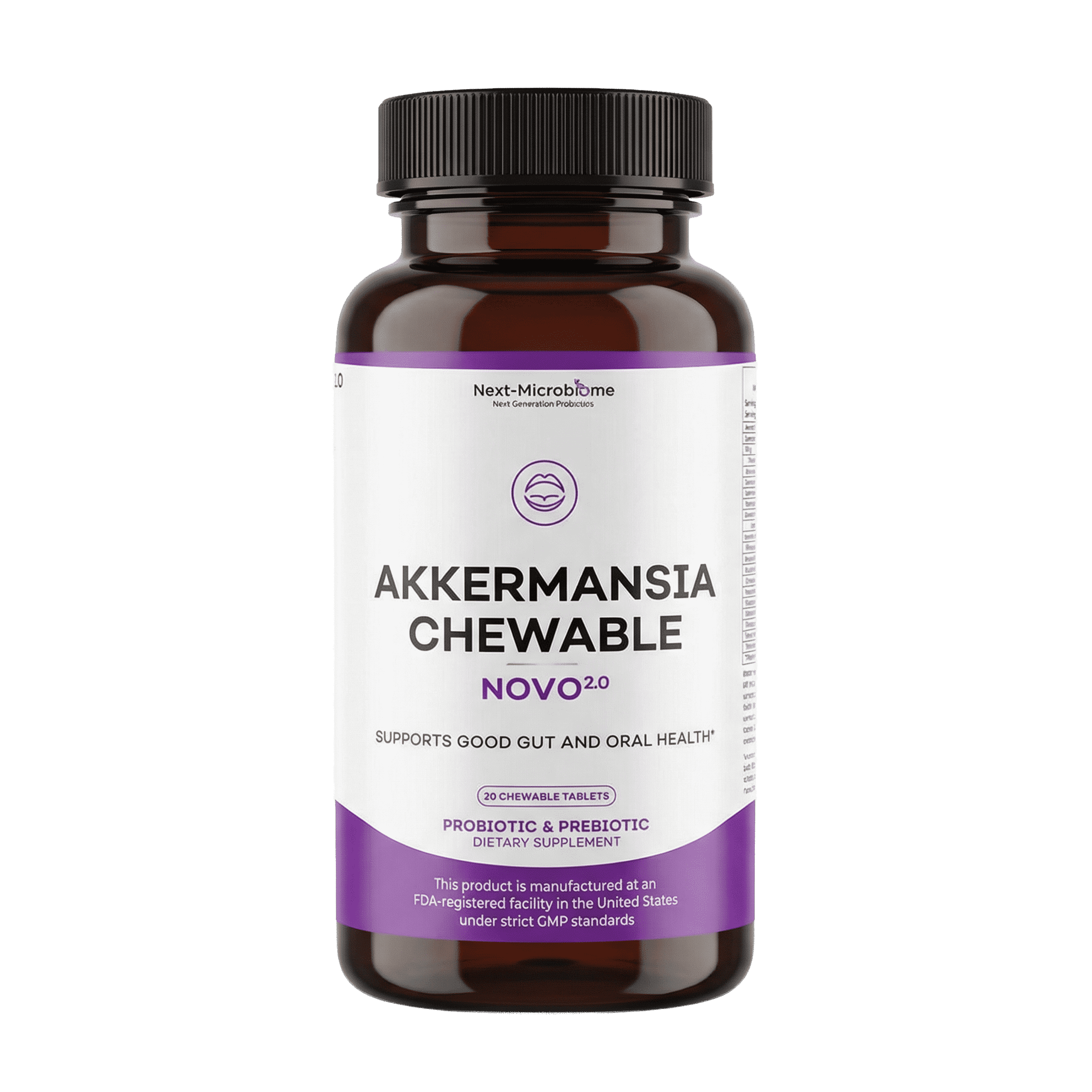
Next-Microbiome makes options in this category, including Akkermansia Chewable and Boost Synergy. Treat any supplement as a complement to diet, not a replacement, and check with a clinician if you are pregnant, nursing, managing a health condition, or taking medication.
Frequently Asked Questions
1. What foods are most associated with higher Akkermansia?
Polyphenol-rich foods are the most studied. Grapes, cranberries, berries, pomegranate, cocoa, and green tea all contain compounds linked to Akkermansia support, mainly in laboratory and animal studies. Colorful vegetables and other plants add fiber that feeds related beneficial microbes.
2. Do prebiotic fibers like inulin and FOS help?
They can help indirectly. Inulin, FOS, and resistant starch feed fiber-fermenting microbes that produce short-chain fatty acids, and a well-fed, diverse fiber community tends to create conditions where mucus-associated bacteria like Akkermansia do better. Increase fiber gradually to reduce bloating.
3. Why are polyphenols often recommended for Akkermansia?
Polyphenols appear to shift the gut environment in ways that favor Akkermansia, partly by reducing oxidative stress in the gut. Most of this evidence comes from animal work, and human results have been less consistent, so polyphenol-rich foods are best viewed as a supportive habit rather than a guaranteed lever.
4. Does cutting back on sugar make a difference?
It may. Diets high in added sugar and low in fiber are associated with a thinner gut mucus layer and less favorable microbial balance, which works against mucus-loving bacteria. Reducing added sugar is a sensible step alongside eating more fiber and polyphenols.
5. Does the variety of fiber matter, not just the amount?
Variety appears to matter. Different fibers feed different microbes, so a mix of vegetables, legumes, whole grains, and resistant starch supports a broader community of short-chain fatty acid producers, which helps maintain the mucosal environment Akkermansia depends on.
6. Can diet alone raise Akkermansia, without a supplement?
For many people, diet and lifestyle changes are a reasonable first approach. Polyphenols, diverse fiber, and lower sugar intake have all been associated with more favorable Akkermansia levels. Individual responses vary, and a supplement is one option some people consider alongside, not instead of, these habits.
7. Does stress affect Akkermansia?
It can. Ongoing stress and elevated cortisol have been linked to reduced mucus production and more gut inflammation, both of which can work against Akkermansia. Managing stress through sleep, movement, and recovery is a supportive, low-risk habit.
8. How do short-chain fatty acids relate to Akkermansia?
Short-chain fatty acids, especially butyrate, are fuel for the cells lining the colon and help support the gut barrier. When fiber fermentation produces more of them, the mucosal environment tends to become more favorable for Akkermansia, which is why fiber and SCFA-supporting foods are often discussed together.
Fasting and exercise are sometimes mentioned as ways to raise Akkermansia. The fasting evidence comes largely from animal studies, where time-restricted eating has been associated with higher Akkermansia; human data are limited, so intermittent fasting is not a reliable lever and is not right for everyone. Regular physical activity supports overall metabolic and gut health, and some studies link it to a more favorable microbial profile, though the specific effect on Akkermansia in people is modest and not fully established. Both are worth doing for general health, with realistic expectations about their direct impact on any single microbe.
For a full scientific roadmap to GLP-1, SCFAs, cravings, stress biology, and metabolic repair, explore the GLP-1 & Microbiome Hub.
Related Blogs:
Akkermansia: The Missing Microbe for Gut Health, Oral–Gut Balance & Digestive Strength
Low Akkermansia muciniphila: Causes, Symptoms & How to Restore It Naturally
How to Increase Akkermansia Naturally With Foods, Polyphenols, HMOs & Prebiotics
Buy Akkermansia: What to Know Before Choosing an Akkermansia Supplement
Akkermansia & Gut Lining Health: Why This Next-Generation Microbe Matters
Scientific References:
-
Van Buiten CB, Seitz VA, Metcalf JL, Raskin I.
Dietary Polyphenols Support Akkermansia muciniphila Growth via Mediation of the Gastrointestinal Redox Environment
Antioxidants. 2024;13(3):304. doi:10.3390/antiox13030304. (Animal study) -
Roopchand DE, et al.
Dietary Polyphenols Promote Growth of the Gut Bacterium Akkermansia muciniphila and Attenuate High-Fat Diet-Induced Metabolic Syndrome
Diabetes. 2015;64(8):2847-2858. doi:10.2337/db14-1916. (Animal study) -
Kostopoulos I, et al.
Akkermansia muciniphila uses human milk oligosaccharides to thrive in the early life conditions in vitro
Scientific Reports. 2020;10:14330. doi:10.1038/s41598-020-71113-8. (In vitro) -
Vandenplas Y, et al.
Human Milk Oligosaccharides: 2'-Fucosyllactose and Lacto-N-neotetraose in Infant Formula
Nutrients. 2018;10(9):1161. doi:10.3390/nu10091161 -
Everard A, et al. Cross-talk between Akkermansia muciniphila and intestinal epithelium controls diet-induced obesity. PNAS. 2013;110(22):9066-9071. doi:10.1073/pnas.1219451110. (Animal study)
-
Cardona F, et al.
Benefits of polyphenols on gut microbiota and implications in human health. Journal of Nutritional Biochemistry 2013;24(8):1415-1422. doi:10.1016/j.jnutbio.2013.05.001 -
Verhoog S, et al.
Dietary Factors and Modulation of Bacteria Strains of Akkermansia muciniphila and Faecalibacterium prausnitzii: A Systematic Review
Nutrients. 2019;11(7):1565. doi:10.3390/nu11071565. (Human systematic review)
Written by Ali Rıza Akın
Microbiome Scientist, Author & Founder of Next-Microbiome
Ali Rıza Akın is a microbiome scientist with nearly 30 years of experience in translational biotechnology, systems biology, and applied microbiome research, spanning discovery, preclinical development, and clinical-stage translation.
His work focuses on how microbial ecosystems interact with human physiology, including:
-
Gut barrier function and intestinal permeability
-
Mucus-associated microbiota (Akkermansia-related systems)
-
Oral–gut microbiome axis
-
Short-chain fatty acids (SCFAs) and metabolic signaling
-
Circadian rhythm–microbiome interactions
-
Clinical Research Contributions
He has contributed to multiple clinical-stage microbiome programs, supporting bacterial strain discovery, optimization, and formulation design across different therapeutic areas, including:
Active Ulcerative Colitis (Inflammatory Bowel Disease)
Hyperoxaluria (Oxalate Metabolism Disorder)
Microbiome-driven gut health and inflammatory conditions
These studies were part of broader clinical development programs evaluating microbiome-based approaches. His contributions focused on the early-stage scientific and translational pipeline, including strain discovery, functional optimization, and multi-strain formulation design.
Scientific Contributions:
Ali Rıza Akın is the discoverer of Christensenella californii, a bacterial species associated with microbiome diversity and metabolic health.
He is a contributing author to scientific publications and Bacterial Therapy of Cancer (Springer), and the author of Bakterin Kadar Yaşa: İçimizdeki Evren: Mikrobiyotamız.
Approach:
His work emphasizes evidence-based microbiome science, long-term safety, and a systems-based understanding of how microbes influence human health.
Medical Disclaimer
This content is for educational and informational purposes only and is not medical advice. It is not intended to diagnose, treat, cure, or prevent any condition. Dietary supplements are not a substitute for prescription medication or professional care, and they do not replace evaluation or treatment for menopause, including decisions about hormone therapy. Consult a qualified healthcare professional before making changes to your diet, supplement routine, or treatment, especially if you are managing a health condition or taking medication.
Last reviewed: July 2026Low Akkermansia: Signs, Causes, and How to Support It Naturally
What to Consider When Choosing an Effective Akkermansia Supplement
Related Posts

Why Do You Wake Up at 3 A.M.? Gut, Cortisol and Blood Sugar

Can Gut Health Affect Sleep? How the Microbiome May Shape Rest and Recovery

Ozempic Plateau? What Your Gut Microbiome May Be Telling You About Slower Weight Loss

Akkermansia vs Ozempic: Why Gut Balance May Shape GLP-1, Digestion, and Results

GLP-1 Gut Side Effects: Why Bloating and Constipation Happen and What May Help

Best Probiotic for Leaky Gut? Why Gut Barrier Support Differs From Digestive Probiotics

Can You Support Akkermansia Naturally, or Are Supplements Needed?