


Cortisol and the Gut Microbiome: Why Stress Becomes a Destructive Loop
Cortisol & The Gut Microbiome: The Hidden Stress Loop
Cortisol is not just a stress hormone.
It is a circadian hormone, a microbiome-responsive hormone, and a metabolic regulator that interacts with nearly every physiological system.
Most people think cortisol begins in the brain — but modern research shows the gut microbiome controls cortisol more than we ever realized.
When the gut is imbalanced, the body enters a destructive loop:
Stress → cortisol spike → gut disruption → inflammation → higher cortisol → worse stress → poor sleep → even more cortisol
This loop drives:
-
anxiety
-
burnout
-
sleep problems
-
inflammation
-
stubborn weight
-
cravings
-
low energy
-
metabolic slowdown
Let’s break down the science — and how to break the loop naturally.
For readers researching where to buy Akkermansia muciniphila, it is important to first understand how Akkermansia fits into stress, gut barrier resilience, SCFA production, inflammatory balance, and metabolic signaling. In this context, Akkermansia support should be viewed as part of a broader microbiome and lifestyle strategy, not as a stand-alone solution for stress, sleep, or cortisol regulation.
Frequently Asked Questions — Cortisol, Stress Biology & Microbiome Regulation
1. Can gut bacteria really change cortisol levels?
Yes — the microbiome regulates cortisol through hypothalamic, pituitary, and adrenal pathways. Loss of Akkermansia, Bifidobacteria, and SCFA producers makes the HPA axis hypersensitive, elevating baseline cortisol.
2. Why does stress immediately affect my digestion?
The vagus nerve links stress signals directly to the gut. High cortisol weakens the gut barrier, slows motility, alters enzyme output, and triggers bloating, cramps, reflux, constipation, and cravings.
3. Can improving the microbiome help with anxiety or burnout?
Yes — restoring microbial balance boosts SCFA production, strengthens mucosal integrity, reduces inflammation, and stabilizes serotonin rhythms.
4. Does cortisol affect sleep even when I feel exhausted?
Absolutely. Elevated cortisol suppresses melatonin, disrupts microbial nighttime activity, and fragments deep sleep, causing “tired but wired” insomnia.
5. Why do cravings increase when cortisol is high?
Cortisol alters microbial composition, increases reward-driven eating, lowers SCFA levels, and weakens pathways involved in GLP-1 and microbiome signaling, intensifying cravings.
6. How fast can the oral–gut axis influence cortisol levels?
Very fast. Oral microbes signal through immune and vagal pathways before digestion begins, making Akkermansia Chewable more rapidly effective than capsules for mood and sleep support.
7. What is the first sign that cortisol–microbiome balance is improving?
Deeper sleep, fewer night awakenings, steadier morning energy, reduced bloating, and fewer afternoon crashes.
8. How does cortisol damage the gut barrier?
Cortisol disrupts tight junctions, thins the mucin layer, lowers butyrate production, and increases permeability — leading to systemic inflammation.
9. Can chronic stress permanently alter the HPA axis?
Long-term stress can make the HPA axis over-responsive, increasing cortisol spikes — but normalization is possible through circadian restoration and microbiome-based sleep support.
10. Why do gut microbes become imbalanced during stress?
Stress hormones change gut pH, reduce beneficial bacteria, slow transit, increase inflammatory species, and suppress SCFA-producing microbes.
11. How does inflammation worsen the cortisol loop?
Inflammation triggers further cortisol release, which damages the gut more — creating a self-reinforcing cycle of dysbiosis and stress sensitivity.
12. Can cortisol cause constipation or diarrhea?
Yes — cortisol disrupts motility, alters water absorption, weakens enzyme output, and influences serotonin signaling that regulates bowel movement patterns.
13. Why do some people gain weight easily during stressful periods?
Cortisol increases visceral fat storage, reduces insulin sensitivity, elevates appetite hormones, and shifts microbes toward energy-harvesting species.
14. How does cortisol interfere with neurotransmitters?
Cortisol disrupts serotonin, GABA, and dopamine balance, increasing anxiety, irritability, cravings, and emotional fatigue.
15. Does poor sleep increase cortisol the next day?
Yes — fragmented sleep raises next-day cortisol, increases inflammation, reduces SCFAs, and worsens appetite regulation.
16. Can improving circadian rhythm lower cortisol naturally?
Absolutely — morning light, meal timing, screen reduction, consistent bedtimes, and targeted restorative sleep support strategies can help normalize cortisol patterns.
17. How does the vagus nerve buffer cortisol spikes?
Healthy vagal tone slows cortisol release, improves resilience, enhances digestion, and supports emotional balance. Dysbiosis weakens vagal signaling.
18. Can SCFA-producing probiotics reduce cortisol?
Yes — SCFAs reduce cortisol reactivity, improve HPA axis calibration, and strengthen sleep depth.
19. How long does it take to repair cortisol-driven gut damage?
Early improvements appear in 1–3 weeks; full mucosal and microbial restoration typically occurs within 6–12 weeks.
20. What daily habits break the cortisol → gut damage → cortisol loop?
Fiber-rich meals, polyphenols, vagal activation, early sunlight, reduced sugar, consistent sleep, and oral–gut probiotics such as Akkermansia Chewable.
If your goal is gut-lining strength, inflammation control, or metabolic resilience, Akkermansia is the microbe to understand first. Explore our Akkermansia Microbiome Guide.
For readers exploring Akkermansia weight management, this topic should be understood through gut barrier resilience, cortisol regulation, SCFA production, inflammatory balance, appetite signaling, and broader metabolic health rather than as a stand-alone weight-loss solution.
1. The HPA Axis: Where Cortisol Comes From
Your cortisol system is called the HPA axis:
-
Hypothalamus releases CRH
-
Pituitary releases ACTH
-
Adrenals release cortisol
This axis evolved for short-term stress, not the daily overload of modern life.
And here’s the critical part:
The gut microbiome regulates the HPA axis at multiple levels—controlling stress sensitivity and cortisol output.
When microbial balance shifts, cortisol becomes unstable and overreactive.

2. Stress Damages the Gut — Raising Cortisol Even Higher
Cortisol itself can damage gut barrier and intestinal lining health, creating a feedback loop:
✔ Reduces beneficial bacteria
(Akkermansia, Bifidobacteria, SCFA producers)
✔ Weakens tight junctions (“leaky gut”)
Allowing inflammatory molecules into the bloodstream
✔ Activates the immune system
Inflammation → brain interprets danger → cortisol rises again
✔ Reduces serotonin production
(90% is made in the gut → affects melatonin → affects sleep)
For readers comparing options, the best probiotic for gut lining is usually one that supports SCFA production, mucin-layer resilience, tight-junction stability, and long-term inflammatory balance rather than promising quick stress or sleep relief.

Reference 2 — Stress-Induced Microbiota Dysbiosis (Frontiers in Immunology, 2020)
This is why stress immediately affects:
-
digestion
-
mood
-
cravings
-
energy
-
sleep
This reflects the broader gut brain axis sleep microbiome relationship, in which microbial balance, stress signaling, and sleep regulation continuously influence one another.
3. SCFAs: The Microbial Molecules That Lower Cortisol Naturally
Healthy microbes produce short-chain fatty acids (SCFAs) such as:
-
butyrate
-
propionate
-
acetate
SCFAs:
-
reduce inflammation
-
calm the HPA axis
-
improve serotonin → melatonin balance
-
strengthen gut barrier
-
reduce cortisol reactivity
-
stabilize circadian timing
Reference 3 — Butyrate Enhances Sleep Architecture (Scientific Reports, 2019)
When SCFAs drop, cortisol becomes harder to control.
When SCFAs rise, cortisol becomes more stable.
In that context, a metabolic support probiotic is best understood as a microbiome-supportive option that may complement SCFA production, inflammatory balance, cortisol rhythm, and long-term metabolic resilience rather than act as a stand-alone stress solution.

4. Cortisol & Circadian Rhythm: Timing Matters
Cortisol is a circadian hormone:
-
highest in the morning (Cortisol Awakening Response)
-
declines gradually
-
lowest at night
Gut microbes also follow a 24-hour rhythm.
When these rhythms misalign:
-
cortisol peaks at the wrong times
-
melatonin drops
-
inflammation rises
-
sleep becomes shallow
-
stress response becomes overactive
Reference 4 — Microbial Circadian Oscillation (Cell Host & Microbe)
Microbial timing = cortisol timing.
5. The Oral–Gut Axis & Cortisol: The Overlooked Pathway
The healthy oral microbiome plays a surprising role in:
-
systemic inflammation
-
cortisol sensitivity
-
vagus nerve activity
-
gut microbial composition
Gum inflammation → inflammatory cytokines → elevated cortisol baseline.
Chewable microbiome delivery activates:
-
oral immune pathways
-
salivary pre-digestion
-
vagal signaling
-
upstream microbial alignment
Reference 5 — (Journal of Oral Microbiology, 2023)
This is why oral–gut axis formulas can deliver melatonin-free sleep support by modulating stress biology earlier than traditional capsule

6. The Stress–Cortisol–Microbiome Loop (Simplified)
Stress → high cortisol
⬇
Cortisol damages gut
⬇
Gut becomes inflamed
⬇
Microbes lose diversity
⬇
SCFAs drop
⬇
Serotonin drops
⬇
Sleep worsens
⬇
Cortisol rises again
This loop continues until the microbiome is restored.
7. Breaking the Cortisol Loop: A Science-Based Blueprint
✔ Morning sunlight
Fixes cortisol awakening response.
✔ 10–12 hour feeding window
Aligns microbial + hormonal rhythms.
✔ SCFA-supportive diet
Resistant starch, prebiotics, soluble fibers.
✔ Vagus nerve activation
Breathing, humming, stretching, cold exposure.
✔ Blue-light reduction
Stops melatonin suppression → lowers night cortisol.
✔ Oral–gut microbial support
Chewable synbiotics activate early immune & vagal pathways.
Together, these restore cortisol at the biological level, not the psychological level.
Microbiome Tools That Support Cortisol Balance
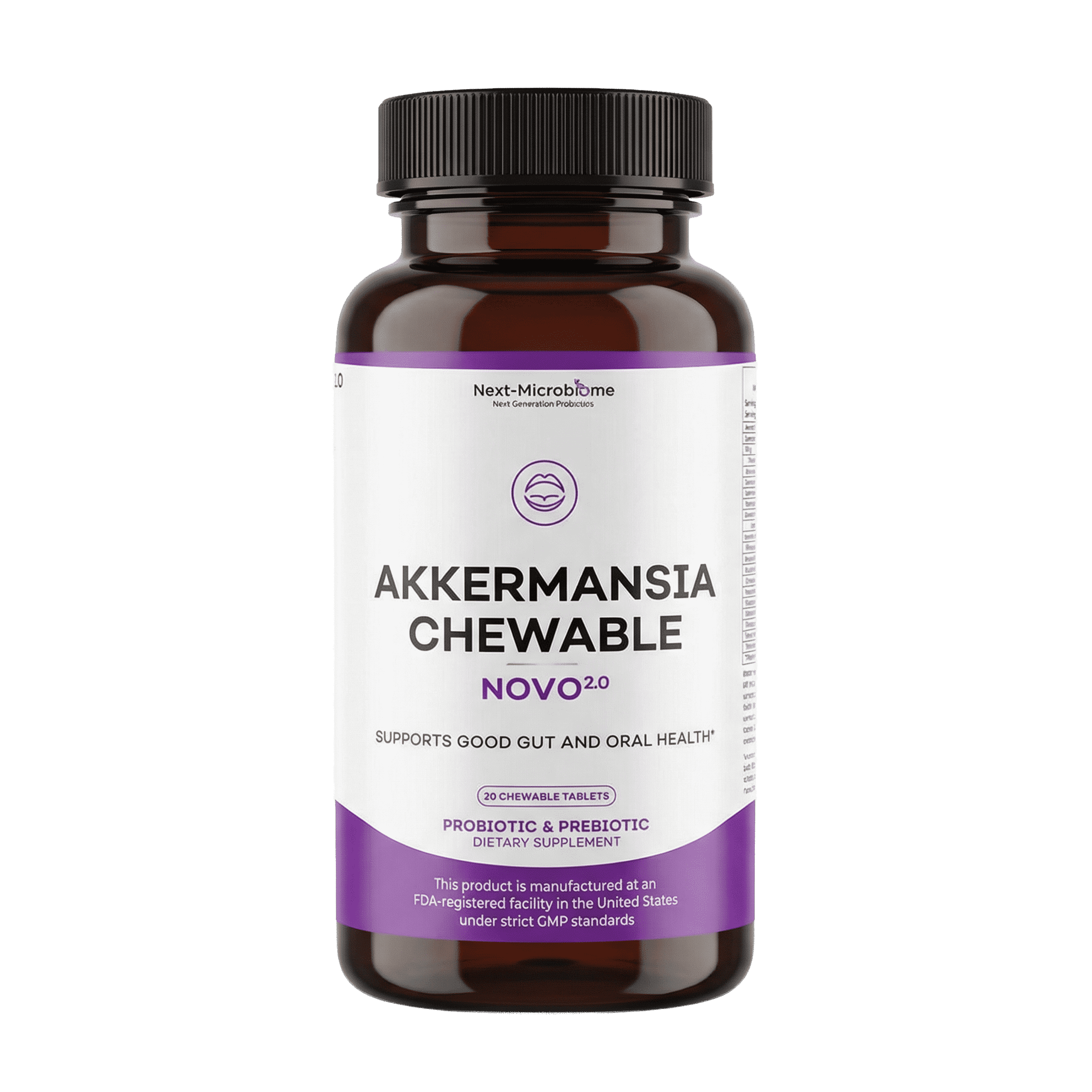
Akkermansia Chewable — Oral–Gut Microbiome Support
Promotes mucosal integrity, microbial diversity, and early oral–gut signaling that influences cortisol regulation.
Sleepy-Biome™ — SCFA and Circadian Rhythm Support
Supports natural cortisol timing, SCFA pathways, and serotonin→melatonin rhythms without melatonin.
For readers comparing pasteurized vs lyophilized probiotic formats, the key consideration is how each formulation relates to stability, microbial viability, delivery quality, safety, and the intended microbiome-support mechanism rather than assuming one format is universally better.
INTERNAL LINKS
Cortisol & Gut Microbiome: The Hidden Stress Loop Explained
Stress, Gut–Brain Axis & Sleep: Microbiome Disruption
Cortisol, Circadian Rhythm & Microbial Timing Explained
SCFAs & Stress Recovery: Restore Gut, Calm HPA Axis
Cortisol, Cravings & GLP-1: How Stress Hijacks Appetite

Written by Ali Rıza Akın
Microbiome Scientist, Author & Founder of Next-Microbiome
Ali Rıza Akın is a microbiome scientist with nearly 30 years of experience in translational biotechnology, systems biology, and applied microbiome research, spanning discovery, preclinical development, and clinical-stage translation.
His work focuses on how microbial ecosystems interact with human physiology, including:
-
Gut barrier function and intestinal permeability
-
Mucus-associated microbiota (Akkermansia-related systems)
-
Oral–gut microbiome axis
-
Short-chain fatty acids (SCFAs) and metabolic signaling
-
Circadian rhythm–microbiome interactions
-
Clinical Research Contributions
He has contributed to multiple clinical-stage microbiome programs, supporting bacterial strain discovery, optimization, and formulation design across different therapeutic areas, including:
Active Ulcerative Colitis (Inflammatory Bowel Disease)
Hyperoxaluria (Oxalate Metabolism Disorder)
Microbiome-driven gut health and inflammatory conditions
These studies were part of broader clinical development programs evaluating microbiome-based approaches. His contributions focused on the early-stage scientific and translational pipeline, including strain discovery, functional optimization, and multi-strain formulation design.
Scientific Contributions:
Ali Rıza Akın is the discoverer of Christensenella californii, a bacterial species associated with microbiome diversity and metabolic health.
He is a contributing author to scientific publications and Bacterial Therapy of Cancer (Springer), and the author of Bakterin Kadar Yaşa: İçimizdeki Evren: Mikrobiyotamız.
Approach:
His work emphasizes evidence-based microbiome science, long-term safety, and a systems-based understanding of how microbes influence human health.
The content provided is for educational and informational purposes only and does not replace professional medical advice, diagnosis, or treatment.
How Microbiome-Based Support Helps Restore Sleep Naturally Without Melatonin
Stress and Sleep: How the Gut-Brain Axis Disrupts Rest and Recovery
Related Posts

Why Do You Wake Up at 3 A.M.? Gut, Cortisol, Blood Sugar, and Sleep Recovery

Can Gut Health Affect Sleep? How the Microbiome May Shape Rest and Recovery

Ozempic Plateau? What Your Gut Microbiome May Be Telling You About Slower Weight Loss

Akkermansia vs Ozempic: How Gut Microbiome Support May Influence GLP-1 and Digestion

GLP-1 Side Effects: How to Ease Bloating, Constipation, and Gut Issues Naturally

Best Probiotic for Leaky Gut? Why Gut Barrier Support Differs From Digestive Probiotics

Can You Support Akkermansia Naturally, or Are Supplements Needed?
