

Natural GLP-1 Support: Why Microbiome Repair Matters for Lasting Metabolic Health
Natural GLP-1 Production: How SCFAs and Gut Bacteria Regulate Metabolism
GLP-1 medications such as Ozempic®, Wegovy®, Mounjaro®, and Zepbound™ have transformed the way we think about appetite, cravings, glucose control, and metabolic health.
But these medications only imitate GLP-1.
They do not rebuild the system required for metabolic resilience, a system that sits at the center of GLP-1 microbiome science and is powered primarily by the gut microbiome, SCFAs, inflammation control, circadian timing, and mucosal structure.
Anyone researching Akkermansia probiotics for metabolic wellness should understand this system first. Akkermansia is not a replacement for GLP-1 medications, but it may help support the gut conditions tied to natural metabolic signaling, including mucosal integrity, SCFA production, inflammatory balance, and microbiome resilience.
This article explains:
• what GLP-1 drugs accomplish
• what they cannot fix
• why microbiome repair is essential for long-term results
• how to build metabolic stability from the inside out
If you missed earlier GLP-1 blogs, start here:
Microbiome Controls Appetite and Metabolism
Natural GLP-1 Support: Fiber, SCFAs, Akkermansia
Resetting Metabolism: Microbiome, SCFAs and GLP-1

Frequently Asked Questions — GLP-1 Drugs, Microbiome Repair & Long-Term Metabolic Health:
1. Are GLP-1 drugs enough to fix metabolism?
No — GLP-1 drugs suppress appetite but do not rebuild microbial diversity, SCFAs, gut barrier strength, inflammation control, or circadian metabolic rhythm.
2. Why does weight often return after stopping GLP-1 drugs?
Because the metabolic foundation was never rebuilt, appetite returns, dysbiosis persists, SCFAs remain low, and circadian signals remain disrupted.
3. Can microbiome repair support long-term GLP-1 results?
Yes — restoring SCFA production, mucosal integrity, and microbial diversity helps maintain natural GLP-1 signaling without medication.
4. Do GLP-1 drugs change the microbiome?
Yes — semaglutide and related drugs shift microbial composition, but these changes do not automatically restore microbial resilience or diversity.
5. Do GLP-1 drugs increase SCFAs or diversity?
No — only fiber, resistant starch, prebiotics, polyphenols, and next-generation synbiotics increase SCFAs and microbial richness.
6. Why do cravings return after stopping GLP-1 medications?
Because GLP-1 levels normalize, dopamine pathways rebound, microbiome damage persists, and SCFA-based satiety signals remain impaired.
7. How does the microbiome regulate natural GLP-1 production?
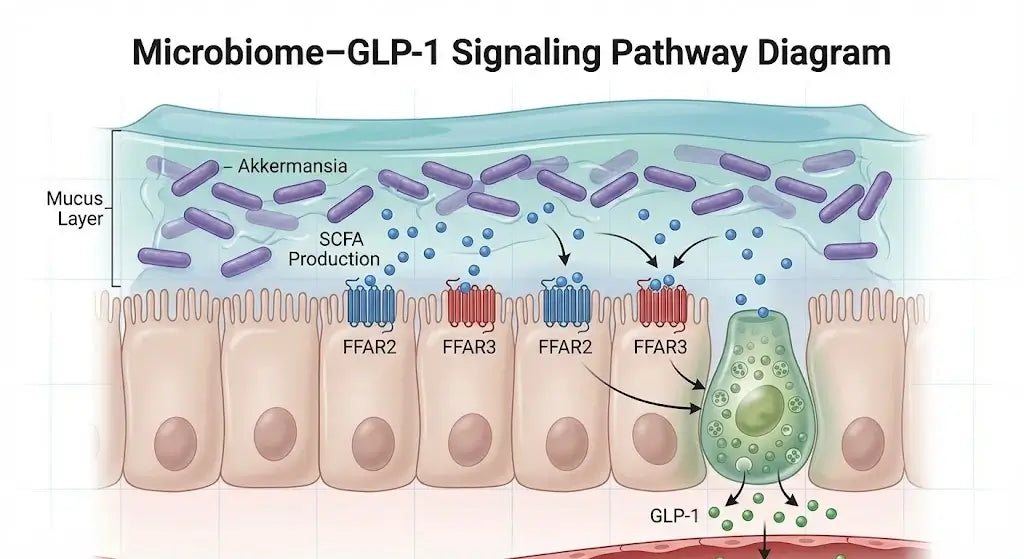
SCFAs stimulate L-cells to release GLP-1, while Akkermansia and mucosal-supportive microbes enhance enteroendocrine hormone sensitivity.
8. Can GLP-1 drugs weaken metabolic rate over time?
Yes — prolonged caloric suppression without microbial repair can reduce metabolic flexibility and lower baseline energy expenditure.
9. How does inflammation interfere with GLP-1 metabolism?
Inflammatory cytokines blunt GLP-1 receptor responsiveness and destabilize insulin signaling, contributing to metabolic relapse.
10. Why is mucosal integrity essential for long-term metabolic stability?
A strong mucosal barrier helps maintain gut barrier and intestinal lining health, prevents LPS leakage, supports SCFA networks, reduces inflammation, and enhances metabolic hormone signaling.
11. How does circadian rhythm influence GLP-1 effectiveness?
GLP-1 secretion follows a daily rhythm. Irregular sleep, late meals, and disrupted light exposure weaken natural GLP-1 production.
12. Can Akkermansia support GLP-1 therapy outcomes?
Yes — Akkermansia strengthens the gut barrier, increases SCFA synergy, improves GLP-1 sensitivity, and reduces inflammation.
13. Do GLP-1 drugs fix insulin resistance?
They temporarily improve it, but without SCFAs, microbial repair, and control of inflammation, insulin resistance often returns.
14. Can diet alone restore metabolic health after GLP-1 use?
Only if the diet rebuilds SCFA-producing microbes, mucosal structure, and circadian metabolic alignment.
15. Why does fiber become more critical during GLP-1 therapy?
Fiber increases SCFAs, nourishes Akkermansia and other beneficial microbes, and prevents the metabolic stagnation seen in some GLP-1 users.
16. How do oral–gut probiotics enhance metabolic repair?
Chewable formulations activate early vagal and mucosal signals, improving downstream microbial colonization and metabolic hormone timing.
17. Is microbiome diversity necessary for appetite control?
Yes — diverse ecosystems generate stronger SCFA rhythms, more stable GLP-1 release, and better hunger regulation.
18. Can improving SCFAs prevent post-GLP-1 weight regain?
Yes — strong SCFA networks stabilize appetite, glucose control, inflammation, and metabolic rate.
19. How long does metabolic healing take once GLP-1 therapy ends?
Early improvements appear in 3–6 weeks; full microbial and hormonal stabilization requires 8–16 weeks of dietary and circadian repair.
20. What is the most effective long-term strategy for metabolic resilience?
High fiber, polyphenols, consistent meal timing, reduced sugar, circadian alignment, SCFA-supportive synbiotics, and mucosal-restoring species like Akkermansia.
If your goal is gut-lining strength, inflammation control, or metabolic resilience, Akkermansia is the microbe to understand first. Explore the Akkermansia Microbiome Guide.
1. GLP-1 Drugs: Effective Tools, But They Do Not Rebuild the Metabolic System
GLP-1 receptor agonists reduce hunger, slow gastric emptying and improve blood sugar regulation.
Scientific Reference 1: Holst, Physiological Reviews (2007)
But they do not:
-
restore beneficial bacteria
-
increase SCFA production
-
repair inflammation-driven mucosal thinning
-
improve circadian hormone timing
-
rebalance gut–brain appetite signalling
These areas determine whether results last.
Scientific Reference 2: Wilding et al., New England Journal of Medicine (2021)
2. Microbiome + SCFAs: The Foundation for Natural GLP-1 Signalling
The gut microbiome ferments fiber into short-chain fatty acids (SCFAs) — butyrate, propionate, acetate.
These molecules influence:
-
GLP-1 and PYY secretion
-
insulin sensitivity
-
mitochondrial energy pathways
-
fat oxidation
-
inflammation modulation
-
appetite and metabolic rhythm
Scientific Reference 3: Koh et al., Cell (2016)
This high-impact review explains SCFAs’ mechanistic roles in host physiology: signalling through receptors (e.g., FFAR2/FFAR3), epigenetic modulation, immune–gut interactions, and metabolic regulation.

Because SCFA production depends on microbiome and diet, GLP-1 medications alone cannot rebuild this pathway. This is the core of the GLP-1 microbiome connection, in which SCFA production, microbial diversity, and mucosal integrity work together to support natural GLP-1 signaling.
In this context, GLP-1 microbiome support is best understood as a systems-based approach that connects SCFA production, microbial diversity, gut barrier stability, and long-term metabolic resilience.

3. Why Weight Regain Happens After Stopping GLP-1 Drugs
Once medication stops:
-
appetite returns
-
cravings rebound
-
GLP-1 levels normalize
-
dysbiosis remains
-
SCFAs remain low
-
circadian rhythm remains disrupted
Metabolic relapse happens because the ecosystem was never rebuilt.
Scientific Reference 4 (Circadian / Microbiome Rhythm & Stability): Thaiss et al., Science (2016)
This research highlights that disrupting circadian–microbial oscillations impairs metabolic homeostasis, glucose regulation, microbial balance, and stability — illustrating why long-term metabolic health requires rebuilding the microbiome and circadian/metabolic rhythms, not just using drugs.

4. A Science-Based Blueprint for Long-Term Metabolic Stability
A sustainable metabolic foundation requires strengthening the internal systems that regulate appetite, inflammation, energy, and hormonal signaling.
A. Restore SCFAs (Metabolic Messaging Molecules)
Increase intake of:
-
resistant starch
-
legumes
-
oats, barley, whole grains
-
fiber-rich vegetables
-
berries, pomegranate, cocoa
-
prebiotics: inulin, GOS

B. Strengthen Gut Barrier and Support Akkermansia
A healthy mucosal barrier:
-
improves GLP-1 sensitivity
-
stabilizes inflammation
-
strengthens metabolic hormone signaling
-
improves insulin response
These mechanisms help explain why Akkermansia muciniphila benefits are increasingly discussed in relation to gut barrier support, GLP-1 responsiveness, inflammation control, and long-term metabolic stability.
Scientific Reference (Gut Barrier + Akkermansia):
Everard A. et al., PNAS (2013) — Cross-talk between Akkermansia muciniphila and intestinal epithelium controls diet-induced obesity. DOI: 10.1073/pnas.1219451110 PNAS+2PNAS+2
In this study, administering live A. muciniphila restored mucus layer thickness, reduced gut permeability and endotoxemia, lowered inflammation, and improved insulin sensitivity and metabolic outcomes in high-fat–diet mice.
This is one reason readers exploring broader topics such as leaky gut and microbiome support often become interested in mucosal-restoring microbes, barrier repair, and metabolic resilience.
For readers comparing options, the best probiotic for gut lining is usually one that supports mucosal integrity, microbial diversity, and long-term barrier resilience rather than promising quick metabolic repair.
C. Restore Circadian Metabolic Timing
To align metabolic hormones:
-
eat within a 10–12 hour daytime window
-
avoid late-night eating
-
get morning sunlight
-
maintain a stable sleep schedule
When circadian rhythm stabilizes, GLP-1 signaling and gut–hormone synchrony stabilize.
D. Reduce Chronic Stress (Cortisol Blocks GLP-1)
Chronic stress:
-
lowers SCFA-producing bacteria
-
reduces natural GLP-1 secretion
-
increases cravings
-
disrupts appetite rhythm
Thus, stress reduction (sleep, mindfulness, lifestyle) is part of metabolic restoration.
E. Support Microbial Diversity
Microbial richness helps regulate:
-
satiety and appetite signaling
-
energy expenditure
-
inflammation and immune tone
-
mood and gut–brain signaling
Daily strategies:
- eat widely diverse plants
- include fermented foods
- minimize ultra-processed foods
- support with synbiotic/probiotic formulations when needed
Research evaluating chewable probiotics effectiveness indicates that delivery format may influence early oral–gut microbial signaling and colonization dynamics, although clinical outcomes depend on strain specificity, dosage, and the individual metabolic and microbial environment.
Optional Microbiome Support
For individuals seeking additional support during metabolic repair, microbiome-targeted formulations may help complement diet and lifestyle.
Boost Synergy GLP-1
For readers comparing a GLP-1 probiotic supplement, Boost Synergy GLP-1 is best understood as a microbiome-targeted formula that may support SCFA pathways, GLP-1 physiology, gut microbial balance, and metabolic signaling alongside diet, lifestyle, and circadian repair.
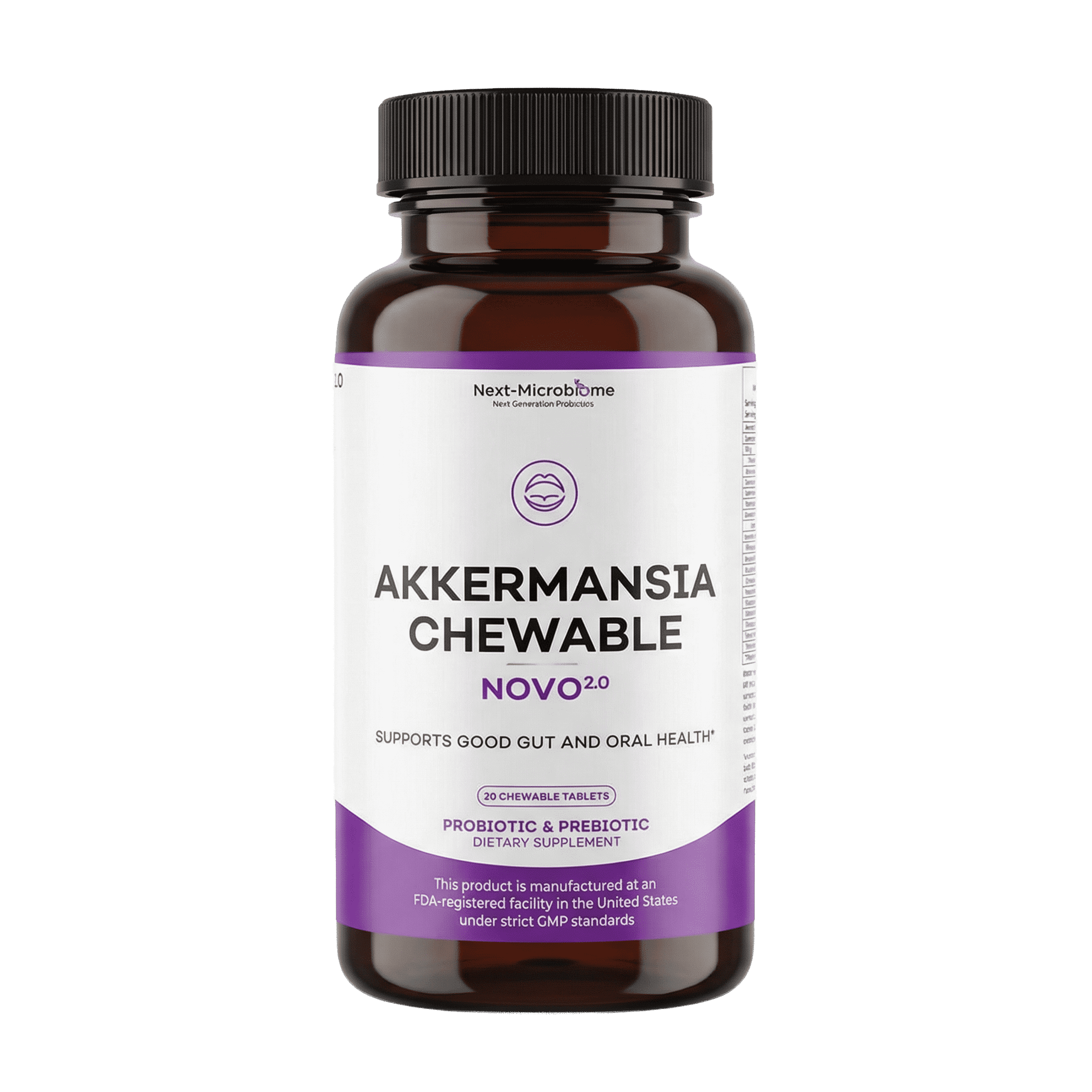
Akkermansia Chewable
Supports mucosal integrity, microbial richness, and gut–metabolic communication.
Sleepy-Biome™
Supports circadian rhythm, stress resilience and overnight SCFA signalling
These supplements are meant to complement — not replace — foundational diet, lifestyle, and microbial restoration practices.
Written by Ali Rıza Akın
Microbiome Scientist, Author & Founder of Next-Microbiome
Ali Rıza Akın is a microbiome scientist with nearly 30 years of experience in translational biotechnology, systems biology, and applied microbiome research, spanning discovery, preclinical development, and clinical-stage translation.
His work focuses on how microbial ecosystems interact with human physiology, including:
-
Gut barrier function and intestinal permeability
-
Mucus-associated microbiota (Akkermansia-related systems)
-
Oral–gut microbiome axis
-
Short-chain fatty acids (SCFAs) and metabolic signaling
-
Circadian rhythm–microbiome interactions
-
Clinical Research Contributions
He has contributed to multiple clinical-stage microbiome programs, supporting bacterial strain discovery, optimization, and formulation design across different therapeutic areas, including:
Active Ulcerative Colitis (Inflammatory Bowel Disease)
Hyperoxaluria (Oxalate Metabolism Disorder)
Microbiome-driven gut health and inflammatory conditions
These studies were part of broader clinical development programs evaluating microbiome-based approaches. His contributions focused on the early-stage scientific and translational pipeline, including strain discovery, functional optimization, and multi-strain formulation design.
Scientific Contributions:
Ali Rıza Akın is the discoverer of Christensenella californii, a bacterial species associated with microbiome diversity and metabolic health.
He is a contributing author to scientific publications and Bacterial Therapy of Cancer (Springer), and the author of Bakterin Kadar Yaşa: İçimizdeki Evren: Mikrobiyotamız.
Approach:
His work emphasizes evidence-based microbiome science, long-term safety, and a systems-based understanding of how microbes influence human health.
The content provided is for educational and informational purposes only and does not replace professional medical advice, diagnosis, or treatment.
Reset Your Metabolism: How the Microbiome, SCFAs, and GLP-1 Work Together
Oral-Gut Axis: How the Mouth Shapes Digestion, Mucosal Immunity, and Gut Balance
Related Posts

Why Do You Wake Up at 3 A.M.? Gut, Cortisol and Blood Sugar

Can Gut Health Affect Sleep? How the Microbiome May Shape Rest and Recovery

Ozempic Plateau? What Your Gut Microbiome May Be Telling You About Slower Weight Loss

Akkermansia vs Ozempic: Why Gut Balance May Shape GLP-1, Digestion, and Results

GLP-1 Gut Side Effects: Why Bloating and Constipation Happen and What May Help

Best Probiotic for Leaky Gut? Why Gut Barrier Support Differs From Digestive Probiotics

Can You Support Akkermansia Naturally, or Are Supplements Needed?