

How Long Does Akkermansia Take to Work? What Changes First and What to Expect

How Long Does Akkermansia Take to Work? What the Research Suggests
One of the most common questions about Akkermansia muciniphila is also the most practical: how long until it does anything? The honest answer is that it works gradually, over weeks to months, and much of what it does happens quietly at the gut lining rather than as a symptom you feel. Here is what the research has actually measured, what is still uncertain, and how to set realistic expectations.
Quick Answer: How long does Akkermansia take to work?
Akkermansia is not a fast-acting supplement, and it should not be expected to change how you feel within days. In the main human trials, researchers measured metabolic changes after about three months of daily use, not after a few days (Depommier et al., 2019; Suenaert et al., 2026). Earlier effects, seen mostly in laboratory and animal studies, happen at the gut lining and are not something you would necessarily notice. So think in terms of consistent daily use over a few months, alongside a fiber-rich diet, activity, and good sleep, rather than a quick result. Some people respond more than others, and a few may not see a measurable change at all.
Key Points
-
Akkermansia does not produce immediate or stimulant-like effects.
-
The earliest changes are biological, at the gut lining, and are usually not something you feel.
-
In human trials, measurable changes were assessed after about three months, not days.
-
Responses vary with your baseline microbiome, diet, sleep, and overall health, and not everyone will see a measurable effect.
-
Realistic expectations are part of using it well.
If you haven’t reviewed the earlier decision steps, start here:
• Is Akkermansia Safe Long Term? What Science Actually Shows
• Who Should Consider Akkermansia (And Who Shouldn’t)
• When to Take Akkermansia: Timing, Consistency & Expectations
Does Akkermansia Work Immediately?
Short answer: no. Akkermansia does not act directly on symptoms. Instead, it interacts with the mucus layer, epithelial signaling, microbial metabolites, and immune pathways. These are slow, biological processes that depend on cell turnover and adaptation, which is why Akkermansia should not be compared to a medication or a fast-acting supplement.
What Changes First (In the Biology, Not in How You Feel)
When researchers look at what changes earliest, the answer is at the gut lining, and mostly in laboratory and animal models rather than in how a person feels.
Gut lining and signaling
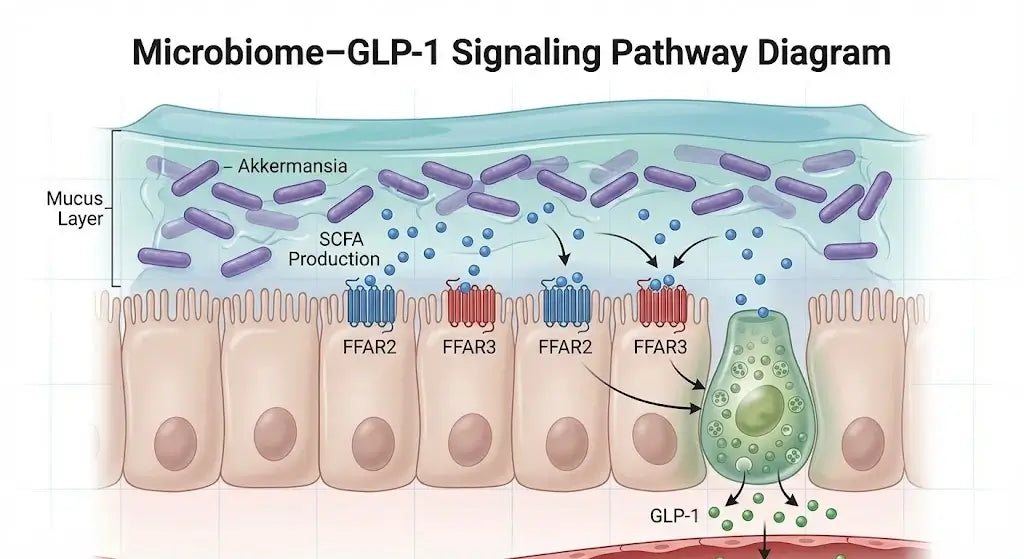
Akkermansia lives in the intestinal mucus layer, and the earliest measured effects tend to appear there. In laboratory and animal studies, Akkermansia and the vesicles it releases have been shown to support tight-junction function and gut-barrier integrity (Chelakkot et al., 2018). These are foundational changes, not something you would perceive as symptom relief.

For background on this system, see:
• Gut Barrier Health: Science of Intestinal Integrity
Microbiome interactions and metabolites
Over time, Akkermansia interacts with other microbes and with metabolites such as short-chain fatty acids, which is why it is often discussed alongside broader metabolic and immune signaling rather than short-term digestive effects. This is a gradual, ecosystem-level process.

What Human Studies Actually Measured
It helps to be precise about what the human trials measured, and when. The main supplement trials assessed outcomes after about three months of daily use, not after days or a single week (Depommier et al., 2019; Suenaert et al., 2026). What they measured were biological markers, such as insulin sensitivity, blood lipids, and appetite-related hormones, rather than day-to-day symptoms.
This distinction matters. In these studies, "working" means a measurable shift in metabolic markers over months, and even then the effects were moderate. It does not mean a noticeable change in how participants felt from week to week. If you are taking Akkermansia and do not feel different, that is consistent with how it behaves in research.
A Realistic Timeline
|
Timeframe |
What the research points to |
Evidence type |
What you might notice |
|---|---|---|---|
|
First few days |
No expected effect; it is not a fast-acting supplement |
General understanding |
Usually nothing |
|
Early weeks |
Gut-lining and tight-junction support |
Lab and animal studies (Chelakkot 2018) |
Usually nothing perceptible |
|
Around 3 months |
Modest changes in metabolic markers such as insulin sensitivity, lipids, and GLP-1 |
Human trials (Depommier 2019; Suenaert 2026) |
Often nothing you feel directly |
|
Ongoing and individual |
Gradual support that depends on diet, sleep, and starting levels |
Trial subgroups and associations |
Varies; some notice general improvements, some do not |
Why Results Vary (and Why Some People May Not Notice Much)
Two people can take the same Akkermansia product and have different experiences. Timelines and outcomes depend on baseline microbiome composition, diet quality and fiber intake, sleep and circadian rhythm, and stress and inflammation.
It is worth being honest about what this means. Variability is not only about some people responding sooner than others. The evidence suggests some people respond more than others, and some may not see a measurable change at all. In the newer trial, the clearest benefits were in people who started with low Akkermansia levels and those with prediabetes (Suenaert et al., 2026), which fits the idea that supplementing may help most when you are lower in it to begin with. So if you do not notice much, that can reflect a genuinely small or absent effect for you, not just a longer timeline.

For context on circadian influence, see:
• Circadian Rhythm & the Gut Microbiome
What Akkermansia Cannot Do Quickly
It helps to set boundaries around expectations. Akkermansia will not create immediate symptom relief, will not override a poor diet or poor sleep, and does not work as a stand-alone fix. Its support is cumulative and depends on the rest of your routine.
Where a Supplement Fits
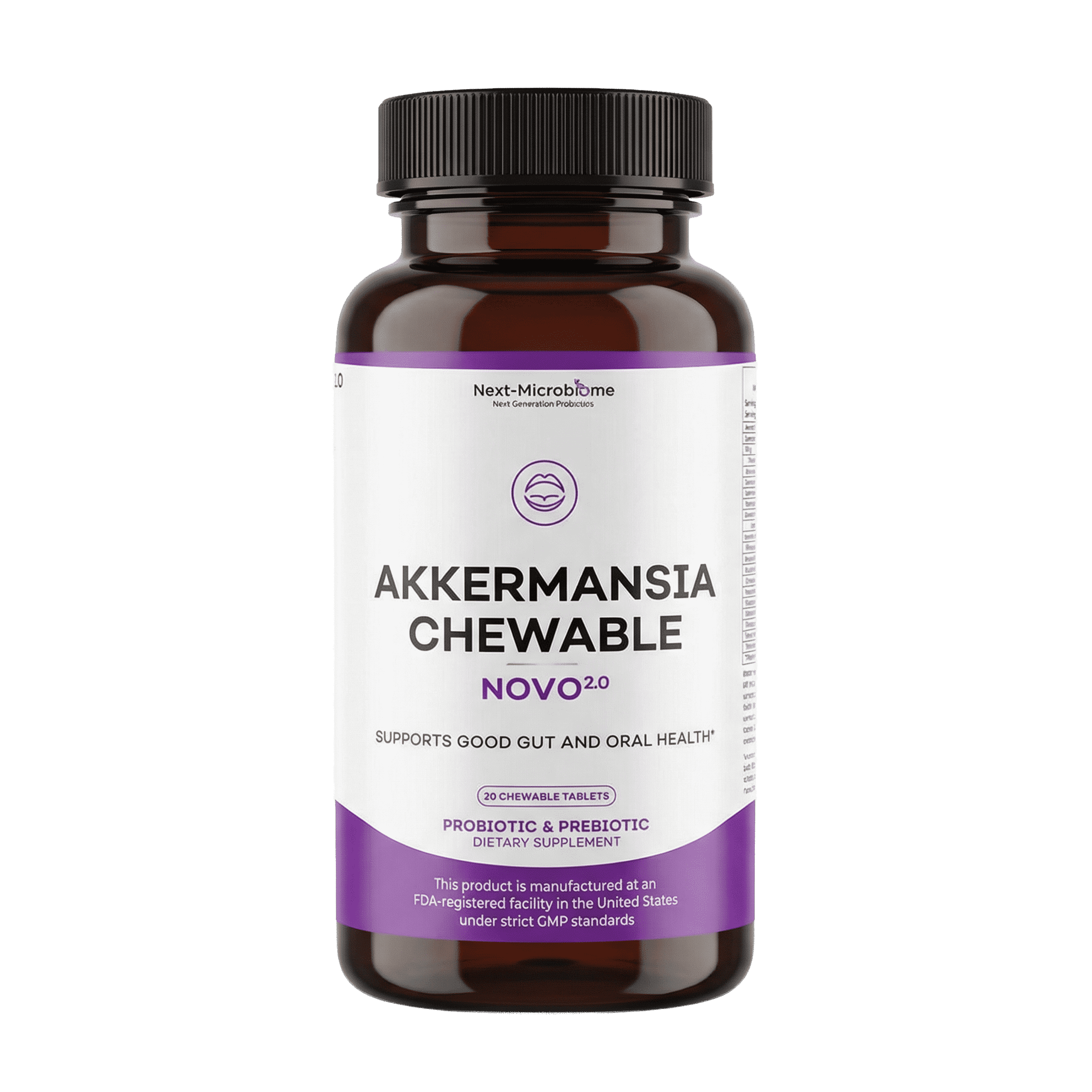
Because Akkermansia works gradually, the sensible way to use it is consistent daily intake alongside a fiber-rich diet, activity, and good sleep, not as a quick fix. If you want to add one, Next-Microbiome makes Akkermansia Chewable and Boost Synergy.
Treat any supplement as a complement to a healthy routine, not a replacement, and check with a clinician if you are pregnant, nursing, managing a condition, or taking medication.
Frequently Asked Questions
1. How long before Akkermansia shows effects?
In human trials, measurable changes were assessed after about three months of daily use. The earliest biological effects, at the gut lining, appear sooner in lab and animal studies but are usually not something you feel.
2. Why don’t I feel anything right away?
Because Akkermansia works on underlying biology, such as the gut barrier and metabolic signaling, rather than producing quick sensations. Feeling nothing in the early weeks is normal and expected.
3. Does consistency affect results?
Yes. Regular daily use matters more than occasional or short-term use, since the effects are cumulative and build over weeks to months.
4. Can diet change how fast Akkermansia works?
Yes. Diet, especially fiber and polyphenol intake, strongly shapes the gut environment Akkermansia depends on, so a plant-rich diet can support the process.
5. What if I never notice a difference?
That is possible. Responses vary, and some people, especially those who already have healthy Akkermansia levels, may not see a measurable change. Akkermansia is best viewed as one supportive part of a broader routine, not a guaranteed result.
Key Takeaways
-
Akkermansia works gradually, not immediately.
-
The earliest effects are at the gut lining and are usually not felt.
-
Human trials measured changes after about three months, and the effects were moderate.
-
Responses vary, and some people may not notice a measurable difference.
-
Consistency, diet, and realistic expectations matter most.
Scientific References
-
Chelakkot C, Choi Y, Kim DK, et al.
Akkermansia muciniphila-derived extracellular vesicles influence gut permeability through the regulation of tight junctions
Experimental and Molecular Medicine 2018;50(2):e450 doi:10.1038/emm.2017.282 (Animal and cell study; early gut-barrier effects) -
Depommier C, Everard A, Druart C, et al.
Supplementation with Akkermansia muciniphila in overweight and obese human volunteers: a proof-of-concept exploratory study
Nature Medicine 2019;25(7):1096-1103
doi:10.1038/s41591-019-0495-2 (Human trial; 3-month endpoint) -
Suenaert P, Segers A, Rymenans L, et al.
Effect of pasteurized Akkermansia muciniphila MucT on insulin sensitivity, body composition, and GLP-1 production in subjects with metabolic syndrome
Gut Microbes 2026;18(1):2690689
doi:10.1080/19490976.2026.2690689 (Newer human trial; 3 to 4 month endpoints) -
Plovier H, Everard A, Druart C, et al.
A purified membrane protein from Akkermansia muciniphila or the pasteurized bacterium improves metabolism in obese and diabetic mice
Nature Medicine 2017;23(1):107-113
doi:10.1038/nm.4236 (Animal study) -
Cani PD, Depommier C, Derrien M, Everard A, de Vos WM.
Akkermansia muciniphila: paradigm for next-generation beneficial microorganisms
Nature Reviews Gastroenterology and Hepatology 2022;19(10):625-637
doi:10.1038/s41575-022-00631-9 (Review)
Written by Ali Rıza Akın
Microbiome Scientist, Author & Founder of Next-Microbiome
Ali Rıza Akın is a microbiome scientist with nearly 30 years of experience in translational biotechnology, systems biology, and applied microbiome research, spanning discovery, preclinical development, and clinical-stage translation.
His work focuses on how microbial ecosystems interact with human physiology, including:
-
Gut barrier function and intestinal permeability
-
Mucus-associated microbiota (Akkermansia-related systems)
-
Oral–gut microbiome axis
-
Short-chain fatty acids (SCFAs) and metabolic signaling
-
Circadian rhythm–microbiome interactions
-
Clinical Research Contributions
He has contributed to multiple clinical-stage microbiome programs, supporting bacterial strain discovery, optimization, and formulation design across different therapeutic areas, including:
Active Ulcerative Colitis (Inflammatory Bowel Disease)
Hyperoxaluria (Oxalate Metabolism Disorder)
Microbiome-driven gut health and inflammatory conditions
These studies were part of broader clinical development programs evaluating microbiome-based approaches. His contributions focused on the early-stage scientific and translational pipeline, including strain discovery, functional optimization, and multi-strain formulation design.
Scientific Contributions:
Ali Rıza Akın is the discoverer of Christensenella californii, a bacterial species associated with microbiome diversity and metabolic health.
He is a contributing author to scientific publications and Bacterial Therapy of Cancer (Springer), and the author of Bakterin Kadar Yaşa: İçimizdeki Evren: Mikrobiyotamız.
Approach:
His work emphasizes evidence-based microbiome science, long-term safety, and a systems-based understanding of how microbes influence human health.
Review and Sources
This article is written and reviewed by a microbiome scientist and is based on the peer-reviewed studies listed in the References. It is reviewed periodically against current research.
This content is for educational and informational purposes only and is not medical advice. It is not intended to diagnose, treat, cure, or prevent any disease. Dietary supplements are not a substitute for prescription medication or professional care. Consult a qualified healthcare professional before making changes to your diet, supplement routine, or treatment, especially if you are pregnant, nursing, managing a health condition, or taking medication.
Last reviewed: July 2026

When Should You Take Akkermansia? Timing, Consistency, and What Actually Matters Most
Low Akkermansia? 7 Signs Your Gut Barrier May Be Failing and What May Help Support It
Related Posts

Why Do You Wake Up at 3 A.M.? Gut, Cortisol and Blood Sugar

Can Gut Health Affect Sleep? How the Microbiome May Shape Rest and Recovery

Ozempic Plateau? What Your Gut Microbiome May Be Telling You About Slower Weight Loss

Akkermansia vs Ozempic: Why Gut Balance May Shape GLP-1, Digestion, and Results

GLP-1 Gut Side Effects: Why Bloating and Constipation Happen and What May Help

Best Probiotic for Leaky Gut? Why Gut Barrier Support Differs From Digestive Probiotics

Can You Support Akkermansia Naturally, or Are Supplements Needed?