

Low Akkermansia? 7 Signs Your Gut Barrier May Be Failing and What May Help Support It
Akkermansia muciniphila: Benefits, Science, and Its Role in Gut Health
Quick Summary
Akkermansia gut health research focuses on a bacterium that naturally lives in the mucus layer of the human intestine. Current Akkermansia muciniphila science focuses on how this microbe interacts with the intestinal mucus layer, gut barrier function, microbiota balance, and metabolic signaling. Research has linked higher levels of Akkermansia muciniphila with healthier gut ecosystems and favorable metabolic patterns, although these findings should be understood within the broader context of overall microbiome health rather than as a standalone outcome.
What Are the Benefits of Akkermansia muciniphila?
Akkermansia muciniphila is a gut bacterium that lives in the intestinal mucus layer and helps maintain intestinal integrity. Research suggests it may support microbiota balance, metabolic regulation, and intestinal health, making it one of the most studied next-generation probiotic organisms.
Interest in this bacterium has grown rapidly in microbiome research because scientists have repeatedly observed that individuals with higher levels of Akkermansia muciniphila often show healthier metabolic markers and stronger microbial balance.
Anyone researching where to buy Akkermansia muciniphila should first understand how this bacterium fits into gut barrier integrity, mucus-layer renewal, microbiota balance, and metabolic signaling. Product decisions should be based on formulation quality, delivery format, safety, and broader microbiome context rather than the strain name alone.
The benefits of Akkermansia muciniphila are closely tied to its role in maintaining gut barrier integrity and regulating interactions within the mucus layer. When this balance is disrupted, microbial imbalances can extend beyond the gut and originate from other regions of the body, including the oral cavity. Emerging research shows that disturbances in the oral microbiome can contribute to downstream effects on gut barrier permeability and metabolic signaling. This broader connection between oral and gut ecosystems is explored in more detail in our article on how oral dysbiosis can damage the gut barrier and metabolic health.
What Is Akkermansia muciniphila?
Akkermansia muciniphila is a bacterium that naturally lives in the mucus layer lining the human intestine.
Unlike many gut bacteria that primarily digest dietary fibers, Akkermansia muciniphila interacts with mucin, the protective layer covering the intestinal wall.
By carefully breaking down and recycling components of this mucus layer, Akkermansia muciniphila participates in a biological process that supports the renewal and stability of the gut barrier.
Since its discovery in 2004, this bacterium has become one of the most studied microorganisms in microbiota science.¹
For a broader overview of the microbiota ecosystem, see:
"What Is the Human Microbiome? A Science Guide"
How Akkermansia muciniphila Supports Gut Barrier Integrity
The intestinal barrier is one of the most important protective systems in the human body.
It separates the internal environment from trillions of microbes living in the digestive tract.
A healthy barrier allows nutrients to pass through while preventing unwanted microbial components from entering the bloodstream.
Research suggests that Akkermansia muciniphila plays a key role in maintaining this barrier.
By interacting with the mucin layer and supporting mucus renewal, Akkermansia muciniphila is being studied for its role in gut barrier and intestinal lining health.
Mechanistic research has shown that interactions between Akkermansia muciniphila and the intestinal epithelium can influence gut barrier function and metabolic regulation.

Akkermansia muciniphila and Metabolic Health
Another major research area focuses on the relationship between Akkermansia muciniphila and metabolic regulation.
Researchers have linked this bacterium with:
• improved microbiota balance
• healthier metabolic signaling
• reduced metabolic inflammation
• improved glucose regulation
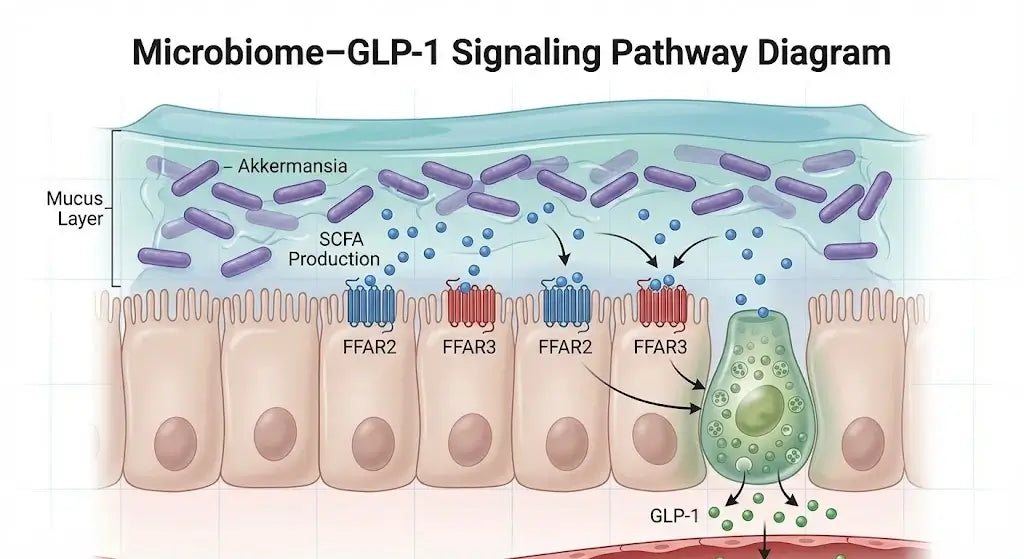
One possible explanation involves the relationship between gut bacteria and GLP-1, as microbiota metabolites may influence metabolic hormones that regulate appetite and glucose homeostasis.
In a randomized human clinical trial, supplementation with pasteurized Akkermansia muciniphila was safe and associated with improvements in several metabolic parameters in overweight and obese volunteers.
For readers exploring Akkermansia weight management, these findings should be understood through metabolic regulation, gut barrier integrity, inflammatory balance, glucose metabolism, and broader microbiome health rather than as a stand-alone weight-loss claim.

The Emerging Oral–Gut Axis
Modern microbiota research shows that microbial ecosystems throughout the body are interconnected.
One of the most interesting examples is the oral–gut axis.
Microorganisms that live in the mouth can influence microbial communities further down the digestive tract.
Scientists are increasingly studying how oral microbiota may affect gut microbial balance, intestinal physiology, and broader patterns of host signaling. Researchers are also beginning to explore how the oral–gut axis and longevity may be connected through long-term microbial and metabolic health, although this remains an emerging area of study.
Learn more about this emerging research area here:
"How Mouth Microbes Shape Gut Health, Digestion, and Overall Health"
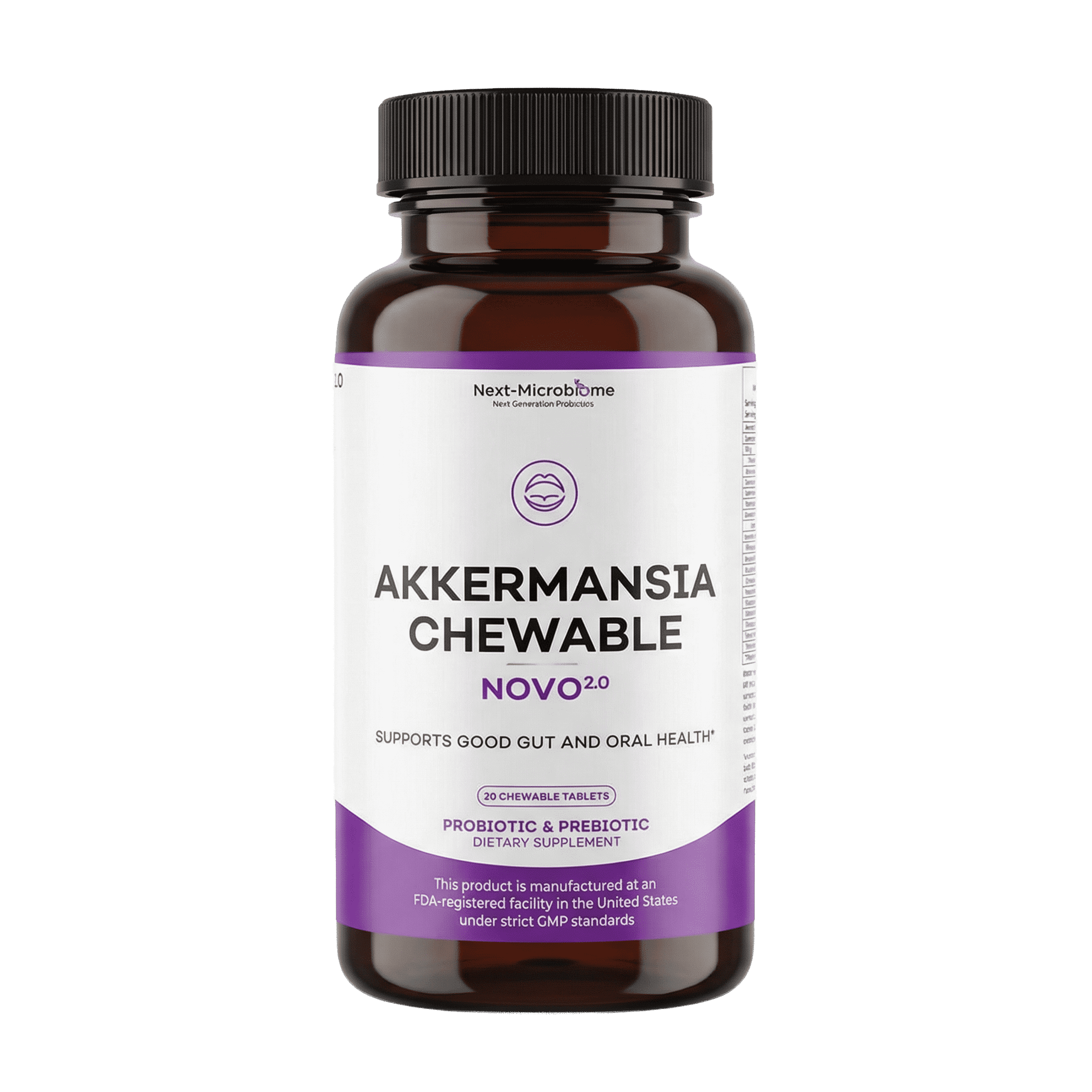
Probiotic delivery format can significantly influence how microbes interact with the body. While capsules are designed to release bacteria in the intestines, chewable probiotics first engage the oral microbiome and mucosal immune system, activating the oral–gut axis before reaching the gut. Our article on chewable probiotics compared with capsule probiotics explains the biological mechanisms behind this difference and how delivery format can influence microbiome signaling and overall probiotic effectiveness.
Signs of Low Akkermansia muciniphila Levels
Microbiota composition varies widely from person to person. However, researchers have observed that lower Akkermansia muciniphila levels often accompany specific metabolic and microbial patterns.
Possible factors associated with reduced Akkermansia muciniphila abundance include:
• low microbiota diversity
• limited intake of microbiota-supporting fibers
• metabolic stress
• certain dietary patterns
For a deeper explanation of this topic:
"What Causes Low Akkermansia and How Can It Be Restored Naturally?"
For readers who want to go beyond understanding the pattern and start exploring practical support options, an Akkermansia probiotic may be worth reviewing alongside diet, microbiota diversity, and broader gut barrier support strategies.
For readers comparing supplement formats, lyophilized Akkermansia should be understood as one delivery-related topic within the broader discussion of Akkermansia stability, formulation quality, gut barrier support, and microbiome context.
Akkermansia muciniphila and the Microbiota Ecosystem
The human microbiota functions as a complex ecological network.
No single bacterium acts alone.
Akkermansia muciniphila interacts with many other microbes through shared metabolic pathways and microbial signaling.
Among the most important microbial metabolites involved in these interactions are short-chain fatty acids (SCFAs), which play an important role in gut physiology, microbial communication, and metabolic regulation.
This is why SCFAs and metabolic health are often discussed together when explaining how microbial metabolites may influence gut barrier function, appetite-related signaling, and broader metabolic regulation.
Another important concept emerging in microbiota research is microbial synergy. The gut microbiota functions as an ecosystem in which different bacterial species interact through complementary biological roles.
For example, Akkermansia muciniphila interacts with microbial metabolites produced by other beneficial bacteria involved in short-chain fatty acid production.
Because of these ecological relationships, some microbiota strategies focus not only on a single bacterium but also on supporting cooperative microbial activity within the microbiota ecosystem.
In some microbiota formulations, this concept is described as “boost synergy,” referring to combinations designed to support complementary microbial functions and gut microbial balance.
One example of a microbiota strategy designed around this principle is the combination of Akkermansia muciniphila with supportive bacteria such as Clostridium butyricum, which are studied for their interactions with short-chain fatty acid pathways and gut microbial balance.

Akkermansia muciniphila vs Traditional Probiotics
Most people are familiar with traditional probiotic bacteria such as Lactobacillus and Bifidobacterium. These microbes have been used in fermented foods and probiotic supplements for decades.
However, Akkermansia muciniphila belongs to a newer category of microbes often described as next-generation probiotics.
Unlike traditional probiotic species that mainly ferment dietary fibers, Akkermansia muciniphila interacts directly with the intestinal mucus layer, a key component of the gut barrier.
This difference in biological function is one reason scientists are increasingly interested in Akkermansia muciniphila.
Key Differences Between Akkermansia muciniphila and Traditional Probiotics
| Feature | Akkermansia muciniphila | Traditional probiotics |
|---|---|---|
| Primary location | Intestinal mucus layer | Intestinal lumen |
| Biological role | Mucin interaction and gut barrier support | Fiber fermentation |
| Research category | Next-generation probiotic candidate | Conventional probiotic species |
| Metabolic interaction | Linked with metabolic signaling pathways | Mainly digestion-related effects |
| Discovery | First described in 2004 | Studied for over a century |
Traditional probiotic bacteria remain important members of the microbiota ecosystem. They help maintain microbial balance and contribute to the production of beneficial microbial metabolites.
However, Akkermansia muciniphila represents a different biological niche within the gut ecosystem.
Because it interacts with the mucus layer that protects the intestinal wall, scientists are studying it as a potential key player in maintaining gut barrier stability and microbiota balance.
When People Begin Exploring Akkermansia muciniphila
Interest in Akkermansia muciniphila has increased dramatically as microbiome science expands.
People often start researching this bacterium when learning about gut barrier health, microbiota diversity, metabolic balance, and broader topics such as leaky gut and microbiome support.
For those exploring the metabolic side of this topic in more depth, GLP-1 microbiome support may also be relevant as part of a broader conversation about microbial signaling, appetite regulation, and microbiota-related metabolic health.
For readers comparing a GLP-1 probiotic supplement, this topic should be understood through microbiome support, gut barrier resilience, SCFA signaling, appetite regulation, and metabolic health rather than as a direct GLP-1 medication.
For readers interested in how stress patterns affect eating behavior, stress hijacks appetite can be explored as a related topic within the broader gut-brain-metabolic signaling conversation.
Safety overview:
"Is Akkermansia Safe for Long-Term Use and Its Effects on the Gut Barrier"
Timing considerations:
"When to Take Akkermansia: Timing, Consistency, and What to Expect"
Supporting Akkermansia muciniphila Through Diet and Lifestyle
Research suggests several lifestyle factors may influence Akkermansia muciniphila levels in the gut microbiota.
These include:
• microbiota-supporting dietary fibers
• polyphenol-rich foods
• diverse plant-based nutrients
• healthy circadian rhythms
• balanced microbial ecosystems
For a broader overview, visit our Akkermansia muciniphila science hub.
For readers building a more complete gut-support routine, this may also be a useful point to explore what to look for in the best probiotic for gut lining, especially when mucosal support, microbiota balance, and long-term gut resilience are part of the goal.
 Frequently Asked Questions:
1. What does Akkermansia muciniphila do?
Akkermansia muciniphila lives in the mucus layer of the intestine and interacts with mucin, helping support gut barrier integrity and microbiota balance.
2. What are the benefits of Akkermansia muciniphila?
Research suggests Akkermansia muciniphila may be associated with improved gut barrier stability, microbiota diversity, metabolic regulation, and balanced microbial ecosystems.
3. Where is Akkermansia muciniphila found?
Akkermansia muciniphila naturally lives in the mucus layer of the human intestine and is present in many healthy individuals.
4. Why are scientists interested in Akkermansia muciniphila?
Researchers study Akkermansia muciniphila as a next-generation probiotic candidate due to its interactions with the intestinal mucus layer and its potential influence on metabolic signaling and gut barrier health.
5. Can Akkermansia muciniphila levels change?
Yes. Akkermansia muciniphila levels can vary depending on diet, microbiota diversity, and lifestyle factors.
References:
-
Derrien M, Collado MC, Ben-Amor K, Salminen S, de Vos WM.
Akkermansia muciniphila gen. nov., sp. nov., a human intestinal mucin-degrading bacterium. -
Depommier C et al.
Supplementation with Akkermansia muciniphila in overweight and obese human volunteers. -
Cani PD, de Vos WM.
Next-generation beneficial microbes: the case of Akkermansia muciniphila. -
Everard A et al.
Cross-talk between Akkermansia muciniphila and intestinal epithelium controls diet-induced obesity.
Written by Ali Rıza Akın
Microbiome Scientist, Author & Founder of Next-Microbiome
Ali Rıza Akın is a microbiome scientist with nearly 30 years of experience in translational biotechnology, systems biology, and applied microbiome research, spanning discovery, preclinical development, and clinical-stage translation.
His work focuses on how microbial ecosystems interact with human physiology, including:
-
Gut barrier function and intestinal permeability
-
Mucus-associated microbiota (Akkermansia-related systems)
-
Oral–gut microbiome axis
-
Short-chain fatty acids (SCFAs) and metabolic signaling
-
Circadian rhythm–microbiome interactions
-
Clinical Research Contributions
He has contributed to multiple clinical-stage microbiome programs, supporting bacterial strain discovery, optimization, and formulation design across different therapeutic areas, including:
Active Ulcerative Colitis (Inflammatory Bowel Disease)
Hyperoxaluria (Oxalate Metabolism Disorder)
Microbiome-driven gut health and inflammatory conditions
These studies were part of broader clinical development programs evaluating microbiome-based approaches. His contributions focused on the early-stage scientific and translational pipeline, including strain discovery, functional optimization, and multi-strain formulation design.
Scientific Contributions:
Ali Rıza Akın is the discoverer of Christensenella californii, a bacterial species associated with microbiome diversity and metabolic health.
He is a contributing author to scientific publications and Bacterial Therapy of Cancer (Springer), and the author of Bakterin Kadar Yaşa: İçimizdeki Evren: Mikrobiyotamız.
Approach:
His work emphasizes evidence-based microbiome science, long-term safety, and a systems-based understanding of how microbes influence human health.

How Long Does Akkermansia Take to Work? What Changes First and What to Expect
What Does Science Say About Akkermansia for Gut Health?
Related Posts

Why Do You Wake Up at 3 A.M.? Gut, Cortisol and Blood Sugar

Can Gut Health Affect Sleep? How the Microbiome May Shape Rest and Recovery

Ozempic Plateau? What Your Gut Microbiome May Be Telling You About Slower Weight Loss

Akkermansia vs Ozempic: Why Gut Balance May Shape GLP-1, Digestion, and Results

GLP-1 Gut Side Effects: Why Bloating and Constipation Happen and What May Help

Best Probiotic for Leaky Gut? Why Gut Barrier Support Differs From Digestive Probiotics

Can You Support Akkermansia Naturally, or Are Supplements Needed?