


Your Gut May Be Ruining Your Sleep: Why Your Microbiome May Be Disrupting Deep Sleep
Gut–Brain–Sleep Axis: How Your Microbiome Influences Melatonin, Cortisol & Deep Sleep
When your gut is inflamed, your sleep collapses.
When your sleep collapses, your gut becomes inflamed.
And when stress spikes, everything collapses together.
This isn’t coincidence — it’s the gut–brain–sleep axis.
Your microbiome communicates constantly with the brain, influencing:
-
melatonin production
-
cortisol timing
-
vagus nerve signaling
-
REM sleep patterns
-
mood and stress response
-
circadian rhythm stability
If you haven’t yet read the foundational blog, start here:
Circadian Rhythm & Gut Microbiome: Sleep and Energy Guide
Let’s break down how your gut microbes shape your sleep biology — and how to support them naturally.
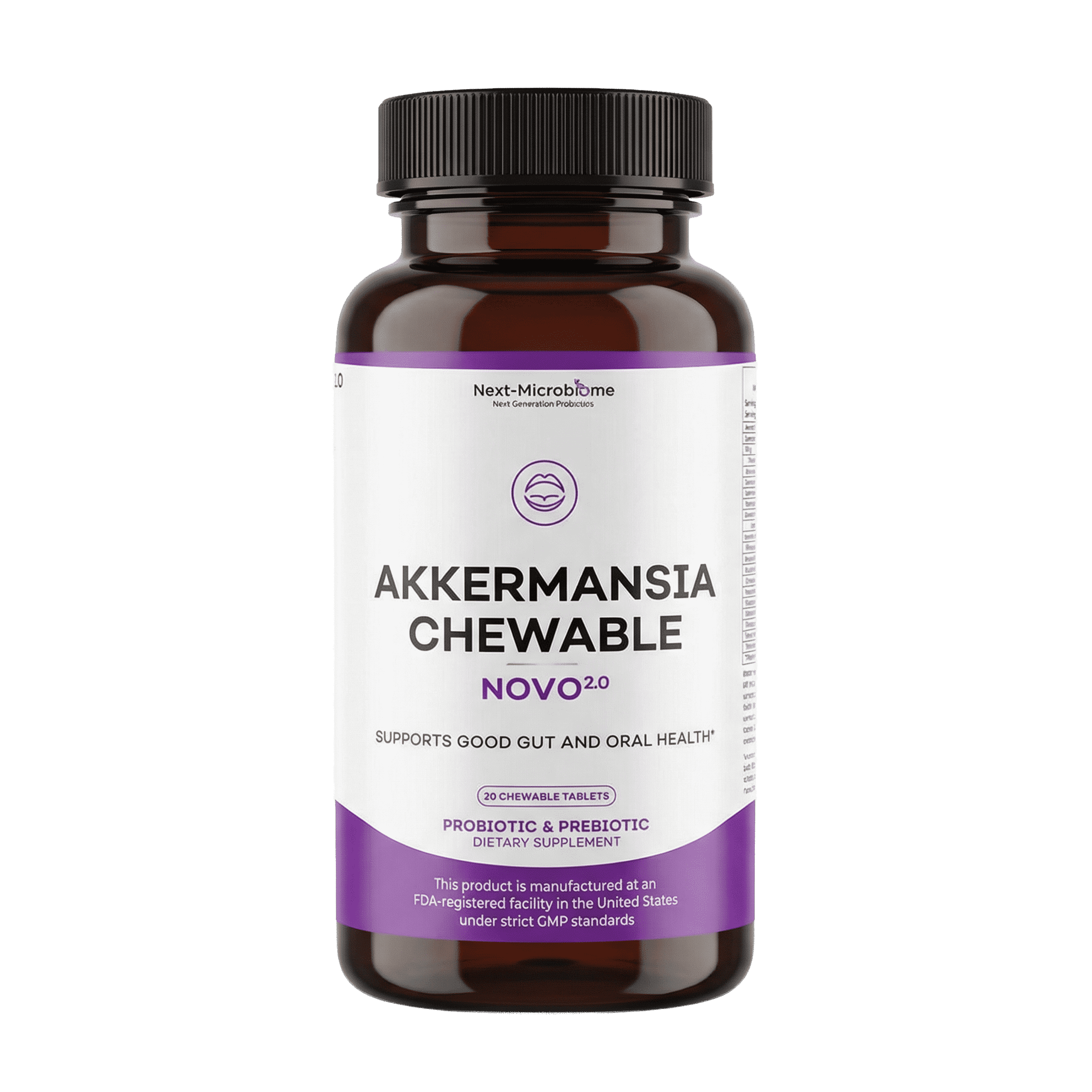
Anyone researching where to buy Akkermansia muciniphila should first understand how this bacterium fits into gut barrier support, SCFA production, inflammatory balance, cortisol rhythm, and broader gut-brain-sleep signaling. Akkermansia support should be viewed as part of a microbiome-focused routine, not as a stand-alone solution for insomnia, stress, or sleep disruption.
Frequently Asked Questions:
1. Can the microbiome influence sleep?
Yes — the gut regulates serotonin, melatonin, cortisol timing, SCFAs, and vagus nerve activity, all of which shape sleep depth and circadian stability.
2. What disrupts the gut–brain–sleep axis?
Stress, dysbiosis, gut inflammation, late-night eating, blue light exposure, circadian disruption, and poor gut barrier integrity.
3. Is melatonin safe for long-term use?
Extended use of exogenous melatonin may influence endogenous hormone signaling and circadian rhythm regulation, although responses vary among individuals. Melatonin-free sleep support strategies are designed to support circadian alignment without directly supplementing sleep hormones.
4. Which probiotics help improve sleep quality?
SCFA-producing strains such as Clostridium butyricum have been studied for their role in modulating melatonin pathways, cortisol timing, and autonomic balance — all of which influence sleep architecture. Probiotic sleep support approaches are designed to reinforce these interconnected gut–brain mechanisms.
5. How quickly can sleep improve when the gut is supported?
Most people notice improvements within 1–3 weeks, depending on stress levels, inflammation, and circadian alignment.
6. How does gut inflammation interfere with deep sleep?
Inflammation disrupts vagus nerve tone, suppresses melatonin sensitivity, increases nighttime cortisol, and fragments deep sleep cycles.
7. Can cortisol imbalance cause persistent insomnia?
Yes — elevated evening cortisol blocks melatonin release, increases alertness, and destabilizes sleep architecture.
8. Does lack of sleep damage the microbiome?
Yes — even one night of poor sleep reduces microbial diversity, increases inflammatory markers, and disrupts microbial circadian rhythms.
9. Can gut microbes influence natural melatonin production?
Yes — they regulate tryptophan metabolism, serotonin pathways, and downstream melatonin synthesis.
10. How does the microbiome shape REM sleep patterns?
SCFAs modulate brainstem sleep circuits, enhancing REM onset, emotional processing, and dream regulation.
11. Can chronic stress permanently alter the gut–brain–sleep axis?
Long-term stress reshapes microbial composition, increases intestinal permeability, disrupts cortisol rhythms, and weakens circadian resilience.
12. Which foods support melatonin and sleep through the microbiome?
Polyphenols, resistant starch, kiwis, tart cherries, kefir, magnesium-rich greens, and omega-3 fats support melatonin biology and gut repair.
13. Does intermittent fasting improve sleep?
Yes — it stabilizes circadian timing, enhances microbiome rhythmicity, improves cortisol alignment, and supports deeper sleep cycles.
14. Is low SCFA production linked to sleep problems?
Yes — reduced butyrate production is associated with nighttime wakefulness, weakened gut barrier repair, and disrupted sleep homeostasis.
15. What is the best probiotic strategy for repairing the gut–brain–sleep axis?
Next-generation probiotics that support SCFA metabolism, gut barrier integrity, and stress modulation, such as Clostridium butyricum and Akkermansia muciniphila, may help support melatonin rhythm and cortisol balance.
Reduced Akkermansia is among the most consistent microbial patterns associated with inflammation, metabolic dysfunction, and gut-barrier weakness.
Why Akkermansia Matters
Akkermansia is often studied for its role in helping support the gut lining, supporting metabolic health, and may also support weight balance within a healthier microbiome ecosystem.
For a complete, science-based guide to restoring this keystone microbe, explore our Akkermansia Microbiome Guide.
For readers exploring more targeted next steps, an Akkermansia probiotic may be worth reviewing as part of a broader strategy that supports gut lining integrity, microbial balance, and sleep-related resilience.

1. What Is the Gut–Brain–Sleep Axis?
The gut and brain communicate through five primary channels:
✔ The vagus nerve
The “fast lane” between gut and brain.
✔ Neurotransmitters
Microbes produce serotonin, GABA, dopamine, and acetylcholine.
✔ Hormones
Cortisol, melatonin, GLP-1, ghrelin, and leptin all respond to gut signals, which is one reason GLP-1 and microbiome signaling are often discussed together in broader metabolic and circadian research.
✔ Immune signaling
Inflammation disrupts sleep and stress patterns.
✔ SCFAs
Short-chain fatty acids regulate deep sleep and stress resilience.
REFERENCE #1 — Gut–Brain Axis Master Review (Physiological Reviews)
A balanced gut = a regulated brain = deeper, more restorative sleep.
2. Microbiome → Serotonin → Melatonin: The Sleep Chemistry Pathway
Over 90% of serotonin (the precursor to melatonin) is made in the gut.
Gut dysbiosis disrupts:
-
serotonin production
-
serotonin conversion
-
melatonin timing
-
REM stability
-
sleep onset
REFERENCE #2 — Microbiota–Melatonin Axis (Scientific Reports, 2024)
This new 2024 study confirms gut microbes influence melatonin synthesis via microbial metabolites and immune signaling.
Healthy microbiome → healthy melatonin → healthy sleep
Dysbiosis → irregular melatonin → broken sleep
3. Microbes Regulate Cortisol Rhythms
Cortisol is not just a stress hormone — it’s a circadian hormone.
Your ideal cortisol curve:
-
High in the morning → wakefulness
-
Low at night → melatonin release
Microbial imbalance disrupts cortisol timing, causing:
-
nighttime alertness
-
morning fatigue
-
low energy
-
anxiety-driven insomnia
REFERENCE #3 — Cortisol & Circadian Rhythm (PNAS, 2009)
SCFAs, mucosal health, oral–gut balance, and gut barrier and intestinal lining health all influence cortisol regulation.

4. SCFAs Deepen Sleep
Short-chain fatty acids (SCFAs) — especially butyrate — enhance:
-
sleep depth
-
REM organization
-
sleep initiation
-
nighttime brain restoration
They also reduce stress-driven inflammation.
REFERENCE #4 — Butyrate Improves Sleep (Scientific Reports, 2021)
SCFA-producing bacteria include:
-
Clostridium butyricum
-
Faecalibacterium prausnitzii
-
Roseburia species
Prebiotics + SCFA probiotics = deeper sleep.
5. The Oral–Gut–Brain Layer: The Missing Connection
The oral microbiome sends early signals that influence:
-
cortisol spikes
-
inflammation
-
vagus nerve tone
-
microbial colonization downstream
Oral dysbiosis →
gut inflammation →
altered sleep chemistry →
poor circadian alignment.
This is why chewable microbiome formulas can improve gut–brain sleep pathways more effectively than capsules.
6. Microbiome-Based, Melatonin-Free Sleep Support
Melatonin overrides your sleep cycle —
but microbiome sleep pathways restore it.
A science-aligned formula should support:
-
serotonin → melatonin pathways
-
cortisol rhythm balance
-
SCFA deep-sleep metabolites
-
vagus nerve regulation
-
microbial circadian cycling
-
oral-gut axis activation
Looking for a melatonin-free microbiome sleep solution?
Sleepy-Biome™ — Microbiome-Based Sleep Support
No hormonal override — just natural circadian restoration.

7. How to Strengthen the Gut–Brain–Sleep Axis Naturally
✔ Morning sunlight
Resets circadian clock via optic input.
✔ Reduce blue light at night
Protects melatonin release.
✔ Eat earlier
Supports microbial oscillation.
✔ Increase polyphenols
Berries • cocoa • pomegranate • green tea
✔ Add prebiotics
Inulin • resistant starch • FOS
✔ Add SCFA-supportive probiotics
Especially C. butyricum for butyrate.
If gut-barrier weakness is part of the picture, some readers may also want to compare what to look for in the best probiotic for gut lining support, especially alongside SCFA-focused and microbiome-based sleep strategies.
✔ Reduce oral inflammation
Enhances oral–gut–brain signaling.
Readers interested in the broader metabolic side of circadian health may also want to explore GLP-1 microbiome support, since microbial signaling can influence both hormone regulation and overall metabolic resilience.
INTERNAL LINKS
Foundational circadian biology:
Circadian Rhythm & Gut Microbiome Guide
Written by Ali Rıza Akın
Microbiome Scientist, Author & Founder of Next-Microbiome
Ali Rıza Akın is a microbiome scientist with nearly 30 years of experience in translational biotechnology, systems biology, and applied microbiome research, spanning discovery, preclinical development, and clinical-stage translation.
His work focuses on how microbial ecosystems interact with human physiology, including:
-
Gut barrier function and intestinal permeability
-
Mucus-associated microbiota (Akkermansia-related systems)
-
Oral–gut microbiome axis
-
Short-chain fatty acids (SCFAs) and metabolic signaling
-
Circadian rhythm–microbiome interactions
-
Clinical Research Contributions
He has contributed to multiple clinical-stage microbiome programs, supporting bacterial strain discovery, optimization, and formulation design across different therapeutic areas, including:
Active Ulcerative Colitis (Inflammatory Bowel Disease)
Hyperoxaluria (Oxalate Metabolism Disorder)
Microbiome-driven gut health and inflammatory conditions
These studies were part of broader clinical development programs evaluating microbiome-based approaches. His contributions focused on the early-stage scientific and translational pipeline, including strain discovery, functional optimization, and multi-strain formulation design.
Scientific Contributions:
Ali Rıza Akın is the discoverer of Christensenella californii, a bacterial species associated with microbiome diversity and metabolic health.
He is a contributing author to scientific publications and Bacterial Therapy of Cancer (Springer), and the author of Bakterin Kadar Yaşa: İçimizdeki Evren: Mikrobiyotamız.
Approach:
His work emphasizes evidence-based microbiome science, long-term safety, and a systems-based understanding of how microbes influence human health.
Circadian Rhythm and the Gut Microbiome: How Timing Shapes Sleep and Energy
Gut Microbial Clock: How Gut Bacteria Shape Sleep, Cravings, and Circadian Timing
Related Posts

Why Do You Wake Up at 3 A.M.? Gut, Cortisol, Blood Sugar, and Sleep Recovery

Can Gut Health Affect Sleep? How the Microbiome May Shape Rest and Recovery

Ozempic Plateau? What Your Gut Microbiome May Be Telling You About Slower Weight Loss

Akkermansia vs Ozempic: How Gut Microbiome Support May Influence GLP-1 and Digestion

GLP-1 Side Effects: How to Ease Bloating, Constipation, and Gut Issues Naturally

Best Probiotic for Leaky Gut? Why Gut Barrier Support Differs From Digestive Probiotics

Can You Support Akkermansia Naturally, or Are Supplements Needed?
