


Oral-Gut Microbiome Hub: How the Mouth Shapes Gut Health, Immunity, and Metabolism
The Oral–Gut Microbiome Knowledge Hub
The oral microbiome is not just the beginning of digestion — it is a regulatory biological interface that shapes gut microbial balance, immune signaling, metabolic hormones, and circadian rhythms.
For decades, discussions of gut health focused almost exclusively on the intestines. However, growing scientific evidence shows that microbial, immune, and metabolic signaling begins in the mouth, long before nutrients reach the stomach or colon.
Anyone researching an Akkermansia muciniphila supplement should first understand why oral–gut signaling matters. Akkermansia is closely tied to mucosal integrity, gut barrier resilience, microbial balance, and metabolic signaling, while the mouth helps shape the upstream environment that influences how these pathways function.
This knowledge hub brings together a structured, evidence-based series explaining:
-
how oral microbes influence gut health through the oral–gut axis
-
why oral microbial balance matters for immunity and inflammation
-
how delivery format (chewables vs capsules) affects upstream signaling
-
how oral dysbiosis contributes to gut barrier damage and metabolic slowdown
-
why circadian rhythm and sleep interact with the oral microbiome
How to Use This Hub
This series is designed to be read step-by-step, but each article also stands alone.
-
New to the topic? Start at Blog 1.
-
Researching a specific mechanism? Jump directly to the relevant article.
-
Interested in sleep or metabolism? Begin with Blogs 4–5.
Oral–Gut Microbiome Series (In Order)
1. Oral Microbiome Foundations
The Oral Microbiome: The Missing Half of Gut Health
Learn what the oral microbiome is, how it develops, and why it plays a foundational role in mucosal immunity and downstream gut microbial balance.
Key topics: oral bacteria, saliva, mucosal immunity, microbial diversity
2. The Oral–Gut Axis Explained
How the Mouth Shapes Digestion, Immunity & Inflammation
Explore the continuous biological communication between the mouth and the gastrointestinal tract, including microbial transfer, immune signaling, and metabolic priming.
Key topics: oral–gut axis, mouth bacteria gut health, inflammation pathways
3. Delivery Format & Biological Engagement
Chewable Probiotics vs Capsules: Why Delivery Format Matters
Understand why probiotics that interact with the oral mucosa can influence upstream signaling pathways that swallowed capsules bypass entirely.
Key topics: chewable probiotics, oral activation, delivery-format biology
4. Oral Dysbiosis & Gut Barrier Damage
Oral Dysbiosis: Hidden Driver of Gut Barrier Health
Learn how imbalances in oral microbial communities contribute to gut barrier dysfunction, immune activation, and metabolic dysregulation.
Key topics: oral dysbiosis, gut barrier damage, inflammation, metabolism
For readers comparing options, the best probiotic for gut lining is usually one that supports oral-gut signaling, mucosal barrier resilience, and long-term microbial balance rather than promising quick repair.

5. Circadian Rhythm, Sleep & Oral Microbiome
Oral Microbiome & Circadian Sleep Pathways
Discover why microbiome and sleep pathways interact through nighttime oral microbial activity, circadian rhythms, appetite signals, immune timing, and metabolic responses.
Key topics: oral microbiome sleep, circadian rhythm, appetite hormones
Related Knowledge Hub
To explore how microbial signaling integrates with metabolic hormones, visit:
GLP-1 & Microbiome: Complete Guide to Metabolic Health
This hub explains how gut microbes influence GLP-1, insulin sensitivity, appetite regulation, and energy balance.
How the Oral–Gut Axis Works (At a Glance)
1. Upstream Microbial Signals
Oral microbes interact with saliva, immune cells, and sensory receptors.
2. Downstream Communication
Microbes and metabolites move from the mouth to the gut, influencing composition and immune tone.
3. Immune Integration
Oral and gut mucosa share immune architecture; upstream signals affect systemic inflammation.
4. Metabolic & Circadian Timing
Oral nutrient sensing primes hormonal responses that shape appetite, sleep, and metabolism.
In that context, a metabolic support probiotic is best understood as a microbiome-supportive option that may complement oral-gut signaling, appetite regulation, and metabolic rhythm rather than act as a stand-alone solution.
Why This Matters
Many people focus on gut health only after symptoms appear.
This series shows that upstream oral biology often determines downstream outcomes, helping explain why gut-only strategies may fail.
Understanding the oral–gut microbiome provides a more complete framework for digestive health, immune resilience, metabolic stability, and sleep regulation.
For readers looking at the bigger wellness picture, gut health and longevity are often discussed through long-term microbial balance, immune resilience, gut barrier support, metabolic stability, and sustainable daily habits.

Evidence-Based, Not Trend-Driven
Across this hub, content references peer-reviewed research from journals such as:
-
Cell — circadian microbial rhythmicity and host metabolism
-
Microorganisms — oral microbial ecology in health and disease
-
Gastroenterology — enteroendocrine and metabolic signaling
Each article includes a dedicated references section to support verification and further study.
Practical Context (Optional Reading)
For readers interested in formulations designed to interact with the oral–gut axis:
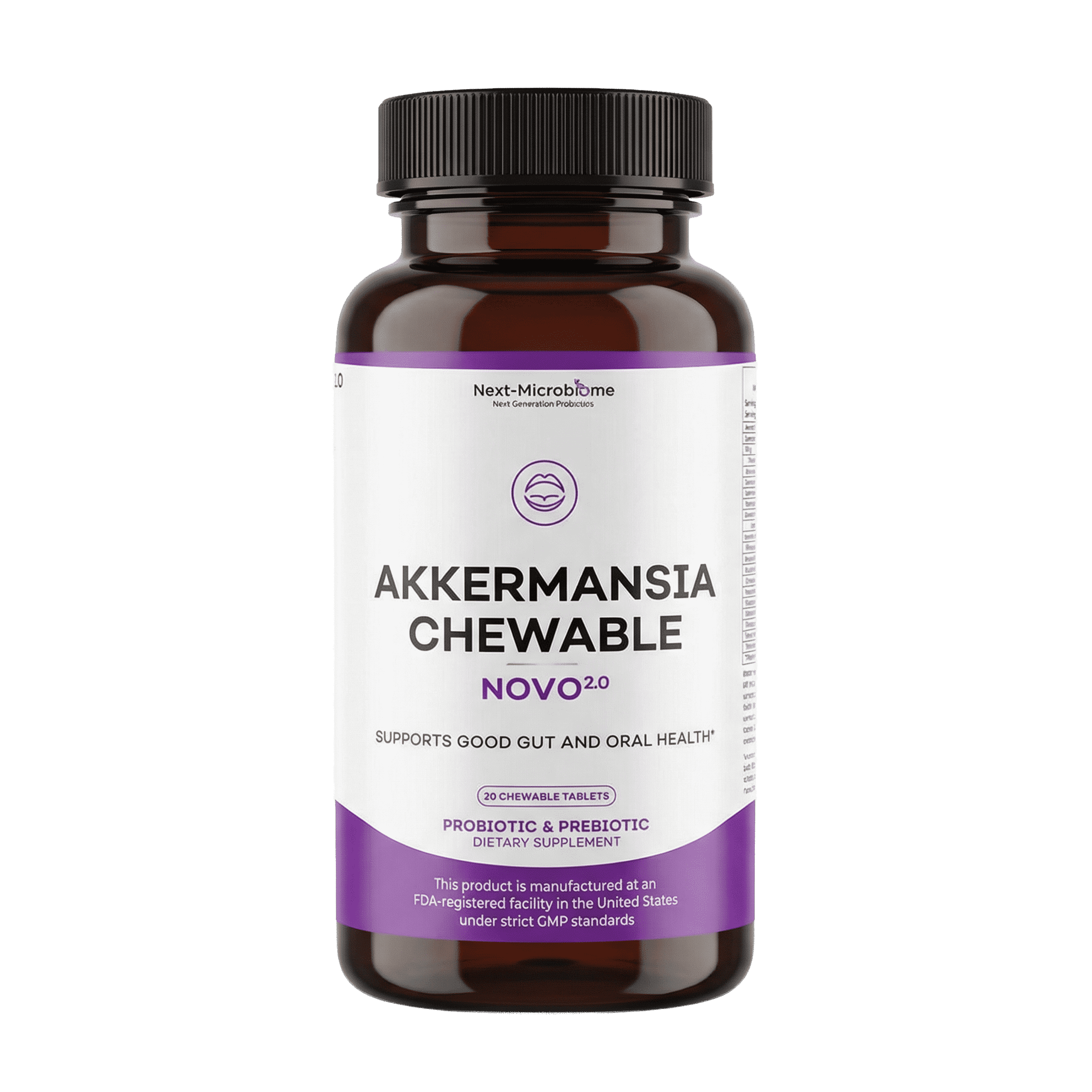
Akkermansia Chewable — Probiome NOVO 2.0
An Akkermansia chewable probiotic formula such as Akkermansia Chewable — Probiome NOVO 2.0 may be explored for educational context because chewable delivery is designed to interact with the oral microbiome before reaching the gut.
Mentioned for educational context only; not medical advice.
FAQ:
1. What daily habits help support a healthier oral microbiome?
A healthier oral microbiome is usually supported by steady daily habits rather than one single intervention. The most practical foundation is brushing and flossing regularly, cleaning the tongue, keeping saliva flowing, and staying consistent with dental checkups. Diet also matters because oral microbial balance can be influenced by sugar exposure, oral hygiene, smoking, and other everyday factors.
Scientific Reference:
https://www.hopkinsmedicine.org/health/conditions-and-diseases/halitosis-bad-breath
https://www.health.harvard.edu/heart-health/why-your-gums-are-so-important-to-your-health
https://pmc.ncbi.nlm.nih.gov/articles/PMC9227938/
2. Can dry mouth affect the oral microbiome?
Yes. Saliva helps control bacteria, rinse away acids and food particles, and support overall oral balance. When the mouth stays dry, the risk of plaque buildup, gum inflammation, cavities, and oral infections can rise. Research reviews also describe xerostomia as a setting where oral microbial imbalance, or dysbiosis, becomes more likely. Mouth breathing can also contribute to dry mouth in some people.
Scientific Reference:
https://my.clevelandclinic.org/health/symptoms/22495-diabetes-and-dry-mouth
https://pmc.ncbi.nlm.nih.gov/articles/PMC11640827/
Written by Ali Rıza Akın
Microbiome Scientist, Author & Founder of Next-Microbiome
Ali Rıza Akın is a microbiome scientist with nearly 30 years of experience in translational biotechnology, systems biology, and applied microbiome research, spanning discovery, preclinical development, and clinical-stage translation.
His work focuses on how microbial ecosystems interact with human physiology, including:
-
Gut barrier function and intestinal permeability
-
Mucus-associated microbiota (Akkermansia-related systems)
-
Oral–gut microbiome axis
-
Short-chain fatty acids (SCFAs) and metabolic signaling
-
Circadian rhythm–microbiome interactions
-
Clinical Research Contributions
He has contributed to multiple clinical-stage microbiome programs, supporting bacterial strain discovery, optimization, and formulation design across different therapeutic areas, including:
Active Ulcerative Colitis (Inflammatory Bowel Disease)
Hyperoxaluria (Oxalate Metabolism Disorder)
Microbiome-driven gut health and inflammatory conditions
These studies were part of broader clinical development programs evaluating microbiome-based approaches. His contributions focused on the early-stage scientific and translational pipeline, including strain discovery, functional optimization, and multi-strain formulation design.
Scientific Contributions:
Ali Rıza Akın is the discoverer of Christensenella californii, a bacterial species associated with microbiome diversity and metabolic health.
He is a contributing author to scientific publications and Bacterial Therapy of Cancer (Springer), and the author of Bakterin Kadar Yaşa: İçimizdeki Evren: Mikrobiyotamız.
Approach:
His work emphasizes evidence-based microbiome science, long-term safety, and a systems-based understanding of how microbes influence human health.
The content provided is for educational and informational purposes only and does not replace professional medical advice, diagnosis, or treatment.
GLP-1 and Microbiome Repair for Appetite Control and Long-Term Metabolism
Menopause Gut Health Science Hub: Microbiome, Hormones, Sleep, and Natural Relief
Related Posts

Why Do You Wake Up at 3 A.M.? Gut, Cortisol, Blood Sugar, and Sleep Recovery

Can Gut Health Affect Sleep? How the Microbiome May Shape Rest and Recovery

Ozempic Plateau? What Your Gut Microbiome May Be Telling You About Slower Weight Loss

Akkermansia vs Ozempic: Why Gut Balance May Shape GLP-1, Digestion, and Results

GLP-1 Gut Side Effects: Why Bloating and Constipation Happen and What May Help

Best Probiotic for Leaky Gut? Why Gut Barrier Support Differs From Digestive Probiotics

Can You Support Akkermansia Naturally, or Are Supplements Needed?
