


Psychobiotic Ingredients for Mood, Stress, and Sleep Support Through the Gut-Brain Axis
How Next-Microbiome Ingredients Support Mood & Sleep
Discover how Akkermansia muciniphila, Clostridium butyricum, Bifidobacterium infantis, and other Next-Microbiome strains influence the gut–brain axis, supporting mood, stress resilience, and deep sleep.
Introduction: From Gut to Brain, A New Frontier
For decades, probiotics were considered “gut only” — useful for digestion, bloating, and maybe immunity. But modern science has revealed something much more profound: the gut and brain are in constant conversation.
This discovery gave birth to the concept of psychobiotics — probiotic strains that influence mood, stress resilience, and sleep quality.
Anyone evaluating an Akkermansia muciniphila supplement should first understand how this bacterium fits into gut barrier integrity, inflammatory balance, and gut-brain signaling. In a mood and sleep context, Akkermansia support should be viewed as microbiome support, not as a stand-alone solution for anxiety, depression, insomnia, or stress-related symptoms.
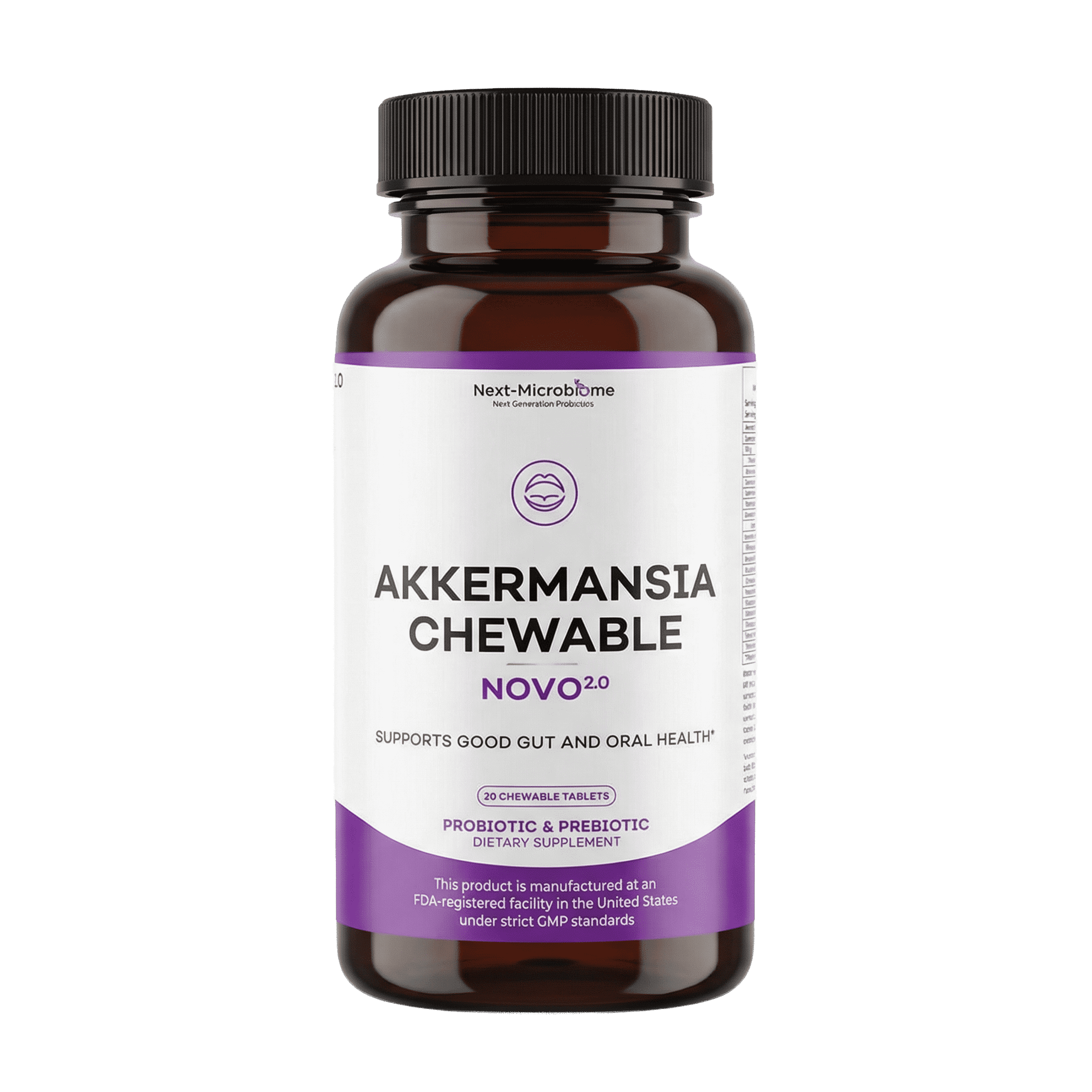
At Next-Microbiome, we embraced this revolution by building our formulas around next-generation bacteria like Akkermansia Chewable, Boost Synergy GLP-1, and Vellura. These aren’t generic probiotics. They are carefully selected strains with pathways that connect directly to the gut–brain axis.
Current Akkermansia muciniphila science increasingly focuses on how this mucus-associated bacterium influences gut barrier integrity, inflammatory balance, and host-microbiome signaling within the gut-brain axis.
Let’s explore how each ingredient plays a role.
1. Akkermansia muciniphila: The Silent Architect of Gut–Brain Balance
-
Barrier protection: Akkermansia strengthens the intestinal lining, preventing “leaky gut.”
-
Why it matters: A stronger barrier lowers systemic inflammation — a hidden driver of anxiety, brain fog, and poor sleep.
-
Evidence: In a 2019 Nature Medicine trial, pasteurized Akkermansia improved insulin sensitivity and reduced inflammation markers in overweight adults.
For readers comparing pasteurized vs lyophilized probiotic formats, the key consideration is how each formulation relates to stability, delivery quality, microbial viability, and the intended gut barrier or gut-brain support mechanism.
These mechanisms help explain why Akkermansia muciniphila benefits are increasingly discussed in relation to gut barrier support, inflammatory regulation, and broader gut-brain resilience.
By stabilizing the gut environment, Akkermansia lays the foundation for a calmer mind and more restorative sleep.
An Akkermansia chewable probiotic formula may be considered through the lens of delivery format, oral-gut signaling, mucosal interaction, and daily consistency. For mood and sleep support, the safest framing is gut-brain pathway support rather than a direct claim that a probiotic can treat stress, anxiety, or insomnia.
2. Clostridium butyricum: The Butyrate Producer for Restorative Sleep
-
Butyrate → Sleep induction: Butyrate, a short-chain fatty acid, has been shown in animal studies to promote non-REM sleep.
-
Brain benefits: Butyrate also lowers neuroinflammation and supports neuroplasticity.
-
Human evidence: Japanese studies suggest C. butyricum improves both digestive and psychological symptoms, especially under stress.
This is your natural “sleep bacterium.”
An Akkermansia and Clostridium butyricum probiotic may be evaluated through complementary gut-brain pathways: Akkermansia for mucus-layer and barrier support, and Clostridium butyricum for butyrate-related SCFA activity. This framing keeps the focus on microbial signaling, inflammation balance, and sleep-related resilience rather than direct treatment claims.
3. Bifidobacterium infantis: The Serotonin & Melatonin Ally
-
Tryptophan metabolism: B. infantis increases circulating tryptophan — the raw material for serotonin (mood) and melatonin (sleep).
-
Anti-inflammatory: Helps quiet stress-related immune pathways.
-
Evidence: Animal studies show B. infantis reverses depressive-like behavior; human trials show reductions in inflammatory cytokines.
This strain helps restore the “happiness molecule” and the “sleep hormone.”
A melatonin-free sleep probiotic may fit this discussion when it is framed around gut-brain signaling, tryptophan metabolism, SCFA activity, cortisol rhythm, and microbiome-supported sleep pathways. The safest positioning is not that probiotics replace melatonin or treat insomnia, but that they may support the biological systems involved in natural sleep regulation.
4. Bifidobacterium longum: Clinically Validated Stress Resilience
Some Next-Microbiome blends include B. longum, one of the most clinically studied psychobiotics.
-
1714 strain: RCTs demonstrated reduced stress and improved memory.
-
R0175 strain: Reported to improve anxiety and depressive symptoms in healthy volunteers.
B. longum is the strongest evidence that psychobiotics can truly influence stress resilience in humans.
5. Lactobacillus rhamnosus: The GABA Pathway Modulator
-
Calming effect: In rodent studies, L. rhamnosus JB-1 altered GABA receptor expression, reducing anxiety-like behavior.
-
Vagus nerve proof: These effects disappeared when the vagus nerve was cut — showing gut–brain communication in action.
Supports calmness and helps reduce the “wired but tired” state that disrupts sleep.
6. Multi-Pathway Synergy
| Strain | Found in | Psychobiotic Action |
|---|---|---|
| Akkermansia muciniphila | Akkermansia Chewable | Strengthens gut barrier → lowers inflammation, stabilizes brain signaling |
| Clostridium butyricum | Boost Synergy GLP-1 | Produces butyrate → induces restorative sleep |
| Bifidobacterium infantis | Boost Synergy GLP-1 | Boosts serotonin & melatonin pathways |
| Bifidobacterium longum | Select blends | Human-validated stress resilience |
| Lactobacillus rhamnosus | Select blends | GABA modulation → calmness & relaxation |
This is a multi-pathway design — targeting inflammation, neurotransmitters, sleep cycles, and stress resilience all at once.
7. Practical Routine
-
Morning: Take Akkermansia Chewable to set your gut barrier and reduce inflammation.
-
Evening: Take Boost Synergy GLP-1 for serotonin, melatonin, and butyrate support.
-
Women’s support: Add Vellura during menopause or hormonal transition to stabilize mood and sleep.
8. A Personal Note: From Science to Daily Life
When I first began studying the gut–brain axis, I expected to find complex pathways and molecules. And they’re all there. But what struck me most is how this science translates into everyday life.
When stress keeps you awake at night, it’s not just in your head — your gut barrier may be inflamed, serotonin may be low, your calming GABA pathways misfiring. The fog, the mood swings, the restless sleep — they’re signals from an ecosystem inside you.
That’s why we created these formulas:
-
Akkermansia Chewable to rebuild the gut’s foundation.
-
Boost Synergy GLP-1 to bring sleep and mood messengers back into rhythm.
-
Vellura to support women in one of life’s most challenging transitions.
The science is rigorous — published in Nature, tested in human trials. But the real story is in how you feel: the morning you wake rested, the meeting you handle calmly, the laughter that comes easier.
That’s the promise of psychobiotics: not quick miracles, but steady, natural support for the systems that make us human — mood, resilience, and sleep.
With consistency, day by day, you start to feel like yourself again.
Ready to Begin Your Psychobiotic Journey?
Start today with our science-backed formulas:
Remember: Take daily for 4–8 weeks to unlock the full psychobiotic potential of your microbiome.
FAQ:
1. Can gut health affect stress, mood, and sleep at the same time?
Yes. The gut-brain axis is a two-way communication system involving the gut microbiome, nervous system, hormones, immune signaling, and neurotransmitters. Because these systems interact closely, gut health can overlap with stress levels, mood, and sleep quality rather than affecting digestion alone. Cleveland Clinic also notes that poor or fragmented sleep has been associated with microbiome imbalance, which helps explain why gut discomfort, restless sleep, and stress can show up together.
Scientific Reference:
https://my.clevelandclinic.org/health/body/the-gut-brain-connection
https://my.clevelandclinic.org/podcasts/butts-and-guts/exploring-the-impact-of-sleep-on-digestive-health
https://my.clevelandclinic.org/health/body/25201-gut-microbiome
2. Does timing matter when taking probiotics for mood and sleep support?
Timing can matter, but consistency matters more. Cleveland Clinic notes that many probiotics do well when taken with food, and breakfast is a practical option for many people because the bowels are more active when you are active. At the same time, probiotic timing can vary by strain and formulation, so the most practical approach is to follow the product directions and take it consistently enough to support a regular routine.
Scientific Reference:
https://health.clevelandclinic.org/best-time-to-take-probiotics
https://my.clevelandclinic.org/health/treatments/14598-probiotics
3. What foods and habits can help probiotics support mood and sleep more effectively?
A probiotic routine usually works best when it is paired with habits that support the gut-brain axis. Johns Hopkins highlights fiber-rich plant foods and fermented foods for gut health, while Harvard recommends prioritizing whole foods over ultra-processed foods when trying to improve how you feel. Cleveland Clinic also recommends a balanced, plant-rich diet and stress management as practical ways to support gut-brain signaling. Taken together, a steady routine built around whole foods, fiber, fermented foods, regular sleep, and stress control can create a stronger foundation for microbiome-focused mood and sleep support.
Scientific Reference:
https://www.hopkinsmedicine.org/health/wellness-and-prevention/your-digestive-system-5-ways-to-support-gut-health
https://www.health.harvard.edu/blog/gut-feelings-how-food-affects-your-mood-2018120715548
https://my.clevelandclinic.org/health/body/the-gut-brain-connection
Written by Ali Rıza Akın
Microbiome Scientist, Author & Founder of Next-Microbiome
Ali Rıza Akın is a microbiome scientist with nearly 30 years of experience in translational biotechnology, systems biology, and applied microbiome research, spanning discovery, preclinical development, and clinical-stage translation.
His work focuses on how microbial ecosystems interact with human physiology, including:
-
Gut barrier function and intestinal permeability
-
Mucus-associated microbiota (Akkermansia-related systems)
-
Oral–gut microbiome axis
-
Short-chain fatty acids (SCFAs) and metabolic signaling
-
Circadian rhythm–microbiome interactions
-
Clinical Research Contributions
He has contributed to multiple clinical-stage microbiome programs, supporting bacterial strain discovery, optimization, and formulation design across different therapeutic areas, including:
Active Ulcerative Colitis (Inflammatory Bowel Disease)
Hyperoxaluria (Oxalate Metabolism Disorder)
Microbiome-driven gut health and inflammatory conditions
These studies were part of broader clinical development programs evaluating microbiome-based approaches. His contributions focused on the early-stage scientific and translational pipeline, including strain discovery, functional optimization, and multi-strain formulation design.
Scientific Contributions:
Ali Rıza Akın is the discoverer of Christensenella californii, a bacterial species associated with microbiome diversity and metabolic health.
He is a contributing author to scientific publications and Bacterial Therapy of Cancer (Springer), and the author of Bakterin Kadar Yaşa: İçimizdeki Evren: Mikrobiyotamız.
Approach:
His work emphasizes evidence-based microbiome science, long-term safety, and a systems-based understanding of how microbes influence human health.
Is Live Akkermansia Better Than Pasteurized for Gut Health and Microbiome Support?
Why Chewable Akkermansia May Work Better Than Capsules for Oral-Gut Support
Related Posts

Why Do You Wake Up at 3 A.M.? Gut, Cortisol, Blood Sugar, and Sleep Recovery

Can Gut Health Affect Sleep? How the Microbiome May Shape Rest and Recovery

Ozempic Plateau? What Your Gut Microbiome May Be Telling You About Slower Weight Loss

Akkermansia vs Ozempic: How Gut Microbiome Support May Influence GLP-1 and Digestion

GLP-1 Side Effects: How to Ease Bloating, Constipation, and Gut Issues Naturally

Best Probiotic for Leaky Gut? Why Gut Barrier Support Differs From Digestive Probiotics

Can You Support Akkermansia Naturally, or Are Supplements Needed?
