


Can Akkermansia Help Support Mood, Stress Resilience, and Gut-Brain Health?
Akkermansia and Depression: Can a Probiotic Improve Your Mood?
Depression affects millions of people globally, causing feelings of sadness, fatigue, and loss of interest in daily activities. Recent research shows a surprising connection between gut health, particularly the gut microbiome, and depression. A probiotic bacterium, Akkermansia muciniphila, is emerging as a promising player in regulating mood. But can improving your gut with Akkermansia help alleviate depression? Let’s explore the science behind it and discover how Akkermansia Chewable could become your new ally in mental health.
Understanding the Gut-Brain Connection
Our gut and brain are more connected than we once thought. This link, known as the gut-brain axis, allows the gut microbiome—trillions of microorganisms living in our digestive system—to communicate with our brain through nerves, hormones, and immune responses.
Scientists have found that the balance of bacteria in the gut influences mood, anxiety, and depression. When the gut microbiome is imbalanced (known as dysbiosis), it can negatively impact mental health. Akkermansia muciniphila is one beneficial bacterium that plays a vital role in maintaining this balance.
Akkermansia muciniphila: A Key Player
Akkermansia muciniphila thrives by feeding on the mucus lining the gut, helping maintain its thickness and integrity. A robust mucus layer protects your gut lining, preventing harmful substances from entering your bloodstream—a process crucial for mental and physical health.
Current Akkermansia muciniphila science increasingly focuses on how this bacterium relates to gut barrier and intestinal lining health, inflammatory balance, and host-microbiome signaling within the gut-brain axis.
For readers comparing options, the best probiotic for gut lining is usually one that supports barrier integrity, inflammatory balance, and long-term microbiome resilience rather than promising direct mood changes.
Anyone researching where to buy Akkermansia muciniphila should evaluate products through formulation quality, delivery format, gut barrier support, safety, and professional guidance. In a mood-focused context, Akkermansia should be understood as part of broader gut-brain and microbiome support, not as a replacement for depression care.
Low levels of Akkermansia are associated with increased gut permeability, inflammation, and mood disorders, including depression. Increasing Akkermansia in your gut may help reduce inflammation and strengthen the gut barrier, thereby improving your mood.
How Does Akkermansia Influence Depression?
Reducing Inflammation
Chronic inflammation is closely linked to depression. Akkermansia helps reduce inflammation by maintaining a healthy gut barrier, thus preventing inflammatory substances from entering your bloodstream and affecting brain function.
Balancing Neurotransmitters
Akkermansia influences the production of serotonin and dopamine, essential neurotransmitters involved in mood regulation. By maintaining gut health, Akkermansia indirectly supports balanced neurotransmitter levels, improving mood, and reducing depressive symptoms.
Enhancing Stress Resilience
Stress negatively impacts gut health, further exacerbating depression. Akkermansia helps bolster resilience to stress by supporting gut integrity and reducing the harmful effects of stress-related hormones.
These mechanisms help explain why Akkermansia muciniphila benefits are increasingly discussed in relation to gut barrier support, inflammatory regulation, stress resilience, and broader gut-brain health.
Scientific Evidence Supporting Akkermansia for Depression
Multiple studies highlight the connection between Akkermansia and improved mental health:
-
A 2021 study published in "Nature Communications" found that people with depression have significantly lower levels of Akkermansia compared to healthy individuals, suggesting a strong correlation between Akkermansia levels and depression symptoms (Zheng et al., 2021).
-
Another research paper published in "Brain, Behavior, and Immunity" showed that Akkermansia supplementation in animal models decreased inflammation and depressive behaviors, supporting its potential use as a therapeutic probiotic for mood disorders (Li et al., 2019).
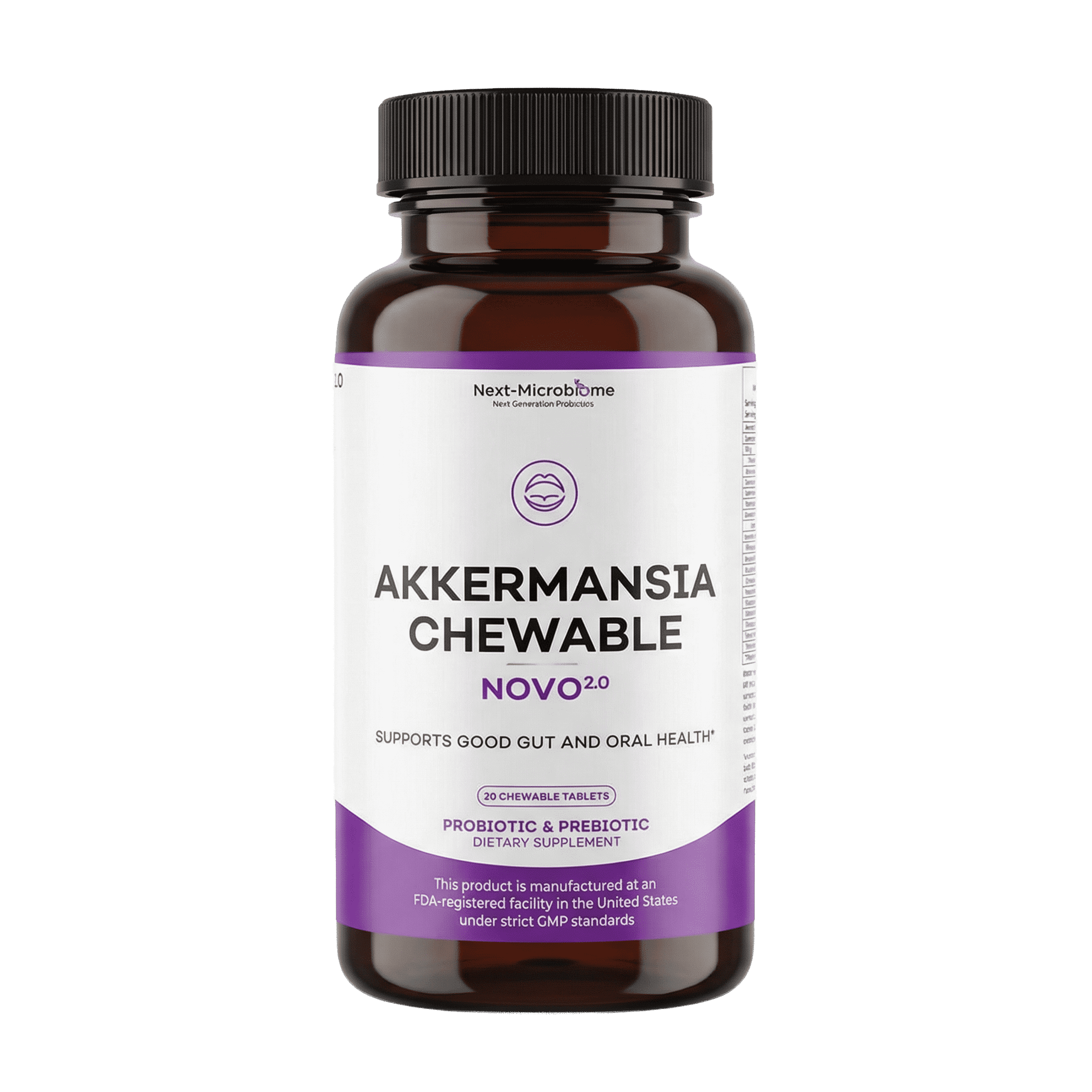
Introducing Akkermansia Chewable: A Practical Solution
Understanding the emerging role of Akkermansia muciniphila in gut barrier integrity, inflammatory balance, and gut-brain signaling, an Akkermansia chewable probiotic formula may offer a convenient way to support the gut microbiome as part of a broader wellness routine.
For readers comparing pasteurized vs lyophilized probiotic formats, the key consideration is how each formulation relates to stability, microbial viability, delivery quality, safety, and the intended gut-brain support mechanism rather than assuming one format is universally better.
Why Choose Akkermansia Chewable?
-
Ease of Use: Chewable tablets are perfect for daily use, requiring no water and are ideal for individuals with swallowing difficulties.
-
Enhanced Absorption: Chewing helps probiotics colonize the mouth, throat, and gut effectively.
-
Comprehensive Formulation: Akkermansia Chewable is enriched with additional beneficial ingredients, including polyphenols, inulin, and vitamin D, to enhance the effectiveness of the probiotic and overall gut health.
How to Use Akkermansia Chewable
-
Take one chewable tablet daily, ideally before bedtime, after brushing your teeth.
-
Chew slowly and thoroughly to enhance oral and gut microbiome integration.
Additional Ingredients in Akkermansia Chewable
Akkermansia Chewable is formulated with supportive ingredients to maximize its gut and mood-enhancing effects:
-
Polyphenols: Powerful antioxidants that support gut bacteria and reduce inflammation.
-
Inulin: A dietary fiber acting as food for probiotics, promoting the growth of beneficial gut bacteria.
-
Vitamin D: Enhances gut integrity and immune function, both crucial for mood regulation.
Lifestyle Tips to Boost Akkermansia Naturally
In addition to taking Akkermansia Chewable, confident lifestyle choices can help naturally boost your Akkermansia levels:
-
Diet: Focus on fiber-rich foods, such as oats, beans, nuts, and berries.
-
Regular Exercise: Engaging in physical activity increases Akkermansia levels and enhances gut health.
-
Stress Management: Practices such as meditation, yoga, or mindfulness can help reduce stress-induced damage to the gut microbiome.
Frequently Asked Questions:
1. How soon can I expect to feel better after taking Akkermansia Chewable?
While individual responses vary, many people notice improvements in gut and mood within 4-6 weeks of regular use.
2. Can Akkermansia Chewable replace my antidepressant medication?
Akkermansia Chewable supports gut health and can complement other treatments, but always consult your healthcare provider before making changes to medication.
3. Are there any side effects?
Akkermansia Chewable is generally well-tolerated, but mild digestive adjustments can occur initially as your microbiome adjusts.
4. Is there real human evidence that Akkermansia can help depression?
Akkermansia is a promising area of research, but it is not yet a proven stand-alone treatment for depression. Most direct Akkermansia findings linked to depressive symptoms are still preclinical, while the stronger human evidence at this point is for probiotics more broadly, not Akkermansia alone. That makes it more accurate to present Akkermansia as an emerging gut-brain support strategy rather than a confirmed depression therapy.
In that context, an Akkermansia supplement is best understood as a microbiome-supportive option that may complement gut barrier and inflammatory balance, not as a replacement for professional depression care.
Medical Reference:
https://my.clevelandclinic.org/health/treatments/natural-antidepressants
Scientific Reference:
https://pubmed.ncbi.nlm.nih.gov/37668965/
https://pubmed.ncbi.nlm.nih.gov/39731509/
https://pubmed.ncbi.nlm.nih.gov/40647242/
5. What foods and habits best support gut bacteria linked to mood?
No single food treats depression, but a varied, plant-rich diet can support the gut microbiome that helps regulate inflammation, gut barrier health, and gut-brain signaling. Experts commonly recommend prebiotic-rich foods, whole fruits and vegetables, whole grains, fermented foods, regular exercise, enough sleep, and stress reduction as practical ways to support a healthier microbial environment. Recent reviews also describe diet-based microbiome support as a useful complementary strategy for mood and depression care.
Medical Reference:
https://health.clevelandclinic.org/how-to-improve-your-digestive-tract-naturally
https://health.clevelandclinic.org/what-are-prebiotics
Scientific Reference:
https://pubmed.ncbi.nlm.nih.gov/39928205/
6. When should someone seek medical care instead of relying on probiotics or supplements for depression?
If low mood, loss of interest, sleep changes, appetite changes, fatigue, or hopelessness persist and interfere with daily life, it is important to speak with a healthcare professional rather than relying on supplements alone. Urgent help is needed if there are thoughts of self-harm or suicide. Probiotics may be supportive for some people, but they should not delay proper evaluation or treatment for depression.
Medical Reference:
https://www.nimh.nih.gov/health/publications/depression
https://www.mayoclinic.org/diseases-conditions/depression/symptoms-causes/syc-20356007
https://www.nimh.nih.gov/health/topics/suicide-prevention
Conclusion: A New Frontier in Depression Treatment
Depression is a complex condition that requires multifaceted approaches. Emerging research highlights Akkermansia muciniphila as a promising probiotic that supports mental health by improving gut integrity, reducing inflammation, and promoting neurotransmitter balance. Akkermansia Chewable is an accessible, effective supplement designed to harness these benefits, offering a practical way to enhance mood and overall well-being.
Take the first step towards better gut health and a brighter mood by exploring Akkermansia Chewable today.
References
-
Zheng, P., et al. (2021). Gut microbiome remodeling induces depressive-like behaviors through a pathway mediated by the host’s metabolism. Nature Communications.
-
Li, J., et al. (2019). Akkermansia muciniphila and gut barrier integrity: A promising therapeutic target for depressive disorders. Brain, Behavior, and Immunity.
Written by Ali Rıza Akın
Microbiome Scientist, Author & Founder of Next-Microbiome
Ali Rıza Akın is a microbiome scientist with nearly 30 years of experience in translational biotechnology, systems biology, and applied microbiome research, spanning discovery, preclinical development, and clinical-stage translation.
His work focuses on how microbial ecosystems interact with human physiology, including:
-
Gut barrier function and intestinal permeability
-
Mucus-associated microbiota (Akkermansia-related systems)
-
Oral–gut microbiome axis
-
Short-chain fatty acids (SCFAs) and metabolic signaling
-
Circadian rhythm–microbiome interactions
-
Clinical Research Contributions
He has contributed to multiple clinical-stage microbiome programs, supporting bacterial strain discovery, optimization, and formulation design across different therapeutic areas, including:
Active Ulcerative Colitis (Inflammatory Bowel Disease)
Hyperoxaluria (Oxalate Metabolism Disorder)
Microbiome-driven gut health and inflammatory conditions
These studies were part of broader clinical development programs evaluating microbiome-based approaches. His contributions focused on the early-stage scientific and translational pipeline, including strain discovery, functional optimization, and multi-strain formulation design.
Scientific Contributions:
Ali Rıza Akın is the discoverer of Christensenella californii, a bacterial species associated with microbiome diversity and metabolic health.
He is a contributing author to scientific publications and Bacterial Therapy of Cancer (Springer), and the author of Bakterin Kadar Yaşa: İçimizdeki Evren: Mikrobiyotamız.
Approach:
His work emphasizes evidence-based microbiome science, long-term safety, and a systems-based understanding of how microbes influence human health.
All content is provided for educational purposes only and does not replace personalized medical advice. Readers should consult qualified healthcare professionals for individual health decisions
Akkermansia muciniphila: How It Supports Gut Strength, Metabolism, Immunity, and Wellness
Can Your Gut Microbiome Support Natural GLP-1 Balance and Metabolic Health?
Related Posts

Why Do You Wake Up at 3 A.M.? Gut, Cortisol, Blood Sugar, and Sleep Recovery

Can Gut Health Affect Sleep? How the Microbiome May Shape Rest and Recovery

Ozempic Plateau? What Your Gut Microbiome May Be Telling You About Slower Weight Loss

Akkermansia vs Ozempic: How Gut Microbiome Support May Influence GLP-1 and Digestion

GLP-1 Side Effects: How to Ease Bloating, Constipation, and Gut Issues Naturally

Best Probiotic for Leaky Gut? Why Gut Barrier Support Differs From Digestive Probiotics

Can You Support Akkermansia Naturally, or Are Supplements Needed?
