


Akkermansia Benefits: Why This Gut Bacterium Matters for Gut and Metabolic Health
In the bustling metropolis of our gut, a microscopic hero named Akkermansia muciniphila plays a vital role in maintaining our overall well-being. This remarkable bacterium, belonging to the Verrucomicrobiaceae family, resides in the mucus layer lining our intestinal walls, performing many functions crucial to our health.
Current Akkermansia muciniphila science focuses on how this mucus-associated bacterium interacts with gut barrier integrity, immune signaling, and metabolic regulation.
For anyone comparing the best Akkermansia probiotic, the starting point is understanding how Akkermansia supports mucin renewal, gut barrier integrity, inflammatory balance, and long-term microbiome resilience.
1. Nourishing the Gut Lining
Akkermansia muciniphila is a voracious consumer of mucin, the complex sugar molecules that form the protective barrier of our gut lining. Breaking down mucin provides nutrients for itself and helps in the renewal and maintenance of this essential barrier. A healthy gut lining acts as a shield, preventing harmful toxins, pathogens, and undigested food particles from entering our bloodstream and causing inflammation and disease.
For readers comparing options, the best probiotic for gut lining is usually one that supports mucin renewal, gut barrier integrity, and long-term microbial balance rather than promising quick digestive repair.
2. Regulating Inflammation
One of Akkermansia muciniphila's most significant benefits is its ability to modulate inflammation in the gut. Chronic inflammation is associated with various health conditions, including obesity, type 2 diabetes, and inflammatory bowel disease. Studies have shown that individuals with lower levels of Akkermansia muciniphila tend to have higher levels of inflammatory markers in their blood.
This bacterium produces short-chain fatty acids (SCFAs) as a byproduct of its metabolic activities. These SCFAs play a crucial role in reducing inflammation by promoting the production of anti-inflammatory cytokines and inhibiting the production of pro-inflammatory cytokines.
3. Improving Insulin Sensitivity
Insulin resistance is a major risk factor for type 2 diabetes. Research suggests that Akkermansia muciniphila can improve insulin sensitivity by enhancing cellular glucose uptake. This can help regulate blood sugar levels and reduce the risk of developing diabetes.
Research on Akkermansia muciniphila suggests that this bacterium may support insulin sensitivity through its relationship with glucose metabolism, gut barrier function, and host-microbiome signaling.
In that context, a metabolic support probiotic is best understood as a microbiome-supportive option that may complement glucose metabolism, gut barrier resilience, and broader metabolic balance rather than act as a stand-alone solution.
4. Promoting Weight Management
Studies have shown a correlation between lower levels of Akkermansia muciniphila and obesity. This bacterium may play a role in weight management by regulating appetite, reducing fat storage, and increasing energy expenditure.
Research on Akkermansia weight management is best understood through its relationship with gut barrier function, metabolic signaling, appetite regulation, and inflammatory balance rather than as a stand-alone weight-loss claim.
5. Strengthening the Immune System
The gut is home to a complex ecosystem of microbes that play a crucial role in our immune system. Akkermansia muciniphila helps maintain the balance of gut microbiota, promoting a healthy immune response. It also produces substances that stimulate the production of antibodies, which help protect us from infections.
How to Increase Akkermansia Levels
While Akkermansia muciniphila is naturally present in our gut microbiome, its levels can decline due to factors such as unhealthy diet, stress, and antibiotic use. Fortunately, there are several ways to increase Akkermansia levels:
- Consume a fiber-rich diet: Fiber is the primary food source for Akkermansia muciniphila. Include plenty of fruits, vegetables, whole grains, and legumes in your diet to promote its growth.
- Incorporate prebiotics: Prebiotics are non-digestible fibers that feed beneficial bacteria like Akkermansia muciniphila. Foods rich in prebiotics include bananas, onions, garlic, and chicory.
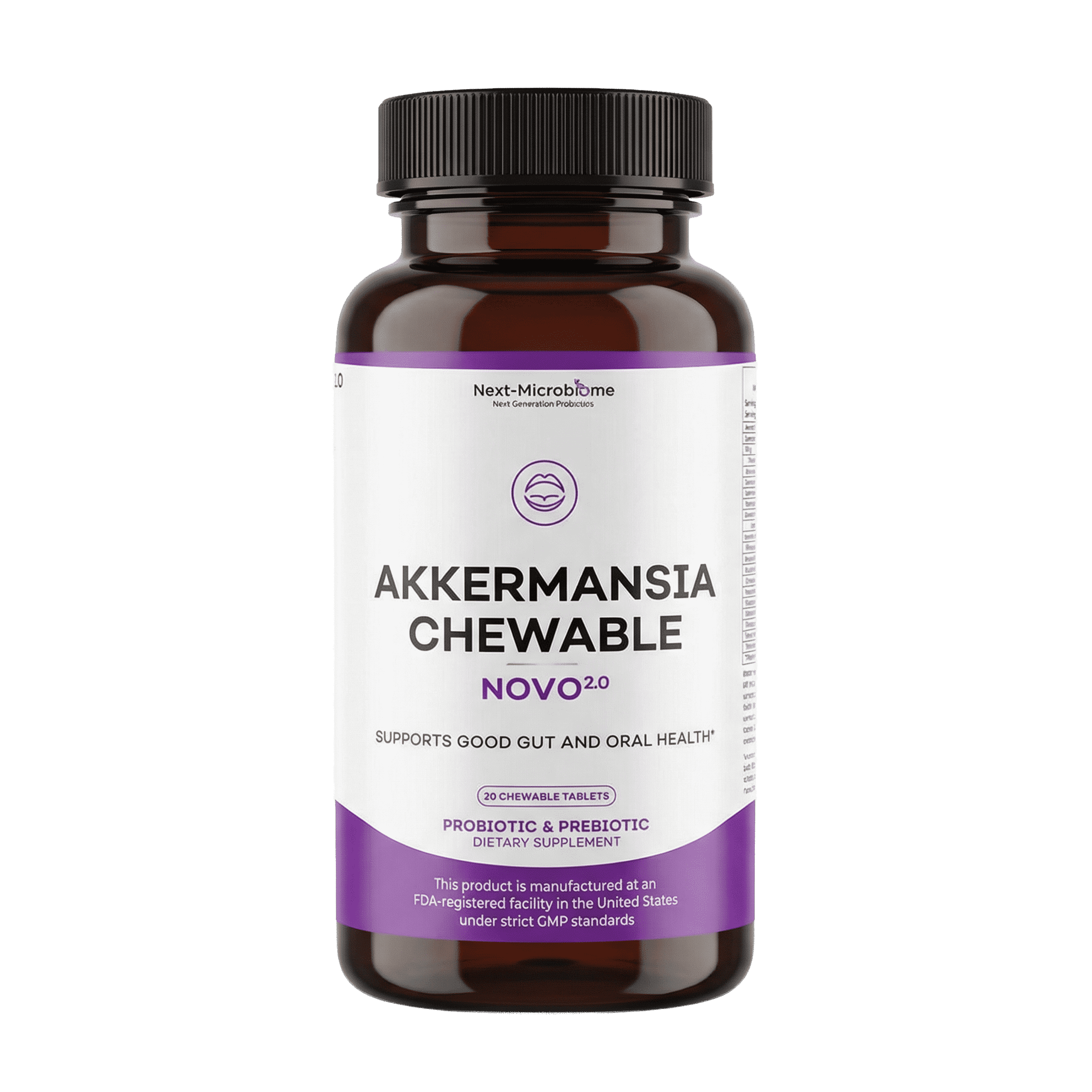
- Consider probiotic supplements: Some probiotic supplements contain Akkermansia muciniphila strains such as Probiome Boost 2.0, Akkermansia Chewable Novo 2.0.
By nurturing the growth of Akkermansia muciniphila, we can reap the benefits of this remarkable bacterium and improve our overall gut health and well-being. Remember, a healthy gut is the foundation of a healthy body!
For readers looking at the bigger wellness picture, microbiome and lifespan research is often discussed through long-term microbial balance, gut barrier resilience, inflammatory regulation, metabolic health, and sustainable lifestyle habits.
FAQ:
1. Is Akkermansia naturally found in the human gut, or only in supplements?
Akkermansia muciniphila is a naturally occurring bacterium in the human gut. Review articles describe it as a mucus-associated microbe that is commonly found in healthy adults, rather than something that exists only in supplements. Supplements are one possible way to support this area of microbiome health, but the organism itself is part of the normal gut ecosystem.
Scientific Reference:
https://pmc.ncbi.nlm.nih.gov/articles/PMC9300896/
https://pmc.ncbi.nlm.nih.gov/articles/PMC6801136/
https://pmc.ncbi.nlm.nih.gov/articles/PMC10301191/
2. How long does it usually take to notice changes when supporting Akkermansia?
It is more realistic to think in weeks to months, not overnight. In a human proof-of-concept study, Akkermansia supplementation was evaluated over 3 months, with improvements seen in markers such as insulin sensitivity and cholesterol. More broadly, probiotics are usually judged over time as digestive comfort and metabolic patterns gradually improve, so consistency matters more than expecting immediate results after only a few days.
Scientific Reference:
https://pmc.ncbi.nlm.nih.gov/articles/PMC6699990/
https://pmc.ncbi.nlm.nih.gov/articles/PMC10301191/
3. Can exercise and daily habits help create a better environment for Akkermansia?
Yes. Exercise is one of the most reliable ways to support a healthier gut microbiome overall, and some research reviews suggest it may help create conditions associated with higher Akkermansia abundance in at least some people. Diet quality, the connection between microbiome and sleep, and daily routine also shape the broader microbiome environment, so Akkermansia support usually works best as part of a consistent lifestyle rather than a single isolated step.
Scientific Reference:
https://www.mdpi.com/2072-6643/14/3/674
https://pmc.ncbi.nlm.nih.gov/articles/PMC11317475/
Written by Ali Rıza Akın
Microbiome Scientist, Author & Founder of Next-Microbiome
Ali Rıza Akın is a microbiome scientist with nearly 30 years of experience in translational biotechnology, systems biology, and applied microbiome research, spanning discovery, preclinical development, and clinical-stage translation.
His work focuses on how microbial ecosystems interact with human physiology, including:
-
Gut barrier function and intestinal permeability
-
Mucus-associated microbiota (Akkermansia-related systems)
-
Oral–gut microbiome axis
-
Short-chain fatty acids (SCFAs) and metabolic signaling
-
Circadian rhythm–microbiome interactions
-
Clinical Research Contributions
He has contributed to multiple clinical-stage microbiome programs, supporting bacterial strain discovery, optimization, and formulation design across different therapeutic areas, including:
Active Ulcerative Colitis (Inflammatory Bowel Disease)
Hyperoxaluria (Oxalate Metabolism Disorder)
Microbiome-driven gut health and inflammatory conditions
These studies were part of broader clinical development programs evaluating microbiome-based approaches. His contributions focused on the early-stage scientific and translational pipeline, including strain discovery, functional optimization, and multi-strain formulation design.
Scientific Contributions:
Ali Rıza Akın is the discoverer of Christensenella californii, a bacterial species associated with microbiome diversity and metabolic health.
He is a contributing author to scientific publications and Bacterial Therapy of Cancer (Springer), and the author of Bakterin Kadar Yaşa: İçimizdeki Evren: Mikrobiyotamız.
Approach:
His work emphasizes evidence-based microbiome science, long-term safety, and a systems-based understanding of how microbes influence human health.
The content provided is for educational and informational purposes only and does not replace professional medical advice, diagnosis, or treatment.
Related Posts

Why Do You Wake Up at 3 A.M.? Gut, Cortisol, Blood Sugar, and Sleep Recovery

Can Gut Health Affect Sleep? How the Microbiome May Shape Rest and Recovery

Ozempic Plateau? What Your Gut Microbiome May Be Telling You About Slower Weight Loss

Akkermansia vs Ozempic: How Gut Microbiome Support May Influence GLP-1 and Digestion

GLP-1 Side Effects: How to Ease Bloating, Constipation, and Gut Issues Naturally

Best Probiotic for Leaky Gut? Why Gut Barrier Support Differs From Digestive Probiotics

Can You Support Akkermansia Naturally, or Are Supplements Needed?
