


Cortisol, Cravings and GLP-1: How Stress Hijacks Appetite and Belly Fat
Cortisol, Cravings & GLP-1: How Stress Hijacks Appetite
Why do we crave sugar, carbs, and “comfort food” when stressed?
Why does cortisol cause belly fat, emotional eating, overeating, and late-night snacking?
It’s not a willpower problem.
It’s biology — a full-body system involving cortisol, the gut microbiome, SCFAs, neurotransmitters, inflammation, and GLP-1 (your appetite-control hormone).
When comparing Akkermansia probiotics for metabolic wellness, it helps to understand how this microbe fits into the broader stress-appetite system. Akkermansia support should be viewed through gut barrier stability, SCFA production, inflammatory balance, GLP-1-related signaling, and long-term metabolic resilience rather than as a quick fix for cravings or weight changes.
This article is part of our Cortisol–Microbiome Series
If you want to follow the full story from the beginning:
Cortisol & Gut Microbiome: The Hidden Stress Loop Explained
Stress, Gut–Brain Axis & Sleep: Microbiome Disruption
Cortisol, Circadian Rhythm & Microbial Timing Explained
SCFAs & Stress Recovery: Restore Gut, Calm HPA Axis
Cortisol, Cravings & GLP-1: How Stress Hijacks Appetite
Frequently Asked Questions — Cortisol, Cravings, GLP-1 & Stress Biology
1. Why does stress make me crave sugar or carbs?
Cortisol signals the brain to seek fast calories. It amplifies dopamine reward pathways, making sugar and refined carbs feel unusually soothing and satisfying.
2. How does stress disrupt the gut microbiome?
Stress lowers SCFA production, disrupts gut barrier and intestinal lining health, weakens GLP-1 signaling, and increases inflammatory species — all of which intensify hunger and cravings.
For readers comparing options, the best probiotic for gut lining is usually one that supports gut barrier stability, microbial balance, and SCFA-related resilience rather than promising fast appetite changes.
3. Does cortisol suppress GLP-1?
Yes. Cortisol reduces SCFA availability, shifts circadian hormone timing, and increases inflammation — all major drivers of GLP-1 suppression.
4. Why does stress cause belly fat?
Cortisol promotes visceral fat storage, raises insulin resistance, encourages quick-energy eating, and increases appetite for high-calorie foods.
5. Can improving gut health reduce cravings?
Absolutely. A balanced microbiome enhances GLP-1 release, regulates blood sugar, calms cortisol reactivity, and reduces stress-driven appetite.
6. How does cortisol change the way the brain perceives food?
Elevated cortisol heightens dopamine sensitivity and reduces satiety signaling, making high-reward foods feel more compelling even when you’re not truly hungry.
7. Is emotional eating actually a biological response?
Yes — emotional eating is tied to cortisol-induced changes in reward pathways, metabolic hormones, and gut–brain communication, not personal weakness.
8. Can stress disrupt natural hunger hormones like ghrelin and leptin?
Yes — chronic stress increases ghrelin, weakens leptin sensitivity, and blunts GLP-1, creating a “hungry brain” even with sufficient calories.
9. Why do cravings get stronger at night when stressed?
Evening cortisol spikes suppress melatonin, destabilize glucose, disrupt SCFA rhythms, and weaken satiety signals — driving nighttime snacking.
10. How does the microbiome help control cravings?
Microbial metabolites such as SCFAs enhance GLP-1, PYY, and insulin sensitivity, reducing hunger intensity and restoring normal appetite patterns.
11. Can cortisol-driven cravings happen even with a healthy diet?
Yes. When cortisol is elevated, the brain prioritizes reward eating over metabolic logic — even in people who normally eat well.
12. Is there a link between cravings and circadian rhythm disruption?
Strongly. When circadian timing is misaligned, GLP-1 drops, cortisol rises, and cravings intensify — especially in the evening.
13. Can low SCFA levels increase emotional or binge eating?
Yes — low SCFAs reduce gut–brain satiety signals and increase cortisol reactivity, making cravings more intense and harder to resist.
14. Does improving GLP-1 naturally reduce stress cravings?
Yes — higher GLP-1 improves impulse control, stabilizes blood sugar, regulates dopamine reward, and reduces emotional overeating.
15. Why do some people gain belly fat faster during stressful periods?
Stress redistributes fat storage toward the abdomen by increasing cortisol exposure, reducing insulin sensitivity, altering microbiome composition, and suppressing GLP-1.
16. Can chewing-based probiotics influence appetite control?
Yes — oral–gut delivery can enhance mucosal signaling, restore microbial balance, and strengthen GLP-1 pathways before digestion even begins.
17. How long does it take to reduce cortisol-related cravings?
Most people feel improvements within 7–21 days, depending on microbiome repair, sleep stability, and cortisol alignment.
18. Do cravings go away when cortisol stabilizes?
Often yes — when cortisol rhythms normalize and SCFAs increase, appetite becomes more stable, and reward-driven cravings diminish.
19. Can stress cravings occur without emotional triggers?
Yes — cravings can be entirely physiological, triggered by cortisol surges, inflammation, circadian disruption, or gut microbial imbalance.
20. What daily habits help break the cortisol–craving cycle?
Consistent meal timing, better sleep, morning light exposure, high-fiber meals, polyphenols, and GLP-1 supportive probiotics such as Akkermansia + Clostridium butyricum.
Unlock the gut-hormone secret to metabolic health:
"How GLP-1 and the Gut Microbiome Support Metabolism and Weight Management"
1. Why Stress Makes You Hungry: The Cortisol–Appetite Connection
Cortisol’s evolutionary role is to mobilize quick energy during danger.
But when stress becomes chronic, the system hijacks appetite:
• sugar cravings
• carb cravings
• emotional eating
• overeating
• larger portion sizes
Cortisol also increases the brain’s reward sensitivity, making high-calorie foods feel more comforting.
Reference 1 — Annual Review of Psychology (2019)
Stress eating is a hormonal loop — not a lack of discipline.

2. Stress Damages Gut Microbes → Cravings Increase
Chronic stress reshapes the gut ecosystem:
• SCFA-producing bacteria decline
• mucosal barrier integrity weakens
• inflammatory cytokines rise
• serotonin production drops
• microbial diversity collapses
This leads to:
✔ stronger cravings
✔ weaker self-regulation
✔ unstable blood sugar
✔ reward-seeking eating
✔ low-mood snacking
This is one reason broader discussions around leaky gut and microbiome support often overlap with stress-related appetite, inflammation, and microbiome research.
Reference 2 — Frontiers in Immunology (2020)
3. Cortisol Suppresses GLP-1 — Your Appetite-Control Hormone
GLP-1 signals:
• fullness
• slower digestion
• lower cravings
• balanced blood sugar
But cortisol interrupts:
• SCFA-driven GLP-1 release
• enteroendocrine signaling
• hormonal circadian timing
• gut barrier stability
Low GLP-1 means more hunger, stronger cravings, and weaker appetite control. This helps explain the broader GLP-1 microbiome connection, in which stress biology, microbial metabolites, gut barrier function, and appetite signaling interact.
Reference 3 — Frontiers in Endocrinology 2021
4. Stress Eating Is Neurochemical — Not Willpower
Stress heightens dopamine reward circuits.
The stressed brain becomes biased toward:
• sugar
• chocolate
• chips
• pastries
• fatty foods
This creates the classic loop:
Stress → cravings → eating → glucose spike → crash → more cravings
5. SCFAs Improve GLP-1, Reduce Cravings & Support Satiety
SCFAs—especially butyrate and propionate—stimulate GLP-1 release.
Higher SCFA levels support:
• stable appetite
• fewer cravings
• better insulin response
• slower gastric emptying
• smoother energy curves
6. Stress Creates a “Circadian Appetite Mismatch.”
Stress disrupts the natural timing of:
• cortisol
• GLP-1
• SCFAs
• serotonin → melatonin conversion
• hunger/satiety hormones
This results in:
• low morning appetite
• late-night cravings
• afternoon energy dips
• dysregulated eating patterns
Your appetite becomes mis-timed because your microbiome is mis-timed.
7. Break the Cortisol–Cravings Loop (Biological Strategy)
✔ Morning light — stabilizes cortisol
✔ 10–12 hour eating window — improves hormonal rhythm
✔ High-SCFA foods — resistant starch, fiber, polyphenols
✔ Oral–gut synbiotics — restore pathway timing
✔ Better sleep — reduces reward-driven eating
✔ Protein + fiber meals — support GLP-1 cycles
Microbiome & Metabolic Supports
For readers exploring microbiome-based support, Akkermansia muciniphila science has increasingly examined how this mucus-associated bacterium relates to gut barrier stability, microbial signaling, and metabolic resilience under stress. In that context, reported Akkermansia muciniphila benefits are often discussed in relation to microbiome balance and appetite-related metabolic support rather than as a standalone solution.
For readers exploring Akkermansia weight management, this topic should be understood through stress biology, gut barrier stability, SCFA production, GLP-1 signaling, appetite regulation, and broader metabolic resilience rather than as a stand-alone weight-loss claim.
Boost Synergy GLP-1
Supports gut-driven GLP-1 signaling, metabolic resilience, and stress-related craving pathways.

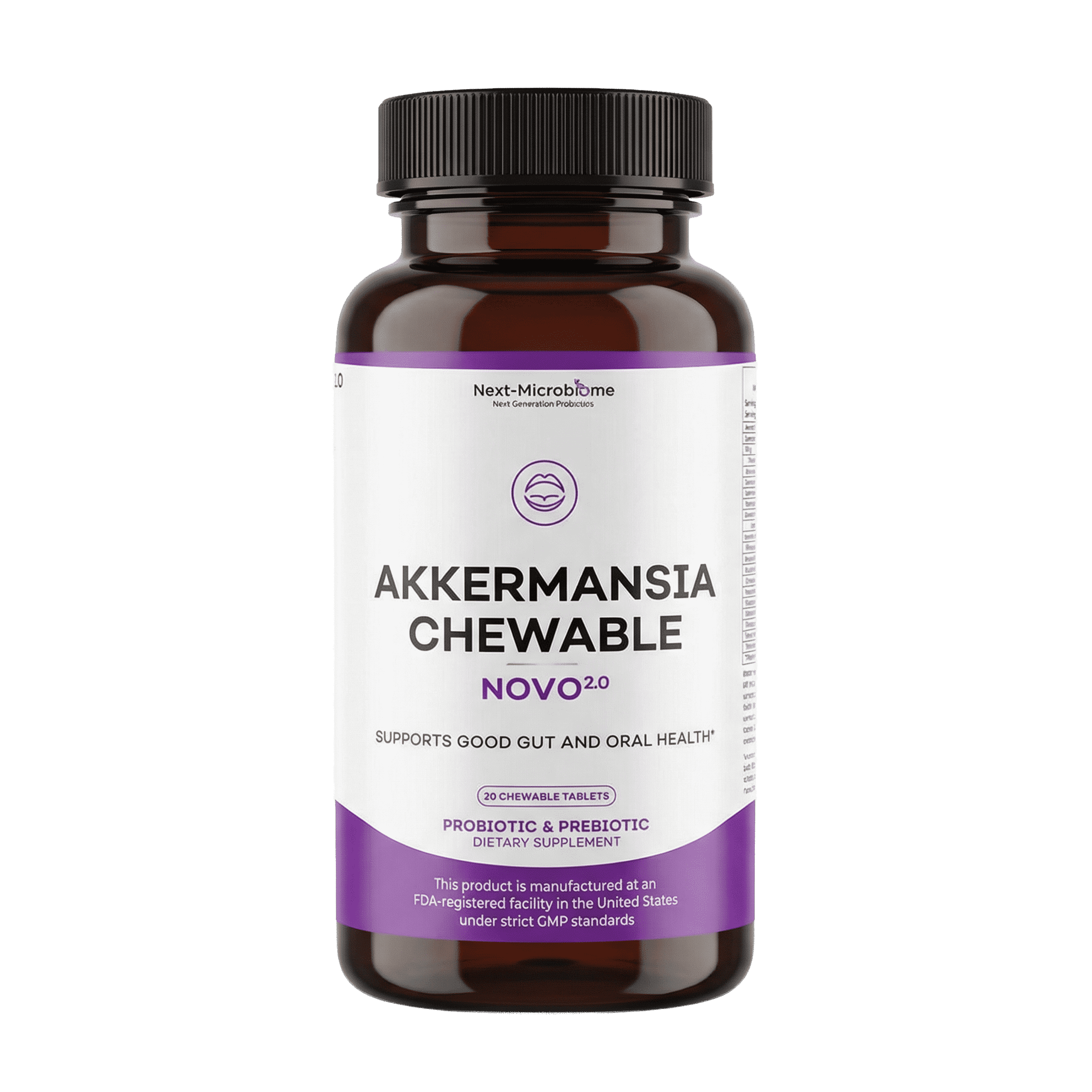
Akkermansia Chewable
Supports mucosal health, microbial stability, and metabolic timing systems.

For readers comparing pasteurized vs lyophilized probiotic formats, the key consideration is how each formulation relates to stability, microbial viability, delivery quality, safety, and the intended microbiome-support mechanism.

Written by Ali Rıza Akın
Microbiome Scientist, Author & Founder of Next-Microbiome
Ali Rıza Akın is a microbiome scientist with nearly 30 years of experience in translational biotechnology, systems biology, and applied microbiome research, spanning discovery, preclinical development, and clinical-stage translation.
His work focuses on how microbial ecosystems interact with human physiology, including:
-
Gut barrier function and intestinal permeability
-
Mucus-associated microbiota (Akkermansia-related systems)
-
Oral–gut microbiome axis
-
Short-chain fatty acids (SCFAs) and metabolic signaling
-
Circadian rhythm–microbiome interactions
-
Clinical Research Contributions
He has contributed to multiple clinical-stage microbiome programs, supporting bacterial strain discovery, optimization, and formulation design across different therapeutic areas, including:
Active Ulcerative Colitis (Inflammatory Bowel Disease)
Hyperoxaluria (Oxalate Metabolism Disorder)
Microbiome-driven gut health and inflammatory conditions
These studies were part of broader clinical development programs evaluating microbiome-based approaches. His contributions focused on the early-stage scientific and translational pipeline, including strain discovery, functional optimization, and multi-strain formulation design.
Scientific Contributions:
Ali Rıza Akın is the discoverer of Christensenella californii, a bacterial species associated with microbiome diversity and metabolic health.
He is a contributing author to scientific publications and Bacterial Therapy of Cancer (Springer), and the author of Bakterin Kadar Yaşa: İçimizdeki Evren: Mikrobiyotamız.
Approach:
His work emphasizes evidence-based microbiome science, long-term safety, and a systems-based understanding of how microbes influence human health.
How SCFAs Support Stress Recovery, Gut Integrity, and HPA Axis Balance
How Cortisol Disrupts the Microbiome and Influences Stress and Appetite
Related Posts

Why Do You Wake Up at 3 A.M.? Gut, Cortisol, Blood Sugar, and Sleep Recovery

Can Gut Health Affect Sleep? How the Microbiome May Shape Rest and Recovery

Ozempic Plateau? What Your Gut Microbiome May Be Telling You About Slower Weight Loss

Akkermansia vs Ozempic: How Gut Microbiome Support May Influence GLP-1 and Digestion

GLP-1 Side Effects: How to Ease Bloating, Constipation, and Gut Issues Naturally

Best Probiotic for Leaky Gut? Why Gut Barrier Support Differs From Digestive Probiotics

Can You Support Akkermansia Naturally, or Are Supplements Needed?
