


Gut Barrier Science Hub: Intestinal Permeability, Leaky Gut, and Microbiome Regulation
Gut Barrier and Intestinal Permeability
The Science Hub for Gut Lining, Permeability & Microbiome Regulation

Your gut barrier does a lot of quiet work. Every day it decides which nutrients reach your bloodstream, how your immune system reads the contents of your intestines, and how the trillions of microbes living in your gut interact with the rest of your body. When that regulation slips, intestinal permeability can rise, the shift many people loosely call “leaky gut.”
This hub pulls together evidence based explanations, written without the usual fear based framing, of how the barrier is built, how permeability is regulated, and how the microbiome contributes to long-term gut lining health.
If you are researching an Akkermansia muciniphila supplement, it helps to first understand the system it belongs to: the mucus layer that coats the gut wall, the balance of resident microbes, the short-chain fatty acids those microbes produce, and the way all of this keeps permeability within a healthy range over time.
Everything here reflects current scientific understanding. You will not find diagnostic claims, miracle promises, or scare tactics.
The Short Version
-
The gut barrier is a living, self-repairing system, not a fixed wall.
-
Some intestinal permeability is normal and necessary for absorbing nutrients and water.
-
“Leaky gut” describes a loss of regulation, not a recognized standalone diagnosis.
-
The microbiome, especially mucus-associated bacteria and the fatty acids they make, helps keep the barrier stable.
-
Meaningful support comes from diet, sleep, and stress habits over time, not from a single quick fix.
What This Hub Covers
This cluster works through four questions:
-
How the gut barrier is built and regulated
-
What intestinal permeability actually means in human physiology
-
Why “leaky gut” is a simplification rather than a diagnosis
-
How microbiome signaling shapes the stability of the gut lining
The aim is to treat gut health as an ecosystem, not a single switch you flip.
Explore the Gut Barrier Science Cluster
Each article below answers a different question while building on the same foundation.
1. Gut Barrier Health: Science-Based Overview
Pillar article, foundational biology. A detailed look at how the gut lining is structured, from epithelial tight junctions and the mucus layer to immune coordination and microbial metabolites. Best if you want to understand how a healthy gut lining functions day to day.
2. Intestinal Permeability vs. Leaky Gut
Clarification article, concept accuracy. Separates normal, regulated permeability from the dysregulated version people tend to label “leaky gut.” Best if conflicting claims online have left you unsure what to believe.

3. Leaky Gut Syndrome: What Science Says About the Gut
Synthesis article, evidence focused. Reviews what research genuinely shows about increased intestinal permeability, what tends to contribute to it, and how the barrier is regulated. Best if you are searching for a grounded explanation of “leaky gut.”
How the Microbiome Regulates the Gut Barrier
The gut barrier never works in isolation from the microbiome. Microbial diversity, the bacteria that live inside the mucus layer, and the metabolites those microbes release all feed into how well the epithelium holds together and how the immune system responds. Short-chain fatty acids matter most here. Butyrate in particular fuels the cells lining the colon and helps reinforce the tight junction proteins that govern what slips between cells.
That is why a dedicated butyrate producer attracts so much research interest. Work on clostridium butyricum benefits examines exactly this role: a bacterium studied for its part in supporting tight junction integrity and barrier resilience within the wider microbial community.
It also reframes how to think about probiotics. When people ask about the best probiotic for gut lining, the more useful answer points to strains studied for tight junction support, microbial balance, and durability over time, not the ones marketed as an overnight cure.
The barrier story extends beyond the intestine. It also takes in the conversation between the oral and gut microbiomes, what you eat, and even your daily circadian rhythm. Research into chewable probiotics effectiveness suggests the delivery format itself may shape that early oral-to-gut interaction, though results still hinge on the specific strain, the dose, and the state of a person’s microbiome to begin with.
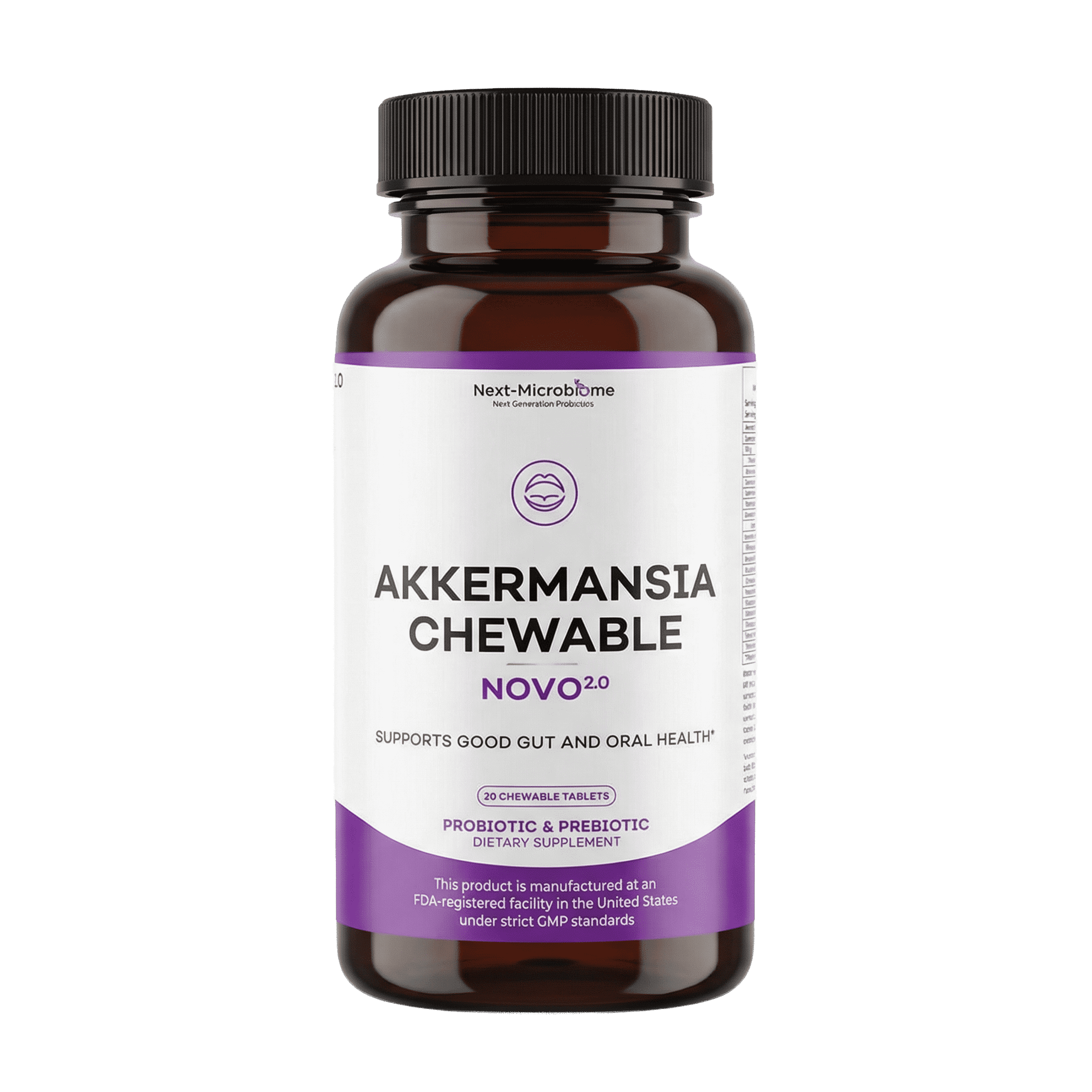
Seen that way, an Akkermansia chewable probiotic formula may be worth considering for people comparing oral-to-gut delivery formats, especially when the goal is mucosal interaction and longer-term barrier support rather than a fast result.
When Microbial Balance Declines
There is no clinical diagnosis called “low Akkermansia.” Even so, a growing body of human research links reduced Akkermansia muciniphila to metabolic dysfunction, weaker barrier integrity, and higher inflammatory signaling. Lower levels have turned up in studies of people with obesity, insulin resistance, and certain inflammatory gut conditions.
Within that picture, a metabolic support probiotic is best read as one supportive piece, something that may complement dietary variety and broader metabolic health. It is not a stand-alone solution, and it does not replace medical treatment.
Instead of chasing a checklist of “symptoms of low Akkermansia,” researchers track measurable signals: a thinner mucus layer, raised markers of endotoxemia, and shifting metabolic indicators. These point to a broader microbiome imbalance, not a single condition you can pin down at home.
Because Akkermansia levels respond to what you eat, the work on foods that increase Akkermansia centers on dietary diversity, fermentable fibers, and polyphenol-rich plants that nourish the whole mucus-associated community rather than one species in isolation. Since fiber intake and meal timing both appear to matter, much of the practical guidance focuses on structured nutrition and habits that may help increase Akkermansia naturally as part of rebuilding overall balance.
For a deeper look at how diet, microbial balance, and mucus-associated species interact over time, see our Akkermansia Microbiome Guide.
 How to Read This Hub
-
Start with Gut Barrier Health for the fundamentals.
-
Move to Permeability vs. Leaky Gut for conceptual clarity.
-
Finish with Leaky Gut Syndrome for the evidence-based synthesis.
Read in that order, the three pages form a complete path through gut barrier science.
Core Scientific Principles Across This Hub
-
Some intestinal permeability is normal and biologically necessary.
-
“Leaky gut” describes a loss of regulation, not a disease in its own right.
-
Barrier health depends on coordination across systems, not quick fixes.
-
Microbiome signaling and metabolites act as central regulators.
-
Long-term support is about restoration and balance, not patching a broken wall.
FAQ:
1. How is intestinal permeability measured in research or clinical practice?
Permeability is assessed with specific tests, not by symptoms alone. The best-known research method is the lactulose-to-mannitol urine test, which tracks how two sugar molecules of different sizes pass through the intestinal lining. Newer approaches add blood biomarkers, tissue analysis, and specialized imaging. None of these turns “leaky gut” into a standalone diagnosis. A clinician still interprets the results alongside a person’s symptoms, history, and any underlying condition.
Scientific Reference:
https://my.clevelandclinic.org/health/diseases/22724-leaky-gut-syndrome
https://www.jnmjournal.org/journal/view.html?doi=10.5056%2Fjnm.2012.18.4.443
https://pmc.ncbi.nlm.nih.gov/articles/PMC11884778/
2. Can stress and poor sleep affect gut barrier health?
Both can influence the environment that keeps the barrier regulated, though the evidence works differently for each. For stress, reviews of human research suggest psychosocial stress can affect intestinal permeability through gut-brain and immune pathways, and the Cleveland Clinic notes that stress may add to inflammation in the gut lining. Sleep is less clear cut. In one controlled study, several nights of severe sleep restriction lowered the richness of the gut microbiome but did not measurably change intestinal permeability in healthy young men. The honest summary is that short-term sleep loss can shift the microbiome, while a direct effect on the human barrier is not yet established. That nuance is part of why steady sleep and stress management still belong in any long-term gut health plan.
Scientific Reference:
https://my.clevelandclinic.org/health/diseases/22724-leaky-gut-syndrome
https://pmc.ncbi.nlm.nih.gov/articles/PMC10569989/
https://pmc.ncbi.nlm.nih.gov/articles/PMC9816096/
3. What foods help support gut barrier health naturally?
A food-first approach usually starts with fiber-rich plants that feed beneficial microbes. Johns Hopkins points to fruits, vegetables, and other whole foods for supporting healthy gut bacteria, and the Cleveland Clinic explains that fiber helps the body produce butyrate, the short-chain fatty acid that supports the gut barrier. Fermented foods such as yogurt, kefir, kimchi, and sauerkraut can round out a microbiome-friendly diet. Taken together, these habits support the microbial environment that keeps the gut lining resilient.
Scientific Reference:
https://www.hopkinsmedicine.org/health/wellness-and-prevention/your-digestive-system-5-ways-to-support-gut-health
https://health.clevelandclinic.org/butyrate-benefits
https://my.clevelandclinic.org/health/body/25201-gut-microbiome
Written by Ali Rıza Akın
Microbiome Scientist, Author & Founder of Next-Microbiome
Ali Rıza Akın is a microbiome scientist with nearly 30 years of experience in translational biotechnology, systems biology, and applied microbiome research, spanning discovery, preclinical development, and clinical-stage translation.
His work focuses on how microbial ecosystems interact with human physiology, including:
-
Gut barrier function and intestinal permeability
-
Mucus-associated microbiota (Akkermansia-related systems)
-
Oral–gut microbiome axis
-
Short-chain fatty acids (SCFAs) and metabolic signaling
-
Circadian rhythm–microbiome interactions
-
Clinical Research Contributions
He has contributed to multiple clinical-stage microbiome programs, supporting bacterial strain discovery, optimization, and formulation design across different therapeutic areas, including:
Active Ulcerative Colitis (Inflammatory Bowel Disease)
Hyperoxaluria (Oxalate Metabolism Disorder)
Microbiome-driven gut health and inflammatory conditions
These studies were part of broader clinical development programs evaluating microbiome-based approaches. His contributions focused on the early-stage scientific and translational pipeline, including strain discovery, functional optimization, and multi-strain formulation design.
Scientific Contributions:
Ali Rıza Akın is the discoverer of Christensenella californii, a bacterial species associated with microbiome diversity and metabolic health.
He is a contributing author to scientific publications and Bacterial Therapy of Cancer (Springer), and the author of Bakterin Kadar Yaşa: İçimizdeki Evren: Mikrobiyotamız.
Approach:
His work emphasizes evidence-based microbiome science, long-term safety, and a systems-based understanding of how microbes influence human health.
Medical Disclaimer
This content is for educational and informational purposes only and is not medical advice. It is not intended to diagnose, treat, cure, or prevent any condition, including insomnia or other sleep disorders. Dietary supplements are not a substitute for prescription medication or professional care. Consult a qualified healthcare professional before making changes to your diet, supplement routine, or treatment, especially if sleep problems are persistent or severe, or if you are pregnant, nursing, managing a health condition, or taking medication.

What Is Leaky Gut? Symptoms, Causes, and How to Support Gut Barrier Health
Leaky Gut Syndrome: What Science Really Says About Intestinal Permeability and Gut Barrier Health
Related Posts

Why Do You Wake Up at 3 A.M.? Gut, Cortisol, Blood Sugar, and Sleep Recovery

Can Gut Health Affect Sleep? How the Microbiome May Shape Rest and Recovery

Ozempic Plateau? What Your Gut Microbiome May Be Telling You About Slower Weight Loss

Akkermansia vs Ozempic: How Gut Microbiome Support May Influence GLP-1 and Digestion

GLP-1 Side Effects: How to Ease Bloating, Constipation, and Gut Issues Naturally

Best Probiotic for Leaky Gut? Why Gut Barrier Support Differs From Digestive Probiotics

Can You Support Akkermansia Naturally, or Are Supplements Needed?
