


Leaky Gut Syndrome: What Science Really Says About Intestinal Permeability and Gut Barrier Health
Leaky Gut Syndrome: What Science Really Says About Intestinal Permeability
“Leaky gut” has become one of the most discussed — and most misunderstood — topics in gut health. While the phrase is often used casually online, intestinal permeability is a real, scientifically recognized biological process that plays a central role in digestion, immune regulation, and systemic inflammation.
In biomedical research, intestinal permeability has been studied for decades in relation to immune activation, metabolic disease, and inflammatory disorders. Foundational work has established how gut barrier regulation influences both local and systemic immune signaling (Turner, 2009; Bischoff et al., 2014).
This article explains what leaky gut actually means, how it differs from normal intestinal permeability, what contributes to gut barrier disruption, and how current science approaches supporting gut barrier function — without fear-based claims or quick-fix promises.
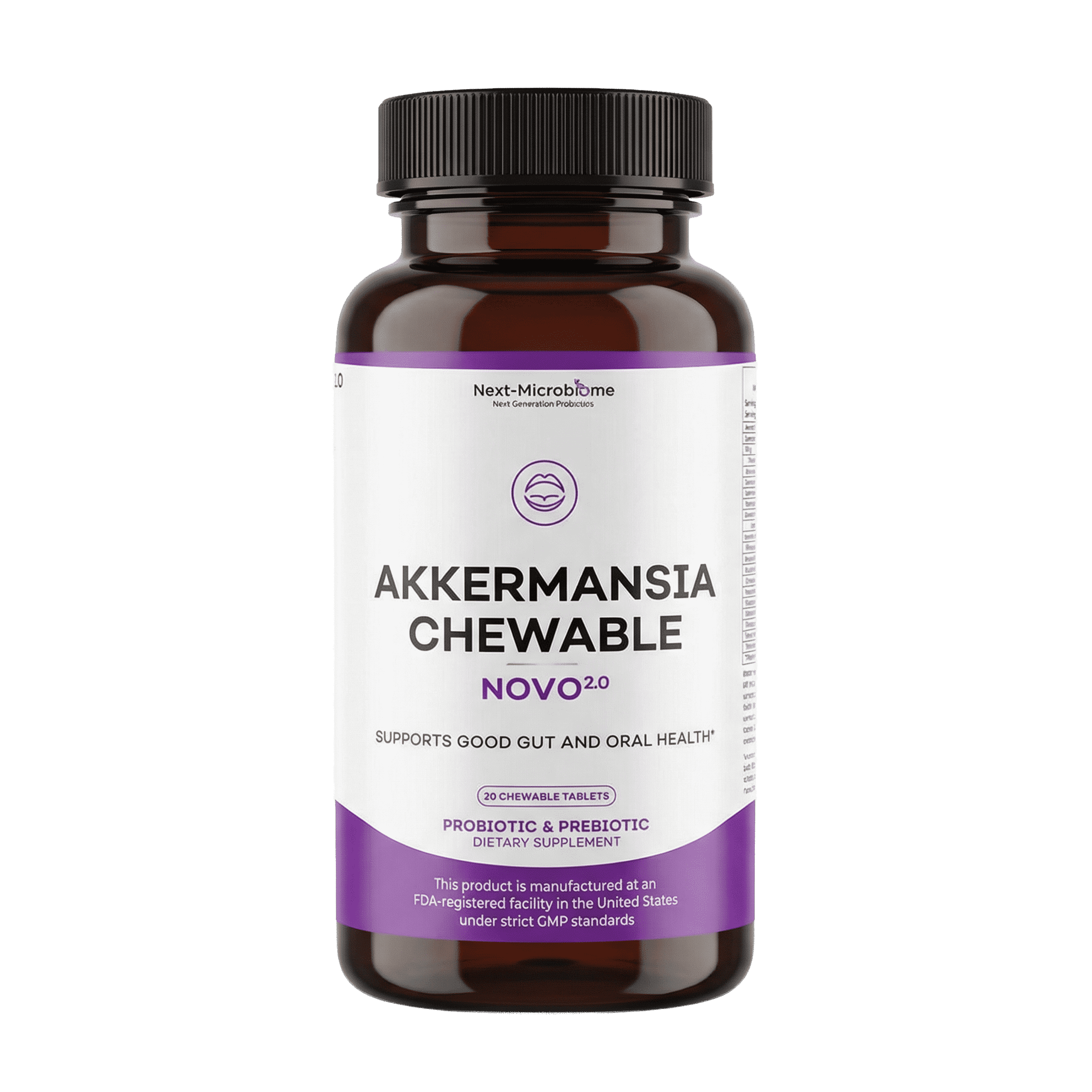
Anyone comparing the best Akkermansia probiotic should first understand how Akkermansia fits into gut barrier science. Rather than choosing based on broad digestive claims, it is better to evaluate whether a probiotic strategy supports mucus-layer biology, microbial diversity, immune-microbiome communication, and long-term intestinal barrier regulation.
Summary
Leaky gut syndrome is a commonly used, non-clinical term for increased intestinal permeability, a measurable physiological process involving impaired regulation of the intestinal barrier. Under healthy conditions, the gut lining selectively allows nutrients to pass while limiting the movement of microbes, toxins, and inflammatory molecules into circulation. When this regulation is disrupted, permeability may increase, contributing to immune activation and low-grade inflammation. Intestinal permeability exists on a continuum and is not a diagnosis by itself. Scientific research shows that gut barrier regulation depends on coordinated interactions between epithelial tight junctions, the protective mucus layer, and microbiome-derived signaling molecules. Sustainable gut barrier support focuses on restoring microbial balance, dietary diversity, circadian rhythm stability, and immune–microbial communication rather than attempting to “seal” the gut.
What Is Leaky Gut Syndrome?
Leaky gut syndrome refers to increased intestinal permeability, a condition in which the tight junctions between intestinal epithelial cells become less regulated.
Under healthy conditions, the intestinal lining acts as a selective barrier:
-
Nutrients pass through efficiently
-
Pathogens, toxins, and undigested particles are restricted
When this barrier becomes dysregulated, larger molecules may pass into circulation, potentially triggering immune activation and low-grade inflammation. This mechanism has been extensively described in the literature on intestinal physiology (Turner, 2009).
Importantly, intestinal permeability exists on a spectrum and is not, by itself, a medical diagnosis.

Intestinal Permeability vs. “Leaky Gut”
The intestinal barrier is not meant to be completely sealed. Controlled permeability is essential for nutrient absorption and immune surveillance.
Problems arise when permeability becomes chronic, excessive, or poorly regulated, often alongside inflammation or microbiome disruption. According to Bischoff et al. (2014), dysregulated intestinal permeability is increasingly recognized as a contributing factor — not a sole cause — in a range of chronic inflammatory and metabolic conditions.
In simple terms:
-
Permeability = normal physiology
-
Leaky gut = loss of regulation
For a detailed scientific comparison, see "What Is the Difference Between Intestinal Permeability and Leaky Gut?"
What Contributes to Increased Intestinal Permeability?
Research indicates that increased intestinal permeability is multifactorial, with several overlapping contributors rather than a single cause.
1. Microbiome Imbalance
Loss of microbial diversity — particularly mucus-associated bacteria — has been strongly linked to impaired barrier signaling, mucus thinning, and epithelial vulnerability (Chelakkot et al., 2018).
2. Chronic Inflammatory Signaling
Pro-inflammatory cytokines such as TNF-α and interferon-γ can alter tight junction protein expression and localization, weakening barrier regulation (Turner, 2009).
3. Stress and Circadian Disruption
Stress hormones and circadian misalignment influence gut permeability through neuro-immune pathways, cortisol signaling, and altered microbial rhythms.
4. Dietary Patterns
Low fiber intake and ultra-processed diets reduce microbial metabolite production, including short-chain fatty acids that support epithelial energy metabolism and tight junction integrity.
This is also why SCFAs and metabolic health are often discussed together in microbiome research, since these metabolites help connect fiber intake, gut barrier function, inflammation regulation, and metabolic signaling.
5. Repeated Antibiotic Exposure
Antibiotics can reduce beneficial microbes involved in mucus regulation and epithelial renewal, indirectly affecting long-term barrier stability.
Commonly Reported Symptoms
There is no single symptom profile. Increased intestinal permeability has been studied in association with, but not as a direct cause of:
-
Digestive discomfort
-
Food sensitivities
-
Skin manifestations
-
Fatigue
-
Brain fog
-
Immune dysregulation
Because these symptoms are non-specific, scientific literature consistently emphasizes contextual interpretation rather than self-diagnosis.
How the Gut Barrier Is Maintained
The intestinal barrier is supported by three interdependent systems:
-
Epithelial tight junctions regulating paracellular transport
-
The mucus layer, which physically separates microbes from epithelial cells
-
Microbial signaling and metabolites, including short-chain fatty acids
For readers learning about SCFAs and gut health, these microbial metabolites are important because they help fuel epithelial cells, support tight junction regulation, and contribute to a more resilient gut barrier environment.
Chelakkot et al. (2018) demonstrate that disruption in any one of these systems can destabilize the others. Effective gut barrier support, therefore, focuses on system-level coordination rather than isolated interventions.
Supporting Gut Barrier Health Naturally
Scientific evidence suggests that gut barrier support is most effective when it focuses on environmental and microbial regulation, rather than aggressive or suppressive strategies.
Commonly supported approaches include:
-
Supporting microbial diversity
-
Consuming diverse dietary fibers
-
Reducing chronic stress
-
Protecting sleep and circadian rhythms
-
Avoiding unnecessary antimicrobial overuse
Research consistently favors restoration and regulation over attempts to forcibly “repair” or “seal” the gut barrier.
For readers researching gut lining repair, the more accurate scientific focus is long-term gut barrier regulation, mucus layer support, microbial diversity, and immune-microbiome communication.
Supporting the Gut Barrier Through the Microbiome
Gut barrier function does not operate in isolation. It is closely connected to the broader human microbiome, including oral microbes, gut-resident bacteria, and the metabolites they produce. Increasing evidence shows that microbial diversity, mucus-associated species, and oral–gut microbial signaling play key roles in long-term barrier regulation (Chelakkot et al., 2018).
For a deeper, science-based overview, visit our Akkermansia Microbiome Guide.
Some individuals choose microbiome-focused formulations designed to support mucus-associated bacteria and microbial signaling as part of a broader gut barrier strategy. These approaches are intended to complement diet, sleep, and lifestyle factors rather than replace them.
In this context, akkermansia microbiome balance should be understood as part of a broader ecosystem approach involving mucus biology, microbial diversity, and long-term gut barrier regulation.
Because gut barrier regulation is also linked to microbial metabolites and metabolic signaling, some people explore microbiome-based metabolic support strategies alongside nutritional and lifestyle changes.
For readers comparing options, the best probiotic for gut lining is usually one that supports mucus-associated bacteria, microbial signaling, and long-term barrier regulation as part of a broader gut health strategy.
 Frequently Asked Questions:
1. Is leaky gut a real medical condition?
Increased intestinal permeability is a well-studied physiological process. “Leaky gut” is a non-clinical term describing dysregulation of this process.
2. Can leaky gut be tested?
Clinical tests exist, but results require professional interpretation and clinical context.
3. Does everyone have intestinal permeability?
Yes. Controlled permeability is essential for nutrient absorption.
4. Can probiotics repair leaky gut?
No single supplement repairs the gut. Microbiome-focused strategies support signaling and balance over time.
5. How long does gut barrier support take?
Meaningful microbiome and barrier changes typically occur over months, not days.
6. What foods support gut barrier health?
Fiber-rich plant foods and polyphenol-containing foods that support microbial metabolism.
Key Takeaways
-
Intestinal permeability is real, measurable, and biologically necessary
-
“Leaky gut” refers to dysregulated permeability, not structural damage alone
-
Gut barrier health depends on microbial signaling, mucus biology, and immune balance
- Akkermansia gut health research is relevant because mucus-associated microbes may help support gut barrier regulation, epithelial integrity, and immune balance.
-
Sustainable improvement comes from ecosystem-level support
-
Science favors regulation and restoration over restriction
Scientific References
-
Turner JR.
Intestinal mucosal barrier function in health and disease.
Nature Reviews Immunology (2009).
PMID: 19855405 -
Bischoff SC, et al.
Intestinal permeability – a new target for disease prevention and therapy.
BMC Gastroenterology (2014).
PMID: 25407511 -
Chelakkot C, Ghim J, Ryu SH.
Mechanisms regulating intestinal barrier integrity and its pathological implications.
Experimental & Molecular Medicine (2018).
PMID: 30115904
Written by Ali Rıza Akın
Microbiome Scientist, Author & Founder of Next-Microbiome
Ali Rıza Akın is a microbiome scientist with nearly 30 years of experience in translational biotechnology, systems biology, and applied microbiome research, spanning discovery, preclinical development, and clinical-stage translation.
His work focuses on how microbial ecosystems interact with human physiology, including:
-
Gut barrier function and intestinal permeability
-
Mucus-associated microbiota (Akkermansia-related systems)
-
Oral–gut microbiome axis
-
Short-chain fatty acids (SCFAs) and metabolic signaling
-
Circadian rhythm–microbiome interactions
-
Clinical Research Contributions
He has contributed to multiple clinical-stage microbiome programs, supporting bacterial strain discovery, optimization, and formulation design across different therapeutic areas, including:
Active Ulcerative Colitis (Inflammatory Bowel Disease)
Hyperoxaluria (Oxalate Metabolism Disorder)
Microbiome-driven gut health and inflammatory conditions
These studies were part of broader clinical development programs evaluating microbiome-based approaches. His contributions focused on the early-stage scientific and translational pipeline, including strain discovery, functional optimization, and multi-strain formulation design.
Scientific Contributions:
Ali Rıza Akın is the discoverer of Christensenella californii, a bacterial species associated with microbiome diversity and metabolic health.
He is a contributing author to scientific publications and Bacterial Therapy of Cancer (Springer), and the author of Bakterin Kadar Yaşa: İçimizdeki Evren: Mikrobiyotamız.
Approach:
His work emphasizes evidence-based microbiome science, long-term safety, and a systems-based understanding of how microbes influence human health.
Gut Barrier Science Hub: Intestinal Permeability, Leaky Gut, and Microbiome Regulation
Gut Barrier Timelines: What Real Progress Looks Like and Why It Varies
Related Posts

Why Do You Wake Up at 3 A.M.? Gut, Cortisol, Blood Sugar, and Sleep Recovery

Can Gut Health Affect Sleep? How the Microbiome May Shape Rest and Recovery

Ozempic Plateau? What Your Gut Microbiome May Be Telling You About Slower Weight Loss

Akkermansia vs Ozempic: How Gut Microbiome Support May Influence GLP-1 and Digestion

GLP-1 Side Effects: How to Ease Bloating, Constipation, and Gut Issues Naturally

Best Probiotic for Leaky Gut? Why Gut Barrier Support Differs From Digestive Probiotics

Can You Support Akkermansia Naturally, or Are Supplements Needed?
