

How Stress Disrupts the Gut-Brain Axis and Affects Sleep
Quick Answer: Can stress and gut health really affect your sleep?
The gut and the brain do talk to each other, and stress affects both, but the popular version of this story is more certain than the science is. What is reasonably well supported: chronic stress is associated with changes in the gut microbiome, people with more diverse gut bacteria tend to sleep better, and short-chain fatty acids made by fiber-fermenting bacteria are a plausible signal between the two. What is not established: that stress "breaks" your gut barrier in healthy people, that gut serotonin controls your melatonin (it does not, and that is a physiology error you will see everywhere), or that any supplement can restore sleep. Much of the mechanism comes from animal studies. The practical version is unglamorous and real: regular sleep and wake times, morning light, fiber, and managing stress directly. And if your sleep problems are persistent, please talk to a clinician, because insomnia has treatments that work and this article is not one of them.
Stress does not only affect your mind. It reaches the gut too, and the gut appears to answer back. This is the second article in our series on cortisol and sleep. The first looked at the cortisol and gut connection; this one focuses on the gut-brain axis and what happens to sleep.
A note up front, because this is health content. A lot of what follows is genuinely interesting biology, and a lot of it has been mapped in mice rather than people. Where a finding comes from animals, this article says so. Where the human evidence is thin or contradictory, it says that too.
How Stress Reaches the Gut
Stress starts in the brain, not the gut, and it is worth getting that order right. The hypothalamus releases CRH, the pituitary responds with ACTH, and the adrenal glands release cortisol. That system evolved for short emergencies.
What reaches the gut is not cortisol alone but the whole stress response: cortisol, plus faster signals from the autonomic nervous system and the immune system. Over time, this is associated with fewer short-chain fatty acid producing bacteria, shifts in microbial balance, and changes in motility and digestion. The gut also has its say in return. In animals, the microbiome helps set how reactive the whole HPA axis is: germ-free mice, raised with no gut bacteria at all, show exaggerated stress responses (Dinan and Cryan, 2012) (Review; causal evidence largely from germ-free animals).
One claim needs correcting here, because it is repeated everywhere. You will read that cortisol weakens the gut lining and causes leaky gut. In animals, stress does increase intestinal permeability, fairly clearly. In healthy humans, it does not hold up: a 2023 review that looked specifically at this found that while animal and laboratory studies strongly suggest stress raises permeability, human studies have not produced consistent evidence for it (La Torre et al., 2023) (Human review). That is worth stating plainly rather than glossing over. The leaky-gut-from-stress story is popular, and it is not currently something human data support.

The Gut, Serotonin, and Sleep: What Is Actually True
Here is the claim you have almost certainly seen: the gut makes 90 percent of your serotonin, serotonin becomes melatonin, so a stressed gut means no melatonin and no sleep. The first part is true. The conclusion does not follow, and this is the most persistent error in this entire topic.
Gut serotonin does not cross the blood-brain barrier. It stays in the periphery, where it does important things for gut motility and platelet function, but it is not the serotonin your brain uses, and it is not the source of the melatonin that governs your sleep. Your brain makes its own serotonin, and the pineal gland converts that into melatonin. The gut's 90 percent is not in that pipeline.
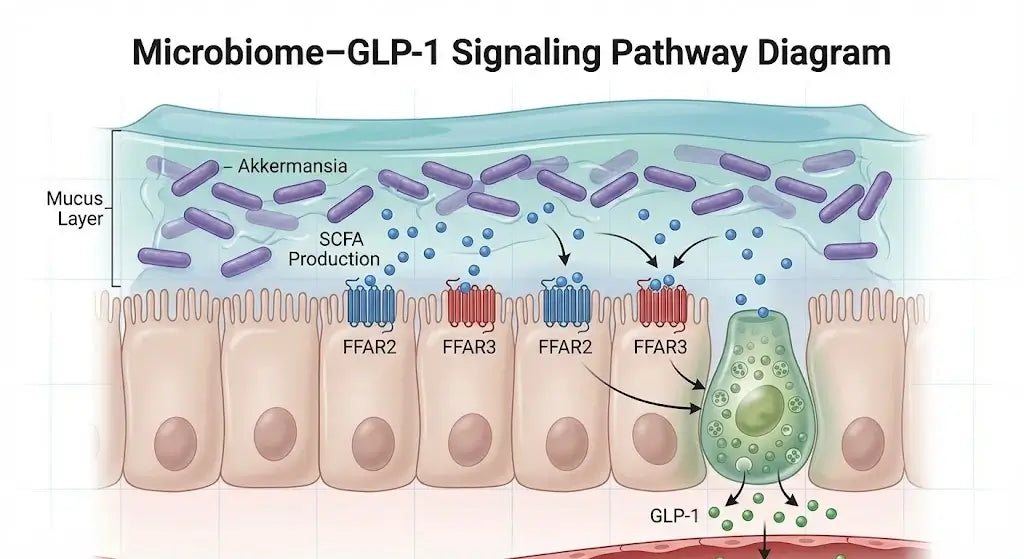
So does the microbiome influence sleep at all? Probably, but through routes that are more roundabout and more interesting than the myth. Gut bacteria shape the supply of tryptophan, the amino acid the brain uses to build its own serotonin and, downstream, its own melatonin (Agus et al., 2018) (Review). They also produce short-chain fatty acids, which act as signals: in rodents, butyrate given before the rest period increased deep, non-REM sleep in the hours afterward (Szentirmai et al., 2019) (Animal study).
The same care applies to GABA. Gut bacteria do make it. Whether bacterial GABA reaches your brain in meaningful amounts has not been shown, and the best-known experiment on this points elsewhere, as the next section explains.
The Vagus Nerve: The Gut-Brain Connection
The vagus nerve is the main physical line between the gut and the brain, and it carries traffic in both directions. It is also where one of the most striking experiments in this field landed.
Researchers fed mice a Lactobacillus strain and saw reduced anxiety-like behavior, lower stress-induced corticosterone, and changes in brain GABA receptor expression. Then they cut the vagus nerve, and the effects disappeared entirely (Bravo et al., 2011) (Animal study). That is a clean result, and it tells us something specific: the signal was traveling up the nerve, not simply diffusing into the bloodstream.
It is a mouse study, and it should be read as one. In humans, vagal tone is associated with stress recovery and heart rate variability, and it is a plausible part of the gut-brain picture. It is not a switch you can flip, and stress does not "break" it.

Stress, Circadian Rhythm, and Sleep Timing
Cortisol follows a daily rhythm: high in the morning, low at night. So, roughly, do gut microbes, whose composition and activity shift across 24 hours, tracking mainly when you eat and sleep. A human review describes the two-way relationship between sleep, circadian timing, and the gut microbiome (Matenchuk et al., 2020) (Human review).
When those rhythms drift out of alignment, through late nights, irregular meals, or light at the wrong times, cortisol can peak late, melatonin can rise late, and sleep gets shallower. Note the hedging, and note that it is deliberate. Melatonin does not become unable to rise; its timing shifts. The distinction matters because the fix follows from it: you are realigning a rhythm, not repairing a broken part.
This is also where the most actionable advice on the page lives, because circadian habits are the best-supported lever in the whole article, and they cost nothing.
The Stress and Sleep Loop, in Plain Terms
Stress and sleep feed into each other, and the gut sits in the middle of that exchange. Ongoing stress raises cortisol and is associated with shifts in the microbiome, including fewer short-chain fatty acid producers. Poorer sleep follows stress, and poor sleep in turn appears to affect the microbiome: a controlled human study found that several nights of severe sleep restriction reduced gut microbial richness, although, notably, it did not measurably increase intestinal permeability (Karl et al., 2023) (Human study). Then the next day starts tired, and the cycle has somewhere to go.
Two things are worth adding to that picture.
It is a loop, not a chain. Nobody has demonstrated a fixed sequence in humans where each step reliably causes the next. What we have is a set of associations that reinforce each other, with the strongest human evidence running from sleep to gut, at least as much as the other way around. The direction of the arrow is genuinely less settled than the diagrams suggest.
And because it is a loop, there are several places to break it, not one. You will sometimes read that this cycle cannot be fixed with sleep habits or meditation and must be fixed "biologically." That is not right, and it is not a harmless thing to get wrong. Behavioral treatment for insomnia, the sort of structured approach a good sleep program or therapist provides, is the recommended first-line treatment for chronic insomnia, ahead of sleeping pills. If you are struggling with sleep, that is the door to knock on. Gut health is a supporting player here, and it is worth attending to. It is not a replacement for treatment that works.
What Actually Helps
These are low-risk habits, and they are ordered with the best-supported first. None of them is a cure, and none replaces medical care if your sleep is genuinely broken.
-
Keep regular sleep and wake times. The most reliable lever here, and the one most people skip. Predictable timing is what both your hormonal and microbial rhythms settle around.
-
Get morning light, and dim it at night. Light in the morning anchors the cortisol rhythm. Less bright light in the evening lets melatonin rise on schedule.
-
Keep a consistent daytime eating window, roughly 10 to 12 hours. Meal timing is the strongest cue for microbial rhythms.
-
Feed your short-chain fatty acid producers. Resistant starch, inulin, GOS, soluble fiber, and polyphenol-rich plants give gut bacteria the raw material to make butyrate.
-
Give the stress response somewhere to go. Slow breathing, walking, and time outdoors help regulate the system upstream of all of this. The evidence here is softer than for light and sleep timing, but the downside is nil.
-
Take sleep problems seriously. If you have been sleeping badly for weeks, see a clinician. Insomnia is treatable, and structured behavioral treatment works better than most people expect.
Where a Supplement Fits
Sleep timing, light, and fiber come first, and nothing below replaces them or replaces treatment for a sleep disorder.
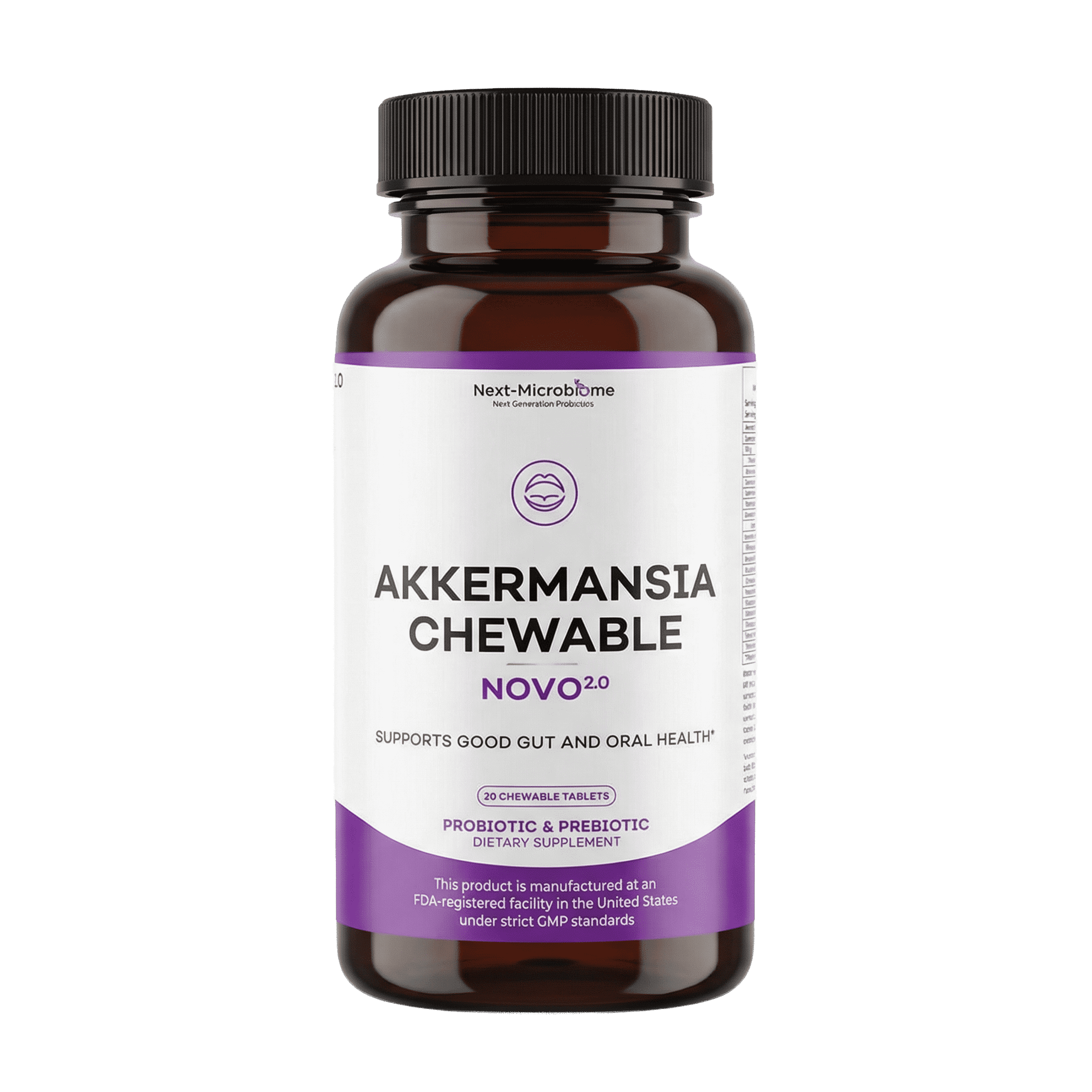
If you want to add a supplement on top of that foundation, Akkermansia Chewable is formulated to support the gut barrier and microbial diversity. The chewable format has a practical advantage: many people find it easier to take consistently than a capsule, and consistency is what the research actually rewards. Sleepy-Biome is a melatonin-free formula intended to support the gut side of the sleep and stress picture.
Neither is a treatment for insomnia, stress, or any medical condition, and neither will fix a sleep problem on its own. Speak with a clinician if you are pregnant, nursing, managing a health condition, or taking medication.

Related Reading
Cortisol & Gut Microbiome: The Hidden Stress Loop Explained
Stress, Gut–Brain Axis & Sleep: Microbiome Disruption
Cortisol, Circadian Rhythm & Microbial Timing Explained
SCFAs & Stress Recovery: Restore Gut, Calm HPA Axis
Cortisol, Cravings & GLP-1: How Stress Hijacks Appetite
Stress, the Gut-Brain Axis, and Sleep: Common Questions Answered
1. Does the gut really make most of your serotonin, and does that control sleep?
It makes most of the body's serotonin, yes, but that serotonin does not cross into the brain and it is not the source of the melatonin that governs sleep. Your brain makes its own serotonin and converts it to melatonin in the pineal gland. The gut's real influence on sleep appears to run through other routes: shaping the supply of tryptophan, the raw material the brain uses, and producing signaling molecules such as short-chain fatty acids.
2. Does poor sleep damage the gut microbiome?
It can affect it. In a controlled human study, several nights of severe sleep restriction reduced gut microbial richness, though it did not measurably increase intestinal permeability. The popular claim that a single bad night damages your gut barrier goes well beyond the evidence. And the relationship runs both ways: people with more diverse gut microbiomes tend to sleep more efficiently, though that is a correlation rather than proof of cause.
3. Can improving gut health help with anxiety or burnout?
Possibly, as one contributing factor among several. Restoring microbial balance may support short-chain fatty acid production and reduce inflammation, and the gut-brain link is real. But most of the causal evidence is from animals, and no probiotic has been shown to treat anxiety or burnout in people. If you are struggling, gut health is a reasonable thing to attend to alongside proper support, not instead of it.
4. What does the vagus nerve actually do here?
It is the main nerve connecting gut and brain, and it carries signals in both directions. Its role is not just theoretical: in mice, the calming effects of a probiotic strain vanished completely when the vagus nerve was cut, which showed the signal was traveling up the nerve. That is animal evidence, so treat vagal tone as one supporting factor in stress recovery rather than a switch you can flip.
5. Can probiotics improve sleep?
The honest answer is that the evidence is not there yet. Short-chain fatty acids produced by gut bacteria are a plausible sleep signal, and in rodents butyrate increased deep sleep. In humans, no probiotic has been shown to reliably improve sleep. Feeding the bacteria you already have, with fiber, is the better-supported move, and sleep timing beats both.
6. Why do I wake up at 2 or 3 AM when I am stressed?
Waking in the early hours is common during stressful periods and can involve cortisol timing, blood sugar, and disrupted sleep architecture. It is also nonspecific: it can follow a hard week, or it can point to something else entirely. We cover this in more depth in a separate article, and if it is persistent, it is worth raising with a clinician rather than self-diagnosing.
7. When should I see a doctor about my sleep?
If poor sleep has lasted more than a few weeks, is affecting how you function during the day, or comes with low mood, anxiety, loud snoring, or gasping at night, see a clinician. Insomnia and sleep apnea are both treatable, and the first-line treatment for chronic insomnia is a structured behavioral program rather than a pill or a supplement. Nothing on this page is a substitute for that.
If your goal is gut-lining strength, inflammation control, or metabolic resilience, Akkermansia is the microbe to understand first. Explore our Akkermansia Microbiome Guide.
Scientific References:
-
Dinan TG, Cryan JF.
Regulation of the stress response by the gut microbiota: implications for psychoneuroendocrinology
Psychoneuroendocrinology 2012;37(9):1369-1378
doi:10.1016/j.psyneuen.2012.03.007 (Review; causal evidence largely from germ-free animal models) -
La Torre D, Van Oudenhove L, Vanuytsel T, Verbeke K.
Psychosocial stress-induced intestinal permeability in healthy humans: what is the evidence?
Neurobiology of Stress 2023;27:100579
doi:10.1016/j.ynstr.2023.100579 (Human review) -
Agus A, Planchais J, Sokol H.
Gut microbiota regulation of tryptophan metabolism in health and disease
Cell Host and Microbe 2018;23(6):716-724
doi:10.1016/j.chom.2018.05.003 (Review) -
Bravo JA, Forsythe P, Chew MV, et al.
Ingestion of Lactobacillus strain regulates emotional behavior and central GABA receptor expression in a mouse via the vagus nerve
Proceedings of the National Academy of Sciences 2011;108(38):16050-16055
doi:10.1073/pnas.1102999108 (Animal study) -
Smith RP, Easson C, Lyle SM, et al.
Gut microbiome diversity is associated with sleep physiology in humans
PLOS ONE. 2019;14(10):e0222394
doi:10.1371/journal.pone.0222394 (Human study, correlational) -
Karl JP, Whitney CC, Wilson MA, et al.
Severe, short-term sleep restriction reduces gut microbiota community richness but does not alter intestinal permeability in healthy young men
Scientific Reports. 2023;13:213
doi:10.1038/s41598-023-27463-0 (Human study) -
Szentirmai E, Millican NS, Massie AR, Kapas L.
Butyrate, a metabolite of intestinal bacteria, enhances sleep
Scientific Reports. 2019;9:7035
doi:10.1038/s41598-019-43502-1 (Animal study; non-REM sleep in rodents) -
Matenchuk BA, Mandhane PJ, Kozyrskyj AL.
Sleep, circadian rhythm, and gut microbiota
Sleep Medicine Reviews 2020;53:101340
doi:10.1016/j.smrv.2020.101340 (Human review)
Written by Ali Rıza Akın
Microbiome Scientist, Author & Founder of Next-Microbiome
Ali Rıza Akın is a microbiome scientist with nearly 30 years of experience in translational biotechnology, systems biology, and applied microbiome research, spanning discovery, preclinical development, and clinical-stage translation.
His work focuses on how microbial ecosystems interact with human physiology, including:
-
Gut barrier function and intestinal permeability
-
Mucus-associated microbiota (Akkermansia-related systems)
-
Oral–gut microbiome axis
-
Short-chain fatty acids (SCFAs) and metabolic signaling
-
Circadian rhythm–microbiome interactions
-
Clinical Research Contributions
He has contributed to multiple clinical-stage microbiome programs, supporting bacterial strain discovery, optimization, and formulation design across different therapeutic areas, including:
Active Ulcerative Colitis (Inflammatory Bowel Disease)
Hyperoxaluria (Oxalate Metabolism Disorder)
Microbiome-driven gut health and inflammatory conditions
These studies were part of broader clinical development programs evaluating microbiome-based approaches. His contributions focused on the early-stage scientific and translational pipeline, including strain discovery, functional optimization, and multi-strain formulation design.
Scientific Contributions:
Ali Rıza Akın is the discoverer of Christensenella californii, a bacterial species associated with microbiome diversity and metabolic health.
He is a contributing author to scientific publications and Bacterial Therapy of Cancer (Springer), and the author of Bakterin Kadar Yaşa: İçimizdeki Evren: Mikrobiyotamız.
Approach:
His work emphasizes evidence-based microbiome science, long-term safety, and a systems-based understanding of how microbes influence human health.
Review and Sources
This article is written and reviewed by a microbiome scientist and is based on the peer-reviewed studies listed in the References. It is reviewed periodically against current research.
Medical Disclaimer
This content is for educational and informational purposes only and is not medical advice. It is not intended to diagnose, treat, cure, or prevent any disease, including insomnia or other sleep disorders, chronic stress, anxiety, or any hormonal condition. Dietary supplements are not a substitute for prescription medication or professional care. If you are experiencing persistent sleep problems, low mood, or anxiety, please speak with a qualified healthcare professional; these conditions are treatable. Consult a healthcare professional before making changes to your diet, supplement routine, sleep, or treatment, especially if you are pregnant, nursing, managing a health condition, or taking medication.
Last reviewed: July 2026
Cortisol and the Gut Microbiome: Why Stress Becomes a Destructive Loop
Cortisol, Circadian Rhythm and the Microbiome Stress Loop Explained
Related Posts

Why Do You Wake Up at 3 A.M.? Gut, Cortisol and Blood Sugar

Can Gut Health Affect Sleep? How the Microbiome May Shape Rest and Recovery

Ozempic Plateau? What Your Gut Microbiome May Be Telling You About Slower Weight Loss

Akkermansia vs Ozempic: Why Gut Balance May Shape GLP-1, Digestion, and Results

GLP-1 Gut Side Effects: Why Bloating and Constipation Happen and What May Help

Best Probiotic for Leaky Gut? Why Gut Barrier Support Differs From Digestive Probiotics

Can You Support Akkermansia Naturally, or Are Supplements Needed?