


Gut-Brain Axis: How Microbes Shape Mood, Stress, Appetite, and Brain Signaling
The Gut–Brain Axis: How Microbes Influence Mood, Stress & Appetite
For decades, scientists believed the brain controlled the gut.
Today, we know the truth:
The gut speaks to the brain just as much — and sometimes even louder.
This connection is called the gut–brain axis, a two-way communication network powered by:
-
gut microbes
-
vagus nerve signaling
-
immune pathways
-
microbial neurotransmitters
-
hormonal regulation
-
inflammatory molecules
The gut extends beyond digestion, acting as a neuroendocrine and immune signaling hub that influences cognition, emotional regulation, sleep architecture, and stress response. A gut-brain sleep formula is designed to support this bidirectional communication system.
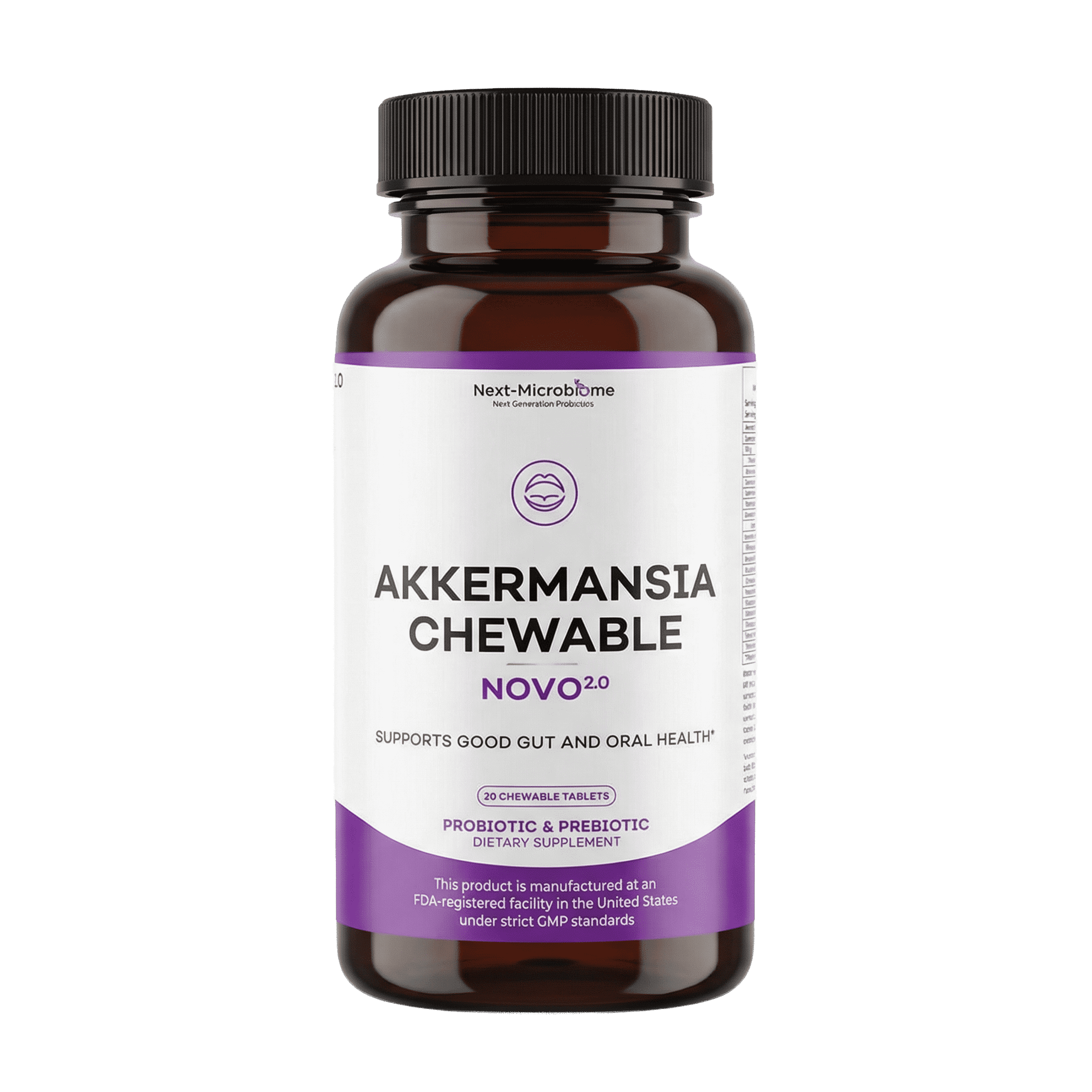
Anyone considering an Akkermansia muciniphila supplement should first understand how this bacterium fits into the gut-brain axis through gut barrier resilience, immune balance, inflammatory regulation, and microbiome signaling. In this context, Akkermansia support should be viewed as part of a broader routine that includes fiber-rich foods, polyphenols, sleep consistency, stress regulation, and overall microbiome care.
If you haven’t read the foundation of microbiome science yet, start with:
"What Is the Human Microbiome? A Complete Guide to Microbes, Immunity & Digestion"
And if you'd like to understand how digestion truly begins in the mouth, continue with:
"Oral Microbiota & Gut Health: How the Mouth Shapes the Entire Microbiome"
Now let’s explore how your gut microbes shape your emotional world.
Frequently Asked Questions — Microbes, Mood, Stress & Appetite
1. Can gut bacteria really affect my mood?
Yes — microbes influence neurotransmitters, inflammatory pathways, hormonal balance, and vagus nerve signaling, all of which shape emotion and mood stability.
2. Can stress change my microbiome?
Absolutely. Stress hormones weaken gut barrier integrity, reduce beneficial bacteria, lower SCFA production, and disrupt microbial diversity.
3. Does improving gut health improve anxiety?
For many people, yes. Rebalancing gut microbes reduces inflammation, stabilizes serotonin pathways, and enhances vagus nerve tone.
4. Is the oral microbiome connected to the gut–brain axis?
Yes — oral microbes influence gut inflammation, which affects brain signaling along the vagus nerve.
5. Which foods support the gut–brain axis?
Polyphenols, fiber, fermented foods, omega-3 fats, green tea, and magnesium-rich plants all support microbial and emotional balance.
6. Do chewable probiotics help the gut–brain axis?
Yes — activating probiotics in the mouth strengthens the oral–gut–brain connection and supports more effective microbial signaling.
7. How do gut microbes influence neurotransmitter production?
Microbes help produce or regulate serotonin, dopamine, GABA, and acetylcholine, which directly influence mood, motivation, and emotional stability.
8. Why does gut inflammation worsen anxiety and stress sensitivity?
Inflammation increases cytokines that travel to the brain, disrupt neurotransmitter balance, and heighten the stress response.
9. Can an imbalanced microbiome contribute to depression?
Emerging evidence links dysbiosis with altered serotonin pathways, chronic inflammation, poor sleep, and weakened vagus nerve signaling.
10. How does the vagus nerve connect the gut and brain?
The vagus acts as a bidirectional superhighway carrying microbial, hormonal, and immune signals that regulate mood, appetite, and stress resilience.
11. Why do cravings increase when the gut–brain axis is disrupted?
Inflammation, cortisol imbalance, low SCFAs, and altered dopamine pathways increase the urge for high-calorie, high-reward foods.
12. Does the gut–brain axis affect sleep quality?
Yes. Gut microbes help regulate melatonin, serotonin, and cortisol rhythms, all of which are essential for healthy sleep architecture. These mechanisms form the basis of restorative sleep support strategies focused on circadian alignment.
13. Can improving gut health reduce emotional eating?
Often yes — restoring microbial balance strengthens GLP-1 signaling, stabilizes blood sugar, reduces inflammation, and weakens stress-driven cravings.
14. Does the microbiome influence cognitive function?
Yes — microbial metabolites affect memory, focus, mental clarity, and executive function through the gut–brain network.
15. How does chronic stress damage the gut–brain axis?
Chronic stress lowers beneficial bacteria, disrupts mucus integrity, raises inflammation, weakens vagal tone, and increases anxiety-like signaling.
16. Why does gut health affect appetite and fullness cues?
SCFAs and GLP-1 produced by gut microbes regulate satiety, reward, hunger patterns, and emotional eating.
17. Can a poor diet worsen mood through the microbiome?
Yes — high sugar, processed foods, and low fiber increase inflammation, disturb serotonin pathways, and destabilize emotional resilience.
18. Do oral bacteria affect brain signaling?
Yes — they influence immune activity, cortisol regulation, and inflammatory cascades that feed directly into the gut–brain loop.
19. How long does it take to notice mood or stress changes after improving gut health?
Most people feel shifts within 2–4 weeks, with more profound emotional benefits emerging over 6–12 weeks.
20. What daily habits best support the gut–brain axis?
Early sunlight, stress reduction, fiber-rich meals, polyphenols, consistent sleep, hydration, and oral–gut synbiotics.
For a full scientific roadmap to GLP-1, SCFAs, cravings, stress biology, and metabolic repair, explore the GLP-1 Microbiome Science.
What Is the Gut–Brain Axis?
The gut–brain axis (GBA) is the constant communication loop between the digestive system and the central nervous system.
This network includes:
-
the vagus nerve
-
gut microbes
-
immune cells
-
neurotransmitters
-
hormones
-
epithelial cells
-
brain centers for emotion & memory
Scientific Reference:
Microbiota–Gut–Brain Axis - Physiological Reviews (2018)
This paper confirms that microbes influence mood, appetite, stress response, and cognitive performance.

How Gut Microbes Talk to the Brain
Microbes communicate with the brain through several biological channels:
1. Neurotransmitter Production
The gut produces:
-
90% of the body's serotonin
-
50% of the body’s dopamine
-
GABA
-
Acetylcholine
These regulate:
-
mood
-
motivation
-
reward
-
stress resilience
-
sleep
-
digestion
2. Vagus Nerve Signaling
The vagus nerve is the “information highway” between gut and brain.
Healthy microbes → calming signals
Dysbiosis → stress signals
This is why gut discomfort often worsens anxiety — and why anxiety worsens digestion.
3. Immune Pathways
Inflammation is a major driver of mood disorders.
The microbiome regulates inflammation by:
-
training immune cells
-
supporting gut barrier and intestinal lining health
-
reducing toxic metabolites
-
preventing cytokine overactivity
For readers comparing options, the best probiotic for gut lining is usually one that supports gut barrier resilience, immune balance, and long-term microbial stability rather than promising quick mood or stress changes.
A healthier microbiome = a calmer immune system = a calmer brain.
4. Microbial Metabolites (SCFAs)
Short-chain fatty acids (SCFAs), especially butyrate, influence:
-
neuroinflammation
-
brain-derived neurotrophic factor (BDNF)
-
learning
-
stress recovery
-
resilience to depression
5. Hormonal Regulation
Microbes regulate:
-
cortisol
-
ghrelin
-
leptin
-
GLP-1
This helps explain how GLP-1 and microbiome signaling influence appetite, energy, cravings, stress, and emotional stability.
In this context, GLP-1 microbiome support is best understood as a systems-based approach that connects microbial balance, appetite signaling, stress regulation, and emotional resilience rather than a stand-alone supplement claim.
For readers comparing a GLP-1 probiotic supplement, this topic should be understood through microbiome support, SCFA production, gut barrier resilience, appetite signaling, and stress-related metabolic balance rather than as a direct GLP-1 medication.
How Dysbiosis (Microbiome Imbalance) Affects the Brain
When the microbiome becomes imbalanced, people often experience:
-
anxiety
-
stress reactivity
-
low mood
-
irritability
-
cravings
-
sleep disturbances
-
poor focus
-
digestive flare-ups
This is not psychological —
it is biological.
Dysbiosis → inflammation → disrupted gut lining → altered neurotransmitters → vagus nerve stress → brain imbalance.
This is one reason broader conversations around leaky gut and microbiome support often overlap with mood, stress, appetite, and microbiome balance.
The Oral–Gut–Brain Connection
The gut–brain axis does NOT start in the gut.
It starts in the mouth.
Oral bacteria influence:
-
vagus nerve tone
-
nitric oxide pathways
-
immune activation
-
upper-GI microbial balance
Reference:
Oral–Gut Microbiome Interaction
This means:
Healthy oral microbiota → healthier gut → healthier brain
Oral dysbiosis → inflamed gut → stressed brain
This is why chewable microbiome supplements are formulated to engage the gut–brain axis through oral–microbial signaling, forming part of a broader microbiome-based sleep support approach.
Foods That Support the Gut–Brain Axis
1. Polyphenols
Found in berries, cocoa, pomegranate, green tea.
They increase beneficial microbes, reduce inflammation, and support cognition.
Reference:
Dietary Polyphenol & Gut Microbiota — Wang et al.
2. Prebiotics
Such as inulin, FOS, resistant starch.
They feed beneficial bacteria & increase SCFAs.
3. Human Milk Oligosaccharides (HMOs)
Especially 2’-FL, supporting mucosal immunity & microbial signaling.
4. SCFA-Supportive Probiotics
Including Clostridium butyricum, which enhances butyrate production.
5. Chewable Microbiome Formulas
They influence the oral microbiota first → then the gut → then the brain.

Written by Ali Rıza Akın
Microbiome Scientist, Author & Founder of Next-Microbiome
Ali Rıza Akın is a microbiome scientist with nearly 30 years of experience in translational biotechnology, systems biology, and applied microbiome research, spanning discovery, preclinical development, and clinical-stage translation.
His work focuses on how microbial ecosystems interact with human physiology, including:
-
Gut barrier function and intestinal permeability
-
Mucus-associated microbiota (Akkermansia-related systems)
-
Oral–gut microbiome axis
-
Short-chain fatty acids (SCFAs) and metabolic signaling
-
Circadian rhythm–microbiome interactions
-
Clinical Research Contributions
He has contributed to multiple clinical-stage microbiome programs, supporting bacterial strain discovery, optimization, and formulation design across different therapeutic areas, including:
Active Ulcerative Colitis (Inflammatory Bowel Disease)
Hyperoxaluria (Oxalate Metabolism Disorder)
Microbiome-driven gut health and inflammatory conditions
These studies were part of broader clinical development programs evaluating microbiome-based approaches. His contributions focused on the early-stage scientific and translational pipeline, including strain discovery, functional optimization, and multi-strain formulation design.
Scientific Contributions:
Ali Rıza Akın is the discoverer of Christensenella californii, a bacterial species associated with microbiome diversity and metabolic health.
He is a contributing author to scientific publications and Bacterial Therapy of Cancer (Springer), and the author of Bakterin Kadar Yaşa: İçimizdeki Evren: Mikrobiyotamız.
Approach:
His work emphasizes evidence-based microbiome science, long-term safety, and a systems-based understanding of how microbes influence human health.
The content provided is for educational and informational purposes only and does not replace professional medical advice, diagnosis, or treatment.
Oral Microbiota and Gut Health: How the Mouth Shapes the Entire Microbiome
Akkermansia for Kids: Building Gut Health, Immunity, Mood, and Microbiome Resilience
Related Posts

Why Do You Wake Up at 3 A.M.? Gut, Cortisol, Blood Sugar, and Sleep Recovery

Can Gut Health Affect Sleep? How the Microbiome May Shape Rest and Recovery

Ozempic Plateau? What Your Gut Microbiome May Be Telling You About Slower Weight Loss

Akkermansia vs Ozempic: Why Gut Balance May Shape GLP-1, Digestion, and Results

GLP-1 Gut Side Effects: Why Bloating and Constipation Happen and What May Help

Best Probiotic for Leaky Gut? Why Gut Barrier Support Differs From Digestive Probiotics

Can You Support Akkermansia Naturally, or Are Supplements Needed?
