



How Can Akkermansia Support Gut Health Against Glyphosate Threat?
The Glyphosate Threat and the Indispensable Role of Akkermansia muciniphila in Gut Defense
As environmental exposure to glyphosate continues to increase globally, growing evidence points to its detrimental effects on gut microbiota and overall gut health. While glyphosate’s herbicidal action is often dismissed as irrelevant to human biology, a frequently asked question is: “How does glyphosate harm gut bacteria?” The answer lies in glyphosate’s ability to inhibit the EPSPS enzyme, a critical part of the shikimate pathway, which is present in many beneficial gut bacteria but absent in human cells. This inhibition results in compromised microbial communities, raising essential health concerns such as gut dysbiosis and leaky gut syndrome.
Probiotic defense against glyphosate damage has become a growing area of research, with Akkermansia muciniphila emerging as a keystone species in maintaining gut homeostasis. This mucin-degrading bacterium is especially important for gut barrier protection and immune modulation. Many wonder “Can Akkermansia muciniphila reverse glyphosate damage?” Evidence suggests it plays a vital role in regenerating the mucus layer and restoring intestinal integrity.
Understanding Glyphosate and the Gut Microbiome
In recent decades, the use of herbicides—especially glyphosate-based formulations—has increased significantly in agriculture, posing potential risks not only to the environment but also to human health. Glyphosate, the active ingredient in Roundup, was initially considered safe due to the absence of its target metabolic pathway, the shikimate pathway, in human cells. However, this pathway is present in a majority of our gut microbiota, including beneficial species like Bifidobacteria, Lactobacilli, and importantly, Akkermansia muciniphila.
As research into the role of gut microbiota in systemic health deepens, understanding the impact of glyphosate on these microbial communities becomes imperative. Dysbiosis, characterized by a disrupted microbial balance, has been linked to inflammatory bowel disease (IBD), irritable bowel syndrome (IBS), obesity, and even neuroinflammatory conditions.
One may ask “Is IBS caused by stress?” and the answer involves the complex gut-brain axis, where microbial imbalance and stress interplay in IBS pathophysiology. Addressing this requires restoring a healthy microbiome, including enhancing populations of good gut bacteria such as Akkermansia muciniphila.
Glyphosate’s Mechanism of Action: EPSPS Inhibition and Dysbiosis
Glyphosate exerts its herbicidal effect by inhibiting the enzyme 5-enolpyruvylshikimate-3-phosphate synthase (EPSPS), thereby blocking the synthesis of aromatic amino acids via the shikimate pathway. While this does not directly affect human metabolism, it significantly impacts microbial communities that rely on this pathway.
Studies show that glyphosate disproportionately affects beneficial gut bacteria, including Bifidobacteria, Lactobacilli, and Enterococcus species, all of which are vital to immune modulation, digestion, and pathogen resistance (Mesnage & Antoniou, 2017; DOI:10.1016/j.toxrep.2017.10.005). Pathogenic microbes such as Clostridium difficile and Salmonella are often more resistant, potentially tipping the balance toward a more inflammatory gut environment. This selective toxicity fosters dysbiosis, weakening colonization resistance and promoting mucosal inflammation.
Moreover, glyphosate exposure is linked to increased intestinal permeability, also known as leaky gut, which facilitates systemic exposure to endotoxins and antigens that may trigger chronic inflammation and autoimmune disorders (Mao et al., 2018; DOI:10.3390/ijms19010245). Many individuals seek natural bloating remedies or home remedies for bloating and gas as symptoms often accompany gut barrier dysfunction, though addressing the root microbial causes remains key.
Akkermansia muciniphila: The Probiotic for Gut Barrier Protection
Discussion around Akkermansia muciniphila benefits often focuses on gut barrier support, mucosal integrity, and immune balance, which is why this microbe is frequently highlighted in gut health research.
-
Mucin Degradation and Barrier Renewal:
Akkermansia muciniphila resides in the mucus layer and uses mucin as its sole carbon and nitrogen source, stimulating goblet cells to produce new mucin and promote a dynamic, robust barrier (Derrien et al., 2004; DOI:10.1128/AEM.70.11.6151-6158.2004). Next-Microbiome research on Akkermansia shows that supporting healthy levels of this bacterium can help sustain mucosal integrity under environmental stressors that challenge microbial balance. It is therefore often included in discussions about good vs bad gut bacteria and in lists of good gut bacteria essential for gut health. -
Reinforcing Tight Junctions and Immune Modulation:
The outer membrane protein Amuc_1100 has been shown to enhance tight junction protein expression and reduce endotoxemia in animal models, thereby decreasing intestinal permeability (Plovier et al., 2017; DOI:10.1038/nm.4236). This supports the common question “Do probiotics help leaky gut?” with a strong affirmative. -
Microbial Cross-Feeding and Metabolic Benefits:
By breaking down mucin, A. muciniphila releases metabolites that feed butyrate-producing bacteria such as Faecalibacterium prausnitzii. Butyrate serves as a critical anti-inflammatory molecule and energy source for colonocytes. -
Metabolic and Immunologic Modulation:
Higher abundance of A. muciniphila is inversely associated with obesity, insulin resistance, and low-grade inflammation. Clinical trials have shown its potential in improving insulin sensitivity and reducing systemic inflammation (Depommier et al., 2019; DOI:10.1038/s41591-019-0562-1). Hence, questions related to Akkermansia and weight loss are gaining research interest.
Can Akkermansia Resist Glyphosate?
Emerging research using metagenomics and metabolomics indicates that Akkermansia muciniphila may exhibit relative resilience to glyphosate exposure compared to other beneficial microbes. In rodent models, its population has been observed to increase following glyphosate-induced dysbiosis, potentially as an adaptive mechanism aimed at restoring barrier integrity (Riede et al., 2021; DOI:10.3390/toxics9020041).
This paradoxical increase could reflect the body's innate response to a compromised gut lining, elevating A. muciniphila as a front-line repair agent. This finding underscores the need to support its function through diet, prebiotics (e.g., 2'-FL HMO, L-arabinose), and targeted supplementation.
Akkermansia Chewable and Akkermansia Life: Next-Generation Gut Health Solutions
With the rising awareness of the gut microbiome's central role in health, probiotic innovations are evolving beyond traditional strains. Akkermansia Chewable and Akkermansia Life represent next-generation formulations that deliver viable A. muciniphila alongside supportive compounds.
-
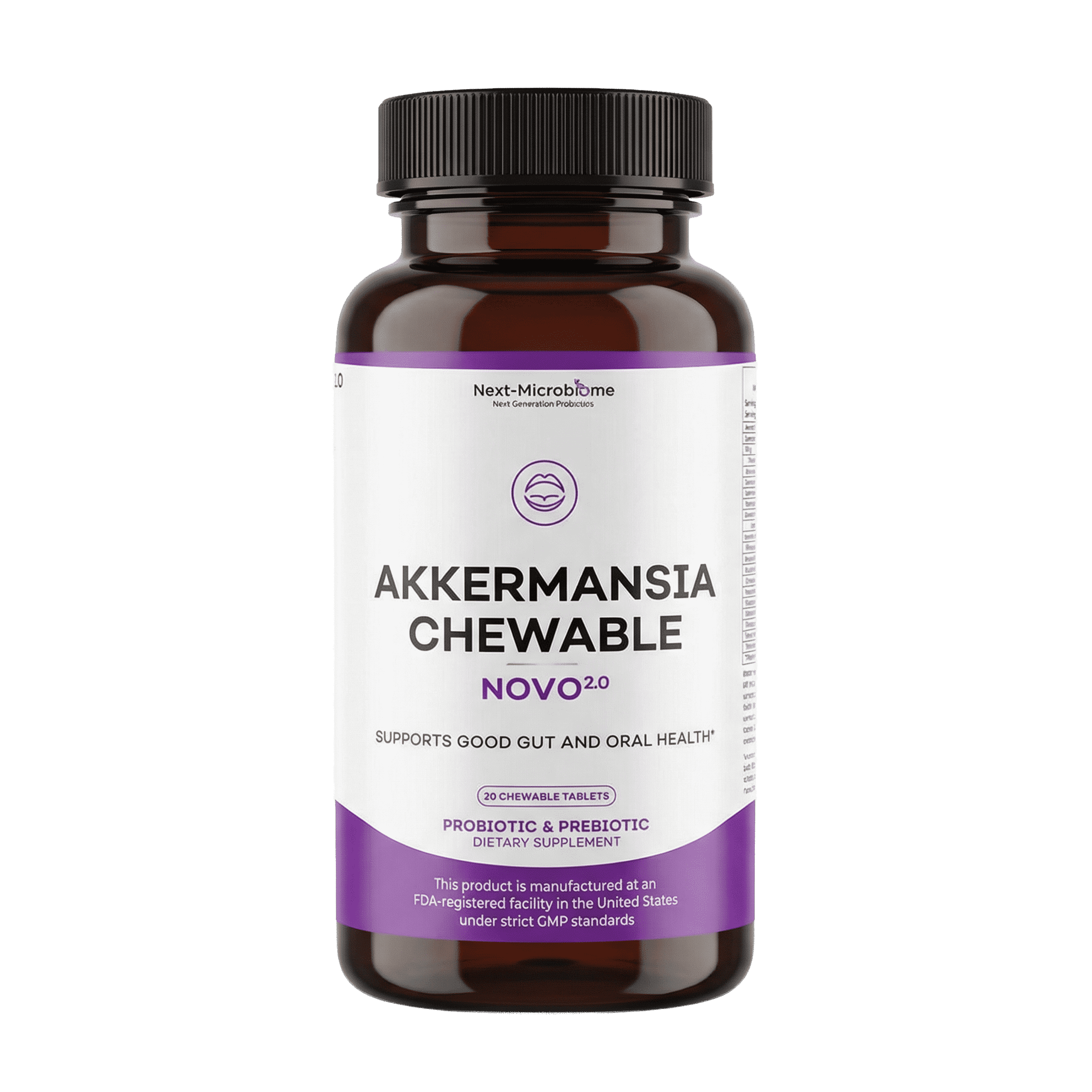
Akkermansia Chewable combines live A. muciniphila with antioxidants, repair nutrients (such as glutamine and collagen), and polyphenol-rich berry extracts.
-
Akkermansia Life focuses on sustained-release delivery and synergistic prebiotics to ensure colonization and function.
For those interested in buying Akkermansia muciniphila, clinical-grade supplementation offers benefits such as:
-
Restoring barrier function post-antibiotic or herbicide exposure
-
Reducing systemic inflammation and endotoxemia
-
Supporting metabolic health and insulin sensitivity
-
Enhancing the resilience of the microbial ecosystem
Notably, pasteurized Akkermansia muciniphila supplements have also gained attention for safety and efficacy.
Conclusion: A Targeted Probiotic Strategy for Glyphosate Detox
As environmental threats like glyphosate continue to undermine gut microbial balance, the protective function of Akkermansia muciniphila becomes more essential than ever. Unlike traditional probiotics, A. muciniphila operates at the structural frontier of gut health—regenerating the mucus barrier, feeding the microbial network, and protecting against inflammation.
Its supplementation through advanced products like Akkermansia Chewable and Akkermansia Life offers a promising strategy to counteract glyphosate-induced dysbiosis and support long-term gut integrity.
For those wondering “Do probiotics heal leaky gut?”, Akkermansia muciniphila stands out as a scientifically supported candidate to restore gut barrier function.
FAQ:
1. Can a doctor test you for glyphosate exposure?
Tests can measure glyphosate in blood or urine, but ATSDR says these are not part of a standard doctor’s office workup. They may only show very recent exposure, and they cannot tell you your lifetime exposure or predict whether you will develop health problems. That is why symptoms, exposure history, and medical evaluation still matter more than trying to use a test result as a complete answer.
Scientific Reference:
https://www.atsdr.cdc.gov/toxfaqs/tfacts214.pdf
https://www.atsdr.cdc.gov/toxprofiles/tp214.pdf
2. When should someone seek medical help after possible glyphosate or weed-killer exposure?
Medical help should be sought promptly if someone develops concerning symptoms after exposure, especially vomiting, trouble breathing, eye pain or burning, skin irritation that worsens, dizziness, weakness, muscle twitching, or changes in alertness. ATSDR notes that swallowing a large amount of glyphosate can cause nausea and vomiting and that it can be very irritating to the skin and eyes. HealthyChildren says signs of pesticide poisoning can look like the flu and advises calling Poison Control right away if symptoms appear after contact with a pesticide. Poison Control also reports that glyphosate products can cause chemical burns, including serious eye injury, which is another reason not to delay evaluation after a significant splash or ingestion.
Scientific Reference:
https://www.atsdr.cdc.gov/toxfaqs/tfacts214.pdf
https://www.healthychildren.org/English/safety-prevention/all-around/Pages/Protecting-Children-from-Pesticides-Information-for-Parents.aspx
https://www.poison.org/articles/lawn-chemicals
References:
-
Mesnage, R., & Antoniou, M. N. (2017). Facts and fallacies in the debate on glyphosate toxicity.
Toxicology Reports, 4, 1–9
-
Mao, Q., Manservisi, F., Panzacchi, S., et al. (2018). The Ramazzini Institute 13-week pilot study on glyphosate and Roundup administered at human-equivalent dose to Sprague Dawley rats: Effects on the microbiome.
International Journal of Molecular Sciences, 19(4), 10245.
-
Derrien, M., Vaughan, E. E., Plugge, C. M., & de Vos, W. M. (2004). Akkermansia muciniphila gen. nov., sp. nov., a human intestinal mucin-degrading bacterium. Applied and Environmental Microbiology, 70(11), 6151–6158.
-
Plovier, H., Everard, A., Druart, C., et al. (2017). A purified membrane protein from Akkermansia muciniphila or the pasteurized bacterium improves metabolism in obese and diabetic mice.
Nature Medicine, 23, 107–113.
-
Depommier, C., Everard, A., Druart, C., et al. (2019). Supplementation with Akkermansia muciniphila in overweight and obese human volunteers: A proof-of-concept exploratory study.
Nature Medicine, 25, 1096–1103.
-
Riede, S., Toboldt, A., Breves, G., et al. (2021). Investigations on the possible impact of a glyphosate-containing herbicide on the composition and metabolism of the gut microbiota in rats.
Toxics, 9(2), 41.
Written by Ali Rıza Akın
Microbiome Scientist, Author & Founder of Next-Microbiome
Ali Rıza Akın is a microbiome scientist with nearly 30 years of experience in biotechnology, translational research, and microbiome-driven health innovation, spanning academic research, Silicon Valley biotech, and applied product development.
His work focuses on gut barrier biology, microbial metabolite signaling (particularly short-chain fatty acids such as butyrate), host–microbiome communication, immune tolerance, and metabolic regulation, with a special emphasis on how microbial ecosystems influence endogenous GLP-1 signaling, insulin sensitivity, inflammation, and circadian biology.
Ali Rıza Akın is the discoverer of Christensenella californii, a human-associated bacterial species linked to metabolic health and mucosal integrity. He is the author of Bakterin Kadar Yaşa: İçimizdeki Evren and a contributing author to Bacterial Therapy of Cancer (Springer, Methods in Molecular Biology).
As the founder of Next-Microbiome, he works at the intersection of fundamental microbiome science and real-world application, emphasizing evidence-based probiotic strategies that prioritize biological mechanisms and host signaling pathways over marketing claims.
All content is provided for educational purposes only and does not replace personalized medical advice. Readers should consult qualified healthcare professionals for individual health decisions.
What Is the Relationship Between the Full Moon and Your Gut Microbiota
How Akkermansia May Support Gut Microbiota Health for Longevity
Related Posts

Best Probiotic for Leaky Gut (Science-Based Gut Barrier Guide 2026)

Can You Support Akkermansia Naturally, or Are Supplements Needed?

How Does Akkermansia Support Natural GLP-1 and Metabolic Regulation?

What Does Science Say About Akkermansia for Gut Health?

Why Is Akkermansia muciniphila Important for Gut Barrier Support?

How Long Does Akkermansia Take to Work?

When to Take Akkermansia: Timing, Consistency, and What to Expect
