
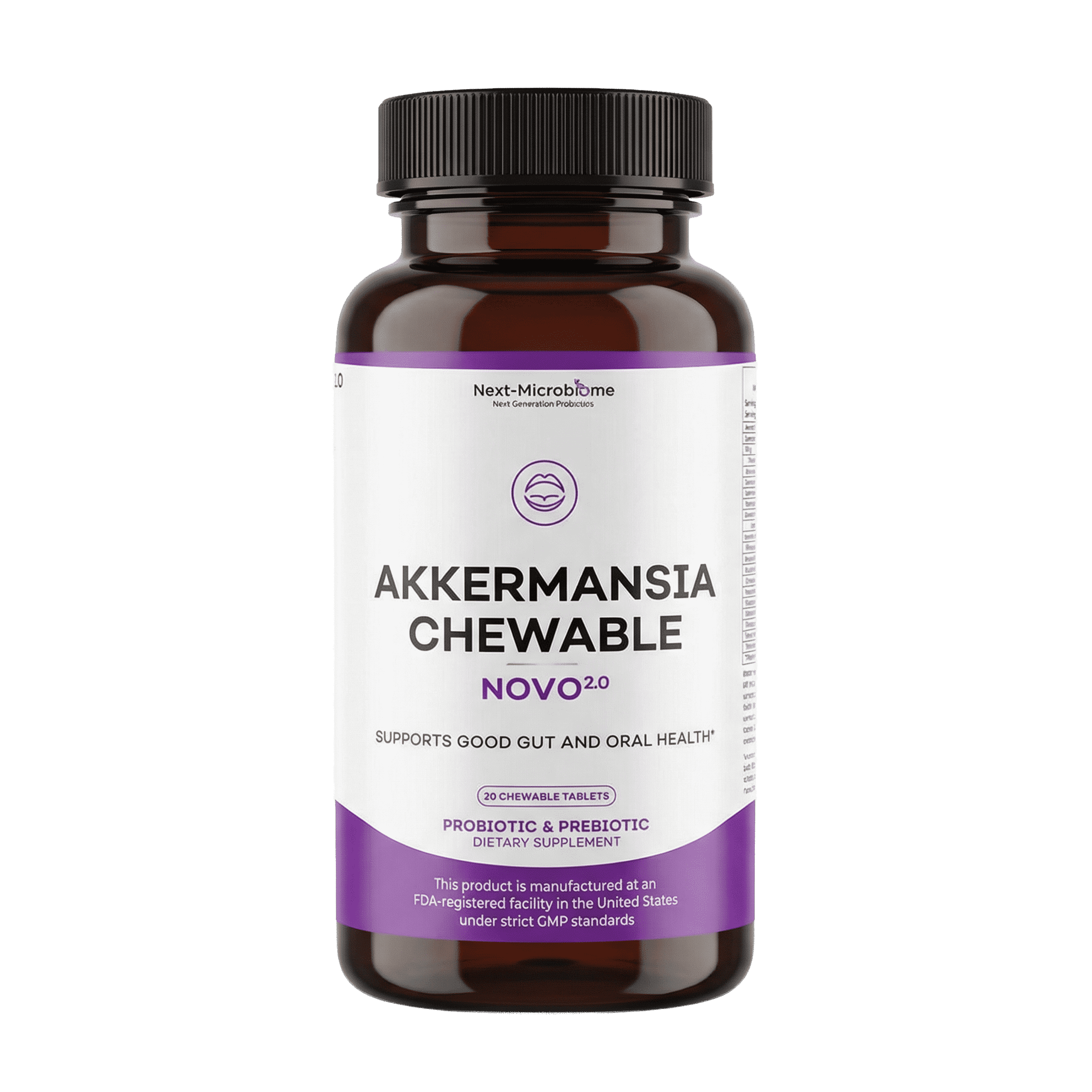


Akkermansia Support: Who It May Help, When It Makes Sense, and When to Be Cautious
When Akkermansia Support Makes Sense — And When It Doesn’t
After learning that Akkermansia muciniphila is a naturally occurring gut bacterium with a strong safety profile, the next logical question becomes more personal: does Akkermansia support actually make sense for you?
This article explains who may benefit from Akkermansia-focused strategies, who should be cautious, and why individual context matters more than labels or trends. The goal is not to promote use, but to support responsible, evidence-based decision-making.
For readers considering an Akkermansia muciniphila supplement, the first step is not choosing a product, but understanding whether Akkermansia support fits their gut barrier health, metabolic context, diet quality, and overall microbiome balance. This keeps the decision grounded in individual needs rather than trends.
If you have not already reviewed the long-term safety evidence, start here:
"Is Akkermansia Safe Long Term? What Science Actually Shows"
Executive Summary
-
Akkermansia support may be relevant for people exploring gut barrier, metabolic, or microbiome-related health questions.
-
It is not appropriate for everyone, particularly during active gastrointestinal disease.
-
Potential relevance depends on diet, microbiome diversity, and gut lining integrity.
-
Akkermansia functions best within a broader gut ecosystem, not as a standalone solution.
-
Responsible decisions prioritize context, balance, and safety over intensity or speed.
What “Considering Akkermansia” Means in Microbiome Science
In microbiome research, considering Akkermansia does not mean deciding whether to “take” or “use” a single intervention. It refers to evaluating whether supporting Akkermansia muciniphila aligns with an individual’s gut barrier and intestinal lining health, microbial ecosystem, and overall physiological context.
From a scientific perspective, Akkermansia relevance is defined by regulatory fit, not by symptoms alone or generalized recommendations.
Who May Benefit From Learning About Akkermansia
1. People Interested in Gut Barrier Health
Akkermansia muciniphila resides in the intestinal mucus layer and participates in signaling pathways regulating gut barrier function and intestinal permeability. This helps explain why Akkermansia muciniphila benefits are often discussed in relation to gut lining integrity and barrier biology rather than as an isolated factor.
For foundational context, see:
Gut Barrier Health: Science of Intestinal Integrity
For readers comparing options, the best probiotic for gut lining is usually one that supports barrier biology, microbial balance, and long-term gut resilience rather than promising fast or isolated results.
2. Individuals With Metabolic or Inflammatory Patterns
Research has consistently observed lower Akkermansia abundance in individuals with metabolic dysfunction or low-grade inflammation. Human and animal studies suggest that restoring normal Akkermansia activity may support digestive wellness and metabolic signaling when combined with appropriate dietary and lifestyle factors. (Depommier et al., 2019).
For readers exploring Akkermansia weight management, this topic should be understood through gut barrier integrity, inflammatory balance, metabolic signaling, microbiome diversity, and lifestyle context rather than as a stand-alone weight-loss solution.
These findings describe associations and regulatory roles, not direct treatment effects or guaranteed outcomes.
3. People Exploring Microbiome-Based Approaches
Individuals already focused on microbiome diversity, fiber intake, circadian rhythm, and microbial metabolites may find Akkermansia relevant as part of a systems-based approach.
Because Akkermansia interacts with microbial metabolites such as short-chain fatty acids (SCFAs), it is often discussed alongside SCFA research rather than as a standalone target.
For readers exploring what broader microbiome support can look like in practice, formulations such as Boost Synergy GLP-1 may be considered as part of a wider diet and lifestyle strategy, rather than as a standalone solution.
Who Should Be Cautious or Seek Guidance First
1. People With Active Gastrointestinal Disease
Individuals with inflammatory bowel disease, acute gastrointestinal infections, or severe gut barrier disruption should not self-direct microbiome strategies. In these situations, medical evaluation and foundational care take priority over microbiome-focused experimentation.
2. People Expecting Immediate or Dramatic Effects
Akkermansia does not act like a medication, stimulant, or symptom-suppressing agent. Microbiome-related changes occur gradually and depend on consistent inputs such as diet quality, sleep, stress regulation, and microbial diversity.
Expectations of rapid or dramatic change are often misaligned with the microbiome's biology.

3. People Treating Akkermansia as a Standalone Solution
Scientific literature does not support using Akkermansia in isolation. Its role depends on interactions with the gut lining, immune signaling, and the broader microbial community.
For a broader systems-level overview, see our Akkermansia microbiome guide.
Why Context Matters More Than Symptoms
Two individuals with similar digestive or metabolic complaints may have very different underlying drivers. may be relevant for one and unnecessary or inappropriate for another.
Key contextual factors include:
-
dietary quality and fiber diversity
-
sleep patterns and circadian rhythm alignment
-
microbiome resilience and diversity
-
immune and inflammatory status
This is why responsible microbiome education avoids one-size-fits-all recommendations and emphasizes individual context over labels.
FAQ:
1. Who should consider Akkermansia support?
People interested in gut barrier regulation, metabolic signaling, microbiome balance, or broader topics such as leaky gut and microbiome support may benefit from learning about Akkermansia within the right context.
2. Who should not use Akkermansia?
Those with active gastrointestinal disease or acute symptoms should prioritize medical guidance first.
3. Is Akkermansia only for metabolic health?
No. Research also links Akkermansia to gut barrier integrity and immune signaling.
4. Can diet alone support Akkermansia?
In some individuals, yes. For readers exploring natural ways to increase Akkermansia, diet quality, fiber diversity, and broader microbiome-supportive strategies are often the first areas of focus.
When diet alone is not enough, some readers compare supplement formats such as lyophilized Akkermansia, but this should be evaluated through formulation quality, stability, delivery method, and individual microbiome context.
5. Who may benefit from supporting Akkermansia levels?
Research suggests Akkermansia muciniphila may be linked with gut barrier integrity and metabolic health, making it a topic of interest in microbiome research.
6. Who should speak with a healthcare professional before using microbiome supplements?
Individuals with immune conditions, chronic illnesses, or those taking medications should consult a healthcare professional before starting new supplements.
7. Is Akkermansia found naturally in the gut?
Yes. Akkermansia muciniphila is a naturally occurring bacterium found in the intestinal mucus layer and is part of the normal gut microbiome in many people.
Scientific References
-
Cani PD & de Vos WM, Frontiers in Microbiology, 2017
-
Everard A et al., PNAS, 2013
-
Depommier C et al., Nature Medicine, 2019
Key Takeaways
In summary, Akkermansia relevance is determined by physiological context, microbiome balance, and gut barrier integrity, not by symptoms alone or generalized trends.
-
Akkermansia is not universally necessary or appropriate.
-
Potential relevance depends on individual context.
-
Safety and benefit are tied to balance, not intensity.
-
Akkermansia works within a microbiome system, not alone.
-
Informed decisions reduce risk and unrealistic expectations.
Summary
-
Akkermansia muciniphila is a mucus-associated gut bacterium involved in gut barrier and metabolic signaling.
-
Support may be relevant for some individuals but is not appropriate for everyone.
-
Scientific evidence emphasizes context, microbiome balance, and gut lining health.
-
Akkermansia should not be treated as a standalone or rapid intervention.
-
Responsible consideration prioritizes safety, balance, and professional guidance when needed.
-
From a scientific perspective, Akkermansia's relevance is defined by regulatory context and ecosystem integration, not by universal use.
This article is intended for scientific education and does not provide medical advice or individualized treatment recommendations.
Scientific References
-
Depommier C et al.
Supplementation with Akkermansia muciniphila in overweight and obese human volunteers.
Nature Medicine (2019). -
Plovier H et al.
A purified membrane protein from Akkermansia muciniphila improves metabolism in obese and diabetic mice.
Nature Medicine (2017). -
Chelakkot C et al.
Mechanisms regulating intestinal barrier integrity and its pathological implications.
Experimental & Molecular Medicine (2018). -
Cani PD & de Vos WM.
Next-Generation Beneficial Microbes: The Case of Akkermansia muciniphila.
Frontiers in Microbiology (2017).
Written by Ali Rıza Akın
Microbiome Scientist, Author & Founder of Next-Microbiome
Ali Rıza Akın is a microbiome scientist with nearly 30 years of experience in translational biotechnology, systems biology, and applied microbiome research, spanning discovery, preclinical development, and clinical-stage translation.
His work focuses on how microbial ecosystems interact with human physiology, including:
-
Gut barrier function and intestinal permeability
-
Mucus-associated microbiota (Akkermansia-related systems)
-
Oral–gut microbiome axis
-
Short-chain fatty acids (SCFAs) and metabolic signaling
-
Circadian rhythm–microbiome interactions
-
Clinical Research Contributions
He has contributed to multiple clinical-stage microbiome programs, supporting bacterial strain discovery, optimization, and formulation design across different therapeutic areas, including:
Active Ulcerative Colitis (Inflammatory Bowel Disease)
Hyperoxaluria (Oxalate Metabolism Disorder)
Microbiome-driven gut health and inflammatory conditions
These studies were part of broader clinical development programs evaluating microbiome-based approaches. His contributions focused on the early-stage scientific and translational pipeline, including strain discovery, functional optimization, and multi-strain formulation design.
Scientific Contributions:
Ali Rıza Akın is the discoverer of Christensenella californii, a bacterial species associated with microbiome diversity and metabolic health.
He is a contributing author to scientific publications and Bacterial Therapy of Cancer (Springer), and the author of Bakterin Kadar Yaşa: İçimizdeki Evren: Mikrobiyotamız.
Approach:
His work emphasizes evidence-based microbiome science, long-term safety, and a systems-based understanding of how microbes influence human health.

Is Akkermansia Safe Long Term? What Research Shows About Safety, Balance, and Gut Health
When Should You Take Akkermansia? Timing, Consistency, and What Actually Matters Most
Related Posts

Why Do You Wake Up at 3 A.M.? Gut, Cortisol, Blood Sugar, and Sleep Recovery

Can Gut Health Affect Sleep? How the Microbiome May Shape Rest and Recovery

Ozempic Plateau? What Your Gut Microbiome May Be Telling You About Slower Weight Loss

Akkermansia vs Ozempic: Why Gut Balance May Shape GLP-1, Digestion, and Results

GLP-1 Side Effects: How to Ease Bloating, Constipation, and Gut Issues Naturally

Best Probiotic for Leaky Gut? Why Gut Barrier Support Differs From Digestive Probiotics

Can You Support Akkermansia Naturally, or Are Supplements Needed?
