


What Does Science Say About Akkermansia for Gut Health?

Akkermansia Microbiome Hub: Evidence Before Action
Akkermansia muciniphila is one of the most studied gut microbes in modern microbiome science, and the potential benefits of Akkermansia muciniphila are often discussed in relation to gut barrier integrity, metabolic signaling, and immune communication. At the same time, it is one of the most misunderstood.
This hub exists to organize evidence before action.
Rather than promoting isolated interventions or simplified advice, this page structures the full scientific decision pathway around Akkermansia—covering safety, eligibility, timing, realistic timelines, and natural versus supplemental support.
If you are looking for clear, responsible, and science-based guidance, this is the starting point.
For readers researching where to buy Akkermansia muciniphila, this hub is designed to help clarify what should come before any purchase decision: safety, individual suitability, expected timelines, product format, and whether natural or supplemental support makes sense in context.
What This Hub Covers (And Why It Exists)
Most Akkermansia-related content online falls into one of two extremes:
-
oversimplified claims that imply Akkermansia can be “boosted” easily
-
highly technical research papers without a practical decision context
This hub bridges that gap by organizing peer-reviewed evidence into decision-oriented guidance, without hype, dosage claims, or unrealistic promises.
Start Here: The Akkermansia Decision Framework
1. Long-Term Safety of Akkermansia
Before considering any microbiome-related strategy, safety comes first.
This article reviews:
-
long-term human and animal safety data
-
physiological balance and regulation
-
when caution is appropriate
Read: "Is Akkermansia Safe Long Term? What Science Actually Shows"
 2. Who Should Consider Akkermansia
Akkermansia is not universally necessary or appropriate.
This article explains:
-
who may benefit from learning about Akkermansia
-
who should be cautious
-
why individual context matters more than labels
Read: "Who Should Consider Akkermansia (And Who Shouldn’t)"
3. When to Take Akkermansia
Questions about timing are common—and often misunderstood.
This article clarifies:
-
why consistency matters more than clock time
-
what circadian biology actually influences
-
realistic expectations around daily routines
Read: "When to Take Akkermansia: Timing, Consistency & Expectations"
4. How Long Akkermansia Takes to Work
Microbiome effects are gradual, not immediate.
This article covers:
-
what changes first at the biological level
-
typical research-observed timelines
-
why results vary between individuals
Read: "How Long Does Akkermansia Take to Work? Science-Based Timelines"
5. Supporting Akkermansia Naturally
Many people prefer natural strategies—but evidence matters.
This article reviews:
-
how diet and lifestyle influence Akkermansia indirectly
-
where evidence is associative versus causal
-
when supplements may be useful
This section also helps clarify the difference between prebiotics and probiotics, especially when comparing food-based strategies that nourish beneficial microbes with supplements that introduce or support specific microbial strains.
Read: "Can You Support Akkermansia Naturally? What Science Says"
How to Use This Hub (Recommended Reading Order)?
If you are new to Akkermansia research, the recommended sequence is:
-
Safety
-
Eligibility
-
Timing
-
Expected timelines
-
Natural vs supplemental support
This mirrors how microbiome science evaluates interventions:
safety → context → mechanism → expectations → strategy
Why Akkermansia Should Be Viewed as a System-Level Microbe?
Across all articles in this hub, one principle remains consistent:
Akkermansia does not act in isolation.
Its activity is shaped by gut barrier and intestinal lining health, mucus layer dynamics, microbial diversity, immune and metabolic signaling, and circadian rhythm alignment.
This systems-based view also explains why gut-based GLP-1 support should be understood through microbial diversity, SCFA production, gut barrier resilience, and inflammatory balance rather than as a direct hormone shortcut.
This systems-level view may also connect to gut-brain health, since microbial balance, inflammation control, circadian rhythm, and barrier resilience can influence how the gut communicates with the brain.
This is why single-factor solutions rarely work, and why responsible guidance emphasizes systems biology over shortcuts.

Summary
-
Akkermansia muciniphila is a mucus-associated gut bacterium involved in gut barrier and metabolic regulation.
- Related topics such as microbiome controls appetite should be understood as microbiome-influenced appetite signaling rather than a simple or standalone Akkermansia claim.
-
Scientific evidence emphasizes balance, context, and gradual biological change.
-
Akkermansia-related decisions should follow a structured evaluation: safety, eligibility, timing, expectations, and strategy.
-
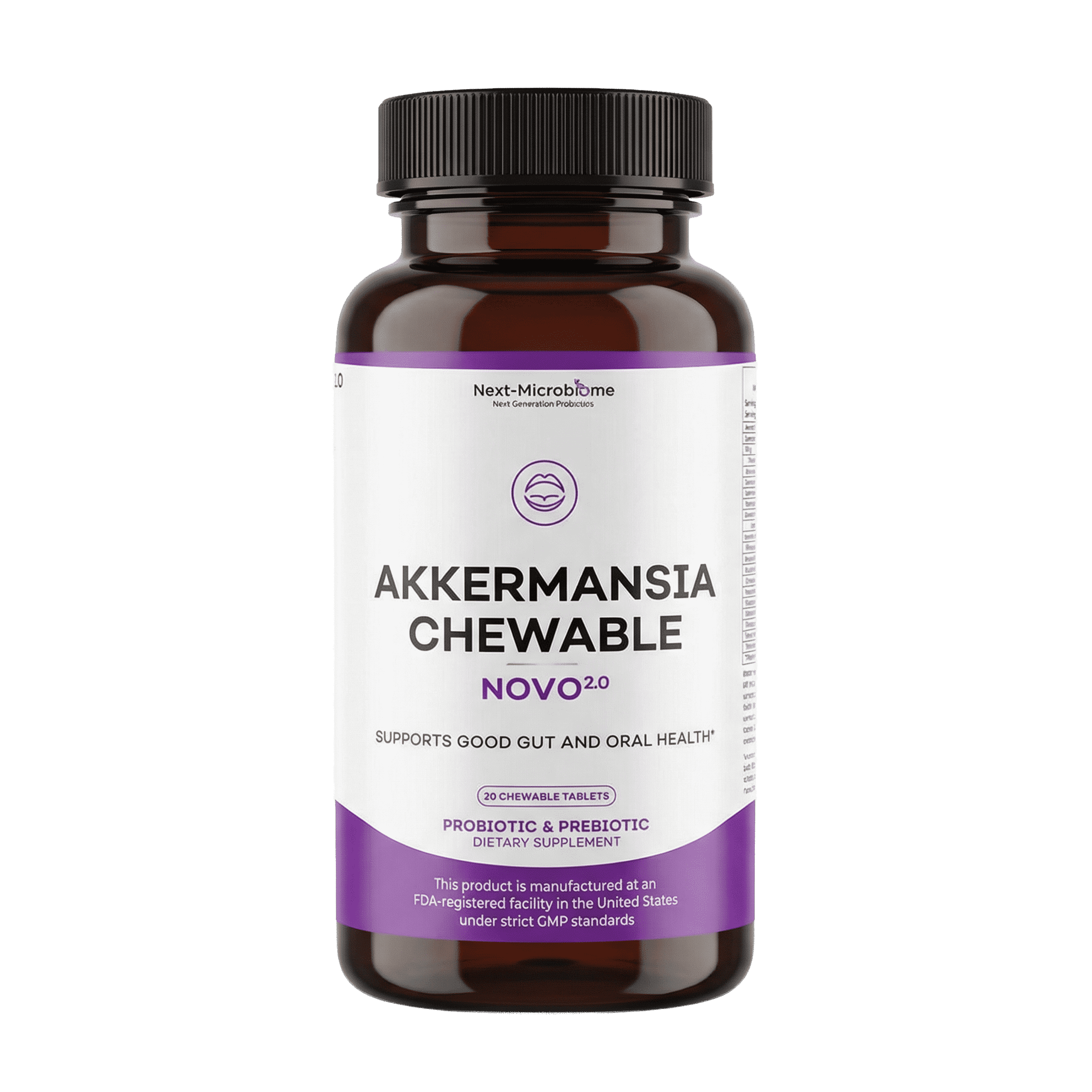
Diet and lifestyle, including discussion around foods that support Akkermansia, may influence this microbe indirectly, while supplements may be useful in specific contexts. For readers comparing product formats, an Akkermansia chewable probiotic formula may be worth evaluating through the lens of oral-gut signaling, ingredient quality, safety data, and whether the format aligns with the user’s broader microbiome goals.
-
This hub brings together Akkermansia muciniphila science in a practical framework covering safety, eligibility, timing, expectations, and support strategies.
FAQ:
1. What is Akkermansia muciniphila and why does it matter for gut health?
Akkermansia muciniphila is a naturally occurring gut bacterium that lives close to the intestinal mucus layer. Research links it with gut barrier function, immune signaling, and metabolic regulation, which is why some readers also explore it in broader conversations around leaky gut and microbiome support. Even so, it is best understood as part of a wider microbial ecosystem, not a standalone fix.
Scientific Reference:
https://pubmed.ncbi.nlm.nih.gov/35641786/
2. Does Akkermansia damage the mucus layer because it feeds on mucin?
Current evidence does not support that simple assumption. Although Akkermansia uses mucin, research describes it as a mucus-associated bacterium that can help support mucus thickness and gut barrier function rather than simply eroding the gut lining.
Scientific Reference:
https://pubmed.ncbi.nlm.nih.gov/29566906/
3. Is Akkermansia supplementation considered safe?
Current evidence suggests pasteurized Akkermansia has been considered safe under studied conditions for adults. At the same time, safety has not been established for every population, including pregnant and lactating women.
Scientific Reference:
https://pubmed.ncbi.nlm.nih.gov/34484452/
4. Can diet help support Akkermansia naturally?
Possibly. Systematic reviews suggest some dietary interventions may increase Akkermansia abundance, but the effect is indirect, varies by person, and should not be treated as a guaranteed result from one food or habit.
Scientific Reference:
https://pubmed.ncbi.nlm.nih.gov/31336737/
5. Does everyone need an Akkermansia supplement?
Not necessarily. A 12-week randomized trial found that people with lower baseline Akkermansia were more likely to show measurable benefits, which supports the idea that baseline status and individual context matter.
Scientific Reference:
https://pubmed.ncbi.nlm.nih.gov/39879980/
If you want, I can next turn these into a clean FAQ schema-ready version.
About the Author
Written by Ali Rıza Akın
Microbiome Scientist, Author & Founder of Next-Microbiome
Ali Rıza Akın is a microbiome scientist with nearly 30 years of experience in translational biotechnology, systems biology, and applied microbiome research, spanning discovery, preclinical development, and clinical-stage translation.
His work focuses on how microbial ecosystems interact with human physiology, including:
-
Gut barrier function and intestinal permeability
-
Mucus-associated microbiota (Akkermansia-related systems)
-
Oral–gut microbiome axis
-
Short-chain fatty acids (SCFAs) and metabolic signaling
-
Circadian rhythm–microbiome interactions
-
Clinical Research Contributions
He has contributed to multiple clinical-stage microbiome programs, supporting bacterial strain discovery, optimization, and formulation design across different therapeutic areas, including:
Active Ulcerative Colitis (Inflammatory Bowel Disease)
Hyperoxaluria (Oxalate Metabolism Disorder)
Microbiome-driven gut health and inflammatory conditions
These studies were part of broader clinical development programs evaluating microbiome-based approaches. His contributions focused on the early-stage scientific and translational pipeline, including strain discovery, functional optimization, and multi-strain formulation design.
Scientific Contributions:
Ali Rıza Akın is the discoverer of Christensenella californii, a bacterial species associated with microbiome diversity and metabolic health.
He is a contributing author to scientific publications and Bacterial Therapy of Cancer (Springer), and the author of Bakterin Kadar Yaşa: İçimizdeki Evren: Mikrobiyotamız.
Approach:
His work emphasizes evidence-based microbiome science, long-term safety, and a systems-based understanding of how microbes influence human health.
Low Akkermansia? 7 Signs Your Gut Barrier May Be Failing and What May Help Support It
GLP-1 Not Working? How Your Gut Microbiome May Be Affecting GLP-1 Signaling
Related Posts

Why Do You Wake Up at 3 A.M.? Gut, Cortisol, Blood Sugar, and Sleep Recovery

Can Gut Health Affect Sleep? How the Microbiome May Shape Rest and Recovery

Ozempic Plateau? What Your Gut Microbiome May Be Telling You About Slower Weight Loss

Akkermansia vs Ozempic: How Gut Microbiome Support May Influence GLP-1 and Digestion

GLP-1 Side Effects: How to Ease Bloating, Constipation, and Gut Issues Naturally

Best Probiotic for Leaky Gut? Why Gut Barrier Support Differs From Digestive Probiotics

Can You Support Akkermansia Naturally, or Are Supplements Needed?
