


Best Probiotic for Leaky Gut? Why Gut Barrier Support Differs From Digestive Probiotics
Most probiotics are designed to support digestion — not the gut barrier itself.
But emerging research suggests that intestinal permeability is not just a digestive issue. It is a barrier regulation problem involving the microbiome, immune signaling, and the mucus layer.
Anyone comparing the best Akkermansia probiotic should first understand the difference between general digestive probiotics and microbiome strategies designed around gut barrier support. Akkermansia is most relevant when the goal is to evaluate mucus-layer interaction, intestinal lining resilience, immune signaling, and long-term microbiome balance rather than choosing a probiotic based on CFU count alone.
Leaky gut is one of the most talked-about — and misunderstood — topics in modern gut health.
Scientifically, it is known as intestinal permeability, a condition characterized by changes in the gut barrier that may allow substances to pass more easily into the circulation.
Emerging research suggests this process may be associated with:
- Chronic low-grade inflammation
- Digestive discomfort
- Immune system dysregulation
- Skin issues
- Fatigue and brain fog
Read the full breakdown of leaky gut syndrome symptoms and causes in:
"What Is Leaky Gut Syndrome? Causes, Symptoms, and Natural Repair Options"
Also, you can explore our full gut barrier science guide:
"What Is Gut Barrier Health and Intestinal Permeability? A Science-Based Guide"
Key Points
- Leaky gut relates to gut barrier function
- The gut barrier includes tight junctions, mucus, immune cells, and microbiota
- Most probiotics support digestion, not the gut lining directly
- The mucus layer is a critical protective interface
- Akkermansia muciniphila is linked to mucus layer dynamics
- Targeted microbiome approaches are emerging
- Delivery format (oral vs capsule) may influence interaction
Quick Summary
Leaky gut, or intestinal permeability, involves disruption of the gut barrier system. While traditional probiotics like Lactobacillus and Bifidobacterium support general gut health, emerging research highlights microbes such as Akkermansia muciniphila, which are associated with the mucus layer and gut barrier function.
What Is Leaky Gut (Scientifically)?
The gut barrier is a highly regulated system composed of:
- Tight junction proteins
- A protective mucus layer
- Immune signaling
- The gut microbiome
When functioning properly, it selectively regulates what enters circulation while preventing harmful substances from crossing into the bloodstream. When disrupted, intestinal permeability may increase.

Scientific reference:
https://link.springer.com/article/10.1186/s12876-014-0189-7
What the Research Shows
The study, led by Stephan C. Bischoff and published in BMC Gastroenterology, provides a foundational framework for understanding intestinal barrier function.
Key findings include:
- The intestinal barrier is multi-layered (epithelial cells, tight junctions, mucus, immune components, microbiota)
- Tight junction proteins (e.g., occludin, claudins) actively regulate permeability
- Barrier dysfunction may allow microbial components into circulation, contributing to low-grade inflammation
- Gut-associated lymphoid tissue (GALT) integrates immune responses with barrier function
- The microbiome directly influences mucus production and barrier integrity
Why This Matters
The gut barrier is not just structural — it is a dynamic, microbiome-regulated system.
Why Most Probiotics May Not Target the Gut Barrier
Most probiotics are designed to support digestion and overall microbial balance — but this is not the same as targeting the gut barrier itself.
Understanding the difference between prebiotics and probiotics can also help clarify this distinction: probiotics introduce or support beneficial microbes, while prebiotics help feed those microbes and support the environment they depend on.
This distinction becomes important when the goal is to support gut barrier and intestinal lining health, rather than general digestive function alone.
For readers comparing options, the best probiotic for gut lining is usually one evaluated by barrier-support mechanisms, mucosal interaction, and long-term microbiome balance rather than general digestive claims alone.
As a result, research is increasingly exploring targeted microbiome approaches — particularly those that interact with the mucus layer and barrier signaling pathways.
Common probiotic strains such as:
- Lactobacillus
- Bifidobacterium
may support:
- Microbial balance
- Digestion
- Short-chain fatty acid production
However, their direct interaction with the gut lining and mucus layer is limited.
Learn more about digestive microbiome function in:
"What Are the Benefits of Probiotics for Digestive Health?"
The Mucus Layer: A Critical Interface
The mucus layer acts as a protective interface between microbes and the intestinal wall.
It plays a role in:
- Barrier protection
- Immune signaling
- Microbial regulation

Akkermansia muciniphila
Current research on Akkermansia muciniphila science suggests this gut bacterium may play a role in mucin interaction, gut barrier signaling, and metabolic health. Ongoing studies continue to explore Akkermansia muciniphila benefits, especially in relation to gut lining support and broader metabolic function.
What Makes Akkermansia Different
Unlike traditional probiotics that mainly operate in the gut lumen, Akkermansia is studied for its interactions with the gut-lining environment.
This has led researchers to explore its role in:
- Mucus layer dynamics
- Gut barrier integrity
- Host–microbe signaling
Emerging Research: Akkermansia and Metabolic Signaling (GLP-1)
GLP-1 helps regulate appetite, insulin response, blood sugar, and satiety. Emerging GLP-1 microbiome science also suggests that GLP-1 and microbiome signaling may be linked, highlighting the gut microbiome’s possible role in metabolic regulation.
Within this evolving area of research, Akkermansia muciniphila is being studied for its potential involvement in gut barrier integrity, metabolic signaling, and microbiome-related energy balance.
In this context, GLP-1 microbiome support is best understood as a systems-based concept that connects gut barrier integrity, microbial signaling, appetite regulation, and broader metabolic resilience rather than a stand-alone supplement claim.
The idea that the microbiome controls appetite is better understood as microbiome-influenced appetite signaling, where microbial metabolites, gut barrier integrity, and GLP-1-related pathways may help shape satiety and metabolic response.
While more human data is still needed, interest continues to grow around how the gut microbiome may shape metabolic health.
For readers exploring food-based GLP-1 strategies, this topic is best understood as a related nutrition and microbiome discussion rather than the main focus of gut barrier support.
Akkermansia vs Traditional Probiotics
Traditional Probiotics
- Support digestion
- Improve microbial balance
- Produce beneficial metabolites
Limitations:
- Indirect effect on the gut lining
- Dependent on digestive survival
Akkermansia muciniphila
- Interacts with the mucus layer
- Associated with gut barrier
- Linked to metabolic signaling
Learn more about Akkermansia benefits in:
"Why Is Akkermansia muciniphila Important for Gut Barrier Support?"
Key Difference
Traditional probiotics support the gut environment
Akkermansia is studied for the gut barrier itself
Who May Consider Targeted Gut Barrier Support?
Some individuals explore targeted microbiome approaches when they experience:
- Digestive discomfort
- Food sensitivities
- Gut barrier concerns
- Interest in advanced microbiome strategies
Also relevant for:
- Metabolic health focus
- GLP-1 pathway interest
Exploring Targeted Microbiome Support
Because of this unique interaction with the gut lining, Akkermansia is increasingly explored as a more targeted microbiome strategy, rather than a general probiotic approach.
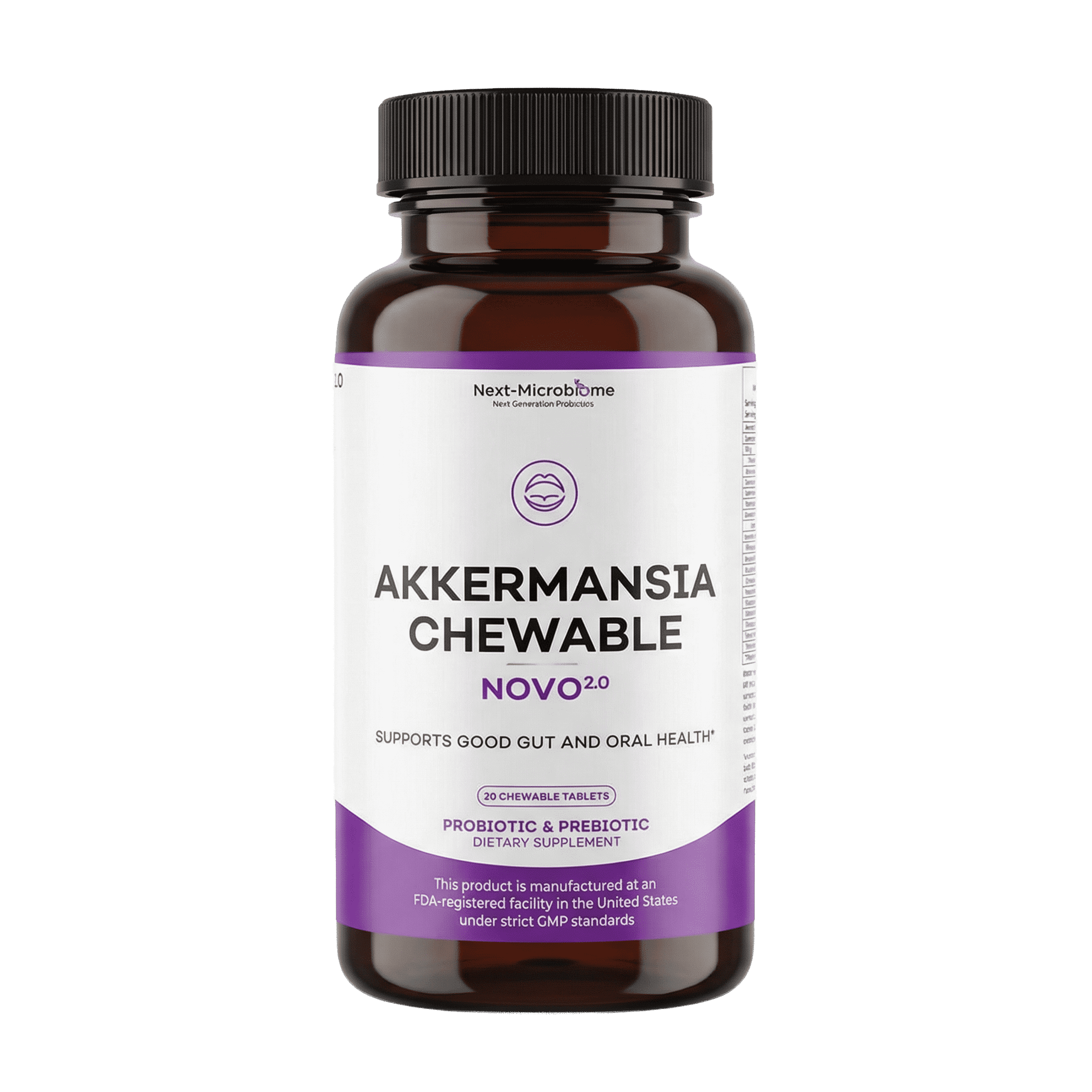
Next-Microbiome Akkermansia Chewable
Designed with:
- Oral–gut microbiome interaction
- Targeted microbial signaling
- Integration into broader gut health strategies

Oral vs Capsule Probiotics
Capsules
Capsule-based probiotics are designed to deliver microbes directly to the gut.
- Primarily support the intestinal microbiome
- Follow a single pathway of interaction (gut-focused)
- Limited interaction before reaching the intestinal environment
Oral Probiotics (Chewable / Dissolvable)
Oral probiotics are designed to interact with the body starting in the mouth.
- Engage with the oral microbiome first
- Continue interacting along the oral–gut axis
- Provide a dual activity pathway: oral + gut microbiome support
- May initiate earlier microbiome signaling before reaching the intestines
Researchers are increasingly exploring how the oral–gut axis and longevity may be connected through broader patterns of microbial signaling and long-term health, although this remains an emerging area of study.
Key Difference
Capsules: single-pathway activity (gut only)
Oral probiotics: dual activity (oral microbiome + gut microbiome)
Learn more:
"Why Does Oral Dysbiosis Matter for Gut and Metabolic Health?"
What is the best probiotic for leaky gut?
The best probiotic depends on the goal. Traditional probiotics support overall gut health, while Akkermansia is being studied for its interactions with the gut barrier and mucus layer.

Final Thoughts
Leaky gut is not just a digestive issue — it is a complex interaction between the gut barrier, immune system, and microbiome.
While general probiotics may support gut balance, emerging research is increasingly focused on microbes that interact directly with the gut lining environment.
Understanding this distinction is key when exploring more targeted approaches.
Frequently Asked Questions
1. What is leaky gut?
“Leaky gut” is a non-medical term often used to describe increased intestinal permeability. In simple terms, it refers to a state where the gut barrier may become less effective at regulating what passes from the intestines into circulation. Because this term is broad and symptoms can overlap with many other conditions, it is better understood as a general explanation than a formal diagnosis.
Read more in "What Is Leaky Gut Syndrome? Causes, Symptoms, and Natural Repair Options"
2. Can probiotics help?
Some probiotics may help support digestive health and microbiome balance, but their effects depend on the strain, formulation, and the specific goal. When gut barrier health is the concern, probiotics are better described as a supportive option rather than a guaranteed solution or quick fix.
3. Is Akkermansia a probiotic?
Akkermansia muciniphila is a naturally occurring bacterium found in the human gut, especially in the intestinal mucus layer. It is often discussed alongside probiotics, but it is generally presented as a beneficial gut microbe with characteristics that differ from more conventional probiotic strains.
Read more in "Why Is Akkermansia Important for Gut and Oral Health?"
4. Can probiotics replace medical care?
No. Probiotics and microbiome-supportive products should not replace medical advice, diagnosis, or treatment. For ongoing digestive symptoms or health concerns, it is best to speak with a qualified healthcare professional.
Related Articles
Written by Ali Rıza Akın
Microbiome Scientist, Author & Founder of Next-Microbiome
Ali Rıza Akın is a microbiome scientist with nearly 30 years of experience in translational biotechnology, systems biology, and applied microbiome research, spanning discovery, preclinical development, and clinical-stage translation.
His work focuses on how microbial ecosystems interact with human physiology, including:
-
Gut barrier function and intestinal permeability
-
Mucus-associated microbiota (Akkermansia-related systems)
-
Oral–gut microbiome axis
-
Short-chain fatty acids (SCFAs) and metabolic signaling
-
Circadian rhythm–microbiome interactions
-
Clinical Research Contributions
He has contributed to multiple clinical-stage microbiome programs, supporting bacterial strain discovery, optimization, and formulation design across different therapeutic areas, including:
Active Ulcerative Colitis (Inflammatory Bowel Disease)
Hyperoxaluria (Oxalate Metabolism Disorder)
Microbiome-driven gut health and inflammatory conditions
These studies were part of broader clinical development programs evaluating microbiome-based approaches. His contributions focused on the early-stage scientific and translational pipeline, including strain discovery, functional optimization, and multi-strain formulation design.
Scientific Contributions:
Ali Rıza Akın is the discoverer of Christensenella californii, a bacterial species associated with microbiome diversity and metabolic health.
He is a contributing author to scientific publications and Bacterial Therapy of Cancer (Springer), and the author of Bakterin Kadar Yaşa: İçimizdeki Evren: Mikrobiyotamız.
Approach:
His work emphasizes evidence-based microbiome science, long-term safety, and a systems-based understanding of how microbes influence human health.
The content provided is for educational and informational purposes only and does not replace professional medical advice, diagnosis, or treatment.

Can You Support Akkermansia Naturally, or Are Supplements Needed?
GLP-1 Side Effects: How to Ease Bloating, Constipation, and Gut Issues Naturally
Related Posts

Why Do You Wake Up at 3 A.M.? Gut, Cortisol, Blood Sugar, and Sleep Recovery

Can Gut Health Affect Sleep? How the Microbiome May Shape Rest and Recovery

Ozempic Plateau? What Your Gut Microbiome May Be Telling You About Slower Weight Loss

Akkermansia vs Ozempic: How Gut Microbiome Support May Influence GLP-1 and Digestion

GLP-1 Side Effects: How to Ease Bloating, Constipation, and Gut Issues Naturally

Can You Support Akkermansia Naturally, or Are Supplements Needed?
