


How Can Daily Habits Support Your Child’s Akkermansia and Gut Health Naturally?
Simple Daily Habits to Boost Your Child’s Akkermansia Naturally
Parents often ask me how to strengthen their child’s microbiome without complicated diets or supplements. The truth is, nurturing a resilient gut ecosystem doesn’t require drastic change — just small, consistent daily habits that feed the right bacteria.
In Akkermansia gut health research, Akkermansia muciniphila stands out as one of the most studied beneficial microbes for gut barrier support, inflammatory balance, and broader host-microbiome signaling. Akkermansia muciniphila science increasingly focuses on its relationship with gut barrier and intestinal lining health, inflammatory balance, immune development, and broader host-microbiome signaling.
These simple routines can help your child’s inner ecosystem — and especially their Akkermansia — thrive naturally.
For parents researching where to buy Akkermansia muciniphila, it is important to remember that children’s microbiome needs are different from adults. Diet quality, fiber-rich meals, sleep, outdoor play, and pediatric guidance should come first before considering any supplement.
For parents who want a broader foundation before focusing on child-specific routines, our gut health microbiome guide explains how diet, sleep, microbial diversity, gut barrier support, and daily habits work together.
For a complete introduction to Akkermansia in childhood, read:
Akkermansia for Kids — Building a Stronger Microbiome From the Start
Frequently Asked Questions — Children’s Microbiome, Akkermansia & Gut Development
1. Why is Akkermansia important for children?
Research on Akkermansia for kids focuses on how this microbe may support the gut lining, inflammatory balance, digestion, and immune and brain development during early childhood.
2. Can daily habits really increase Akkermansia in kids?
Yes — small, consistent routines such as fiber-rich meals, predictable mealtimes, diverse foods, and outdoor activity significantly improve Akkermansia levels over time.
3. What foods naturally increase Akkermansia in children?
Berries, oats, apples, lentils, beans, leafy greens, nuts (age-appropriate), and polyphenol-rich foods nourish Akkermansia and other beneficial microbes.
4. Does screen time or poor sleep affect the microbiome?
Yes. The connection between microbiome and sleep matters because irregular sleep and overstimulation can disrupt circadian rhythms, cortisol balance, and SCFA production, indirectly lowering Akkermansia activity.
5. How early in life does Akkermansia develop?
Akkermansia begins colonizing during infancy and becomes more influential as the mucosal barrier matures. Early diet and lifestyle strongly shape its long-term levels.
6. Can picky eating reduce Akkermansia levels?
Yes — diets low in fiber and plant diversity limit the prebiotics Akkermansia needs, reducing microbial richness and weakening gut resilience.
7. Do antibiotics affect Akkermansia in children?
Yes — antibiotics can temporarily lower Akkermansia levels by thinning the mucosal layer and reducing SCFA-producing microbes. Recovery depends on diet quality afterward.
8. How does outdoor play support the microbiome?
Time outside exposes children to environmental microbes, increases physical activity, lowers stress hormones, and strengthens microbial diversity overall.
9. Can improving Akkermansia help reduce childhood inflammation?
Yes — Akkermansia helps maintain a strong mucosal barrier, which reduces immune overactivation and supports healthy inflammatory balance.
10. Does fiber help boost Akkermansia in kids?
Absolutely. Soluble and fermentable fibers such as oats, bananas, beans, chia, and sweet potato help beneficial bacteria produce SCFAs. This is why butyrate and gut health are often discussed together when explaining how fiber supports Akkermansia-friendly conditions.
11. Are fermented foods safe for kids?
Yes — small, age-appropriate portions of yogurt, kefir, and fermented vegetables can support microbial diversity and digestive comfort.
12. Can Akkermansia influence mood and behavior in children?
Emerging research suggests the gut–brain axis influences emotional regulation, stress resilience, and attention — and Akkermansia plays a role by modulating inflammation and gut barrier health.
13. Do meal routines impact the microbiome?
Yes — consistent eating windows help regulate microbial rhythms and prevent grazing, which may improve Akkermansia stability and digestion.
14. How does hydration affect the gut microbiome?
Adequate water supports stool regularity, mucosal hydration, and microbial metabolism — all essential for maintaining a healthy environment for Akkermansia.
15. Can reducing sugar intake help Akkermansia thrive?
Yes — high sugar diets reduce mucosal barrier strength and increase inflammatory microbes. Lower sugar intake supports Akkermansia growth and improves SCFA balance.
16. Does stress affect children’s microbiome?
Yes — emotional stress changes cortisol rhythms, reduces SCFAs, lowers microbial diversity, and weakens gut barrier function. A calmer daily structure helps Akkermansia flourish.
Patterns such as stress and cravings can also overlap with sleep disruption, processed snack habits, and emotional regulation, so they are best viewed as broad wellness signals rather than proof of one specific gut issue.
17. How long does it take to see improvements in a child’s microbiome?
Most parents notice changes in digestion, mood, and energy within 2–4 weeks, with deeper microbial shifts emerging over 6–12 weeks.
18. Should kids take probiotics to increase Akkermansia?
Not all chewable probiotics affect Akkermansia directly, but options that support the oral-gut axis, gut barrier integrity, and SCFA production may help create conditions where Akkermansia naturally increases. In some cases, an Akkermansia supplement may be considered as part of that broader support strategy.
19. Are polyphenols safe for children?
Yes — natural polyphenols from berries, cocoa (low sugar), apples, pomegranate, and herbs are gentle, safe, and strongly supportive of Akkermansia ecology.
20. What is the simplest daily routine to support Akkermansia in kids?
A fiber-rich breakfast, colorful fruits and vegetables, consistent sleep, outdoor play, hydration, and reduced sugar form the foundation of a strong childhood microbiome.
Start the Morning with Fiber and Color
Breakfast sets the microbial tone for the entire day.
Instead of sugary cereals or pastries, focus on whole grains, fruits, and seeds. Oats with blueberries, apples with peanut butter, or chia pudding topped with strawberries deliver both polyphenols and fiber — the two nutrients Akkermansia depends on.
Each color in fruits and vegetables represents different plant compounds that feed different microbial families.
More color = more diversity = more Akkermansia.
Does fiber really help increase Akkermansia?
Yes. Fiber-rich foods increase short-chain fatty acids, which help maintain the mucin layer and support natural gut lining repair, the very habitat Akkermansia lives in.
Kids who consume more plant-based fibers consistently show higher Akkermansia levels in observational studies.
Research on Akkermansia muciniphila supports this broader pattern, showing that fiber-rich, microbiome-supportive diets help create the mucosal and metabolic conditions in which this bacterium can thrive.
Scientific Reference:
Ayala-García JC et al., Diet and Akkermansia in school-aged children
Can a child’s Akkermansia improve even if they are picky eaters?
Yes. Even picky eaters can improve Akkermansia levels with simple shifts — like adding berries to breakfast, swapping one snack for a whole-food option, or using oats, bananas, or nuts as a base for familiar foods.
Consistency matters more than perfection.

Encourage Play Outside Every Day
Akkermansia is part of a community — and that community thrives on environmental exposure.
Children who play outdoors, dig in the soil, or interact with animals develop higher microbial diversity and stronger immune tolerance.
Natural exposure also enriches species that support the mucin layer and reduce inflammation.
Outdoor air, sunlight, and daily movement regulate the gut–brain axis, improving sleep, mood stability, and stress resilience.
For parents exploring the gut-brain connection more broadly, probiotics for mental wellness should be understood as an educational topic around microbial balance, inflammation, and emotional regulation, not as a replacement for pediatric or mental health care.
Does outdoor play actually change the microbiome?
Yes. Children who spend time outdoors show dramatically higher microbial richness — a key predictor of long-term metabolic and immune health.
Choose Real Foods Over Packaged Foods
Modern snacks often contain emulsifiers, preservatives, dyes, and artificial sweeteners that may weaken gut barrier resilience and influence gut barrier permeability, making it harder for Akkermansia to thrive.
Whole, unprocessed foods give the microbiome the building blocks it needs to regenerate.
Even replacing just one packaged snack a day with a whole-food option can create a measurable improvement in microbial composition.
Are processed foods harmful if only eaten occasionally?
Occasional intake is fine — the issue is daily reliance.
Children who eat ultra-processed foods multiple times a day have significantly lower microbial diversity and lower Akkermansia abundance.
Add a Polyphenol Boost in Snacks and Drinks
Polyphenols — found in berries, pomegranate, green tea, cocoa, plums, spinach, and nuts — are Akkermansia’s favorite fuel.
Smoothies, fruit bowls, or even cocoa in warm milk can deliver a polyphenol-rich boost.
Do polyphenols really increase Akkermansia?
Yes. Studies show polyphenol-rich foods directly increase Akkermansia levels and stimulate mucin layer renewal.
Scientific Reference:
Mruk-Mazurkiewicz H et al., Akkermansia’s therapeutic potential
Which foods increase Akkermansia the fastest?
Foods highest in fiber and polyphenols — such as blueberries, apples, pomegranate, cocoa, oats, legumes, and chia seeds — show the strongest natural effect on boosting Akkermansia.
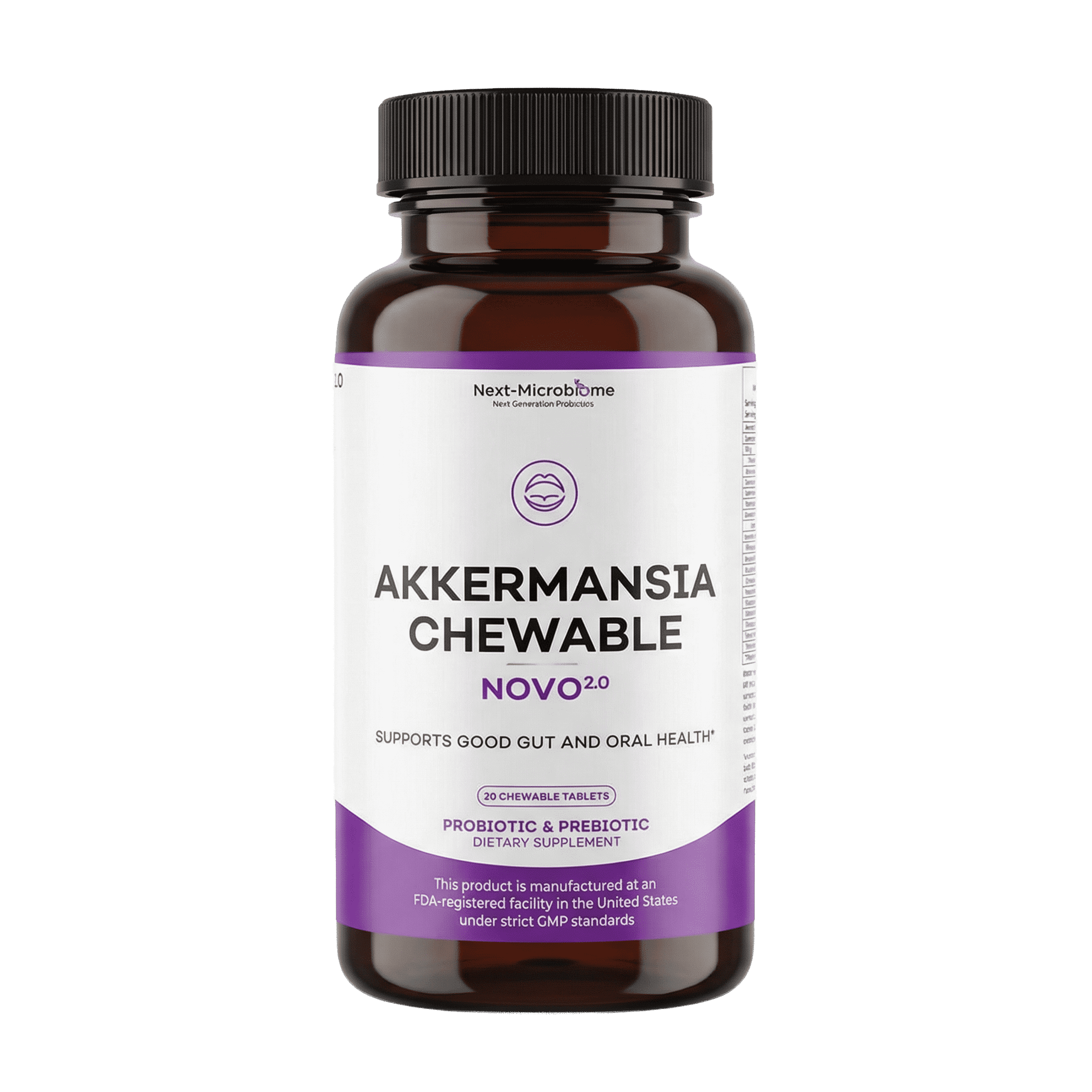
Support with Chewable Akkermansia
For parents researching an Akkermansia probiotic, this chewable format is presented as a daily option that fits a broader microbiome-supportive routine.
It contains:
-
bioactive Akkermansia components
-
plant-based prebiotics
-
polyphenols
-
mucin-supporting co-factors
Unlike ordinary probiotics that only act in the intestinal lumen, Chewable Akkermansia is designed to support the mucin layer directly — Akkermansia’s natural habitat.
Children love its gentle, berry-based taste, making it effortless to integrate into a daily routine.
Can supplements help if the diet is not perfect?
Yes. While diet is the foundation, next-generation synbiotics can provide targeted support — especially for children recovering from antibiotic use, experiencing inflammation, following ultra-processed diets, or exhibiting low microbial diversity.
Build a Microbiome-Friendly Routine
Supporting Akkermansia isn’t about perfection — it’s about repetition.
Daily habits build microbial stability.
Over time, that same stability may also support broader pathways discussed in GLP-1 and microbiome research, especially through gut barrier health, SCFA production, and metabolic signaling. For parents comparing a natural GLP-1 support probiotic, this context matters because pediatric gut support should focus on overall microbiome balance, diet quality, and professional guidance rather than weight-loss or hormone-focused claims.
Within weeks of making small changes, parents often notice:
-
fewer digestive issues
-
better stool patterns
-
calmer moods
-
improved sleep
-
steadier energy
Does sleep affect Akkermansia levels in children?
Yes. Poor sleep dysregulates hormones and inflammatory signals, weakening the gut barrier. This reflects the broader gut brain axis sleep microbiome relationship, in which sleep quality, microbial stability, and stress signaling influence one another. Children with consistent sleep routines show stronger microbial stability, improved digestion, and better emotional balance.

Can too much screen time impact the gut microbiome?
Indirectly, yes. Excess screen time reduces outdoor activity, increases processed-snack intake, disrupts sleep cycles, and lowers exposure to environmental microbes — all factors that reduce microbial diversity and weaken Akkermansia pathways.
Small choices — more fiber, more color, more nature — quietly shape your child’s future health from the inside out, reflecting growing interest in how the oral–gut axis and longevity may be connected through long-term microbial resilience.
Links
Main Blog – Akkermansia for Kids: Building a Stronger Microbiome
Scientific Sources
https://www.mdpi.com/2227-9067/10/11/1799
https://pubmed.ncbi.nlm.nih.gov/35272549/
https://www.mdpi.com/2072-6643/16/11/1695
Written by Ali Rıza Akın
Microbiome Scientist, Author & Founder of Next-Microbiome
Ali Rıza Akın is a microbiome scientist with nearly 30 years of experience in translational biotechnology, systems biology, and applied microbiome research, spanning discovery, preclinical development, and clinical-stage translation.
His work focuses on how microbial ecosystems interact with human physiology, including:
-
Gut barrier function and intestinal permeability
-
Mucus-associated microbiota (Akkermansia-related systems)
-
Oral–gut microbiome axis
-
Short-chain fatty acids (SCFAs) and metabolic signaling
-
Circadian rhythm–microbiome interactions
-
Clinical Research Contributions
He has contributed to multiple clinical-stage microbiome programs, supporting bacterial strain discovery, optimization, and formulation design across different therapeutic areas, including:
Active Ulcerative Colitis (Inflammatory Bowel Disease)
Hyperoxaluria (Oxalate Metabolism Disorder)
Microbiome-driven gut health and inflammatory conditions
These studies were part of broader clinical development programs evaluating microbiome-based approaches. His contributions focused on the early-stage scientific and translational pipeline, including strain discovery, functional optimization, and multi-strain formulation design.
Scientific Contributions:
Ali Rıza Akın is the discoverer of Christensenella californii, a bacterial species associated with microbiome diversity and metabolic health.
He is a contributing author to scientific publications and Bacterial Therapy of Cancer (Springer), and the author of Bakterin Kadar Yaşa: İçimizdeki Evren: Mikrobiyotamız.
Approach:
His work emphasizes evidence-based microbiome science, long-term safety, and a systems-based understanding of how microbes influence human health.
How Modern Diets and Antibiotics Harm Kids’ Microbiota and Gut Health
What Is Akkermansia and Why Does It Matter for Gut Health and Microbiome Balance?
Related Posts

Why Do You Wake Up at 3 A.M.? Gut, Cortisol, Blood Sugar, and Sleep Recovery

Can Gut Health Affect Sleep? How the Microbiome May Shape Rest and Recovery

Ozempic Plateau? What Your Gut Microbiome May Be Telling You About Slower Weight Loss

Akkermansia vs Ozempic: How Gut Microbiome Support May Influence GLP-1 and Digestion

GLP-1 Side Effects: How to Ease Bloating, Constipation, and Gut Issues Naturally

Best Probiotic for Leaky Gut? Why Gut Barrier Support Differs From Digestive Probiotics

Can You Support Akkermansia Naturally, or Are Supplements Needed?
