


GLP-1 and the Microbiome: How Gut Health Shapes Appetite, Metabolism, and Long-Term Balance
GLP-1 & Microbiome Knowledge Hub
Quick Answer
GLP-1 is a metabolic hormone regulated indirectly by the gut microbiome. Certain bacteria, including Akkermansia muciniphila, support GLP-1 secretion by improving gut barrier function, reducing inflammation, and promoting the production of short-chain fatty acids.
Why This Cluster Matters for Appetite, Metabolism & Long-Term Weight Stability
GLP-1 is a powerful metabolic hormone — but it does not operate in isolation.
Appetite regulation, cravings, energy balance, glucose control, and metabolic resilience depend on an interconnected biological network involving:
-
gut microbiome composition
-
dietary fiber fermentation → short-chain fatty acid (SCFA) production
-
gut barrier stability
-
circadian rhythm signaling
-
stress and cortisol biology
-
metabolic inflammation
Modern research shows that when this system is disrupted, GLP-1 signaling weakens, whether GLP-1 is stimulated naturally or pharmacologically.
This reflects the broader GLP-1 microbiome connection, in which GLP-1 regulation is tightly linked to gut barrier integrity, microbial diversity, and mucin-degrading bacteria such as Akkermansia muciniphila. For readers who want to explore the full biological network, our Akkermansia microbiome hub explains how the oral microbiome, gut barrier and intestinal lining health, and metabolic signaling are interconnected.
This five-part GLP-1 cluster explains how microbiome health determines the effectiveness and durability of GLP-1–based metabolic strategies.
What This GLP-1 Cluster Explains
Across this series, you’ll learn:
-
how GLP-1 works within enteroendocrine and gut–brain signaling
-
why microbiome damage weakens GLP-1 sensitivity
-
how stress and cortisol disrupt appetite regulation
-
how SCFAs restore metabolic flexibility
-
what GLP-1 medications cannot biologically repair
Whether GLP-1 medications are used or not, long-term metabolic outcomes depend on the same foundation:
A stable microbiome that produces adequate SCFAs and supports natural GLP-1 signaling.
Supporting GLP-1 Naturally Through the Microbiome
GLP-1 is often discussed as a hormone that can be increased through medication, but emerging research shows that it is also deeply influenced by the gut microbiome.
Certain gut bacteria play a key role in the effectiveness of GLP-1 signaling in the body. When the microbiome is balanced, this signaling pathway tends to function more efficiently. When it is disrupted, the response can weaken.
In particular, bacteria such as Akkermansia muciniphila and butyrate-producing strains have been associated with:
-
Improved gut barrier integrity
-
Enhanced metabolic signaling
-
Support for natural GLP-1 response
This shifts the perspective from simply increasing GLP-1 to supporting the biological system that regulates it.
A microbiome-focused approach typically includes:
-
Supporting beneficial bacteria
-
Promoting short-chain fatty acid production
-
Maintaining gut lining health
For readers interested in a more applied option within this microbiome-centered approach, Boost Synergy GLP-1 can be explored as part of broader support for SCFA pathways, gut barrier function, and natural GLP-1 signaling.
This cluster provides the scientific roadmap to understand and rebuild that foundation.

A Keystone Insight: Akkermansia & Metabolic Signaling
Reduced levels of Akkermansia muciniphila are among the most consistent microbial patterns associated with inflammation, metabolic dysfunction, and gut-barrier weakening.
These upstream mechanisms—particularly short-chain fatty acid production, mucosal reinforcement, and reduced inflammatory tone—create the conditions necessary for proper GLP-1 signaling. Akkermansia muciniphila is uniquely positioned within this network, acting not as a direct hormone producer but as an ecosystem regulator. A deeper look into the clinically observed benefits of Akkermansia muciniphila reveals how this bacterium supports metabolic balance, insulin sensitivity, and gut barrier resilience.
 Full GLP-1 Cluster — Articles (In Order)
1. How the Microbiome Controls Appetite & Metabolism
What you’ll learn:
How gut bacteria, SCFAs, and enteroendocrine pathways shape GLP-1 release, cravings, hunger regulation, and metabolic balance.
2. Natural GLP-1 Support: Fiber, SCFAs, Akkermansia & Prebiotics
What you’ll learn:
Evidence-based strategies to support natural GLP-1 physiology through fiber, resistant starch, polyphenols, and beneficial microbes like Akkermansia.
3. Cortisol, Cravings & GLP-1: Why Stress Makes You Overeat
What you’ll learn:
How stress suppresses GLP-1, lowers SCFA production, disrupts satiety signals, and intensifies reward-driven eating.
4. Resetting Metabolism: Microbiome, SCFAs & GLP-1 Energy Balance
What you’ll learn:
A complete metabolic reset framework: gut barrier repair, SCFA pathways, circadian rhythm alignment, mitochondrial efficiency, and stress regulation.
5. GLP-1, Microbiome & SCFAs: A Blueprint for Metabolic Health
What you’ll learn:
Why GLP-1 medications cannot rebuild the metabolic system — and how microbiome repair, SCFAs, and circadian biology create long-term metabolic stability.
GLP-1 Drugs vs. Microbiome Repair — Simple Comparison Table
| Feature | GLP-1 Drugs | Microbiome Repair |
|---|---|---|
| Suppresses appetite | ✔️ | Indirect (via SCFAs + GLP-1) |
| Repairs gut microbiome | ❌ | ✔️ |
| Supports SCFA production | ❌ | ✔️ |
| Reduces cravings naturally | Moderate | Strong |
| Restores circadian rhythm | ❌ | ✔️ |
| Inflammation control | Mild | Strong |
| Dependence risk | Possible | None |
| Weight regain risk | High | Low |
| Gut barrier repair | ❌ | ✔️ |
| Improves metabolic flexibility | Limited | High |
Supporting the microbiome may provide a more sustainable way to improve how GLP-1 signaling functions over time.
For those interested in this approach, formulations centered on Akkermansia and SCFA-supporting pathways are increasingly explored:
Akkermansia muciniphila formulation

Why this matters:
GLP-1 drugs suppress appetite, but microbiome repair rebuilds the metabolic ecosystem that determines long-term results.
While much of GLP-1 research focuses on isolated pathways, real-world metabolic outcomes depend on how these mechanisms translate into practical, sustainable microbiome strategies. This includes dietary inputs, microbial balance, and targeted interventions that support long-term signaling stability. For a more applied and clinically grounded perspective, see our science-based guidance on how to support Akkermansia and the microbiome effectively.
Core Biological Themes Covered
-
GLP-1 physiology — hunger, insulin, glucose, fat metabolism
-
Microbiome → SCFAs → GLP-1 axis — why microbial metabolites matter
-
Stress & cortisol loops — how stress overrides satiety
-
Metabolic flexibility — mitochondria, fat oxidation, insulin sensitivity
-
Circadian timing — sleep, appetite rhythms, metabolic control
-
Long-term GLP-1 support — without medication dependency
Who This Cluster Is For
-
People seeking long-term metabolic stability, not temporary appetite suppression
-
Individuals using GLP-1 medications who want durable outcomes
-
Anyone struggling with cravings, stress eating, or appetite swings
-
Those with gut issues, inflammation, fatigue, or metabolic slowdown
-
Readers looking for science-driven, microbiome-based insight
How to Navigate This Cluster
-
Start with Blog 1 — understand GLP-1 biology
-
Continue with Blogs 2–4 — learn how diet, microbes, stress, and rhythms interact
-
Finish with Blog 5 — integrate everything into a complete metabolic blueprint
-
Revisit as needed — each article stands alone
Why GLP-1 Outcomes Improve When the Microbiome Is Repaired
GLP-1 medications suppress appetite, but they do not correct:
-
dysbiosis
-
impaired SCFA production
-
circadian disruption
-
gut-barrier inflammation
-
stress-driven appetite loops
When microbiome function is restored, GLP-1 sensitivity improves, SCFA pathways activate, cravings stabilize, and metabolic flexibility returns.
Appetite control becomes regulated rather than forced.
Supporting the Microbiome Pathway
As discussed throughout this guide, long-term GLP-1 regulation depends on a stable microbiome, effective SCFA production, and a resilient gut barrier.
Supporting these interconnected systems may help improve how metabolic signaling functions over time.
In this context, certain formulations have been developed to align with these biological mechanisms — particularly those centered around Akkermansia muciniphila, butyrate-producing bacteria, and microbiome-supportive compounds.
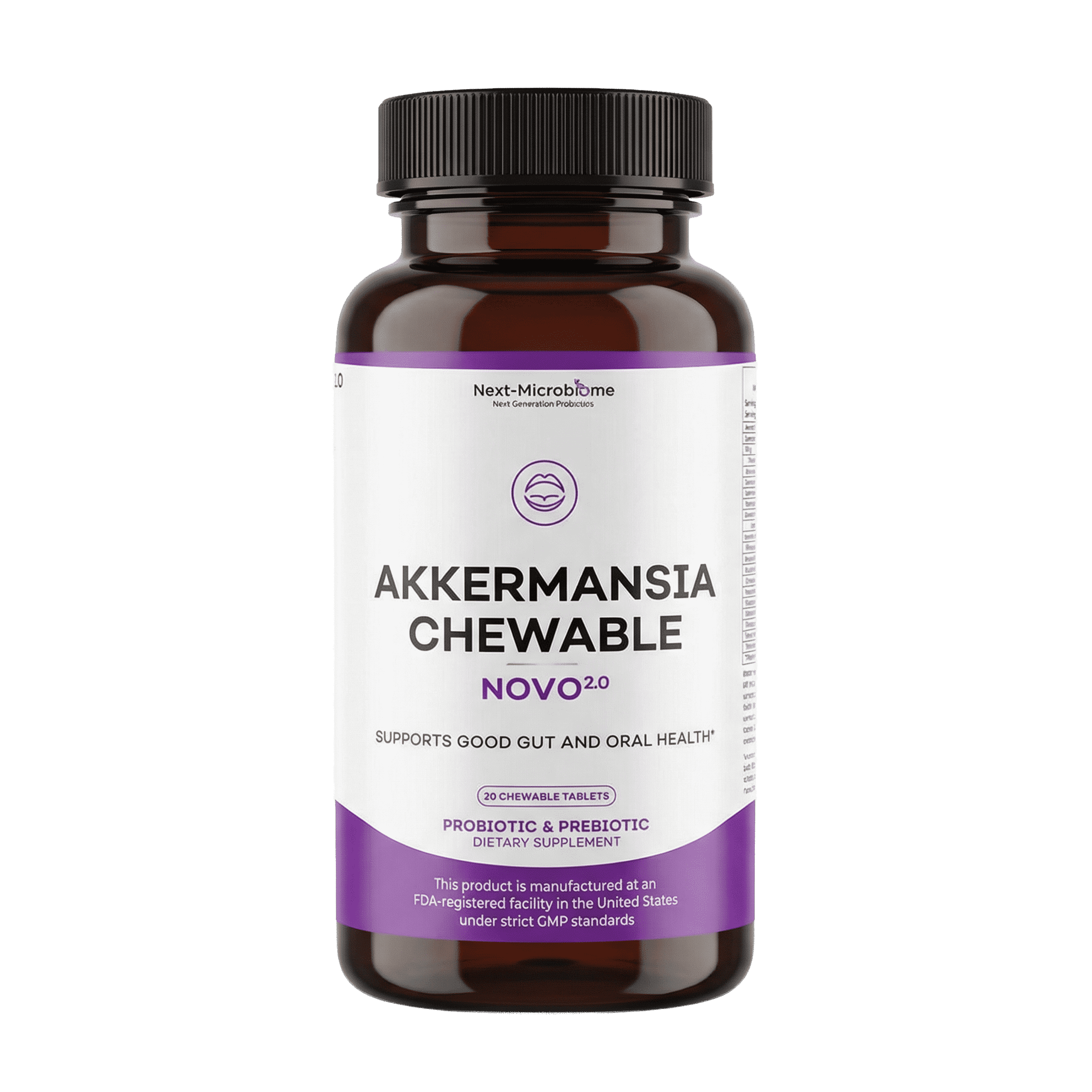
One example is Next-Microbiome Akkermansia Chewable, designed to support:
-
Gut lining integrity
-
Short-chain fatty acid pathways
-
Microbiome-driven metabolic signaling
This is provided for informational purposes within the context of microbiome research and metabolic health.
Final Takeaway
Whether GLP-1 medication is used or not, long-term metabolic health depends on one foundation:
A resilient microbiome → healthy SCFAs → stable GLP-1 → lasting metabolic balance.
This cluster shows how to build it.
FAQ:
1. What is GLP-1?
GLP-1 is a hormone involved in appetite regulation and blood sugar balance.
2. How does the microbiome affect GLP-1?
Microbial metabolites may influence GLP-1 secretion.
3. Why is GLP-1 important for metabolism?
It regulates satiety and glucose metabolism.
References:
-
Cani PD et al., 2019
Written by Ali Rıza Akın
Microbiome Scientist • Author • Founder of Next-Microbiome California Inc.
Ali Rıza Akın is a microbiome scientist with nearly 30 years of experience in biotechnology and translational research in Silicon Valley. His work focuses on gut microbiota, mucosal barrier biology, SCFA metabolism, circadian rhythm, GLP-1 physiology, and host–microbe metabolic signaling.
He is the discoverer of Christensenella californii, a human-associated microbial species linked to mucosal integrity, metabolic resilience, immune balance, and microbial ecology.
His scientific and translational expertise includes:
-
GLP-1 and enteroendocrine signaling
-
SCFA-mediated metabolic pathways
-
Circadian rhythm and gut microbial timing
-
Mucosal barrier restoration and gut immunology
-
HPA axis, cortisol physiology, and stress biology
-
Oral–gut microbial ecology and colonization resistance
-
Development of next-generation synbiotics
-
Clinical translation of microbiome science for metabolic and immune health
Ali Rıza Akın is the author of Bakterin Kadar Yaşa: İçimizdeki Evren, a comprehensive science-based work on human microbiota, and a contributing author to Bacterial Therapy of Cancer (Springer).
As the Founder of Next-Microbiome California Inc., he leads research and development of Akkermansia-based formulations, mucosal-targeted probiotics, SCFA-supporting synbiotics, and oral–gut–brain axis innovations designed to strengthen metabolic stability, improve gut barrier function, and support long-term health.
His scientific mission is to translate advanced microbiome biology into accessible, evidence-based solutions that improve human resilience, metabolic health, and longevity.

How to Naturally Support GLP-1 with Fiber, SCFAs, Prebiotics, and Akkermansia
Oral-Gut Microbiome Hub: How the Mouth Shapes Gut Health, Immunity, and Metabolism
Related Posts

Akkermansia vs Ozempic: How Gut Microbiome Support May Influence GLP-1 and Digestion

GLP-1 Side Effects? Fix Bloating & Constipation Fast (Gut-Science Guide)

Which Probiotics May Help Support Leaky Gut and the Gut Barrier?

Can You Support Akkermansia Naturally, or Are Supplements Needed?

GLP-1 Not Working? How Your Gut Microbiome May Be Affecting GLP-1 Signaling

What Does Science Say About Akkermansia for Gut Health?

Low Akkermansia? 7 Signs Your Gut Barrier May Be Failing and What May Help Support It
