


Can’t Increase Akkermansia? What Your Gut May Be Missing to Support It Naturally
How to Increase Akkermansia Naturally: Foods, Polyphenols, HMOs & Prebiotics
Akkermansia muciniphila is one of the most studied gut bacteria in microbiome research, particularly for its relationship with gut barrier and intestinal lining health, inflammation regulation, metabolic balance, and digestive stability.
But modern diets, medications, stress, and disruptions to the microbiota often cause Akkermansia levels to decline — leading to bloating, sensitivity, weakened barrier function, and slower metabolism.
The good news is that you can naturally increase Akkermansia through specific foods, nutrients, prebiotics, and microbiome-supporting compounds backed by real clinical science and supported by broader Akkermansia muciniphila science.
If you haven’t read the foundational overview yet, start with Blog 1:
How Akkermansia Supports Gut Health, Oral–Gut Balance, and Digestive Strength
And for symptoms and causes of low Akkermansia, see Blog 2:
What Causes Low Akkermansia and How Can It Be Restored Naturally?
Now let’s look at natural ways to increase Akkermansia through foods, prebiotics, polyphenols, HMOs, and broader microbiome-supportive habits.
For readers who want a more targeted next step alongside food-based strategies, an Akkermansia probiotic may be worth exploring as part of a broader plan that also supports mucosal health, SCFA balance, and oral-gut signaling.
Frequently Asked Questions — Increasing Akkermansia Naturally
1. What foods increase Akkermansia naturally?
Polyphenol-rich foods like berries, cocoa, pomegranate, green tea, and colorful vegetables help increase Akkermansia abundance.
2. Does resistant starch help Akkermansia?
Yes — resistant starch feeds SCFA-producing microbes, boosting butyrate and supporting mucin regeneration.
3. Do HMOs increase Akkermansia?
Yes — especially 2’-FL, which improves mucosal structure and creates ideal conditions for Akkermansia growth.
4. What supplements increase Akkermansia?
Polyphenols, HMOs, prebiotic fibers (inulin, FOS), resistant starches, and SCFA-supportive microbes like Clostridium butyricum.
5. Can chewable probiotics increase Akkermansia?
Yes — chewables support the oral–gut axis, reduce upstream inflammation, and enhance Akkermansia-friendly mucosal signaling.
6. How long does it take to increase Akkermansia?
Most people see improvements within 2–4 weeks, with deeper mucin-layer restoration over 6–12 weeks.
7. Why are polyphenols so effective for Akkermansia?
Polyphenols reduce inflammation, enrich mucin-positive microbes, and strengthen the antioxidant environment Akkermansia requires.
8. How does fiber diversity influence Akkermansia growth?
Diverse fibers increase SCFAs, stabilize gut motility, and support a mucosal environment where Akkermansia thrives.
9. Can low sugar intake increase Akkermansia?
Yes — reducing sugar prevents mucin depletion, limits inflammatory microbes, and protects the mucosal layer Akkermansia depends on.
10. How does fasting affect Akkermansia levels?
Intermittent fasting consistently increases Akkermansia because it flourishes during nutrient-scarce periods and supports metabolic balance.
11. Do polyphenol supplements work as well as foods?
Both are effective; supplements provide concentration, while foods deliver additional fibers and antioxidants that further support Akkermansia.
12. Are prebiotics required for increasing Akkermansia?
They are not required but highly beneficial, as prebiotic fibers fuel SCFA producers that enhance mucin renewal.
13. Does the oral microbiome influence Akkermansia growth?
Yes — oral inflammation can stress the entire GI tract. Chewables improve oral ecology, reducing downstream inflammation that harms Akkermansia.
14. Can Akkermansia grow without probiotics at all?
Yes — diet-driven changes (polyphenols, HMOs, resistant starch, fasting) alone can significantly boost levels.
15. Does stress impact Akkermansia growth?
Yes — cortisol reduces mucin production, lowers SCFAs, and increases inflammation, all of which suppress Akkermansia.
16. Can improving SCFAs help raise Akkermansia?
Absolutely — SCFAs signal mucin production, enhance epithelial repair, and create a strong ecological base for Akkermansia expansion.
17. Which HMOs are best for Akkermansia?
2’-FL is the most studied; it enhances mucosal immunity, supports epithelial growth, and increases Akkermansia abundance.
18. Does exercise help increase Akkermansia levels?
Yes — regular exercise improves metabolic flexibility, reduces inflammation, and supports Akkermansia-friendly SCFA patterns.
19. Can Akkermansia increase longevity markers?
Higher Akkermansia levels have been associated with improved gut integrity, lower inflammation, and healthier metabolic aging in some research. Scientists are also exploring how the oral–gut axis and longevity may be connected through broader patterns of microbial balance, immune signaling, and long-term metabolic health, although this remains an emerging area of study.
20. What habits maximize natural Akkermansia growth?
Polyphenols at every meal, fiber diversity, resistant starch, fasting windows, hydration, reduced sugar, improved sleep, stress reduction, and oral–gut synbiotics like Akkermansia Chewable.
For a full scientific roadmap to GLP-1, SCFAs, cravings, stress biology, and metabolic repair, explore the GLP-1 & Microbiome Hub.
1. Polyphenol-Rich Foods (Clinically Supported)
Polyphenols are plant compounds that directly support Akkermansia growth by improving mucin metabolism and modulating microbial activity.
Best polyphenol sources:
-
blueberries
-
cranberries
-
blackberries
-
pomegranate
-
cocoa
-
green tea
-
red/purple grapes
A 2024 study in MDPI Foods found that polyphenols increase Akkermansia abundance and strengthen mucin layer dynamics.
This makes polyphenols one of the strongest daily dietary strategies.

2. Human Milk Oligosaccharides (HMOs) — Especially 2'-FL
HMOs are specialized prebiotics that nourish mucosal bacteria, support epithelial integrity, and create ideal conditions for Akkermansia to thrive.
A review in the American Journal of Clinical Nutrition demonstrated that HMOs strengthen gut barrier function and support beneficial mucin-associated microbes.
The most well-studied HMO for mucosal support is 2'-Fucosyllactose (2'-FL).
It directly nourishes:
-
Akkermansia-supporting microbes
-
gut lining repair pathways
-
mucin regeneration processes
3. Prebiotics: Inulin, FOS & Resistant Starch
Prebiotics feed beneficial bacteria that coexist with (and support) Akkermansia.
Best prebiotics to increase Akkermansia:
-
inulin (chicory root, Jerusalem artichoke)
-
FOS
-
resistant starch (cooled potatoes, green bananas, lentils)
-
beta-glucans
Prebiotics also support short-chain fatty acid (SCFA) production, especially butyrate — essential for gut barrier function.
Dietary Modulation of Mucin & Microbial Diversity
Certain polyphenols and prebiotic fibers stimulate mucin turnover and microbial cross-feeding networks. This helps explain why many foods that increase Akkermansia contain fermentable fibers and plant bioactives, and why discussions of Akkermansia muciniphila benefits often focus on gut barrier support, microbial balance, and metabolic resilience.
Green tea catechins, cranberries, inulin, and resistant starch may support beneficial shifts.
For deeper context, see our circadian rhythm article, as microbial balance follows daily cycles.
From a next-microbiome perspective, dietary bioactives function as precision modulators of microbial balance.
Food Categories
|
Category |
Example |
Mechanism |
|
Polyphenols |
Cranberry |
Selective stimulation |
|
Prebiotics |
Inulin |
Fermentation |
|
Resistant Starch |
Cooked potatoes |
SCFA production |
Scientific References
-
Kong et al., 2019
Dietary fibers and Akkermansia muciniphila modulation.
Food & Function. -
Everard et al., 2011
Prebiotics increase Akkermansia abundance and improve gut barrier function.
Gut. -
Van Hul et al., 2020
Human milk oligosaccharides influence gut microbiota composition.
Gut Microbes. -
Cardona et al., 2013
Benefits of polyphenols on gut microbiota and metabolic health.
Journal of Nutritional Biochemistry.
4. SCFA-Producing Probiotics (Clostridium butyricum)
Clostridium butyricum is one of the most powerful bacteria for:
-
butyrate production
-
mucin regeneration
-
colonocyte fuel supply
-
inflammation reduction
-
improving microbial diversity
A 2021 study in Frontiers in Microbiology confirmed C. butyricum strengthens the gut lining and supports SCFA signaling:
When SCFAs rise, Akkermansia grows more easily. This also helps explain why GLP-1 and microbiome signaling are often discussed together, since SCFA pathways are closely involved in broader metabolic regulation.
In that context, a metabolic support probiotic may be most relevant when it is designed to support SCFA ecology, microbial balance, and the gut conditions that help Akkermansia thrive.
5. Reduce What Harms Akkermansia
To increase Akkermansia, you must also remove what destroys it:
Avoid or minimize:
-
high-sugar diets
-
ultra-processed foods
-
low-fiber diets
-
chronic stress
-
alcohol overuse
-
repeated antibiotic courses
These factors weaken mucin integrity and starve Akkermansia.
6. Strengthen the Oral–Gut Microbiota Axis
Akkermansia does not exist in isolation — it is part of a continuous microbial ecosystem that begins in the mouth.
The oral microbiota influences:
-
upper GI inflammation
-
gastric pH
-
salivary enzyme activity
-
nitric oxide production
-
microbial migration to the gut
Chewable microbiome formulas activate in the oral cavity before reaching the gut, which is why some readers also ask about the best time to take Akkermansia as part of a consistent oral–gut support routine.
More stable oral–gut signaling → better conditions for Akkermansia.
7. Use an Akkermansia-Supportive Supplement (Chewable Advantage)
A high-quality supplement designed to support Akkermansia should include:
-
polyphenols
-
HMO 2′-FL
-
SCFA-supportive strains (C. butyricum)
-
inulin or FOS
-
orally active delivery (chewable)
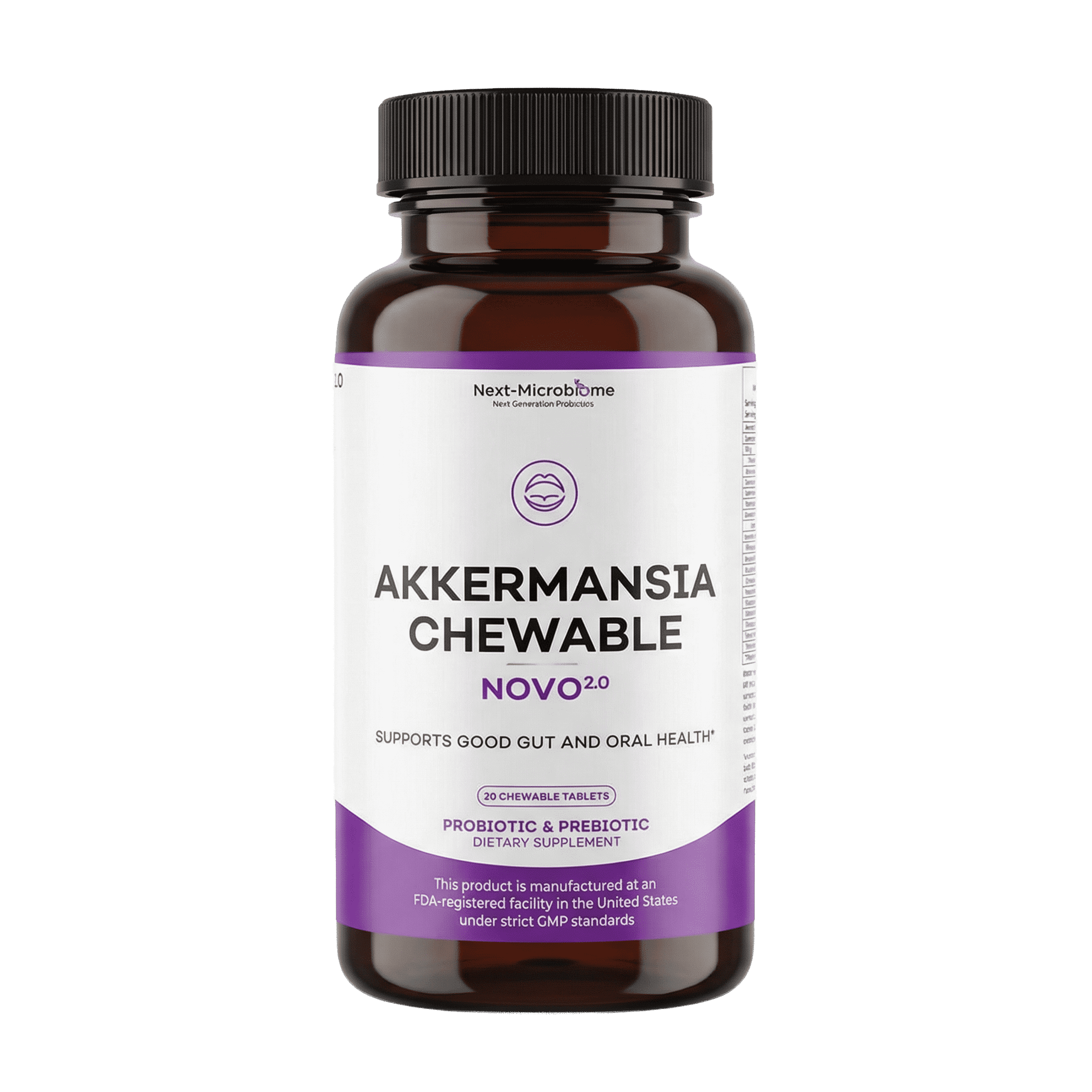
For a next-generation formula designed specifically to support the gut lining, mucosal immunity, Akkermansia abundance, and the oral–gut axis, explore Akkermansia Chewable.

INTERNAL LINKS
Akkermansia: The Missing Microbe for Gut Health, Oral–Gut Balance & Digestive Strength
Low Akkermansia muciniphila: Causes, Symptoms & How to Restore It Naturally
How to Increase Akkermansia Naturally With Foods, Polyphenols, HMOs & Prebiotics
Buy Akkermansia: What to Know Before Choosing an Akkermansia Supplement
Akkermansia & Gut Lining Health: Why This Next-Generation Microbe Matters
For readers comparing practical options more closely, an Akkermansia supplement may be worth reviewing based on delivery format, HMO content, SCFA-supportive strains, and overall gut-lining support.
Written by Ali Rıza Akın
Microbiome Scientist, Author & Founder of Next-Microbiome
Ali Rıza Akın is a microbiome scientist with nearly 30 years of experience in biotechnology and translational research in Silicon Valley. He is the discoverer of Christensenella californii, a novel human-associated bacterial species linked to metabolic health and mucosal integrity.
His scientific work spans:
-
mucosal immunology
-
gut barrier biology
-
oral–gut microbiome interactions
-
SCFA metabolism
-
next-generation probiotics (Akkermansia, Christensenella, Clostridium butyricum)
-
host–microbe signaling
-
microbial therapeutics
He is the author of Bakterin Kadar Yaşa: İçimizdeki Evren (Live as Long as Your Bacteria) and a contributor to Bacterial Therapy of Cancer: Methods and Protocols (Springer, Methods in Molecular Biology).
As Founder of Next-Microbiome, Ali develops advanced synbiotic formulations — including the industry’s first chewable Akkermansia-supporting synbiotic — designed to strengthen the gut lining, support metabolic resilience, enhance mucosal immunity, and harmonize the oral–gut microbiome axis.
Low Akkermansia? Signs, Causes, and How to Restore It Naturally
What to Consider When Choosing an Effective Akkermansia Supplement
Related Posts

Ozempic Plateau? What Your Gut Microbiome May Be Telling You About Slower Weight Loss

Akkermansia vs Ozempic: How Gut Microbiome Support May Influence GLP-1 and Digestion

GLP-1 Side Effects: How to Ease Bloating, Constipation, and Gut Issues Naturally

Best Probiotic for Leaky Gut? Why Gut Barrier Support Differs From Digestive Probiotics

Can You Support Akkermansia Naturally, or Are Supplements Needed?

GLP-1 Not Working? How Your Gut Microbiome May Be Affecting GLP-1 Signaling

What Does Science Say About Akkermansia for Gut Health?
