


Akkermansia for Kids: Building Gut Health, Immunity, Mood, and Microbiome Resilience
Akkermansia for Kids: The Complete Microbiome Growth & Resilience Guide
Your Hub for Gut Health, Immunity, Mood, and Daily Microbiome Habits
Inside every child lives an entire universe — trillions of microorganisms shaping digestion, immunity, metabolism, mood, focus, and even sleep patterns. Among these microbes, one stands out as a master architect of gut integrity and long-term resilience, Akkermansia muciniphila.
Over the last decade, Akkermansia has become one of the most researched next-generation bacteria due to its powerful role in:
-
strengthening the gut barrier
-
regulating inflammation
-
supporting immune development
-
influencing the gut–brain axis
-
aiding metabolic balance
-
producing signals that shape behavior and cognition
This landing page acts as the central knowledge hub for everything related to Akkermansia in children, helping parents explore Akkermansia muciniphila science across four interconnected pillars:
-
Why Akkermansia matters in childhood
-
How the microbiome shapes mood & learning
-
How modern diets damage Akkermansia
-
Daily habits to rebuild Akkermansia naturally
Each blog below offers a deeper dive, including practical steps, scientific insights, and microbiome-friendly routines.
For parents exploring children's gut health, this hub is best used as an educational starting point for understanding how diet, sleep, antibiotics, outdoor exposure, stress, and microbiome diversity may shape a child’s gut barrier, immune resilience, mood, and daily wellness.
Parents considering an Akkermansia muciniphila supplement should first look at the child’s age, diet quality, health history, antibiotic exposure, and pediatric guidance. In children, Akkermansia support is best understood as part of a food-first microbiome strategy, not as a replacement for balanced meals, sleep, outdoor play, or medical advice.
Let’s begin.
1. Akkermansia for Kids — Building a Stronger Microbiome From the Start
This foundational article explains:
-
What Akkermansia muciniphila is
-
Why it is uniquely important for gut barrier and intestinal lining health
-
How it influences early immune training
-
How diet, delivery mode, antibiotics, and lifestyle shape its development
-
The first 1,000 days as a critical microbiome window
You’ll learn how Akkermansia protects:
-
mucosal integrity
-
metabolic balance
-
immune tolerance
-
neurodevelopment
For parents exploring akkermansia gut health, the key focus should be its relationship with mucus-layer support, gut barrier resilience, immune development, and broader microbiome balance.
This blog is the starting point for all parents entering the microbiome world.
2. How a Healthy Microbiome Shapes Learning, Mood, and Focus in Children
This article explores the gut–brain axis, one of the most profound scientific discoveries of the last 20 years.
Inside you’ll find:
-
how gut microbes produce neurotransmitters
-
how inflammation affects attention and emotional stability
-
the role of Akkermansia in neuroplasticity
-
why balanced gut signals support calmer moods
-
how the microbiome influences sleep and classroom performance
The connection between the microbiome and sleep is especially relevant for children because gut-brain signaling, inflammation balance, and daily routines may influence sleep quality, mood, and focus.
This guide explains how strengthening the microbiome can create:
-
better focus
-
improved emotional balance
-
fewer meltdowns
-
smoother sleep cycles
-
more resilient coping responses
3. Antibiotics, Sugar, and Processed Foods — How Modern Diets Damage Kids’ Microbiota
A modern diet filled with refined carbohydrates, artificial additives, and ultra-processed snacks dramatically weakens microbial diversity — especially Akkermansia.
This article reveals:
-
how antibiotics reduce beneficial species
-
how sugar feeds inflammatory microbes
-
how emulsifiers damage the mucin layer
-
why processed foods reduce polyphenol availability
-
how a disrupted microbiome affects mood, immunity, allergies, and metabolism
Parents will learn how to reverse this damage using:
-
dietary diversity
-
whole-food meals
-
plant fibers and polyphenols
-
nature exposure
-
targeted next-generation synbiotics

4. Simple Daily Habits to Boost Your Child’s Akkermansia Naturally
This practical guide provides step-by-step routines for supporting Akkermansia every single day.
Inside you’ll find:
-
microbiome-friendly breakfast ideas
-
how plant color diversity builds microbial diversity
-
the importance of outdoor play
-
why sleep influences Akkermansia
-
how to reduce daily sugar exposure
-
easy polyphenol-rich snack ideas
-
real-food swaps that make a measurable difference
It also explains when parents may want to consider additional microbial reinforcement using next-generation synbiotics.
When additional support is being considered, an Akkermansia chewable probiotic formula should be evaluated through a food-first and pediatrician-guided lens. The goal is to support gut barrier resilience, microbial diversity, and daily consistency, not to replace balanced meals, outdoor play, sleep, or medical advice.
Scientific Foundation Behind the Cluster
Each blog is grounded in peer-reviewed research highlighting Akkermansia’s essential role in:
Gut Barrier & Mucosal Strength
Gut–Brain Axis & Cognitive Development
Immune & Metabolic Regulation
Current discussion around Akkermansia muciniphila benefits often focuses on gut barrier support, microbial balance, immune development, and broader microbiome resilience, including potential relevance to digestive wellness and metabolic signaling, although outcomes can vary depending on diet, environment, and overall health context.
In that context, a metabolic support probiotic is best framed as a microbiome-supportive option that may complement gut barrier resilience and broader metabolic signaling, not as a stand-alone reason to supplement a child.
Recommended Page
Unlock the gut-hormone secret to metabolic health, "How GLP-1 and the Gut Microbiome Support Metabolism and Weight Management."
Reinforcing the Microbiome with Chewable Akkermansia
For parents who want reliable, daily support across:
-
immune resilience
-
metabolic balance
-
calmer gut–brain signaling
-
better microbial diversity
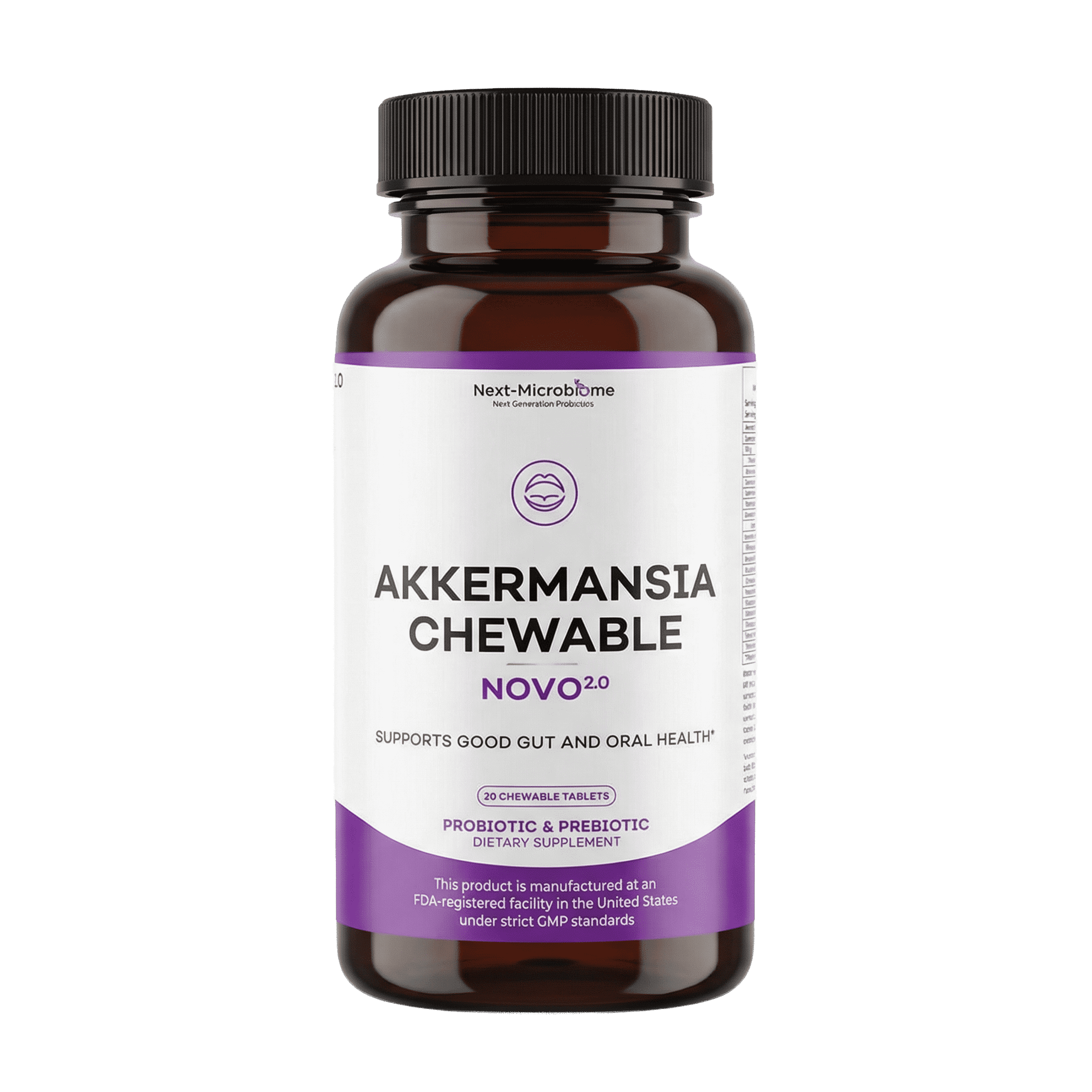
Next-Microbiome’s Chewable Akkermansia offers a premium, science-aligned option:
It contains:
-
Akkermansia bioactive components
-
mucin-supporting cofactors
-
polyphenol-rich plant extracts
-
gentle, child-preferred berry flavor
Ideal for children recovering from:
-
antibiotic courses
-
processed-food diets
-
chronic inflammation
-
low microbial diversity
-
picky eating patterns

FAQ:
1. Should parents talk to a pediatrician before giving a child an Akkermansia or probiotic supplement?
Yes. Parents should talk to a pediatrician before giving a child any probiotic, prebiotic, or microbiome supplement. HealthyChildren notes that not all children need probiotic supplements and that some children could be harmed by them, while NCCIH says long-term safety data in children are still limited. Extra caution is especially important for premature infants, critically ill children, and children with weakened immune systems. The American Academy of Pediatrics also advises against routinely giving probiotics to preterm infants because safety and product quality can vary. For most families, the safest approach is to treat any Akkermansia or other microbiome supplement as something that should be reviewed in the context of the child’s age, health history, and current medications.
For parents researching akkermansia long-term safety, the most responsible next step is to review the child’s health status with a pediatrician, especially because long-term pediatric data for microbiome supplements can be limited.
Scientific Reference:
https://www.healthychildren.org/English/healthy-living/nutrition/Pages/Do-Kids-Really-Need-Vitamins-or-Supplements-to-Stay-Healthy-and-Boost-Immunity.aspx
https://www.healthychildren.org/English/news/Pages/Caution-in-Use-of-Probiotics-in-Preterm-Infants.aspx
https://www.nccih.nih.gov/health/tips/things-to-know-about-dietary-supplements-for-children-and-teens
https://www.nccih.nih.gov/health/probiotics-usefulness-and-safety
2. Do most kids need a daily microbiome supplement, or should parents start with food first?
For most healthy children, food should come first. Healthy Children says the most effective way to get probiotics is through a healthy diet, and it also points parents toward fiber-rich foods that act as prebiotics, which help beneficial gut microbes grow. Cleveland Clinic likewise emphasizes that prebiotics are the “fuel” for good bacteria and that plant-rich, high-fiber foods help support a healthier gut environment. In practice, that means prioritizing fruits, vegetables, beans, lentils, whole grains, and age-appropriate fermented foods before relying on a daily supplement. Supplements may still have a role in some cases, but they should be chosen for a clear reason and discussed with a pediatrician rather than used automatically.
For parents comparing options, the best probiotic for gut lining is usually one that supports gut barrier resilience and microbial balance within a food-first, pediatrician-guided approach rather than being used automatically.
Scientific Reference:
https://www.healthychildren.org/English/healthy-living/nutrition/Pages/Do-Kids-Really-Need-Vitamins-or-Supplements-to-Stay-Healthy-and-Boost-Immunity.aspx
https://www.healthychildren.org/English/tips-tools/ask-the-pediatrician/Pages/Can-probiotics-help-prevent-tummy-trouble.aspx
https://health.clevelandclinic.org/prebiotics-vs-probiotics-whats-the-difference
https://my.clevelandclinic.org/health/body/25201-gut-microbiome
Written by Ali Rıza Akın
Microbiome Scientist, Author & Founder of Next-Microbiome
Ali Rıza Akın is a microbiome scientist with nearly 30 years of experience in translational biotechnology, systems biology, and applied microbiome research, spanning discovery, preclinical development, and clinical-stage translation.
His work focuses on how microbial ecosystems interact with human physiology, including:
-
Gut barrier function and intestinal permeability
-
Mucus-associated microbiota (Akkermansia-related systems)
-
Oral–gut microbiome axis
-
Short-chain fatty acids (SCFAs) and metabolic signaling
-
Circadian rhythm–microbiome interactions
-
Clinical Research Contributions
He has contributed to multiple clinical-stage microbiome programs, supporting bacterial strain discovery, optimization, and formulation design across different therapeutic areas, including:
Active Ulcerative Colitis (Inflammatory Bowel Disease)
Hyperoxaluria (Oxalate Metabolism Disorder)
Microbiome-driven gut health and inflammatory conditions
These studies were part of broader clinical development programs evaluating microbiome-based approaches. His contributions focused on the early-stage scientific and translational pipeline, including strain discovery, functional optimization, and multi-strain formulation design.
Scientific Contributions:
Ali Rıza Akın is the discoverer of Christensenella californii, a bacterial species associated with microbiome diversity and metabolic health.
He is a contributing author to scientific publications and Bacterial Therapy of Cancer (Springer), and the author of Bakterin Kadar Yaşa: İçimizdeki Evren: Mikrobiyotamız.
Approach:
His work emphasizes evidence-based microbiome science, long-term safety, and a systems-based understanding of how microbes influence human health.
Gut-Brain Axis: How Microbes Shape Mood, Stress, Appetite, and Brain Signaling
Microbiome Development: How Early Life and Adulthood Shape Lifelong Health
Related Posts

Why Do You Wake Up at 3 A.M.? Gut, Cortisol, Blood Sugar, and Sleep Recovery

Can Gut Health Affect Sleep? How the Microbiome May Shape Rest and Recovery

Ozempic Plateau? What Your Gut Microbiome May Be Telling You About Slower Weight Loss

Akkermansia vs Ozempic: Why Gut Balance May Shape GLP-1, Digestion, and Results

GLP-1 Side Effects: How to Ease Bloating, Constipation, and Gut Issues Naturally

Best Probiotic for Leaky Gut? Why Gut Barrier Support Differs From Digestive Probiotics

Can You Support Akkermansia Naturally, or Are Supplements Needed?
