


Low Akkermansia? Signs, Causes, and How to Restore It Naturally
Low Akkermansia muciniphila: Causes, Symptoms & How to Restore It Naturally
Akkermansia muciniphila is one of the most important bacteria for gut lining strength, immune balance, metabolic health, and overall digestive resilience. When levels of Akkermansia drop, the effects can be felt throughout the entire digestive system.
Low Akkermansia is increasingly linked to:
-
inflammation
-
bloating
-
gut sensitivity
-
weakened mucosal barrier
-
impaired metabolic signaling
-
disrupted oral–gut microbial flow
This article explains why Akkermansia levels decline, what symptoms to look for, and how to naturally increase this next-generation microbe — using only clinically supported methods.
For a full foundational overview of Akkermansia muciniphila science, see Blog 1:
Akkermansia: The Missing Microbe for Gut Health, Oral–Gut Balance & Digestive Strength
Frequently Asked Questions — Low Akkermansia: Symptoms, Causes & Natural Restoration
1. What are the symptoms of low Akkermansia?
Bloating, inflammation, digestive sensitivity, cravings, weakened gut lining, low metabolic flexibility, and greater susceptibility to irritation.
2. Why does Akkermansia decrease?
Low polyphenols, low fiber, frequent antibiotics, poor diet, mucin depletion, low SCFA levels, stress, and oral–gut microbial imbalance.
3. How quickly can Akkermansia levels improve?
Many people see early improvements within 2–4 weeks, with deeper mucin-layer restoration over 6–12 weeks.
4. Can Akkermansia be supplemented directly?
Direct supplementation options are limited; the most reliable approach is supporting the environment Akkermansia requires, including polyphenols, HMOs, prebiotics, and SCFA-producing microbes. When evaluating an Akkermansia supplement, delivery format, complementary ingredients, and oral-gut support may matter more than choosing a product based on the strain name alone.
5. Does the oral microbiota affect Akkermansia?
Yes — oral dysbiosis increases GI inflammation, disrupts mucosal immunity, and reduces Akkermansia resilience. Chewable formats help restore the oral–gut axis.
6. Which supplements help low Akkermansia?
Chewable formulas containing polyphenols, HMO 2’-FL, inulin, resistant starch, and Clostridium butyricum support Akkermansia growth.
7. How does low Akkermansia weaken the gut barrier?
Akkermansia fuels mucin renewal; when levels drop, the gut lining becomes thinner, more permeable, and more prone to inflammation.
8. Can low Akkermansia contribute to weight gain or metabolic slowdown?
Yes — low levels are linked to reduced insulin sensitivity, impaired GLP-1 response, slower fat oxidation, and increased cravings.
9. Is low Akkermansia linked to autoimmune or inflammatory conditions?
Yes — research shows reduced Akkermansia in metabolic syndrome, IBD, autoimmune disorders, and chronic inflammation.
10. Why do cravings increase when Akkermansia is low?
Weak mucosal integrity and low SCFAs impair GLP-1 and PYY signaling, intensifying sugar and carb cravings.
11. Can stress reduce Akkermansia levels?
Yes — cortisol disrupts mucin production and SCFA cycles, creating an inflammatory environment hostile to Akkermansia.
12. How does low Akkermansia impact oral–gut microbial balance?
Weak gut mucosa allows inflammatory oral bacteria to survive downstream, worsening dysbiosis and further lowering Akkermansia.
13. What role do SCFAs play in restoring Akkermansia?
SCFAs improve mucin production, strengthen the barrier, reduce inflammation, and create ecological support for Akkermansia regrowth.
14. Can circadian rhythm affect Akkermansia levels?
Yes — irregular eating windows, poor sleep, and disrupted cortisol timing weaken mucosal repair and lower Akkermansia abundance.
15. Does sugar directly reduce Akkermansia?
Yes — high sugar intake reduces mucin layer thickness, increases inflammatory microbes, and suppresses Akkermansia populations.
16. Can improving the oral microbiome increase Akkermansia?
Yes — stabilizing the oral–gut axis reduces mucosal stress and enhances downstream Akkermansia colonization.
17. How do polyphenols boost Akkermansia?
Polyphenols nourish mucin-positive species, reduce inflammation, and create an antioxidant environment ideal for Akkermansia.
18. What daily habits help restore low Akkermansia?
Fiber-rich meals, polyphenols, fasting windows, hydration, reduced sugar, consistent sleep, and targeted oral–gut synbiotics.
19. How long does mucin layer repair take once Akkermansia increases?
Mucin thickening typically improves within 4–8 weeks, with full mucosal resilience taking up to 12 weeks.
20. Can low Akkermansia impact mood or stress resilience?
Yes — weakened gut barriers increase inflammation and cortisol dysregulation, which disrupt gut–brain communication.
GLP-1 only works when the metabolic system beneath it is healthy. If your microbiome is unstable, SCFAs are low, or inflammation is high, GLP-1 signaling weakens. For a complete scientific roadmap to restoring natural GLP-1 biology, visit the GLP-1 & Microbiome Knowledge Hub.
Some people also explore microbiome-focused formulations such as Boost Synergy GLP-1 as part of broader gut and metabolic support.
What Causes Low Akkermansia?
Several lifestyle, dietary, and microbial disruptions can reduce Akkermansia levels:
1. Low Polyphenol Intake
Polyphenols from berries, cocoa, pomegranate, and green tea directly support Akkermansia growth.
A 2024 MDPI study confirmed that polyphenols increase Akkermansia abundance and improve mucosal dynamics.
2. Weak Gut Lining or Mucin Layer
Akkermansia lives inside the mucin layer — when mucin thins, Akkermansia declines.
3. Antibiotics or Medication
Broad-spectrum antibiotics can sharply reduce Akkermansia populations.
4. High-Sugar, Ultra-Processed Diets
These reduce microbial diversity and weaken mucin integrity.
5. Low SCFA Production
Butyrate-producing microbes (like Clostridium butyricum) help nourish the mucosal barrier.
Low SCFAs → low Akkermansia.
6. Oral–Gut Microbiota Imbalance
More than 1 billion mouth bacteria travel to the gut daily.
Dysbiosis in the oral microbiota can increase upper-GI inflammation and reduce Akkermansia’s ability to thrive.

Symptoms of Low Akkermansia muciniphila
Although Akkermansia is microscopic, its effects are not.
Low levels are associated with:
✔ Bloating after meals
✔ Irregular digestion or sensitivity
✔ Increased inflammation
✔ Poor gut lining resilience
✔ Food intolerance–like symptoms
✔ Sugar cravings
✔ Lower metabolic flexibility
✔ Frequent gas or discomfort
✔ Weak mucosal immune function
Research consistently links low Akkermansia to digestive issues, metabolic impairment, and gut barrier stress.
A clinical review published in Nutrients (2024) showed that probiotics and prebiotic compounds supporting mucin and gut barrier integrity significantly reduce GI symptoms and inflammation.
Gut Barrier, Mucin Turnover & Metabolic Signaling
Akkermansia muciniphila is uniquely adapted to live in the mucus layer of the intestine, where it is being studied for its role in gut barrier and intestinal lining health. It degrades mucin in a controlled manner, helping stimulate renewal of the protective barrier. When levels decline, mucus thinning may occur, potentially contributing to increased intestinal permeability and systemic inflammation.
Research shows that reduced abundance may correlate with metabolic instability, insulin resistance, and inflammatory signaling. This helps explain why individuals experiencing symptoms of low akkermansia often report digestive discomfort, bloating, or metabolic challenges.
Mechanistically, Akkermansia also interacts with short-chain fatty acid (SCFA) producers, helping regulate GLP-1 secretion and immune balance. This helps clarify the broader GLP-1 microbiome connection discussed in metabolic health research. Supporting its growth is not simply about adding one strain; it requires improving the overall microbial ecosystem. Understanding the broader benefits of Akkermansia muciniphila can help explain why maintaining healthy levels of this bacterium is important. For a broader overview of this species’ role, see our Akkermansia hub guide.
For a broader overview of this species’ role, see our Akkermansia microbiome guide.
As part of emerging next-microbiome research, restoring Akkermansia is increasingly viewed as foundational for long-term metabolic and gut barrier resilience.
Comparison Table
|
Function |
Optimal Levels |
Low Levels |
|
Mucus Thickness |
Maintained |
Reduced |
|
Inflammation |
Regulated |
Elevated |
|
Metabolic Markers |
Stable |
Dysregulated |
|
SCFA Interaction |
Balanced |
Disrupted |
Scientific References
-
Everard et al., 2013
Cross-talk between Akkermansia muciniphila and intestinal epithelium controls diet-induced obesity.
Proceedings of the National Academy of Sciences (PNAS). -
Cani & de Vos, 2017
Next-Generation Beneficial Microbes: The Case of Akkermansia muciniphila.
Frontiers in Microbiology. -
Dao et al., 2016
Akkermansia muciniphila and improved metabolic health during dietary intervention in obesity.
Gut. -
Plovier et al., 2017
A purified membrane protein from Akkermansia muciniphila improves metabolism in obese and diabetic mice.
Nature Medicine.
Low Akkermansia & the Gut Lining
Akkermansia lives in the mucin layer — the “inner shield” of the gut.
When Akkermansia is depleted:
-
mucin turnover slows
-
gut barrier weakens
-
permeability increases
-
inflammation rises
-
other microbes struggle to colonize properly
An umbrella meta-analysis published in the European Journal of Medical Research found that probiotics targeting mucosal and barrier function significantly reduced digestive discomfort across multiple GI conditions:
Restoring Akkermansia is one of the most effective ways to improve mucosal health. For readers comparing options, the best probiotic for gut lining is usually one that supports mucin turnover, SCFA production, and oral-gut microbial balance rather than relying on a single generic strain.
The Oral–Gut Microbiome Connection
Low Akkermansia doesn’t always begin in the gut.
The oral microbiota plays a significant upstream role:
-
Oral dysbiosis increases inflammation
-
Harmful oral bacteria travel to the gut
-
Salivary enzymes and pH influence gastric function
-
Chewing activates digestive and immune pathways
-
Mouth–gut microbial traffic shapes diversity
Supporting the oral microbiota is essential — especially when using chewable microbiome formulas, which activate earlier in the digestive process.
How to Restore Akkermansia Naturally
Research supports several effective strategies:
1. Increase Polyphenols
Berries, pomegranate, cocoa, and green tea help increase Akkermansia abundance.
MDPI 2024 demonstrated that polyphenols support Akkermansia and improve mucosal metabolism.
2. Support the Mucin Layer with HMOs (2’-FL)
A clinical review in AJCN showed that human milk oligosaccharides (HMOs) improve gut barrier integrity and nourish mucosal bacteria.
HMOs create ideal conditions for Akkermansia colonization.
3. Add SCFA-Supportive Probiotics (C. butyricum)
Clostridium butyricum increases butyrate — essential for mucin production and intestinal healing.
A 2021 microbiology review confirmed its strong effects on gut lining repair.
4. Prebiotics: Inulin, FOS, Resistant Starch
Feed Akkermansia-friendly bacteria and improve SCFA output.
5. Support the Oral–Gut Axis
Chewable microbiome formulas engage the oral microbiota before reaching the gut, which is why Akkermansia supplementation timing is often considered alongside delivery format, consistency, and oral–gut support.
Best Way to Support Akkermansia: Chewable Microbiome Formulas
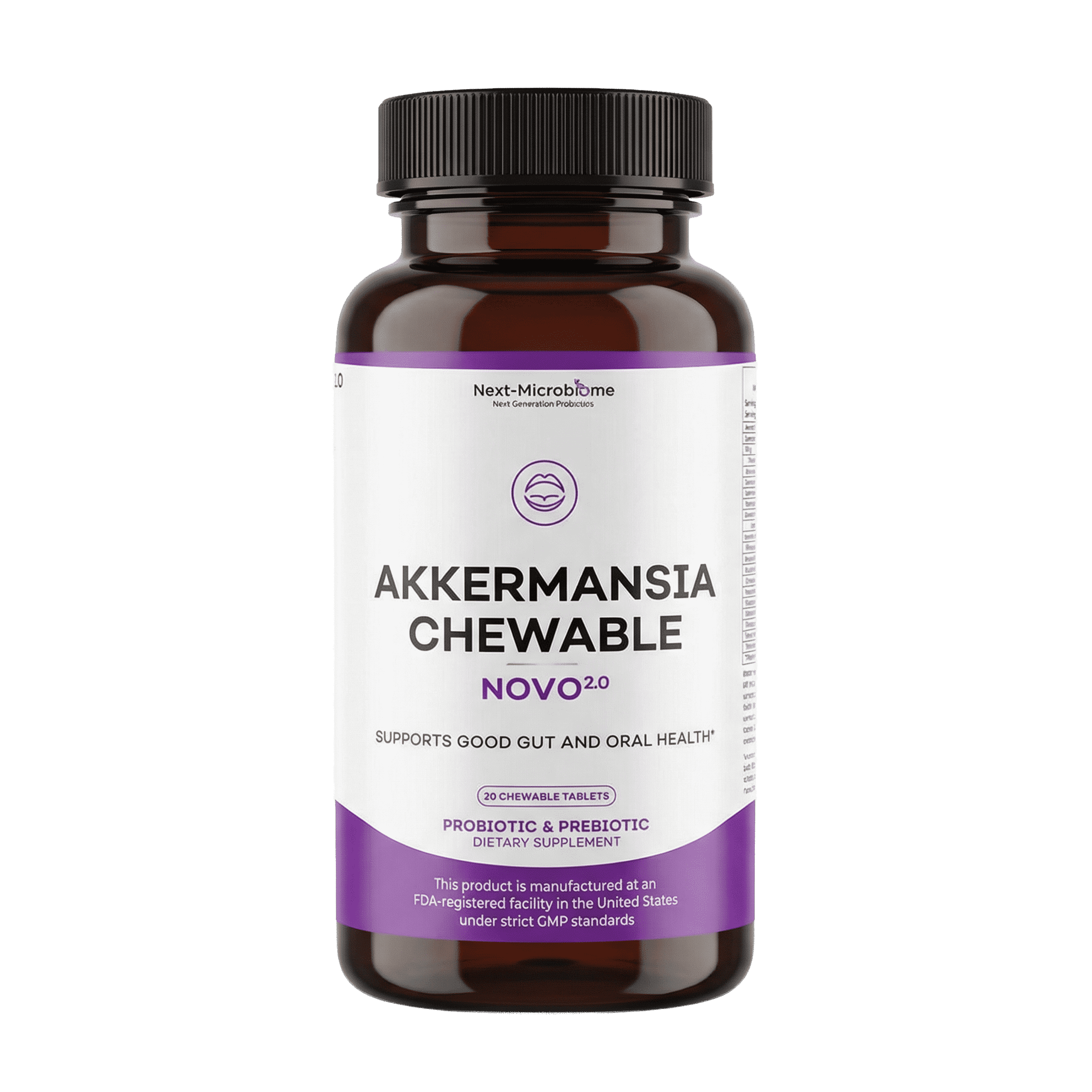
To support Akkermansia abundance, gut lining strength, oral-gut microbial balance, and digestive comfort, some readers explore an Akkermansia probiotic in chewable form.
This next-generation approach to mucosal health is designed to support:
-
earlier activation via oral microbiota
-
polyphenol synergy
-
mucin support
-
prebiotic + HMO synergy
-
SCFA-supportive strains

INTERNAL LINKS
Akkermansia: The Missing Microbe for Gut Health, Oral–Gut Balance & Digestive Strength
Low Akkermansia muciniphila: Causes, Symptoms & How to Restore It Naturally
How to Increase Akkermansia Naturally With Foods, Polyphenols, HMOs & Prebiotics
Buy Akkermansia: What to Know Before Choosing an Akkermansia Supplement
Akkermansia & Gut Lining Health: Why This Next-Generation Microbe Matters
Written by Ali Rıza Akın
Microbiome Scientist, Author & Founder of Next-Microbiome
Ali Rıza Akın is a microbiome scientist with nearly 30 years of experience in translational biotechnology, systems biology, and applied microbiome research, spanning discovery, preclinical development, and clinical-stage translation.
His work focuses on how microbial ecosystems interact with human physiology, including:
-
Gut barrier function and intestinal permeability
-
Mucus-associated microbiota (Akkermansia-related systems)
-
Oral–gut microbiome axis
-
Short-chain fatty acids (SCFAs) and metabolic signaling
-
Circadian rhythm–microbiome interactions
-
Clinical Research Contributions
He has contributed to multiple clinical-stage microbiome programs, supporting bacterial strain discovery, optimization, and formulation design across different therapeutic areas, including:
Active Ulcerative Colitis (Inflammatory Bowel Disease)
Hyperoxaluria (Oxalate Metabolism Disorder)
Microbiome-driven gut health and inflammatory conditions
These studies were part of broader clinical development programs evaluating microbiome-based approaches. His contributions focused on the early-stage scientific and translational pipeline, including strain discovery, functional optimization, and multi-strain formulation design.
Scientific Contributions:
Ali Rıza Akın is the discoverer of Christensenella californii, a bacterial species associated with microbiome diversity and metabolic health.
He is a contributing author to scientific publications and Bacterial Therapy of Cancer (Springer), and the author of Bakterin Kadar Yaşa: İçimizdeki Evren: Mikrobiyotamız.
Approach:
His work emphasizes evidence-based microbiome science, long-term safety, and a systems-based understanding of how microbes influence human health.
Akkermansia for Gut Health, Gut Lining Support, and Oral-Gut Microbiome Balance
Can’t Increase Akkermansia? What Your Gut May Be Missing to Support It Naturally
Related Posts

Ozempic Plateau? What Your Gut Microbiome May Be Telling You About Slower Weight Loss

Akkermansia vs Ozempic: How Gut Microbiome Support May Influence GLP-1 and Digestion

GLP-1 Side Effects: How to Ease Bloating, Constipation, and Gut Issues Naturally

Best Probiotic for Leaky Gut? Why Gut Barrier Support Differs From Digestive Probiotics

Can You Support Akkermansia Naturally, or Are Supplements Needed?

GLP-1 Not Working? How Your Gut Microbiome May Be Affecting GLP-1 Signaling

What Does Science Say About Akkermansia for Gut Health?
