
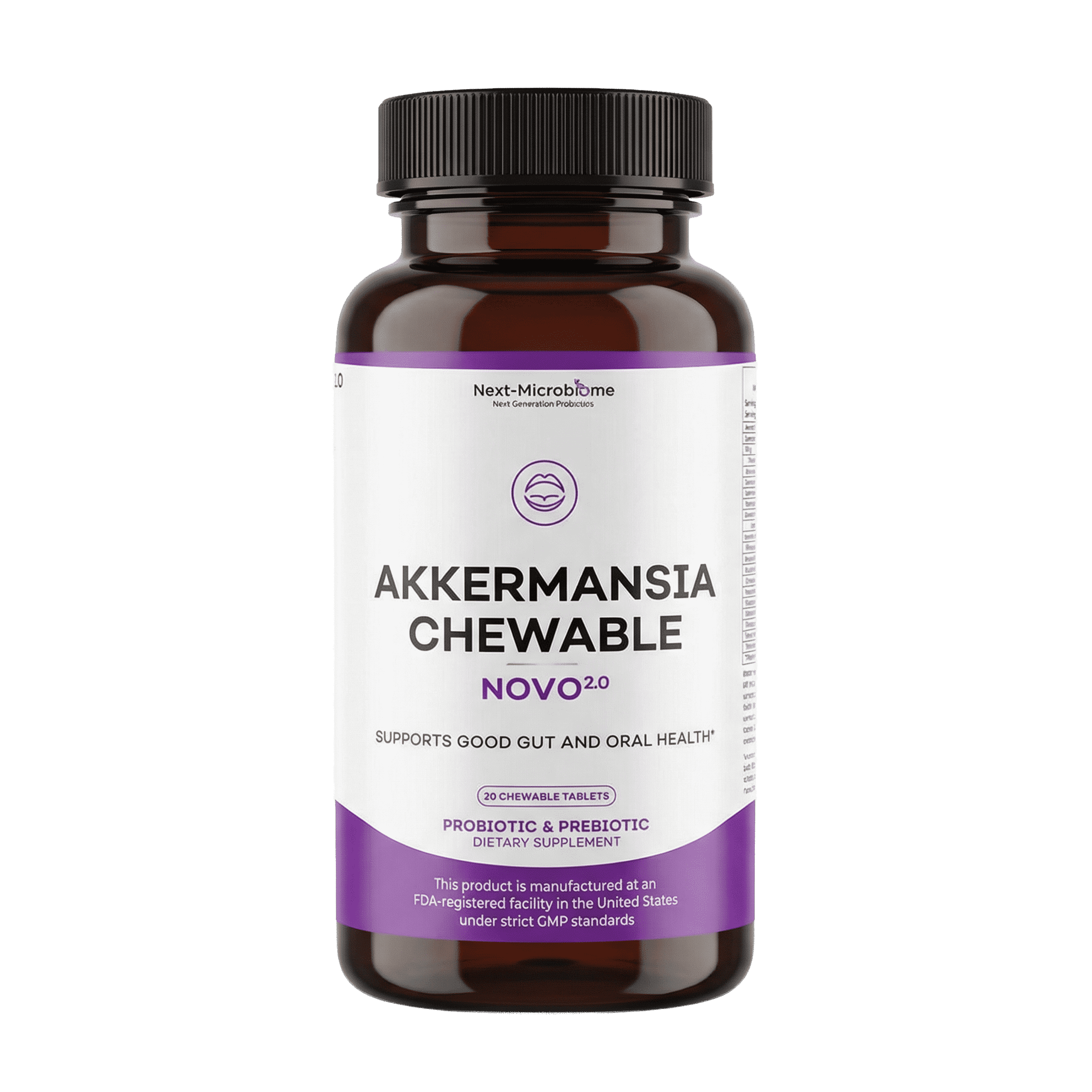


When Should You Take Akkermansia? Timing, Consistency, and What Actually Matters Most
When Should You Take Akkermansia? Timing, Consistency, and What Actually Matters
After understanding whether Akkermansia is safe and who should consider it, the next practical question is simple and very common:
When should Akkermansia be taken — and does timing really make a difference?
This article explains what current microbiome science suggests about timing, consistency, food context, and realistic expectations, using a question-and-answer structure that aligns with how people search and how Google and AI systems surface health information. Understanding the Akkermansia muciniphila benefits can help explain why timing and consistency may matter.
If you haven’t reviewed the earlier decision steps, start here:
Is Akkermansia Safe Long Term? What Science Actually Shows
Who Should Consider Akkermansia (And Who Shouldn’t)
Key Points
-
There is no single “best” time of day to take Akkermansia.
-
Consistency matters more than morning vs evening timing.
-
Akkermansia does not create immediate effects like a drug.
-
Daily routines, sleep, and diet influence outcomes more than clock time.
-
Realistic expectations align with microbiome biology, not quick results.
What “Timing” Means in Microbiome Science
In microbiome research, timing does not refer to achieving an immediate physiological response after ingestion. Instead, it refers to how consistently microbial signals are reinforced over time within the gut ecosystem.
From a scientific perspective, Akkermansia timing is best understood as habit alignment, not clock-based optimization.
Does Timing Matter When Taking Akkermansia?
Short answer: only slightly, consistency matters far more.
Akkermansia does not act as a stimulant, hormone, or fast-acting compound. Its influence occurs through gradual modulation of gut barrier signaling, mucus dynamics, and microbial interactions that may shape broader digestive wellness and metabolic signaling over time.
Because these processes unfold over time, most research and expert discussions emphasize regular exposure rather than precise timing.
Is It Better to Take Akkermansia in the Morning or at Night?
There is no strong evidence that Akkermansia must be taken in the morning or evening to be effective.
However, gut microbes, epithelial cells, and immune signaling follow circadian rhythms, meaning stable daily patterns still matter at a systems level. Research shows that the gut microbiome exhibits diurnal oscillations influenced by host feeding rhythms and circadian mechanisms, and disruption of these rhythms can negatively affect metabolic homeostasis (Thaiss et al., 2014).
Rather than focusing on clock time, microbiome science suggests aligning Akkermansia support with consistent daily routines, including sleep and feeding patterns.

For broader context on this interaction, see:
Circadian Rhythm & the Gut Microbiome
Should Akkermansia Be Taken With Food or on an Empty Stomach?
Current evidence does not require Akkermansia to be taken strictly with or without food.
What matters more is:
-
overall diet quality
-
consistency of daily habits
Akkermansia’s activity depends on mucin availability and gut barrier signaling, rather than on direct digestion of food. Food timing alone is unlikely to override broader lifestyle factors.
Products designed to support Akkermansia levels, such as Boost Synergy, combine Akkermansia-focused microbiome strains with supportive prebiotics and metabolites.
Why Is Consistency More Important Than Timing?
Microbiome-related changes occur through:
-
epithelial turnover
-
microbial signaling
-
immune tolerance modulation
These processes take weeks, not hours.
Human studies examining Akkermansia-related outcomes typically observe changes over 4–12 weeks, reinforcing the idea that daily consistency matters more than optimizing the exact hour of intake (Depommier et al., 2019).
How Does Akkermansia Fit Into Gut Barrier Regulation?
Akkermansia interacts directly with the intestinal mucus layer and is being studied for how it may influence epithelial signaling pathways involved in gut barrier and intestinal lining health (Chelakkot et al., 2018).
This explains why Akkermansia research often overlaps with gut barrier science, rather than traditional probiotic timing discussions.

For deeper background, see:
Gut Barrier Health: Science of Intestinal Integrity
For readers exploring broader topics such as leaky gut and microbiome support, the most relevant scientific context here is gut barrier regulation and intestinal permeability rather than timing alone.
In that context, some readers may also want to compare what to look for in the best probiotic for gut lining, especially when mucosal support, host-microbe signaling, and barrier-focused formulation logic are part of the goal.
What Can’t Timing Fix?
It’s important to be clear about limitations.
Timing alone:
-
will not accelerate results dramatically
-
will not override poor diet or sleep
-
will not “force” microbiome change
Akkermansia functions within a coordinated biological system rather than as a rapid-acting intervention.
Key Takeaways
In summary, Akkermansia timing is defined by consistency and routine alignment, not by clock-based precision.
-
Akkermansia does not require precise timing.
-
Consistency matters more than clock time.
-
Daily routines, sleep, and diet influence outcomes.
-
Akkermansia works through slow biological signaling.
-
Expectations should align with microbiome timelines.

Summary
-
Akkermansia muciniphila does not produce immediate effects and does not require strict timing.
-
Scientific evidence emphasizes consistency over specific time-of-day use.
-
Microbiome-related changes occur gradually and depend on gut barrier and lifestyle context.
-
Circadian rhythm influences gut biology, but timing alone is not decisive.
-
Responsible use focuses on routine alignment and realistic expectations.
-
From a microbiome science perspective, “when to take” Akkermansia refers to habit consistency rather than optimization.
This article is intended for scientific education, Akkermansia microbiome guide and does not provide medical advice or individualized treatment recommendations.
Products designed to support Akkermansia levels, such as Boost Synergy, combine Akkermansia-focused microbiome strains with supportive prebiotics, probiotics, and metabolites to help support overall gut microbiome balance.
FAQ:
1. Should Akkermansia be taken with or without food?
Akkermansia supplements can usually be taken with or without food, depending on the product instructions. Many people take it at the same time each day to maintain consistency. Taking it with a meal may help with routine and digestive comfort, but the most important factor is consistent daily use.
2. How long before Akkermansia starts working?
Changes from Akkermansia supplementation may take several weeks to a few months, depending on diet, gut microbiome balance, and consistency. Some individuals evaluate results over 4–12 weeks, since microbiome changes typically occur gradually alongside supportive habits such as fiber intake and balanced nutrition.
3. Does Akkermansia help with weight loss?
Akkermansia muciniphila is being studied for its role in metabolic health and gut barrier function. Some research has linked higher Akkermansia levels with improved metabolic markers, but it should not be considered a standalone weight-loss solution. Healthy weight management generally involves diet, activity, sleep, and overall lifestyle factors.
4. Can Akkermansia be taken with other probiotics?
Yes, Akkermansia can often be taken with other probiotics depending on the formulation. Some microbiome products combine Akkermansia with complementary probiotic strains, prebiotics, or metabolites designed to support gut ecosystem balance. Always follow product instructions or consult a healthcare professional if unsure.
5. When is the best time to take Akkermansia?
There is no universally best time. Consistency in your daily routine matters more than the timing of your morning or evening routine.
6. Should Akkermansia be taken every day?
Yes. Research emphasizes regular exposure rather than sporadic use for effects on the microbiome.
7. Can timing affect Akkermansia results?
Timing may have a minor influence through circadian biology, but it is not the primary driver of outcomes.
8. How long before Akkermansia shows effects?
Most observed changes occur gradually over several weeks, not immediately.
Scientific References
-
Depommier C et al.
Supplementation with Akkermansia muciniphila in overweight and obese human volunteers: a proof-of-concept exploratory study.
Nature Medicine (2019). -
Plovier H et al.
A purified membrane protein from Akkermansia muciniphila improves metabolism in obese and diabetic mice.
Nature Medicine (2017). -
Chelakkot C et al.
Mechanisms regulating intestinal barrier integrity and its pathological implications.
Experimental & Molecular Medicine (2018). -
Thaiss CA et al.
Trans-kingdom control of microbiota diurnal oscillations promotes metabolic homeostasis.
Cell (2014).
Written by Ali Rıza Akın
Microbiome Scientist, Author & Founder of Next-Microbiome
Ali Rıza Akın is a microbiome scientist with nearly 30 years of experience in translational biotechnology, systems biology, and applied microbiome research, spanning discovery, preclinical development, and clinical-stage translation.
His work focuses on how microbial ecosystems interact with human physiology, including:
-
Gut barrier function and intestinal permeability
-
Mucus-associated microbiota (Akkermansia-related systems)
-
Oral–gut microbiome axis
-
Short-chain fatty acids (SCFAs) and metabolic signaling
-
Circadian rhythm–microbiome interactions
-
Clinical Research Contributions
He has contributed to multiple clinical-stage microbiome programs, supporting bacterial strain discovery, optimization, and formulation design across different therapeutic areas, including:
Active Ulcerative Colitis (Inflammatory Bowel Disease)
Hyperoxaluria (Oxalate Metabolism Disorder)
Microbiome-driven gut health and inflammatory conditions
These studies were part of broader clinical development programs evaluating microbiome-based approaches. His contributions focused on the early-stage scientific and translational pipeline, including strain discovery, functional optimization, and multi-strain formulation design.
Scientific Contributions:
Ali Rıza Akın is the discoverer of Christensenella californii, a bacterial species associated with microbiome diversity and metabolic health.
He is a contributing author to scientific publications and Bacterial Therapy of Cancer (Springer), and the author of Bakterin Kadar Yaşa: İçimizdeki Evren: Mikrobiyotamız.
Approach:
His work emphasizes evidence-based microbiome science, long-term safety, and a systems-based understanding of how microbes influence human health.

Who Should Consider Akkermansia? When Support Makes Sense and When It May Not
How Long Does Akkermansia Take to Work? What Changes First and What to Expect
Related Posts

Ozempic Plateau? What Your Gut Microbiome May Be Telling You About Slower Weight Loss

Akkermansia vs Ozempic: How Gut Microbiome Support May Influence GLP-1 and Digestion

GLP-1 Side Effects: How to Ease Bloating, Constipation, and Gut Issues Naturally

Best Probiotic for Leaky Gut? Why Gut Barrier Support Differs From Digestive Probiotics

Can You Support Akkermansia Naturally, or Are Supplements Needed?

GLP-1 Not Working? How Your Gut Microbiome May Be Affecting GLP-1 Signaling

What Does Science Say About Akkermansia for Gut Health?
