


Oral Microbiota and Gut Health: How the Mouth Shapes the Entire Microbiome
Oral Microbiota & Gut Health: How the Mouth Shapes the Entire Microbiome
Most people think gut health starts in the stomach or intestines —
But the truth is, digestion begins in the mouth, and the microbiome begins there, too.
Every day, more than 1 billion oral bacteria travel from the mouth down the digestive tract. These microbes influence stomach acidity, immune signals, inflammatory responses, and even the success of probiotics.
To understand the bigger picture of the human microbiome first start with:
What Is the Human Microbiome? A Complete Guide to Microbes, Immunity & Digestion
Now, let’s explore why the oral microbiota is one of the most influential — and overlooked — parts of gut health.
Frequently Asked Questions:
1. Does the oral microbiome affect gut health?
Yes — over 1 billion oral bacteria migrate into the gut daily, shaping stomach acidity, immune signaling, inflammation, and microbial balance.
2. Can oral dysbiosis cause digestive issues?
Absolutely. Oral dysbiosis can trigger small-intestinal inflammation, microbial imbalance, and downstream dysbiosis.
3. Why is saliva important?
Saliva transports digestive enzymes, antibodies, and microbial communities that initiate digestion and immune signaling.
4. Are chewable probiotics better?
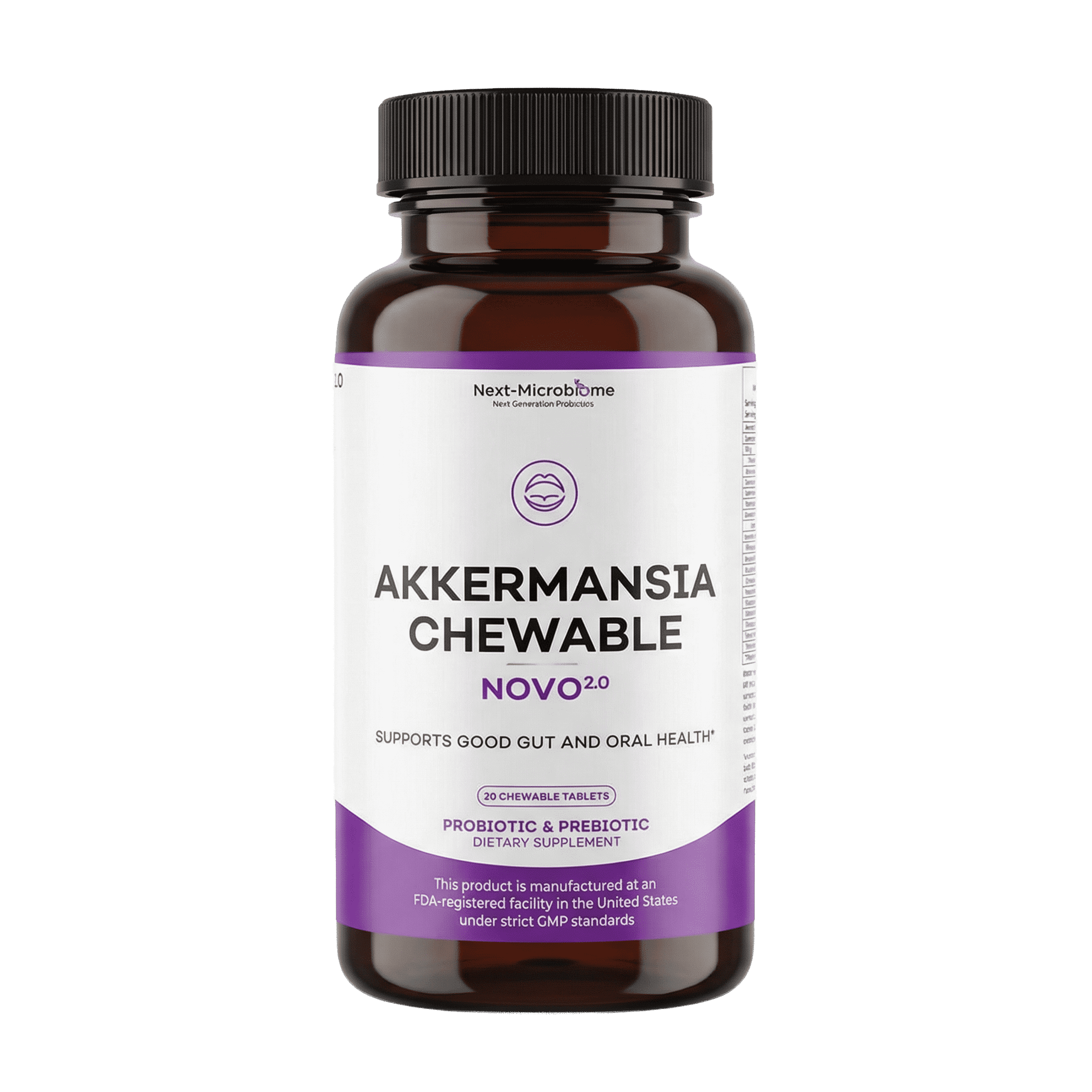
Yes — they support the oral microbiota first, improving colonization, mucosal immunity, and downstream gut balance.
5. What foods support the oral microbiota?
Polyphenol-rich foods like berries, cocoa, pomegranate, herbs, and green tea help reduce oral inflammation and microbial imbalance.
6. Can improving oral microbiota improve gut health?
Yes — balancing oral bacteria reduces inflammatory load and strengthens gut microbial resilience.
7. How does the oral microbiome influence stomach acidity?
Oral bacteria modulate gastric pH, enzyme activity, and mucosal signaling, shaping which microbes survive into the gut.
8. Can oral bacteria trigger small-intestinal overgrowth (SIBO-like symptoms)?
Yes — certain oral species can migrate downward and disrupt small-intestinal microbial communities, contributing to bloating, inflammation, and malabsorption.
9. How does periodontal inflammation affect gut health?
Gum inflammation increases systemic inflammatory markers and contributes to gut barrier weakness and dysbiosis.
10. Which oral bacteria are beneficial for gut health?
Species such as Streptococcus salivarius, Rothia, and Actinomyces help regulate immunity, pH, and microbial competition.
11. Which oral bacteria harm gut health?
Pathogenic species like Fusobacterium, Porphyromonas, and Prevotella can trigger inflammation and disrupt gut microbial ecology when swallowed.
12. Does mouth breathing affect the microbiome?
Yes — mouth breathing dries the oral cavity, shifts pH, increases dysbiosis, and allows inflammatory oral bacteria to dominate.
13. How does oral hygiene impact the oral–gut axis?
Brushing, flossing, and gentle tongue cleaning reduce inflammatory bacteria load, lowering the microbial burden that reaches the gut.
14. Can dry mouth (xerostomia) disrupt gut health?
Yes — reduced saliva decreases enzyme flow, weakens oral immunity, raises oral acidity, and allows dysbiosis that travels into the GI tract.
15. Are oral probiotics different from gut probiotics?
Yes — oral probiotics are designed to colonize the mouth and upper GI, improving oral bacteria balance, while traditional probiotics primarily target the gut.
16. Can chewable Akkermansia support both oral and gut microbiota?
Yes — chewable delivery improves oral mucosal contact, influences the oral immune environment, and enhances downstream gut colonization and signaling.
17. How long does it take to rebalance the oral microbiome?
Most people see improvements within 2–4 weeks, with deeper oral–gut axis changes appearing within 6–12 weeks.
18. Is oral dysbiosis linked to systemic inflammation?
Yes — oral inflammation increases circulating cytokines, affecting gut integrity, metabolic health, and immune regulation.
19. Can stress impact the oral microbiome?
Yes — stress increases mouth acidity, reduces saliva flow, and promotes inflammatory oral species that negatively influence gut health.
20. What is the best strategy to strengthen the oral–gut axis?
Combining oral probiotics, polyphenols, proper oral hygiene, and gut-supportive fibers builds a stable, anti-inflammatory microbiome from mouth to colon.
Oral bacteria influence gut microbes, inflammation, barrier integrity, taste-receptor signaling, and even circadian metabolic timing. For the complete scientific overview, visit the Oral–Gut Microbiome Hub.
What Is the Oral Microbiota?
The oral microbiota consists of more than 700 microbial species living on:
-
the tongue
-
gums
-
teeth
-
tonsils
-
saliva
-
inner cheeks
This ecosystem:
-
breaks down food
-
activates digestive enzymes
-
regulates pH
-
interacts with immune cells
-
produces signaling molecules
-
primes the digestive tract
The oral cavity is a microbial “launch pad” for everything that happens downstream.
How Oral Bacteria Travel to the Gut
Scientific evidence confirms that oral bacteria routinely migrate into the gastrointestinal tract.
Reference: Oral–Gut Microbiome Interaction — Frontiers (2021)
Key findings:
-
Saliva transports oral bacteria with every swallow
-
Many survive stomach acidity
-
They colonize the upper GI tract
-
They influence gut microbial diversity
-
Oral dysbiosis can cause gut dysbiosis
-
Oral pathogens increase GI inflammation
The oral microbiota is not separate from the gut — it feeds into it.

How the Oral Microbiota Shapes Gut Health
1. It Influences Stomach pH
Salivary enzymes are activated before food reaches the stomach, shaping acidity and the speed of digestion.
2. It Primes Immune Responses
Oral bacteria interact with mucosal immune cells.
When unhealthy, they send “danger signals” downstream.
3. It Impacts Microbial Colonization
Healthy oral bacteria → healthy upper-GI colonization
Unhealthy oral bacteria → inflammatory microbial imbalance
4. It Drives Upper-GI Inflammation
Oral pathogens such as Fusobacterium and Prevotella are linked to:
-
gastritis
-
acid sensitivity
-
mucosal irritation
-
reduced microbial diversity
5. It Affects Gut Lining Strength
Oral bacteria influence mucin breakdown and tight-junction stability — affecting permeability.
The Oral–Gut Axis & the Gut–Brain Axis
The oral–gut axis directly affects the microbiota–gut–brain axis.
Changes in oral microbiota modify:
-
vagus nerve signaling
-
appetite regulation
-
stress response
-
serotonin activity
-
inflammatory signals
-
cognitive function
Reference: Microbiota–Gut–Brain Axis — Physiological Reviews (2018)
This makes oral–gut health central to emotional and metabolic resilience.
Why Chewable Microbiome Formulas Work Better
Chewable microbiome supplements activate in the mouth, not just in the gut.
A chewable format can:
-
support oral microbial balance
-
activate digestive enzymes early
-
strengthen immune priming
-
reduce upper-GI inflammation
-
improve probiotic survival
-
enhance downstream gut colonization
Capsules bypass the oral microbiota entirely.
This is why formulations designed for the oral–gut axis can produce broader benefits for the microbiome.

How to Support the Oral Microbiota Naturally
1. Eat Polyphenol-Rich Foods
Berries, cocoa, green tea, and pomegranate support beneficial oral bacteria.
Reference: Dietary Polyphenols & Gut Microbiota — Wang et al., 2022
2. Reduce Oral Inflammation
Inflamed gums contribute to systemic and gut inflammation.
Improve by:
-
flossing
-
brushing gently
-
avoiding sugared drinks
-
limiting harsh alcohol-based mouthwashes
3. Strengthen the Gut Lining
When the gut lining is stable, inflammatory feedback to the mouth decreases. HMOs (2'-FL) and SCFA-supportive probiotics help. For readers comparing options, the best probiotic for gut lining is usually one that supports mucosal stability, SCFA-related barrier support, and oral-gut microbial balance rather than acting as a quick fix.
References:
HMO 2’-FL — AJCN
4. Use a Chewable Microbiome Formula
Chewables help synchronize:
Oral Microbiota → Gut Microbiota → Gut Lining → Brain Signals
This matches natural digestion pathways.
Where This Fits in the Human Microbiome Cluster
If you’re exploring the microbiome step-by-step, continue your learning journey:
What Is the Human Microbiome? A Complete Guide to Microbes, Immunity & Digestion
Oral Microbiota & Gut Health: How the Mouth Shapes the Entire Microbiome
The Gut–Brain Axis: How Microbes Influence Mood, Stress & Appetite
Microbiome Development From Birth to Adulthood
Written by Ali Rıza Akın
Microbiome Scientist, Author & Founder of Next-Microbiome
Ali Rıza Akın is a microbiome scientist with nearly 30 years of experience in translational biotechnology, systems biology, and applied microbiome research, spanning discovery, preclinical development, and clinical-stage translation.
His work focuses on how microbial ecosystems interact with human physiology, including:
-
Gut barrier function and intestinal permeability
-
Mucus-associated microbiota (Akkermansia-related systems)
-
Oral–gut microbiome axis
-
Short-chain fatty acids (SCFAs) and metabolic signaling
-
Circadian rhythm–microbiome interactions
-
Clinical Research Contributions
He has contributed to multiple clinical-stage microbiome programs, supporting bacterial strain discovery, optimization, and formulation design across different therapeutic areas, including:
Active Ulcerative Colitis (Inflammatory Bowel Disease)
Hyperoxaluria (Oxalate Metabolism Disorder)
Microbiome-driven gut health and inflammatory conditions
These studies were part of broader clinical development programs evaluating microbiome-based approaches. His contributions focused on the early-stage scientific and translational pipeline, including strain discovery, functional optimization, and multi-strain formulation design.
Scientific Contributions:
Ali Rıza Akın is the discoverer of Christensenella californii, a bacterial species associated with microbiome diversity and metabolic health.
He is a contributing author to scientific publications and Bacterial Therapy of Cancer (Springer), and the author of Bakterin Kadar Yaşa: İçimizdeki Evren: Mikrobiyotamız.
Approach:
His work emphasizes evidence-based microbiome science, long-term safety, and a systems-based understanding of how microbes influence human health.
Human Microbiome Guide: How Microbes Shape Digestion, Immunity, and Whole-Body Health
Gut-Brain Axis: How Microbes Shape Mood, Stress, Appetite, and Brain Signaling
Related Posts

Ozempic Plateau? What Your Gut Microbiome May Be Telling You About Slower Weight Loss

Akkermansia vs Ozempic: How Gut Microbiome Support May Influence GLP-1 and Digestion

GLP-1 Side Effects: How to Ease Bloating, Constipation, and Gut Issues Naturally

Best Probiotic for Leaky Gut? Why Gut Barrier Support Differs From Digestive Probiotics

Can You Support Akkermansia Naturally, or Are Supplements Needed?

GLP-1 Not Working? How Your Gut Microbiome May Be Affecting GLP-1 Signaling

What Does Science Say About Akkermansia for Gut Health?
