


Future of Microbiome Research: How Personalized Health Is Taking Shape
The Future of Microbiome Research & Personalized Health Explained
Microbiome science has moved far beyond the question of which bacteria live in the gut.
Today, research focuses on how microbial ecosystems function, communicate with the body, and can be modulated with precision.
This article explores where microbiome research is heading, what next-generation probiotics really mean, and how personalized microbiome science is reshaping medicine, nutrition, and long-term wellness.
It builds on three key foundations:
-
a clear explanation of what the human microbiome is,
-
an understanding of how the gut microbiome develops across life, and
-
insights into how the gut microbiome communicates with the brain, immune system, and metabolism.
For a systems-level overview connecting oral–gut, gut–brain, and developmental microbiome pathways, see the Human Microbiome Hub.
Key Insight
The future of microbiome science lies in understanding microbial function, signaling, and host interaction rather than simply identifying bacterial species. Personalized microbiome health focuses on microbial metabolites, immune communication, circadian biology, and barrier integrity. These advances are driving next-generation probiotics and precision strategies that align with individual biology rather than one-size-fits-all solutions.
For readers beginning to compare the Akkermansia muciniphila supplement category, this article provides a science-first lens for understanding why future microbiome strategies are moving beyond generic probiotic labels toward function, signaling, barrier integrity, and personalized fit.
Frequently Asked Questions About the Future of Microbiome Science
1. Is microbiome research still evolving?
Yes. Microbiome science is one of the fastest-growing fields in modern biology and medicine.
2. Will probiotics become personalized?
Yes. Research is moving toward precision approaches based on host biology, lifestyle, and microbial function.
3. Are next-generation probiotics different from traditional ones?
Yes. They focus on functional signaling, mucosal interaction, and ecosystem support rather than transient colonization.
4. Are at-home gut microbiome tests ready to guide personalized health decisions?
Not yet. Commercial gut microbiome kits can describe parts of the bacteria found in a stool sample, but Cleveland Clinic says most clinical providers do not use or recommend these tests for routine care because the results are not yet actionable enough for personalized medical advice. The American Gastroenterological Association also says there are still major barriers to bringing microbiome diagnostics into clinical practice, including the fact that stool samples do not fully represent the different microbial communities throughout the gut and that better biomarkers and sampling tools are still needed.
Scientific Reference:
https://my.clevelandclinic.org/health/body/25201-gut-microbiome
https://gastro.org/news/experts-heres-what-is-needed-to-advance-microbiome-therapeutics/
5. Can your microbiome predict how you will respond to certain foods or treatments?
In some settings, yes, but this is still developing. Mayo Clinic researchers reported that an individualized diet model based on the microbiome, along with genetics, age, and activity level, predicted blood sugar responses better than standard calorie- or carbohydrate-based approaches. In cancer care, MD Anderson says gut microbes can influence how patients respond to immunotherapy, and newer research from MD Anderson has identified microbiome signatures linked to both treatment response and treatment-related toxicity. Even so, these findings still need broader validation before they can be used as standard care for most patients.
Scientific Reference:
https://newsnetwork.mayoclinic.org/discussion/mayo-clinic-research-finds-an-individualized-approach-to-nutrition-is-most-effective-for-managing-blood-sugar-levels/
https://www.mdanderson.org/cancerwise/the-gut-microbiome-and-cancer-treatment--what-we-do-and-don-t-know.h00-159385101.html
https://www.mdanderson.org/newsroom/study-identifies-gut-microbes-associated-with-toxicity-to-combined-checkpoint-inhibitors-in-melanoma-patients.h00-159462423.html
How Is Microbiome Research Shaping Personalized Health?
Modern microbiome research is redefining personalized health by shifting attention from microbial lists to biological function and signaling capacity.
This transition allows interventions to be tailored to:
-
individual metabolism
-
immune responsiveness
-
circadian biology
-
lifestyle context

1. From Cataloging Microbes to Understanding Function
Early microbiome research focused on identifying which microbes were present.
Today, the emphasis is on what microbes do.
Key areas of focus include:
-
microbial gene expression
-
metabolite production
-
host–microbe signaling
-
immune modulation
-
metabolic integration
As highlighted in Nature, understanding microbial function is essential for translating microbiome data into meaningful health outcomes (Human Microbiome Project Consortium, 2012).
This shift explains why simply adding bacteria is no longer considered sufficient.
2. Microbial Metabolites Drive Personalized Health
Microbiome-derived metabolites — such as short-chain fatty acids (SCFAs), bile acid derivatives, and tryptophan metabolites — act as powerful signaling molecules.
Research published in Cell demonstrates that these metabolites influence:
-
immune cell differentiation
-
gut barrier integrity
-
glucose metabolism
-
appetite regulation
-
neurochemical balance
(Koh et al., 2016)
Because metabolite production varies widely between individuals, personalized strategies are required to support optimal signaling.
In that context, a metabolic support probiotic is best understood as a microbiome-supportive option that may complement microbial metabolite signaling, glucose metabolism, appetite regulation, and broader metabolic resilience rather than act as a stand-alone solution.
3. Precision Microbiome Modulation
Personalized microbiome approaches integrate:
-
diet and fiber specificity
-
stress and cortisol regulation
-
oral–gut microbial balance
-
mucosal barrier support
Studies in Cell show that individuals respond very differently to the same probiotic or dietary intervention due to colonization resistance and host factors (Zmora et al., 2018).
This explains why one-size-fits-all probiotics often fail.
4. Next-Generation Probiotics: Beyond Traditional Strains
Next-generation probiotics differ fundamentally from earlier formulations.
They emphasize:
-
mucus-associated microbes
-
host signaling pathways
-
immune tolerance
-
epithelial integrity
-
metabolic communication
One of the most studied examples is Akkermansia muciniphila, which interacts directly with the mucus layer and influences immune and metabolic signaling. Research on Akkermansia muciniphila has focused particularly on its role in gut barrier and intestinal lining health, host signaling, and microbiome-mediated metabolic regulation.
For readers comparing options, the best probiotic for gut lining is usually one that supports mucosal interaction, epithelial integrity, and long-term barrier resilience rather than relying on broad probiotic claims alone.
This functional role is discussed extensively in our Akkermansia Microbiome Guide.
5. The Oral–Gut Axis in Personalized Microbiome Care
Personalized microbiome strategies increasingly recognize the oral–gut axis as an upstream control point.
Oral microbes:
-
influence nitric-oxide signaling
-
shape immune tone
-
affect upper-GI microbial composition
-
modulate downstream gut responses
Research in Cell Host & Microbe confirms that oral bacteria can translocate to the gut and influence inflammation and dysbiosis (Willis & Gabaldón, 2020). This helps explain why oral microbiome gut health is increasingly viewed as a connected biological system rather than separate compartments.
6. Microbiome Science Meets Circadian Biology
Microbiome research has revealed strong interactions with circadian rhythms.
As demonstrated in Science, microbial activity oscillates with the host’s biological clock, influencing metabolism, immune responses, and hormone signaling (Thaiss et al., 2016).
This means personalized microbiome care must consider:
-
meal timing
-
sleep–wake cycles
-
stress patterns
-
hormonal rhythms
Ignoring circadian biology limits the effectiveness of microbiome interventions.
7. Translating Microbiome Research Into Real-World Health
The future of microbiome science lies in translation, not complexity.
Effective strategies focus on restoring ecosystem balance, supporting barrier integrity, enabling beneficial signaling, and aligning with lifestyle biology. These same principles are also relevant for readers exploring broader topics such as leaky gut and microbiome support.
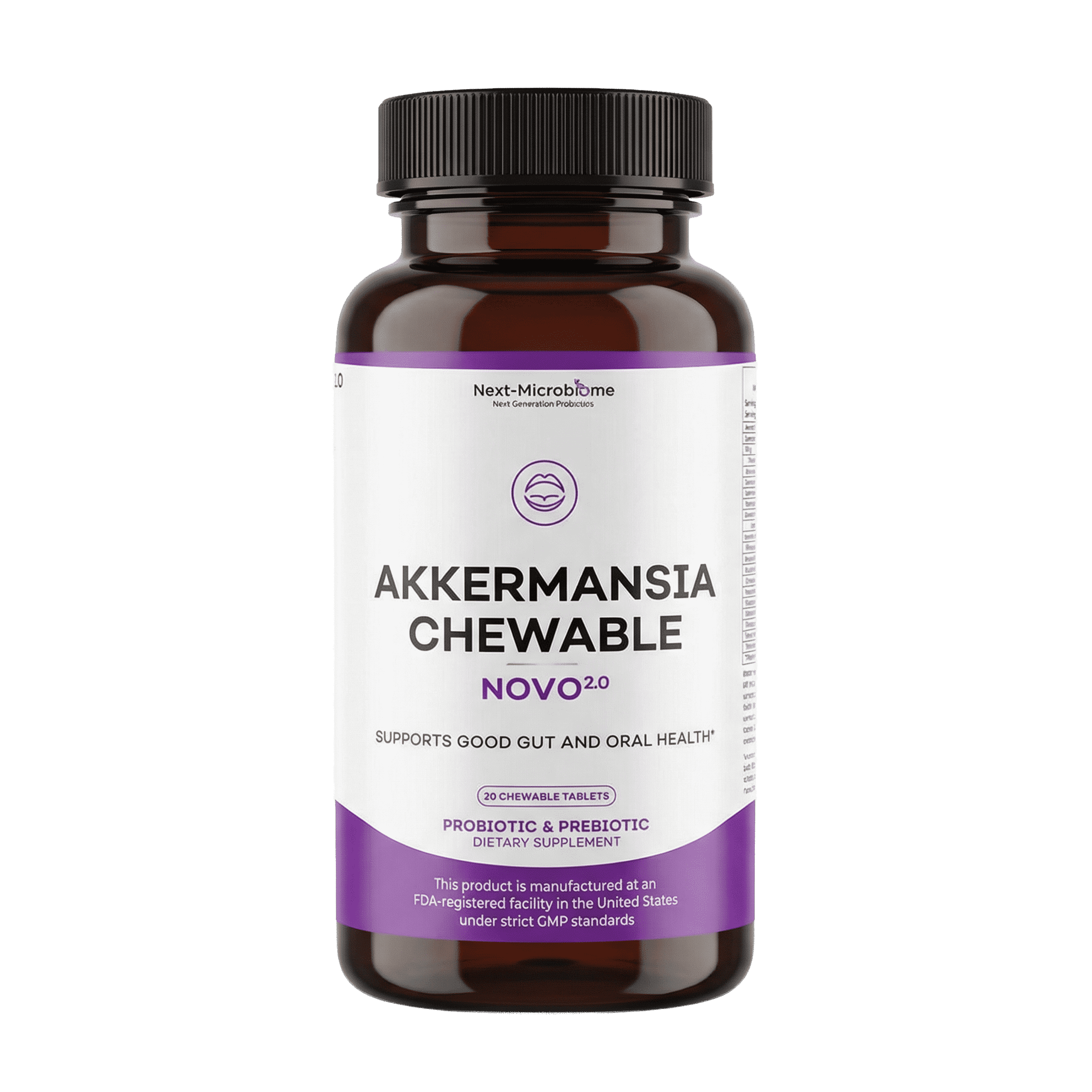
A practical example of this approach is Akkermansia Chewable, designed to support mucosal integrity and oral–gut signaling as part of a personalized microbiome routine:
These approaches work with human biology rather than overriding it.
8. Why Personalized Microbiome Health Matters
Personalized microbiome care offers a framework for addressing:
-
digestive disorders
-
metabolic dysfunction
-
immune imbalance
-
stress sensitivity
-
sleep disruption
-
chronic inflammation
Rather than treating symptoms in isolation, microbiome science provides a systems-level lens for long-term health.
This is also why microbiome and lifespan research is increasingly discussed through microbial diversity, inflammatory balance, metabolic resilience, gut barrier integrity, and lifestyle-aligned prevention.
This is why microbiome research now underpins many of the most promising developments in preventive and personalized medicine.
Scientific References
-
Human Microbiome Project Consortium. (2012). Structure, function and diversity of the healthy human microbiome.
Nature. -
Koh, A., et al. (2016). From dietary fiber to host physiology: short-chain fatty acids as key bacterial metabolites.
Cell.
-
Zmora, N., et al. (2018). Personalized gut mucosal colonization resistance to probiotics.
Cell. -
Willis, J. R., & Gabaldón, T. (2020). The human oral microbiome in health and disease.
Cell Host & Microbe.
-
Thaiss, C. A., et al. (2016). Transkingdom control of microbiota diurnal oscillations promotes metabolic homeostasis.
Cell.
Written by Ali Rıza Akın
Microbiome Scientist, Author & Founder of Next-Microbiome
Ali Rıza Akın is a microbiome scientist with nearly 30 years of experience in translational biotechnology, systems biology, and applied microbiome research, spanning discovery, preclinical development, and clinical-stage translation.
His work focuses on how microbial ecosystems interact with human physiology, including:
-
Gut barrier function and intestinal permeability
-
Mucus-associated microbiota (Akkermansia-related systems)
-
Oral–gut microbiome axis
-
Short-chain fatty acids (SCFAs) and metabolic signaling
-
Circadian rhythm–microbiome interactions
-
Clinical Research Contributions
He has contributed to multiple clinical-stage microbiome programs, supporting bacterial strain discovery, optimization, and formulation design across different therapeutic areas, including:
Active Ulcerative Colitis (Inflammatory Bowel Disease)
Hyperoxaluria (Oxalate Metabolism Disorder)
Microbiome-driven gut health and inflammatory conditions
These studies were part of broader clinical development programs evaluating microbiome-based approaches. His contributions focused on the early-stage scientific and translational pipeline, including strain discovery, functional optimization, and multi-strain formulation design.
Scientific Contributions:
Ali Rıza Akın is the discoverer of Christensenella californii, a bacterial species associated with microbiome diversity and metabolic health.
He is a contributing author to scientific publications and Bacterial Therapy of Cancer (Springer), and the author of Bakterin Kadar Yaşa: İçimizdeki Evren: Mikrobiyotamız.
Approach:
His work emphasizes evidence-based microbiome science, long-term safety, and a systems-based understanding of how microbes influence human health.
The content provided is for educational and informational purposes only and does not replace professional medical advice, diagnosis, or treatment.
How the Gut-Brain Axis Works and How the Microbiome Communicates
Fiber Isn’t the Hero: How Prebiotics, Microbes, and SCFAs Shape Gut and Metabolic Health
Related Posts

Why Do You Wake Up at 3 A.M.? Gut, Cortisol, Blood Sugar, and Sleep Recovery

Can Gut Health Affect Sleep? How the Microbiome May Shape Rest and Recovery

Ozempic Plateau? What Your Gut Microbiome May Be Telling You About Slower Weight Loss

Akkermansia vs Ozempic: How Gut Microbiome Support May Influence GLP-1 and Digestion

GLP-1 Side Effects: How to Ease Bloating, Constipation, and Gut Issues Naturally

Best Probiotic for Leaky Gut? Why Gut Barrier Support Differs From Digestive Probiotics

Can You Support Akkermansia Naturally, or Are Supplements Needed?
